
 Add to Preferred Sources
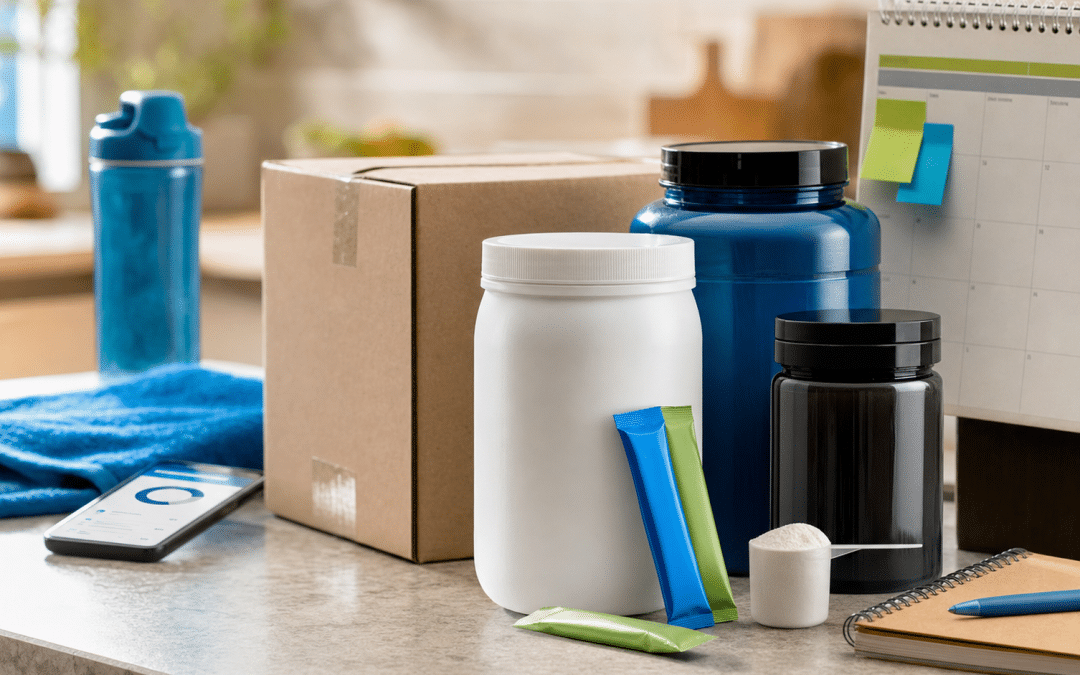
Email marketing for supplement brands is the practice of sending timed, behaviour-triggered emails so that a customer reorders a consumable product before the pack runs out, with education in between. It sits inside our email marketing guide for South African businesses, but supplements add two constraints that most retail advice skips: a finite days-supply that sets your send dates, and health-adjacent copy that has to survive South African advertising rules.
This post gives you the flow list in build order, a formula for timing replenishment reminders from pack size, a claims table for email copy, the POPIA rules for your list, and a break-even formula you can fill in with your own margins. It names no Rand margin or basket value because this research did not find a public SA source for them. Every Rand input is yours to supply.
Quick Answer
Email marketing for supplement brands should start with a replenishment reminder timed from the pack's days-supply, then add a welcome series, cart recovery, a subscription skip flow and a win-back. Treat promotional emails as advertising under the ARB Code as a benchmark, so health claims need evidence you hold before sending, and the list needs POPIA section 69 consent or the existing-customer exception. Regulatory positions here are as sourced and dated in the post, so check them with an adviser. Judge the programme on repeat orders it adds, not opens.
In this post
Not sure which flow earns its place first?
Send us your current flows, pack sizes and list size and we will show you where the reorder gap sits.
Get a flow reviewHow does email marketing for supplement brands differ from other retail?
Supplement email marketing differs from general retail because the product has a built-in end date: a bottle holds a fixed number of servings, so the customer's next purchase date is knowable on the day of the first order. That turns your customer list into a restock calendar, which is why supplement brand email flows are built around days-supply rather than seasonal promotions.
The second difference is the content risk. A fashion email can exaggerate a sale. A supplement email that implies a result for the body is making a claim, and claims carry obligations covered in the claims section below. The third is data sensitivity: what someone buys can hint at their health, which matters for how you segment.
Takeaway: the pack is the clock
A supplement customer's reorder date is set by servings per pack and servings per day, both printed on your own label. Email marketing for supplement brands works when the first reminder comes from that arithmetic, not from a generic "30 days after purchase" rule that ignores multi-month packs.
Which flows should a supplement brand build first?
The flows a supplement brand needs are a replenishment reminder, a welcome series, cart recovery, a subscription or skip flow and a win-back. As a build-order judgement, not measured data, start with replenishment because it acts on people who have already bought and needs only pack size and purchase date from your store.
| Flow | Trigger | Job | Best for |
|---|---|---|---|
| Replenishment reminder | Days since delivery (or fulfilment plus transit days), set by pack days-supply | Reorder before the pack is empty | Any brand with repeat buyers; build first |
| Welcome series | Sign-up or first purchase | Explain how to use the product and ask what the customer wants from it | Every brand; supplies the goal data for segments |
| Cart recovery | Basket started, no order | Close stalled online orders | Brands selling through their own store |
| Subscription or skip | Subscription created or renewal due | Offer a skip or pause instead of a cancellation | Brands running subscriptions |
| Win-back | No order past the expected reorder window | Learn whether they switched, stopped or just forgot | Lists with lapsed buyers |
Consent matters most on two of these flows. Someone who abandoned a cart but never bought, or who only joined a newsletter, is not a customer under POPIA section 69(3), so emailing them needs consent, requested once, and the customer route covers only your own similar products. Capture consent at checkout or sign-up before those flows send; the POPIA section below sets out the conditions.
The cart flow works the way it does in any online shop, so our guide to Shopify abandoned cart recovery covers the timing logic. If you sell subscriptions, read Shopify subscriptions in South Africa before you design the skip flow. The wider shop logic sits in our email marketing for ecommerce post.
How do you time a supplement replenishment reminder?
A replenishment reminder is timed by taking the pack's days-supply and subtracting a buffer for the customer to click, pay and receive the next parcel. Days-supply is servings per pack divided by servings per day. The formula is: reminder day, counted from delivery, equals days-supply minus delivery days minus a safety margin.
| Pack (example) | Servings per day | Days-supply | First reminder, counted from delivery | Best for |
|---|---|---|---|---|
| 60 capsules | 2 | 30 days | Day 23 | Monthly buyers |
| 30 sachets | 1 | 30 days | Day 23 | Monthly buyers |
| 90 capsules | 3 | 30 days | Day 23 | Higher-dose products, same monthly cycle |
| 120 capsules | 2 | 60 days | Day 53 | Value-pack buyers on a two-month cycle |
The table assumes a parcel that takes four days to arrive plus a three-day safety margin, a seven-day buffer, so 30 − 7 = day 23 and 60 − 7 = day 53. Those two numbers are example assumptions. Use the courier time your own orders actually take, which varies by destination and carrier, and a margin you are comfortable with. Customers who skip doses will reorder later than the arithmetic says, so treat the reminder as a prompt, not a prediction.
Two refinements that cost little
First, record pack size against each product or tag and build one wait step per days-supply band, rather than one 30-day rule for everything; check whether your platform supports per-product delays before assuming it does. Second, when a customer buys two packs at once, restart the clock on the combined days-supply instead of firing two reminders. Our post on lists versus segments uses Klaviyo's terms, but the same logic applies in Omnisend.
Reminders going out on the wrong day?
Tell us your top three pack sizes and dose instructions and we will assess whether your timing fits your parcel times.
Check my timingWhat can a supplement email say about health?
A supplement email can say what you can substantiate before sending, and nothing that presents the product as treating, curing or preventing a condition. Clause 4.1.1 of Section II of the Advertising Regulatory Board (ARB) Code, as summarised in De Rebus, requires advertisers to hold documentary evidence for factual claims before the advertisement is published.
The same article explains that ARB rulings bind its members, while enforcement against non-members works through ARB-member publishers and broadcasters declining the advertising. The article does not address email specifically, so treat the Code as your benchmark rather than assuming a mailbox is exempt.
There is a second reason to avoid therapeutic language. In the Supreme Court of Appeal's 2022 ruling on the 2017 General Regulations, commentary on the judgment reports that a medicine under the Medicines and Related Substances Act must "have or claim to have a therapeutic purpose", and that a wide range of supplements would not be medicines. Because a therapeutic purpose is part of what defines a medicine, a regulatory adviser should decide where any given sentence of your copy falls.
SAHPRA's statement on the judgment said the existing regulations and guidelines would stay in place during the 12-month suspension of the order. That statement dates from 2022 and this post has not verified today's position. Check the current rules with a regulatory adviser before you publish; this post is not legal advice.
| Copy type | Exposure | Safer approach | Best for |
|---|---|---|---|
| Names a condition the product "fixes" or "treats" | Therapeutic claim; needs evidence and invites the medicine question | Describe what the product contains and how to take it | Nobody; remove it |
| "Supports" a normal body function | Still a factual claim; evidence must match the ingredient, dose and population | Use only where you hold that file, and keep the file dated | Brands with a documented evidence file |
| Customer testimonial about results | Repeats a claim in another voice; a cautious practice is to treat it as your own claim | Quote taste, ease of use and service, not outcomes | Review and reorder emails |
| Dose and usage instructions | Must match the label | Copy the label wording exactly | Welcome and post-purchase emails |
Takeaway: write the claim file before the email
For every sentence in a supplement email that describes an effect on the body, keep a dated record of the evidence behind it, because the ARB Code expects substantiation to exist before publication. If you cannot point to that record, rewrite the sentence to describe the product, not the outcome.
How does POPIA apply to a supplement email list?
POPIA applies to a supplement list through section 69, which prohibits electronic direct marketing unless the person has consented or is an existing customer. The text of section 69 sets out each condition: you may approach someone whose consent you need only once to request it, and the customer route requires that you obtained the details in a sale, market your own similar products, and gave a free opportunity to object at collection and on each message. Every message must also identify the sender and give a contact address for stop requests.
So a checkout customer can receive your replenishment and similar-product emails under the customer route, with an unsubscribe in every send. A newsletter-only sign-up, a giveaway entrant or a gym-partner lead needs consent. Our guide to POPIA email compliance goes through the wording, and list cleaning covers old addresses you cannot trace.
Health data is the supplement-specific wrinkle. POPIA section 26(1) lists health among the categories of special personal information whose processing is generally prohibited unless an exemption applies. Whether a supplement purchase counts as health information is a legal question this post does not answer. The practical response is to collect less: ask what the customer wants from the product in broad lifestyle terms, not what condition they have.
Which segments work without collecting health details?
Email marketing for health supplements works best on segments such as goal, pack size, days-supply stage and order count, because each changes what the email says and when it goes. None needs a medical detail. A welcome-series question such as "training, energy, or everyday routine?" gives you a content track without asking about a condition.
Keep it to three or four segments you will actually maintain. Days-supply stage is the useful one: customers in the last week of a pack, customers a month past their expected reorder date, and first-time buyers each need a different message. Gym-linked audiences are a separate case; our post on email marketing for gyms covers a different list with different consent routes.
When does the email platform pay for itself?
The platform pays for itself when the incremental repeat orders it wins cover its monthly fee at your own margin. The formula is: monthly platform fee ÷ (average order value × margin after product cost, shipping and payment fees) = incremental orders needed per month. This post prints no sample Rand result because the inputs are specific to your brand.
Test before you pay. Omnisend's free plan allows up to 250 contacts and 500 emails a month, and Klaviyo's free plan allows up to 250 active profiles and 500 monthly email sends. Spread across 250 contacts, 500 emails is two sends per contact a month, enough for one replenishment reminder plus one welcome email, or a smaller test cohort running a longer sequence. Both limits are as shown on each vendor's pricing page in October 2026, and plans change, so recheck before you rely on them.
Count only incremental orders. A reminder sent to someone who would have reordered anyway does not earn its fee, so compare against a holdout group that receives nothing and judge on sales, not opens. Our email marketing audit checklist shows how to check what a programme delivers. Where you also message on WhatsApp, treat it as a second channel against the same holdout.
Want a second opinion on your break-even?
Send us your platform fee, order value and margin and we will check the maths with you.
Request an auditWhy South African Businesses Choose Growth Pulse Media
Growth Pulse Media was founded by Dirk van Greuning, who built and scaled a large South African ecommerce business before starting the agency, so repeat purchase and margin come before design, and parcel transit times and POPIA consent shape the flows we plan. We are a registered Shopify Partner and an Omnisend Certified Partner, all work is executed in-house, and a limited client load keeps senior attention on each account. If you want email marketing for supplement brands set up as replenishment, welcome and win-back flows in Omnisend on your Shopify store, our email marketing service is the place to start.
We build the flows and timing; the claims file and legal sign-off stay with you and your adviser. The same approach applies to email marketing for supplement stores that sell through a single Shopify shop.
Who This Is NOT For
Supplement email programmes fit poorly with four kinds of brand, each described below.
A brand that wants health outcomes in the subject line. If the plan depends on copy that says the product treats or cures a condition, email will not fix it and the substantiation duty gets harder, not easier.
Anyone planning to email a bought or scraped list. Section 69 of POPIA gives you consent or the customer route. A purchased list has neither.
A brand with no record of what customers bought. Replenishment timing needs purchase date and pack size. Marketplace-only sellers who often do not receive the buyer's email address have nothing to trigger from.
A brand wanting a revenue forecast before launch. A reorder rate depends on your product, price and list, so no honest forecast exists before a test. Run the test on a free plan first.
Frequently Asked Questions
These are the questions supplement brands ask most about timing, claims, consent and segments.
How often should a supplement brand email customers?
Send one replenishment reminder per pack cycle and keep other sends to a level you can sustain and test. This research did not find a sourced ideal frequency, so judge frequency by unsubscribes and sales against a holdout group, not by opens.
Can supplement brands make health claims in marketing emails?
Only claims you can substantiate before sending, and therapeutic claims about treating or curing a condition are best avoided. The ARB Code requires documentary evidence for factual claims before publication, and a medicine is defined by a therapeutic purpose. The SAHPRA position cited here dates from 2022 and is not verified as current, so check current rules with a regulatory adviser.
Do I need consent to email supplement customers in South Africa?
You need either consent or the existing-customer route in POPIA section 69(3). That route covers people whose details you obtained in a sale, for your own similar products, with a free chance to object at collection and in each message. Prospects need consent, requested once.
When should I send a supplement reorder reminder?
Send it before the pack runs out: days-supply minus delivery time minus a safety margin, counted from delivery. For a 30-day pack with a seven-day buffer that is day 23, using example assumptions. Use your own courier times.
Can I segment supplement customers by health condition?
Avoid it unless you have taken advice. POPIA section 26(1) lists health as special personal information whose processing is generally prohibited unless an exemption applies. Segment by goal, pack size and days-supply stage instead.
Ready to turn your pack size into a reorder clock?
Tell us about your range and store and we will talk through flows, timing and sign-up points for Shopify and Omnisend. No obligation — we'll get back to you within 24 hours.
Request a free audit