Email marketing for ecommerce South Africa generates R36 to R76 for every R1 spent when automation flows are correctly configured — making it the highest-ROI channel available to South African online stores. Most stores have email installed but generate under 10% of revenue from it, sending newsletters instead of behaviour-triggered flows. This guide covers what email marketing for ecommerce requires — from the five core flows to the South African seasonal campaign calendar.
Email marketing connects directly to your broader South African ecommerce strategy — it is the retention layer that turns one-time buyers into repeat customers and generates compounding revenue without additional acquisition spend.
Quick Answer
Email marketing for ecommerce South Africa works through two layers: automation flows (abandoned cart, welcome series, post-purchase, browse abandonment, win-back) that run continuously, and segmented campaigns around South African seasonal moments and new arrivals. According to Klaviyo's 2026 benchmarks, flows generate 41% of total email revenue from just 5.3% of sends — proving that automation, not volume, is the primary revenue driver for South African ecommerce stores.
Running a South African ecommerce store with email installed but no automation flows — and watching email contribute less than 10% of your revenue?
Get a Free Ecommerce Email AuditEmail Marketing for Ecommerce South Africa: Why Automation Beats Campaigns
The most important insight in email marketing for ecommerce is that automation flows dramatically outperform broadcast campaigns on revenue efficiency. According to Klaviyo's 2026 email marketing benchmarks, automated flows generate revenue per recipient that is 18 times higher than broadcast campaigns. This is not a small difference — it is the difference between an email channel that generates 5% of store revenue and one that generates 30%.
The reason is relevance. A broadcast campaign goes to everyone on the list at the same time with the same message. An automated flow goes to the right person at the right moment — when they have just abandoned a cart, just made a first purchase, or just gone 90 days without buying. Relevance drives opens, clicks, and revenue. Volume drives unsubscribes and spam complaints.
Flows First, Campaigns Second
The correct sequencing for email marketing for ecommerce South Africa is flows before campaigns — always. Most South African stores do this backwards: they send weekly newsletters (campaigns) before configuring a single automation flow. A store doing R200,000/month in online revenue with no automation flows is leaving an estimated R40,000–R60,000/month in recoverable email revenue on the table. Configure all five core flows first. Then build a campaign calendar on top of that automation foundation.
Email Marketing for Ecommerce South Africa: The Five Core Flows
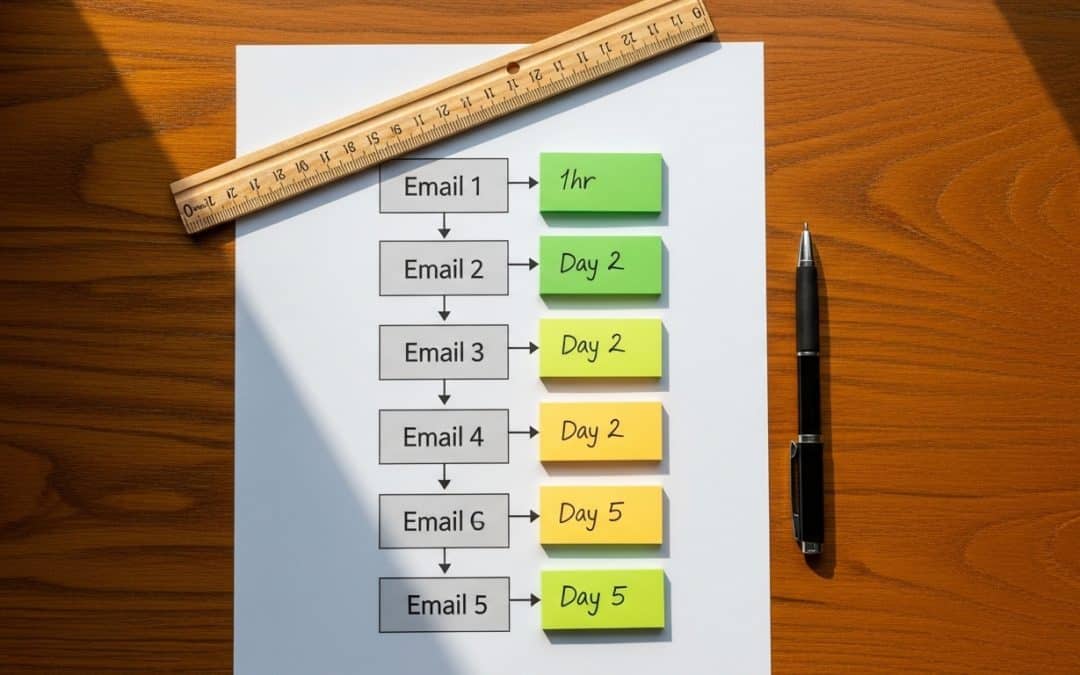
Every South African ecommerce store needs five automation flows live before investing significant time in campaigns. Each flow targets a specific moment in the customer journey where a behaviour-triggered email dramatically outperforms any broadcast message.
1. Abandoned Cart Flow
The abandoned cart flow is the highest-revenue automation for South African ecommerce stores. South Africa's cart abandonment rate sits around 83% — meaning 83 of every 100 shoppers who add to cart leave without buying. A three-email sequence (1 hour, 24 hours, 72 hours) recovers 3–8% of abandoned carts automatically. For a store doing R300,000/month with 400 monthly cart abandonments at R750 average, that recovery is worth R9,000–R24,000/month.
2. Welcome Series
The welcome series converts new subscribers into first-time buyers at the moment they are most engaged. A five-email welcome sequence that introduces the brand, highlights bestsellers, references South African payment options (PayFast, Ozow), and delivers a time-limited first-purchase offer typically converts 8–15% of new subscribers into buyers. This flow runs continuously and generates consistent new-customer revenue without any ongoing effort after initial setup.
3. Post-Purchase Sequence
The post-purchase sequence starts the moment an order is placed and covers three phases: transactional confirmation (order confirmed, dispatched via The Courier Guy or Aramex with tracking details), a review request 7–10 days after delivery, and a cross-sell email 14 days post-delivery recommending complementary products. Post-purchase emails have the highest open rates of any email type — 55–60% — because customers are actively looking for order updates immediately after buying.
4. Browse Abandonment Flow
Browse abandonment flows trigger when a subscriber views a product page but does not add to cart, catching shoppers earlier than the abandoned cart flow. They generate lower conversion rates but higher volume — far more people browse than add to cart. For South African stores selling considered-purchase categories (furniture, electronics, homeware), these flows are particularly valuable because they re-engage shoppers while a specific product is still fresh in their mind.
5. Win-Back Flow
The win-back flow targets customers who purchased previously but have not returned in 90–180 days. A 2–3 email sequence that acknowledges the gap, highlights new arrivals, and offers a win-back incentive on the final email recovers 5–10% of lapsed customers who would otherwise churn permanently. For South African stores with growing customer databases, a win-back flow running continuously means the customer acquisition investment made months ago keeps generating returns.
Want a custom email flow setup plan for your South African ecommerce store — with projected revenue per flow based on your current traffic and average order value?
Get Your Free Email Flow Revenue ProjectionEmail Marketing for Ecommerce South Africa: Real Store Results
A Cape Town South African fashion ecommerce store on Shopify had Klaviyo installed and was sending one broadcast newsletter per month to 3,400 subscribers. Email was generating R7,200/month — 4% of total store revenue. After configuring all five automation flows over six weeks, the results at month four were measurable.
| Email Channel | Before Flows | Month 4 After Flows |
|---|---|---|
| Abandoned cart flow | R0 | R22,800/month |
| Welcome series | R0 | R8,400/month |
| Post-purchase cross-sell | R0 | R9,600/month |
| Browse abandonment | R0 | R5,100/month |
| Win-back flow | R0 | R3,800/month |
| Monthly campaign (newsletter) | R7,200/month | R11,400/month |
| Total email revenue | R7,200/month | R61,100/month |
| Email as % of store revenue | 4% | 27% |
Total email revenue grew from R7,200 to R61,100/month — a 748% increase — for a Klaviyo plan cost of R1,260/month. The newsletter campaign also improved from R7,200 to R11,400/month because the flows had warmed up the list — subscribers who had already received relevant automated emails were more responsive to broadcast campaigns. The flows and the campaigns made each other better.
Email Revenue Is Compounding Revenue
Unlike paid advertising, ecommerce email automation is a compounding asset. Once flows are live, they generate revenue every month regardless of whether a single rand is spent on ads. As the subscriber list grows from website popups, checkout capture, and referrals, the same automation generates proportionally more revenue without additional configuration. A South African ecommerce store that invests in email automation in 2026 will generate returns from that investment for years.
How Growth Pulse Media Builds Email Marketing for South African Ecommerce Stores
Growth Pulse Media configures and manages email marketing for South African ecommerce businesses — all five automation flows with South African-specific copy (PayFast checkout references, local courier tracking language, SA seasonal moments), monthly campaign calendar planning, Klaviyo list segmentation, and monthly revenue reporting per flow and campaign.
Our email marketing work is grounded in direct operator experience running Klaviyo on South African Shopify and WooCommerce stores. We know how South African customers respond to abandoned cart copy that references PayFast by name, how post-purchase sequences perform better when they reference Courier Guy tracking, and how welcome series convert higher when they acknowledge the South African shopping context. All work is executed in-house — no offshore outsourcing of email strategy or flow configuration.
Who This Is NOT For
Email marketing for ecommerce is not the right priority for every South African online store right now.
Your store has fewer than 300 monthly sessions. Email automation converts existing traffic — it does not generate traffic from nothing. A store with 200 monthly sessions cannot build a subscriber list large enough for flows to generate meaningful revenue. The abandoned cart flow needs abandoned carts to trigger. Build traffic to at least 500 monthly sessions before investing in email flow configuration. Fix the traffic problem first.
You want to send campaigns without building flows first. Sending weekly newsletters to a cold, unsegmented list before automation flows are live is the most common and most expensive email mistake South African ecommerce stores make. It burns subscriber engagement on low-converting broadcast messages before the high-converting automated flows are in place. Build the five core flows first. Then build a campaign calendar on top of that foundation.
You are on Shopify's native email tool and unwilling to switch. Shopify Email handles basic broadcast newsletters but cannot support behaviour-triggered automation flows — abandoned cart, browse abandonment, post-purchase sequences. These flows require Klaviyo or Omnisend. Start on Klaviyo's free plan (up to 250 active profiles) if budget is a concern. The automation capability gap between Shopify Email and Klaviyo is the difference between 5% and 25% of store revenue coming from email.
You want email to replace paid acquisition entirely. Email is a retention channel — it works on your existing audience and does not generate cold awareness on its own. Stores that abandon paid acquisition entirely see list growth stall within 6–12 months. Email and paid channels are complementary: email reduces the cost of retention while paid channels maintain the subscriber flow that keeps email revenue growing.
Ready to find out what your South African ecommerce store's five automation flows would generate — with projected revenue figures based on your actual traffic and average order value?
Get Your Free Email Flow Setup ConsultationEmail Marketing for Ecommerce South Africa: Frequently Asked Questions
What is email marketing for ecommerce in South Africa?
Email marketing for ecommerce South Africa generates revenue from a store's existing subscriber base without additional paid acquisition spend. It operates through two layers: always-on automation flows triggered by customer behaviour (abandoned cart, welcome series, post-purchase, browse abandonment, win-back) and periodic campaign sends around South African seasonal moments. Together these generate 25–40% of total ecommerce revenue for stores with correctly configured email automation.
Which email flows generate the most revenue for South African ecommerce stores?
The abandoned cart flow generates the most revenue for most South African ecommerce stores — recovering 3–8% of abandoned carts through a three-email sequence at 1 hour, 24 hours, and 72 hours. The welcome series generates the second-highest by converting new subscribers into buyers at 8–15% conversion. Post-purchase cross-sell flows generate the third-highest by recommending complementary products 14 days after purchase.
How much revenue should email generate for a South African ecommerce store?
A South African ecommerce store with all five automation flows live and a monthly campaign calendar should generate 25–40% of total store revenue from email. Stores generating under 10% from email are typically running campaigns without automation flows. Stores generating over 40% are either performing exceptionally well or underinvesting in paid acquisition. The 25–40% benchmark applies to stores with 500+ monthly sessions, a growing subscriber list, and Klaviyo or Omnisend correctly configured with behaviour-triggered automation.
What email platform is best for South African ecommerce email marketing?
Klaviyo is best for South African ecommerce stores above 5,000 contacts — its integration depth, predictive analytics, and revenue attribution justify the cost at scale. Omnisend is better under 5,000 contacts, delivering ecommerce-native automation at a lower price point with faster-configuring pre-built templates. Neither Mailchimp nor Shopify Email can support the behaviour-triggered automation flows that generate the majority of ecommerce email revenue.
How long does it take to set up email automation for a South African ecommerce store?
Setting up all five core automation flows takes 4–6 weeks from platform connection to all flows live and tested. The abandoned cart flow is typically live within 2–3 days. The welcome series takes 3–5 days including copy. Browse abandonment, post-purchase, and win-back flows add 2–3 weeks. All flows should be tested against real store behaviour before going live to confirm product data syncs and personalisation pulls the right information.
What South African email marketing campaign moments generate the highest ecommerce revenue?
The highest-revenue campaign moments for South African ecommerce stores are Black Friday (late November), Cyber Monday, the festive season (December), and January back-to-school. South African Black Friday generates the most email revenue of any single campaign — planning should begin 3 weeks in advance. Secondary moments include Valentine's Day, Women's Month (August), and Heritage Month (September). Monthly new arrivals and quarterly win-back campaigns run year-round regardless of seasonal activity.
Ready to Build Email Marketing for Your South African Ecommerce Store That Generates 25–40% of Revenue Automatically?
Growth Pulse Media configures all five automation flows for South African ecommerce stores — with South African-specific copy, PayFast and Courier Guy references, and monthly revenue reporting per flow. We will send you a projected revenue estimate per flow based on your store's current traffic and AOV before any work begins. No obligation — we will get back to you within 24 hours.
Get Your Free Email Flow Revenue Projection