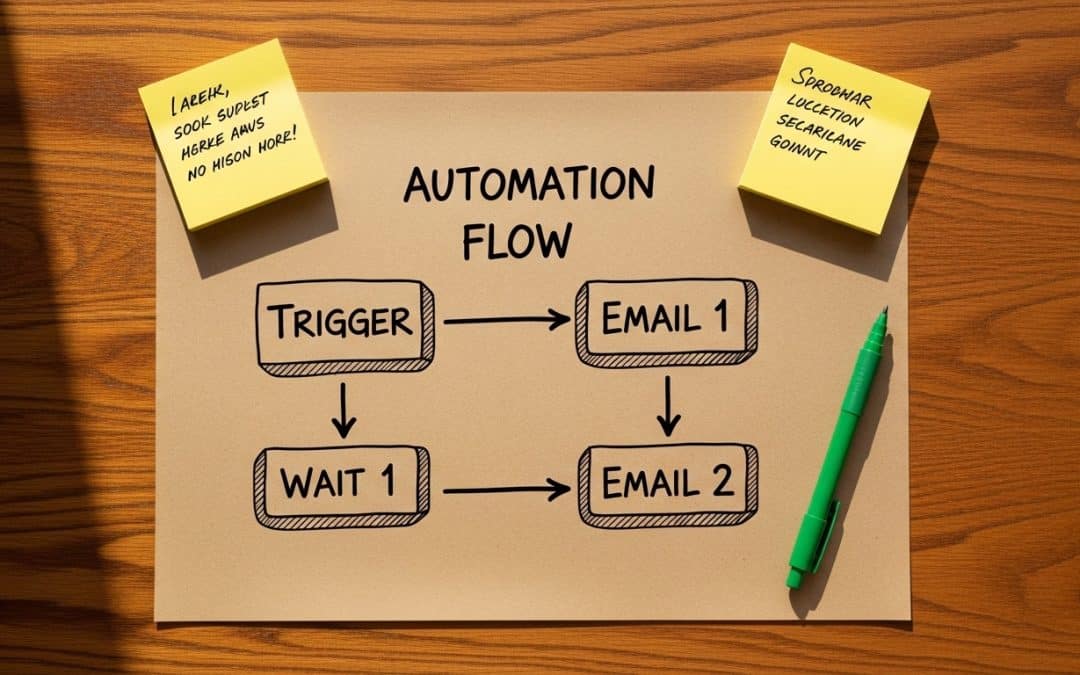
Email automation for ecommerce is the system that sends the right email to the right SA customer at the right moment — triggered by what that SA customer did, not by what time it is.
When a SA shopper adds a product to their cart and leaves, email automation sends an abandoned cart reminder. When a SA customer completes a purchase, email automation sends an order confirmation, a review request, and a cross-sell sequence. This happens automatically, 24 hours a day, without manual intervention — which is why email automation for SA ecommerce businesses consistently generates the highest revenue per email send of any email marketing activity.
Email automation is different from email campaigns. Campaigns are broadcast emails sent to a SA list at a chosen time — a SA Black Friday promotion, a new product launch announcement.
Automations are behaviour-triggered sequences that respond to individual SA customer actions in real time. Both are necessary for a complete SA ecommerce email strategy, but automations are where the highest SA revenue efficiency lives. Read our complete SA email marketing guide for the full strategic context.
Quick Answer
Email automation for ecommerce is a sequence of emails sent automatically when a SA customer takes a specific action — subscribing, browsing a product, abandoning a cart, or completing a purchase.
The five core SA ecommerce email automations are: welcome series (convert new SA subscribers into first-time buyers), abandoned cart flow (recover SA shoppers who left without purchasing), post-purchase sequence (review request + cross-sell), browse abandonment (re-engage SA product viewers who did not add to cart), and win-back flow (re-engage SA customers who have not purchased in 90+ days).
According to Klaviyo benchmark data, email automations generate up to 30x more revenue per recipient than broadcast email campaigns — making them the highest-ROI SA email marketing investment available.
Running an SA ecommerce store without email automation? We configure Klaviyo flows for SA Shopify stores — from welcome series to win-back — and show you the exact SA revenue each flow generates.
Get a Free SA Email Automation ConsultationWhat Is Email Automation for Ecommerce: The Core Definition
Email automation for ecommerce is best understood as a set of rules that connect SA customer behaviour to SA email responses — automatically and at scale. When a SA shopper takes a defined action (subscribing, purchasing, abandoning a cart, reaching a spend threshold), the automation system identifies that action, selects the correct SA email sequence, and sends it at the correct interval without any manual involvement from the SA business.
The key distinction from manual SA email marketing is the trigger.
An SA email campaign is decided by the SA marketer: "We will send a SA promotion on Friday." An SA email automation is decided by the SA customer's behaviour: "This SA customer abandoned their cart 1 hour ago — send Email 1 now." The SA customer's real-time behaviour drives the SA email timing and content, which is why SA email automations convert at significantly higher rates than SA broadcast campaigns.
SA email automation example (correct): A SA shopper adds two products to their cart on a Johannesburg SA fashion store, then leaves without purchasing.
Klaviyo detects the SA cart abandonment, waits 1 hour, and automatically sends an email showing the exact SA products abandoned — with the SA customer's name, the SA product images pulled from Shopify, and a direct SA checkout link. No SA marketer involved. No SA manual action required. The SA email arrives at peak SA engagement timing based on when the SA customer abandoned.
SA email campaign (not automation): The SA marketer notices end-of-week SA sales are low and manually sends a 20% discount email to the entire SA subscriber list on Friday afternoon. This reaches SA subscribers who have just purchased, SA subscribers who have never engaged, and SA subscribers who abandoned a cart yesterday — with identical SA content regardless of SA behaviour. SA revenue per recipient is a fraction of what a targeted SA automation generates.
Email Automation for Ecommerce: The 5 Core SA Flows Every Store Needs
Email automation for SA ecommerce stores should be built in priority order — the flows that generate the most SA revenue for the least SA setup time first.
According to Klaviyo's ecommerce email automation benchmarks, abandoned cart flows alone generate an average of $3.65 revenue per recipient — compared to $0.11 for standard SA email campaigns. The five flows below are the foundation every SA ecommerce store should have running before any advanced SA automation is built.
Flow 1: SA Welcome Series
The SA welcome series triggers when a new SA subscriber joins the SA email list — through a SA website popup, a SA checkout email capture, or a SA social media lead form. It is typically 3–5 emails sent over 7–10 days, introducing the SA brand story, SA product bestsellers, SA social proof, and a first-purchase incentive for SA new subscribers who have not yet bought.
Welcome flows generate an average placed order rate of 1.97% across Klaviyo's SA and global ecommerce base, with the top 10% of SA welcome flows converting at 9.89%. For a SA ecommerce store adding 500 new SA email subscribers per month, a 3% placed order rate from the SA welcome series generates 15 SA orders per month from subscribers who would otherwise not have purchased without the SA nurture sequence.
Flow 2: SA Abandoned Cart Flow
The SA abandoned cart flow triggers when a SA shopper adds products to their cart but leaves without completing checkout — the highest-value SA email automation available.
The SA flow sends a 3-email sequence: Email 1 at 1 hour (SA product reminder, no incentive), Email 2 at 24 hours (SA social proof and trust signals), Email 3 at 7 days (time-limited SA incentive for price-sensitive SA abandoners who did not respond to the first two SA emails).
The SA Abandoned Cart Revenue Calculation
A SA ecommerce store with 800 monthly cart additions at 83% SA abandonment rate and R650 average SA order value abandons approximately R430,000/month.
A Klaviyo SA abandoned cart flow recovering 12% of those SA abandoners generates R51,600/month in additional SA revenue — automatically, from a one-time SA setup investment. At 15% SA recovery, that is R64,500/month. This is why SA abandoned cart flow configuration is always the first SA email automation priority for any SA ecommerce store that does not yet have one running.
Flow 3: SA Post-Purchase Sequence
The SA post-purchase sequence triggers immediately after a SA customer completes a purchase — covering order confirmation (transactional), shipping confirmation (transactional), delivery confirmation with SA review request, and a SA cross-sell email 14 days post-delivery recommending SA products related to what the SA customer purchased.
SA post-purchase flows have average open rates of 59.77% — the highest of any SA email automation type — because SA customers are highly engaged with SA order-related emails immediately following SA purchase.
Flow 4: SA Browse Abandonment Flow
The SA browse abandonment flow triggers when a SA shopper views a SA product page but does not add anything to their SA cart.
It is a softer SA re-engagement than the SA cart abandonment flow — typically 1–2 emails showing the SA products viewed, with SA social proof and related SA product recommendations. SA browse abandonment flows catch SA shoppers earlier in their SA purchase journey than SA cart abandonment flows, and typically generate lower SA conversion rates but higher SA volume because more SA shoppers browse than add to cart.
Flow 5: SA Win-Back Flow
The SA win-back flow triggers when a SA customer has not purchased within a defined SA window — typically 90 or 180 days after their last SA purchase.
It is a 2–3 email SA re-engagement sequence acknowledging the SA customer's absence, highlighting new SA products or SA collections added since their last SA visit, and offering a SA win-back incentive on the final SA email. SA win-back flows recover 5–10% of lapsed SA customers who would otherwise churn from the SA customer base entirely.
Want to know which of the five SA email automation flows will generate the most revenue for your specific SA store — and in what order to build them?
Get Your Free SA Email Automation Priority AssessmentEmail Automation for Ecommerce: SA Platform Comparison
Email automation for SA ecommerce requires a platform that integrates directly with your SA Shopify or WooCommerce store — pulling SA customer data, SA product information, SA purchase history, and SA cart events in real time to power behaviour-triggered SA flows. The two platforms most commonly used by SA ecommerce businesses are Klaviyo and Omnisend.
| SA Feature | Klaviyo | Omnisend |
|---|---|---|
| SA Shopify integration depth | Native — deepest available | Native — strong |
| SA pre-built ecommerce flows | 60+ SA flow templates | Pre-built SA ecommerce flows |
| SA revenue attribution per flow | Yes — per email and per flow | Yes — campaign and flow level |
| SA free plan | Up to 250 active profiles | Up to 250 contacts, 500 emails/month |
| SA entry paid plan | $20/month (500 profiles) | $16/month (500 contacts) |
| SA SMS integration | Yes — Email + SMS plan from $35 | Yes — included in paid plans |
| Best for SA store size | Growing and established SA stores | Early-stage SA stores on a budget |
For SA Shopify stores doing more than R50,000/month in SA revenue, Klaviyo's deeper SA data integration and SA revenue attribution per email make it the recommended SA platform — the additional SA insight into which specific SA emails generate which SA Rand amounts justifies the cost difference over Omnisend at meaningful SA revenue levels. For SA stores under R50,000/month, Omnisend offers comparable SA core automation functionality at a lower SA entry cost.
Email Automation for Ecommerce: SA Real Store Results
A Pretoria SA health and wellness Shopify store had no email automation configured — SA email marketing consisted only of monthly SA newsletter broadcasts to a list of 2,800 SA subscribers. After configuring all five core SA flows over 6 weeks, SA email revenue changed materially.
| SA Email Channel | Before Automations | After All 5 SA Flows Live |
|---|---|---|
| SA monthly email revenue (total) | R8,400 | R67,200 |
| SA email as % of total store revenue | 6% | 31% |
| SA abandoned cart recovery revenue | R0 | R22,800/month |
| SA welcome series revenue | R0 | R9,100/month |
| SA post-purchase revenue (cross-sell) | R0 | R14,600/month |
| SA broadcast campaign revenue | R8,400/month | R12,300/month (same list, better SA segmentation) |
| SA win-back + browse abandonment | R0 | R8,400/month |
SA email revenue grew from R8,400 to R67,200/month — an 8x increase. The SA broadcast campaigns also improved because SA list segmentation improved once SA automation data revealed which SA subscribers were active purchasers, SA cart abandoners, and SA lapsed customers. The SA automation setup was a one-time 6-week investment that now generates SA revenue every month without ongoing manual SA effort.
The SA Email Automation Compounding Effect
SA email automations compound over time in a way SA broadcast campaigns do not. Every new SA subscriber enters the SA welcome series.
Every SA cart abandonment triggers the SA abandoned cart flow.
Every SA purchase triggers the SA post-purchase sequence.
As SA subscriber list size grows, SA automation revenue grows proportionally — without any additional SA marketing effort. A SA store with 500 monthly new SA subscribers running a 3% SA welcome flow conversion generates 15 additional SA orders per month that would not exist without the SA automation. At 5,000 monthly new SA subscribers, that is 150 additional SA orders per month — from the same SA welcome flow setup.
How Growth Pulse Media Configures SA Email Automation
Growth Pulse Media configures Klaviyo email automation for South African Shopify ecommerce businesses — covering all five core SA flows with SA-specific copy, SA product imagery pulled directly from the Shopify SA catalogue, SA Rand pricing, and SA-localised send timing. We have direct experience configuring Klaviyo for SA Shopify stores across SA fashion, SA health, SA homeware, and SA electronics categories.
Every SA email automation engagement starts with a SA revenue audit: we calculate exactly how much SA revenue each of the five flows will generate at your current SA store's SA traffic and SA conversion rate — before any SA configuration work begins. SA clients know the projected SA revenue return before committing to the SA setup investment.
All SA email automation work is executed in-house. We use Klaviyo and Omnisend for SA client SA ecommerce email automation — the same SA platforms we recommend to SA clients. We do not outsource SA Klaviyo configuration offshore.
Who This Is NOT For
SA email automation is not the right SA marketing investment for every SA ecommerce store right now.
Your SA email list has fewer than 200 active subscribers. SA email automations require a minimum SA subscriber volume to generate meaningful SA revenue data and SA optimisation signals.
Below 200 SA active subscribers, the SA abandoned cart flow may trigger only 5–10 times per month — insufficient SA volume for the SA flow to generate enough SA revenue to justify the SA Klaviyo subscription cost over SA alternatives. Focus on SA list building first through SA website popups, SA social lead forms, and SA post-purchase SA email capture.
Your SA store has no SA traffic — fewer than 500 monthly SA sessions. SA email automations are triggered by SA customer behaviour on your SA store.
Without sufficient SA traffic, there is insufficient SA behaviour to trigger SA flows at meaningful SA volume. SA welcome flows need SA new subscribers. SA abandoned cart flows need SA cart additions. SA browse abandonment flows need SA product views. Fix SA traffic first through SA SEO content, SA Google Ads, or SA social media — then configure SA email automation to convert that SA traffic efficiently.
You want to build advanced SA segmentation flows before establishing basic SA flows. The five core SA flows described in this guide — SA welcome, SA abandoned cart, SA post-purchase, SA browse abandonment, and SA win-back — generate the vast majority of SA email automation revenue for most SA stores.
Complex SA flows built before the SA basics are proven consistently underperform against simple SA basics done well. Get all five SA core flows live and optimised before investing in SA VIP SA customer flows, SA loyalty SA triggers, or SA predictive SA product recommendation SA automations.
You are not prepared to invest in SA-specific email copy for each SA flow. Generic SA email templates — "Hi [First Name], you left something behind" — consistently underperform SA-specific copy that references SA delivery timeframes, SA payment methods SA customers recognise, and SA brand context relevant to the SA shopper's SA experience.
SA email automation configured with SA-generic templates from international SA email platforms generates a fraction of the SA revenue that SA-localised, SA-brand-specific SA copy achieves.
SA email automation is the highest-ROI SA marketing channel available for SA ecommerce businesses that have SA traffic and SA subscribers — because it converts existing SA customer relationships into SA revenue automatically, without ongoing SA ad spend or SA manual effort.
Ready to find out exactly how much SA revenue your SA store could be generating from email automation — with a projected SA Rand figure for each of the five flows before you commit?
Get Your Free SA Email Automation Revenue ProjectionEmail Automation for Ecommerce: Frequently Asked Questions
What is email automation for ecommerce?
Email automation for ecommerce is the system that sends emails automatically when SA customers take specific actions — subscribing to a SA email list, abandoning a SA cart, completing a SA purchase, or lapsing without buying for 90+ days.
Unlike SA broadcast email campaigns sent to an entire SA list at a chosen time, SA email automations are triggered by individual SA customer behaviour in real time — making them significantly more relevant and more revenue-efficient than manual SA email sending.
What is the most important email automation for SA ecommerce stores?
The abandoned cart flow is the most important email automation for South African ecommerce stores — generating the highest SA revenue per recipient of any SA email automation type.
At South Africa's 83% cart abandonment rate, every SA ecommerce store with meaningful SA traffic has significant SA abandoned cart revenue to recover. The SA abandoned cart flow is also the fastest SA automation to configure on Klaviyo — typically live within 3 days of SA setup — making it the correct first SA email automation priority for any SA store that does not yet have one running.
How much does email automation cost for SA ecommerce stores?
SA email automation platform costs start from free (Klaviyo free plan up to 250 active profiles, Omnisend free plan up to 250 contacts).
Paid SA plans start from $16–$20/month for SA stores with 500 SA active profiles.
SA configuration costs for all five core SA flows range from R3,000–R15,000 as a once-off SA setup investment, depending on SA copy, SA design, and SA integration complexity. The SA ROI on SA email automation configuration is typically positive within the first month of SA flows going live — SA abandoned cart recovery alone covers the SA setup cost for most SA ecommerce stores within 30–60 days.
How long does it take to set up email automation for a SA Shopify store?
Setting up all five core SA email automation flows on Klaviyo for a SA Shopify store takes approximately 4–6 weeks from SA platform connection to all SA flows live and SA tested.
The SA abandoned cart flow can be configured and live in 2–3 days. The SA welcome series takes 3–5 days including SA copywriting. The SA post-purchase sequence, SA browse abandonment, and SA win-back flows add another 2–3 weeks of SA configuration, SA copy, and SA testing. SA flows should always be SA tested with SA test orders before going live to confirm SA product data is pulling correctly from the SA Shopify integration.
What is the difference between Klaviyo and Omnisend for SA ecommerce automation?
Klaviyo offers the deepest native Shopify SA integration available — syncing SA customer purchase history, SA product data, SA cart events, and SA predictive analytics in real time.
Omnisend offers comparable SA core ecommerce automation at a lower SA entry cost, with strong SA pre-built flow templates and SA email + SMS integration. For SA stores doing more than R50,000/month in SA revenue, Klaviyo's SA per-email revenue attribution and SA advanced SA segmentation justify the higher SA cost. For SA stores under R50,000/month, Omnisend is a commercially viable SA alternative with lower SA monthly overhead while SA store revenue grows.
Can email automation replace SA email campaigns for ecommerce?
No — SA email automation and SA email campaigns serve different SA purposes and both are needed for a complete SA ecommerce email strategy.
SA email automations convert individual SA customer behaviour into SA revenue automatically — welcome, SA abandoned cart, SA post-purchase, SA browse abandonment, SA win-back. SA email campaigns communicate SA time-sensitive information to a SA audience simultaneously — SA Black Friday promotions, SA new product launches, SA seasonal SA sales. The highest-performing SA ecommerce email programmes run both: SA automations handling always-on SA revenue conversion, and SA campaigns handling SA promotional moments. Neither replaces the other.
Ready to Build Email Automation That Generates SA Revenue Around the Clock for Your SA Store?
Growth Pulse Media configures Klaviyo email automation for South African Shopify stores — all five core SA flows with SA-specific copy, SA product integration, and SA revenue tracking. We start every SA engagement with a projected SA Rand revenue figure for each SA flow so you know the return before committing. No obligation — we will get back to you within 24 hours.
Get Your Free SA Email Automation Consultation