
 Add to Preferred Sources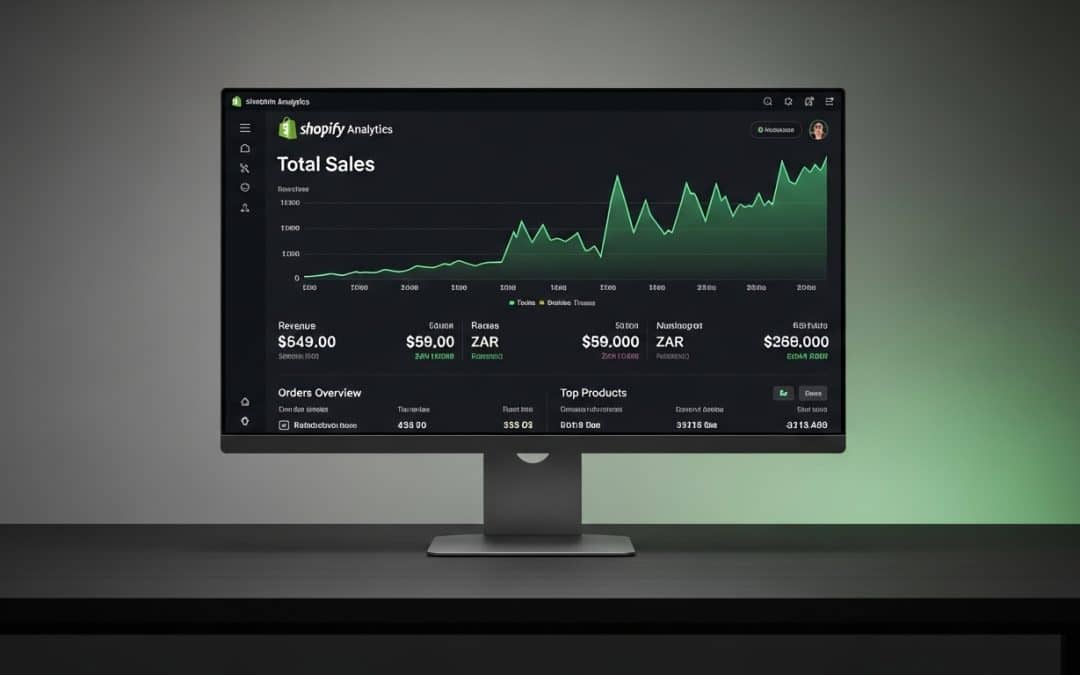
Most South African Shopify stores plateau because their owners mistake a working store for a growing one — and a Shopify growth strategy South Africa is what separates the two. A working Shopify store processes orders. A growing one compounds revenue month over month through a system of interconnected levers. According to Shopify's ecommerce growth research, the stores that scale consistently are those that systematically address all growth levers rather than relying on a single channel: conversion optimisation, email automation, SEO, paid acquisition, and average order value — each one multiplying the others rather than operating in isolation. If you are running a Shopify store in South Africa and revenue has flatlined or grown only as fast as your ad spend, the growth system described in this guide is what changes that trajectory.
SA Shopify merchants face a specific growth challenge that differs from their global counterparts — the SA market is smaller, payment gateway options are more constrained, mobile data costs affect checkout completion, and SA consumer trust in online purchasing is still maturing relative to markets like the UK or Australia. A Shopify growth strategy built for SA conditions addresses these local variables rather than applying global playbooks that underperform in the SA context.
Quick Answer
A Shopify growth strategy for South African stores works across five compounding levers: store conversion rate (fix before scaling traffic), email automation (activate abandoned cart, browse abandonment, and post-purchase sequences), Shopify SEO (compound organic traffic without ongoing ad spend), paid acquisition via Google Shopping and Meta Ads (scale once conversion is proven), and average order value (bundles, free shipping thresholds, post-purchase upsells). The correct order matters — fix conversion first, activate email second, scale traffic third.
Running a Shopify store in South Africa and not sure which growth lever to pull first? We have built and scaled SA Shopify stores — we know exactly where the biggest revenue gaps are hiding.
Get a Free Shopify Growth AuditShopify Growth Strategy South Africa: Lever 1 — Store Conversion Optimisation
A Shopify growth strategy for South African stores must start with conversion rate — because every other growth lever multiplies the value of traffic you are already generating. A SA Shopify store converting at 0.8% that fixes conversion to 2.4% has tripled its revenue from existing traffic before spending a single additional rand on advertising or SEO. No other growth investment delivers that return on existing assets.
The SA-specific conversion barriers on Shopify are well-documented from direct store management experience. Payment gateway hesitation at checkout is the largest single conversion drop-off point — SA shoppers who do not see PayFast, Peach Payments, or Ozow at checkout abandon at significantly higher rates than SA shoppers offered familiar local payment options. A Shopify store running Stripe or PayPal as its only checkout options is leaving 20–35% of SA conversion potential on the table before a single product page element is evaluated.
The SA Shopify Conversion Audit: What to Fix First
Start at checkout and work backwards. If PayFast and at least one instant EFT option (Ozow) are not active in your Shopify checkout, this is the first fix — it is also the fastest, taking less than two hours to install and configure through the Shopify App Store. Next, audit your product pages. SA shoppers need: multiple product images from different angles, a clearly visible delivery timeframe tied to a named SA courier (The Courier Guy or Aramex), a size guide or specification table where relevant, and customer reviews visible without scrolling on desktop. Product pages missing any of these elements consistently underperform against the SA conversion benchmark of 2–3%.
Mobile checkout flow is the third priority. Over 70% of SA Shopify traffic arrives on mobile. Count the steps between "add to cart" and "order confirmed" on your store's mobile checkout. Every additional step beyond 3 costs SA conversion. Shopify's accelerated checkout options — Shop Pay, Apple Pay, and Google Pay — reduce mobile checkout to a single tap for returning SA shoppers and consistently improve mobile conversion rates by 15–25% for stores that activate them.
SA Shopify conversion fix — full implementation: A Durban homeware store activates PayFast and Ozow in checkout, adds a sticky add-to-cart bar on mobile product pages, sets up Shop Pay accelerated checkout, and adds The Courier Guy delivery times prominently on product pages. Conversion rate moves from 0.9% to 2.7% over 45 days. Same traffic. Same ad spend. Revenue increases by 200%.
SA Shopify conversion mistake: The same store increases Google Shopping budget by R8,000/month to drive more traffic to a store converting at 0.9% with no SA payment gateways active. Traffic increases 60%. Revenue increases 14%. The bottleneck is the store — every rand spent on additional traffic to an unconverted store generates a fraction of its potential return.
The Conversion Sequencing Rule
South African Shopify stores that scale revenue consistently fix conversion rate before scaling traffic — every time. A store converting at 2.5% generates 3.1x more revenue from the same traffic as one converting at 0.8%. Fix the store first. Then scale the traffic into a proven conversion engine. Scaling traffic into a broken conversion funnel is the most common and most expensive mistake in SA Shopify growth.
Shopify Growth Strategy South Africa: Lever 2 — Email Automation
Email automation is the highest-ROI Shopify growth lever available to South African stores — it generates revenue from SA customers who have already been acquired, using automations that run without ongoing management cost once configured correctly. The three sequences every SA Shopify store must have active before scaling any paid traffic channel are abandoned cart recovery, browse abandonment, and post-purchase — in that priority order.
Abandoned Cart Recovery for SA Shopify Stores
Shopify's built-in abandoned checkout emails are a starting point — but Klaviyo or Omnisend sequences consistently outperform Shopify's native emails for SA stores because they allow more sophisticated segmentation, better SA-specific personalisation, and multi-channel sequences that combine email with SMS for high-value abandoned carts. A properly configured 3-email abandoned cart sequence on Klaviyo — sent at 1 hour, 24 hours, and 72 hours after abandonment — recovers 12–20% of abandoned cart value for SA Shopify stores in most product categories.
SA-specific abandoned cart sequence elements that lift recovery rates: include the exact product image and name from the SA shopper's cart, display the PayFast or Ozow logo prominently to address payment hesitation, show a named SA courier delivery timeframe to address delivery uncertainty, and include a single-click return-to-cart link that pre-populates the cart. The third email in the sequence — sent 72 hours after abandonment — should include a time-limited incentive (free shipping for the next 24 hours, rather than a discount that trains SA buyers to always wait for a deal).
Post-Purchase Sequences for SA Customer Retention
The post-purchase sequence is the most underutilised email automation in SA Shopify stores — and the one that has the highest long-term revenue impact because it drives repeat purchase rate. A SA Shopify store with a 25% returning customer rate generates significantly more lifetime customer value than one with an 8% returning rate — and the difference is almost entirely determined by what happens in the 30–60 days after a SA customer's first purchase.
A high-performing post-purchase sequence for SA Shopify stores includes: an order confirmation email with SA courier tracking details, a product care or usage guide email sent 3 days after delivery, a review request email sent 14 days after estimated delivery, and a complementary product recommendation email sent 30 days after purchase. This sequence builds the trust, satisfaction, and re-engagement that converts first-time SA buyers into repeat customers who account for disproportionate Shopify revenue over time.
Want to know which email automations your SA Shopify store is missing and how much revenue they could recover? We will show you the gaps in a free audit.
Get a Free Shopify Email Automation AuditShopify Growth Strategy South Africa: Lever 3 — Shopify SEO
Shopify SEO for South African stores is the only growth lever that compounds traffic without ongoing spend — making it the highest long-term ROI investment in any SA Shopify growth strategy. Every rand invested in Shopify SEO builds an asset — rankings, indexed content, domain authority — that continues generating SA traffic and revenue long after the investment is made. Google Shopping ads and Meta Ads stop generating traffic when the budget stops. SEO-driven organic traffic continues indefinitely once established.
The three Shopify SEO priorities for SA stores are: product and collection page optimisation (highest commercial intent, most direct revenue impact), blog content targeting SA informational queries in your product category (builds topical authority and top-of-funnel SA audience), and technical SEO (site speed, mobile performance, structured data). Collection page SEO is the most underutilised opportunity in SA Shopify SEO — a well-optimised collection page ranks for dozens of SA product category queries simultaneously and drives higher-intent traffic than individual product pages.
SA Shopify Collection Page SEO
Most SA Shopify stores have collection pages with the default Shopify template — a collection title, a grid of products, and no unique content. These pages rank for nothing. A collection page optimised for SA organic search has a keyword-rich H1 (e.g., "Women's Summer Dresses South Africa — Shop Online"), 200–400 words of unique introductory content addressing the SA buyer's category questions, and internal links to top-performing products and related collection pages. This content structure helps Google understand what the collection page is about and who it serves — enabling it to rank for the SA category queries that drive the most product discovery traffic.
Shopify Blog Content for SA Stores
A Shopify blog targeting SA informational queries in your product category drives top-of-funnel organic traffic from SA consumers who are researching before buying. A SA outdoor furniture store ranking for "how to choose outdoor furniture South Africa," "best outdoor furniture materials for SA climate," and "outdoor furniture care tips SA" builds a warm audience of SA buyers in the research phase — who, when they are ready to purchase, return to the brand they found helpful during their research. This is how SA Shopify stores build organic revenue without relying entirely on paid acquisition.
Shopify Growth Strategy South Africa: Lever 4 — Paid Acquisition
Paid acquisition — Google Shopping and Meta Ads — is the traffic scaling lever that SA Shopify stores reach for first and should reach for last. Paid acquisition is the right growth lever after conversion is proven (store converting at 2%+), email automation is active (abandoned cart recovering revenue), and SEO is building (organic traffic compound starting). At that point, paid acquisition scales a proven system — not a broken one.
Google Shopping for SA Shopify Stores
Google Shopping is the highest-intent paid acquisition channel for SA Shopify stores selling physical products — because SA shoppers searching on Google for a specific product are closer to purchase than any social media audience. A SA shopper searching "linen bedding set South Africa" on Google and seeing your Shopping ad with a product image, price in Rand, and store name is one click away from your product page. The conversion potential of this intent level is significantly higher than cold social media traffic.
Connecting a SA Shopify store to Google Shopping requires: a Google Merchant Center account with your SA business information verified, a product feed connected from Shopify (via the Google channel app), and a Google Shopping campaign in Google Ads with SA geographic targeting. SA Shopping CPCs are typically R3–R12 per click depending on product category — lower than search text ads for most product categories, making Shopping the most cost-efficient paid acquisition channel for SA Shopify ecommerce.
Meta Ads for SA Shopify Stores
Meta Ads — Facebook and Instagram — complement Google Shopping by reaching SA shoppers before they are actively searching. A SA consumer who sees a product in an Instagram Reel, visits the Shopify store, and does not purchase immediately becomes a warm audience for retargeting. The Meta Pixel installed on your SA Shopify store (via the Meta sales channel in Shopify) tracks this visitor and enables you to show them the exact products they viewed in a retargeting ad — often the most profitable campaign in any SA Shopify Meta Ads account.
Shopify Growth Strategy South Africa: Lever 5 — Average Order Value
Average order value optimisation generates more revenue per transaction without acquiring any additional SA customers — making it one of the most cost-efficient growth levers available to SA Shopify stores. Three AOV mechanisms consistently deliver results for SA Shopify stores: product bundles, free shipping thresholds, and post-purchase upsells.
Free shipping thresholds set 15–25% above the current average order value consistently lift AOV as SA shoppers add items to qualify. If your SA Shopify store's average order value is R380, setting free shipping at R450 is more effective than setting it at R500 — the gap is small enough for SA shoppers to bridge easily, large enough to meaningfully move the average transaction value. For SA stores where shipping cost is significant (The Courier Guy rates to far-off provinces), this lever directly improves gross margin per order while simultaneously lifting revenue.
Shopify Growth Strategy South Africa: Real Revenue Impact
A Johannesburg fashion Shopify store implementing all five growth levers in sequence over 120 days — conversion first, then email automation, then SEO content, then paid acquisition at a higher budget than before, then AOV optimisation — produced the following results compared to the prior 120-day period of ad-spend-only growth.
| Metric | Ad-Spend Only (Prior 120 days) | Full Growth Strategy (120 days) |
|---|---|---|
| Monthly revenue | R120,000 | R340,000 |
| Store conversion rate | 0.8% | 2.6% |
| Email revenue contribution | 4% | 26% |
| Abandoned cart recovery rate | 0% | 16% |
| Average order value | R340 | R460 |
| Returning customer rate | 7% | 22% |
| Organic traffic monthly | 420 visits | 2,800 visits |
| Paid ad spend | R18,000/month | R18,000/month |
| Revenue per R1 of ad spend | R6.67 | R18.89 |
The same R18,000/month ad spend generated R120,000 before the growth strategy and R340,000 after it — not because more money was spent on ads, but because the store now converts at 2.6% instead of 0.8%, email automation recovers 16% of abandoned revenue, and organic traffic has grown to supplement paid acquisition. The revenue per rand of ad spend moved from R6.67 to R18.89 — a 2.8x improvement from system optimisation, not from budget increase.
The Compounding System
The five Shopify growth levers compound each other — higher conversion rate makes SEO traffic more valuable, email automation captures revenue from traffic that does not convert immediately, higher AOV improves the ROAS of paid acquisition, and organic SEO reduces the total traffic cost as it grows. SA Shopify stores that implement all five levers see non-linear revenue growth because the levers multiply each other rather than adding linearly. A 3x revenue improvement from the same ad budget is not unusual — it is the expected outcome of implementing the complete growth system.
How Growth Pulse Media Grows SA Shopify Stores
Growth Pulse Media's approach to Shopify growth for South African stores comes from direct operator experience — before founding GPM, we built and scaled a large SA ecommerce business using Shopify, PayFast, Peach Payments, The Courier Guy, Aramex, Klaviyo, and Omnisend. We applied these five growth levers to our own SA store before we applied them to client stores — which means every recommendation we make has been tested under real SA revenue pressure, not derived from global case studies or Shopify's marketing materials.
We start every SA Shopify growth engagement with a conversion and email audit — because these two levers generate the fastest return on existing traffic before we scale anything. We integrate Klaviyo or Omnisend for email automation, set up Google Shopping and Meta Ads with SA-specific campaign structure, and build an SEO content strategy targeting the SA informational queries that bring top-of-funnel SA buyers into the store ecosystem. We report on revenue, conversion rate, and cost per acquisition — not on traffic or ad impressions.
We work with a limited number of SA Shopify clients so every store gets senior-level attention across all five growth levers simultaneously. We do not offshore any of the SA Shopify work we manage.
Who This Is NOT For
A Shopify growth strategy is not the right investment for every SA store at every stage.
Your Shopify store is doing under R30,000/month in revenue. Below R30,000/month, the investment in a full five-lever growth strategy does not return proportionally to the cost. Focus on product-market fit, your first 200 SA customers, and basic conversion setup — PayFast active, product pages complete, abandoned cart email live. Come back when monthly revenue justifies the full growth system investment.
You want to scale ad spend before fixing your conversion rate. We will not recommend scaling Google Shopping or Meta Ads budget on a SA Shopify store converting at under 1.5%. The incremental revenue from more traffic to an unconverted store does not justify the additional spend. Conversion fix comes first — without exception.
Your product has not found SA market fit yet. A growth strategy amplifies what already works — it does not fix a product that SA buyers are not responding to. If your store has traffic and a reasonable conversion rate but low repeat purchase rate and negative customer feedback, the growth problem is product, not marketing. Fix the product before investing in marketing scale.
You want results within 30 days from SEO. The SEO lever in a SA Shopify growth strategy compounds over 3–6 months, not 30 days. Conversion rate and email automation show results within 30 days. Paid acquisition scales within 30–45 days. SEO-driven organic traffic becomes meaningful at 90–180 days. If your timeline requires all five levers delivering within a month, adjust expectations for the SEO component specifically — or focus budget on the levers that deliver on that timeline.
Every SA Shopify store that has scaled past R500,000/month in revenue has done so by building all five levers — never by scaling ad spend alone.
Ready to build a Shopify growth system for your SA store that compounds revenue without simply scaling ad spend? Let's start with a free audit of where your biggest gaps are.
Get Your Free Shopify Growth Strategy SessionShopify Growth Strategy South Africa: Frequently Asked Questions
What is the most effective Shopify growth strategy for South African stores?
The most effective Shopify growth strategy for South African stores implements five levers in sequence: store conversion rate optimisation first (fix checkout with PayFast and local payment gateways, optimise product pages and mobile checkout), email automation second (abandoned cart, browse abandonment, and post-purchase sequences on Klaviyo or Omnisend), SEO third (collection page optimisation, blog content targeting SA queries), paid acquisition fourth (Google Shopping and Meta Ads into a proven conversion funnel), and average order value optimisation fifth (free shipping thresholds, bundles, post-purchase upsells). The sequence matters as much as the levers themselves.
How long does it take to grow a Shopify store in South Africa?
South African Shopify stores implementing a full five-lever growth strategy typically see measurable revenue improvement within 30–45 days from conversion and email automation fixes, meaningful paid acquisition improvement within 45–60 days, and organic SEO traffic growth becoming significant between months 4–6. Full compound growth — where all five levers are active and reinforcing each other — typically becomes clearly visible between months 3–5 for SA stores implementing the strategy correctly with sufficient budget across all channels.
How important is PayFast for Shopify stores in South Africa?
PayFast is essential for South African Shopify stores — it is the most widely used local payment gateway in SA and its absence from checkout is one of the primary causes of high checkout abandonment rates for SA ecommerce stores. SA shoppers who do not see a recognised local payment option at checkout abandon at significantly higher rates than those offered PayFast, Peach Payments, or Ozow. PayFast integrates with Shopify via a native app in the Shopify App Store and takes less than two hours to set up and configure correctly.
Should SA Shopify stores use Klaviyo or Omnisend for email automation?
Both Klaviyo and Omnisend integrate natively with Shopify and are strong choices for SA Shopify email automation. Klaviyo is the stronger choice for SA stores doing R200,000+/month in revenue that need sophisticated segmentation, predictive analytics, and advanced abandoned cart logic. Omnisend is the stronger choice for SA stores earlier in their email journey — easier to set up, more affordable at lower revenue levels, and includes SMS alongside email. Both platforms are SA-compatible and deliver comparable results for core abandoned cart and post-purchase automation at the SME revenue level.
What is a good conversion rate for a South African Shopify store?
A good conversion rate for a South African Shopify store is 2–3% for established stores with SA payment gateways active, optimised mobile checkout, and strong product page trust signals. Stores below 1% have significant conversion infrastructure gaps — typically in payment options, mobile checkout flow, or product page content. Stores above 3% are performing strongly and should focus on traffic scaling and average order value optimisation. The SA ecommerce average sits around 1.2–1.5% for stores without SA-specific optimisation and 2–3% for stores built around SA buyer behaviour.
How do I drive more traffic to my Shopify store in South Africa?
Drive more traffic to a South African Shopify store through four channels in this priority order: first, optimise existing traffic conversion before adding more (so new traffic converts profitably); second, activate Google Shopping campaigns for product category searches with high SA purchase intent; third, build Instagram and Facebook Ads funnels targeting SA demographics relevant to your product category; and fourth, invest in Shopify SEO — collection page optimisation and blog content — for compounding organic traffic that grows without ongoing ad spend. The SA stores with the most sustainable traffic growth run all four channels simultaneously, using paid acquisition for immediate volume and SEO for long-term compound growth.
Ready to Build a Shopify Growth System That Compounds SA Revenue?
Growth Pulse Media builds Shopify growth strategies for South African ecommerce stores — built on real operator experience running a large SA Shopify store using PayFast, Peach Payments, Klaviyo, Omnisend, The Courier Guy, and Aramex. We implement all five growth levers and report on revenue, conversion rate, and cost per acquisition. No obligation — we will get back to you within 24 hours.
Get Your Free Shopify Growth Strategy Consultation