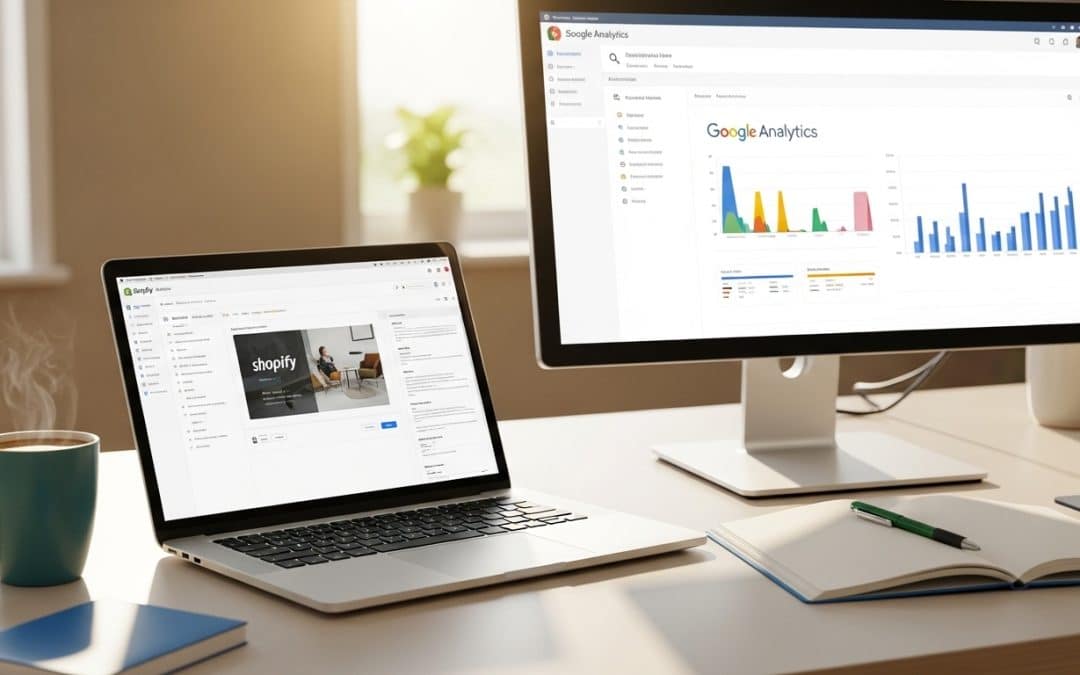
Shopify SEO South Africa is the process of optimising your SA Shopify store so that Google ranks your product pages, category pages, and content higher in organic search results — generating consistent free traffic and sales alongside your paid channels. Most SA Shopify stores launch with zero SEO configuration, meaning they are invisible to the roughly 80% of SA online shoppers who start their buying journey with a Google search. This guide covers everything SA store owners need to know about Shopify SEO in South Africa — from the technical foundations Shopify handles automatically to the on-page, content, and link building work you need to do yourself. For a full overview of what ecommerce SEO involves beyond Shopify specifically, read our ecommerce SEO South Africa guide.
Want to know where your SA Shopify store's biggest SEO gaps are? We'll audit it for free — no strings.
Get a Free Shopify SEO AuditShopify SEO South Africa: What Shopify Handles Automatically
Shopify SEO South Africa starts with a strong technical foundation that Shopify provides out of the box — and understanding what the platform handles automatically helps SA store owners focus their time and budget on the optimisation work Shopify cannot do for them.
| Technical SEO Element | What Shopify Does Automatically | What SA Store Owners Still Need to Do |
|---|---|---|
| Hosting and uptime | 99.99% uptime on fast global CDN servers | Nothing — Shopify handles this completely |
| SSL certificate | Free SSL on every store — HTTPS by default | Nothing — active from day one |
| Mobile responsiveness | All Shopify themes are mobile-first by default | Test your specific theme on SA mobile networks — speed matters more than desktop |
| XML sitemap | Auto-generated at yourstore.co.za/sitemap.xml | Submit sitemap to Google Search Console after launch |
| Canonical tags | Auto-generated on product and collection pages | Verify canonicals are correct on variant and filtered URLs |
| Robots.txt | Auto-generated with sensible defaults | Review to ensure important pages are not accidentally blocked |
| Page speed | Fast baseline — Shopify infrastructure is optimised | Audit installed apps — heavy apps are the #1 speed killer on SA Shopify stores |
According to Shopify's official SEO documentation, the platform is built with SEO best practices in place — including auto-generated canonical tags, structured data for products, and clean URL structures. This gives SA Shopify stores a stronger technical SEO baseline than most custom-built sites, but it does not replace the on-page, content, and authority-building work that actually drives rankings.
Key Takeaway
Shopify SEO South Africa starts from a strong technical position — the platform handles hosting, SSL, sitemaps, canonical tags, and mobile responsiveness automatically. The SEO work that actually determines whether your SA Shopify store ranks is everything Shopify cannot automate: keyword-optimised product titles and descriptions, SA-specific meta tags, structured content strategy, and link building from credible SA sources.
Shopify SEO South Africa: On-Page Optimisation for SA Stores
Shopify SEO South Africa on-page optimisation is the highest-impact work most SA store owners can do immediately — because Shopify gives you full control over the elements Google uses to understand and rank every page, but fills them with generic defaults that tell Google nothing useful about your products or SA relevance.
Product Page SEO
Product pages are where SA Shopify stores lose the most organic traffic — because most stores use manufacturer-supplied titles and descriptions that are identical to dozens of other SA stores selling the same products. Google has no reason to rank your version over any other if the content is the same.
Well-optimised SA Shopify product page: Title tag: "Nike Air Max 270 South Africa | R1,899 | Free Delivery | PayFast Accepted." Meta description: "Buy Nike Air Max 270 in SA. All sizes in stock. Free delivery on orders over R750. Pay with PayFast, Ozow, or credit card. Fast Johannesburg delivery." Product description: 150–300 words of unique copy covering SA-specific details — Rand pricing, local shipping timeline, PayFast accepted, SA warranty information. Alt text on main image: "Nike Air Max 270 running shoes South Africa."
Poorly optimised SA Shopify product page (common default): Title tag: "Nike Air Max 270" — no SA signal, no price, no payment context. Meta description: auto-generated from the first line of the product description. Product description: copy-pasted from the manufacturer's website — identical to 50 other stores. Alt text: "product-image-1.jpg" or blank. This page gives Google zero reason to rank your store for SA searches over any other store carrying the same product.
Collection Page SEO
Collection pages (Shopify's term for category pages) are the most underoptimised pages on most SA Shopify stores. SA shoppers searching "running shoes South Africa" or "men's watches under R2,000" are comparison shopping at the collection level — they have buying intent but have not chosen a specific product yet. A 200–300 word SA-specific introduction above your product grid dramatically improves both rankings and conversion for these high-value searches.
Well-optimised SA collection page: Title tag: "Running Shoes South Africa | Free Delivery | From R799." Collection description: 200–300 words covering what makes your running shoe range relevant to SA buyers — local brand options, Rand price ranges, free delivery thresholds, PayFast accepted. This description appears above the product grid and gives Google substantial, SA-specific content to index — content that product-only collection pages lack entirely.
Blog Content for Shopify SEO
Shopify includes a built-in blog that most SA stores either ignore completely or fill with promotional posts that generate no search traffic. For Shopify SEO South Africa, blog content serves a specific strategic purpose — targeting informational keywords that product and collection pages cannot rank for, then funnelling that traffic toward your products through internal links.
A SA Shopify store selling skincare products targeting "best moisturiser for dry skin South Africa" with a blog post can capture research-stage shoppers who are not yet searching for specific product names. Internal links from that post to your moisturiser collection page create a direct path from research to purchase. Most SA businesses see first page 1 rankings appear between months 5 and 6 of consistent content production — with results compounding significantly as domain authority builds.
Want a Shopify SEO strategy that covers products, collections, and content for your specific SA store? We'll map it out with you.
Get a Free Shopify SEO Strategy SessionShopify SEO South Africa: Technical Issues SA Store Owners Must Fix
Shopify SEO South Africa technical optimisation requires addressing several platform-specific issues that Shopify's automatic systems do not fully resolve — particularly for SA stores with large product catalogues or heavy app installations.
App Bloat and Page Speed
The number one technical SEO killer on SA Shopify stores is app bloat — every Shopify app you install adds JavaScript that loads on every page, slowing your store progressively. A SA store with 15–20 apps installed often sees mobile page load times of 6–8 seconds — well above the 3-second threshold where 53% of mobile visitors leave. Audit your installed apps quarterly, remove any you are not actively using, and test page speed before and after each new app installation.
How to audit Shopify app impact on SA store speed: Run your store through Google PageSpeed Insights before and after deactivating each app. Identify which apps add the most render-blocking JavaScript. For apps you need to keep, check whether the developer offers a lazy-loading or deferred-loading option. Most SA Shopify stores can improve mobile load time by 1–3 seconds simply by removing unused apps — a free optimisation that directly improves both rankings and conversion.
Duplicate Content from Product Variants
SA Shopify stores selling products in multiple colours, sizes, or configurations often generate duplicate URL variations — a product available in 8 colours creates 8 variant URLs with nearly identical content. Shopify adds canonical tags automatically, but SA store owners should verify these are working correctly in Google Search Console by checking the "Duplicate — Google chose a different canonical" report. If Google is ignoring your canonicals, the duplicate pages are splitting your ranking authority instead of consolidating it.
URL Structure Limitations
Shopify forces a specific URL structure — products always live at `/products/product-name` and collections at `/collections/collection-name`. You cannot change this structure. For Shopify SEO South Africa, this means your product slug is the only element you control — make it count by including SA-relevant keywords rather than default manufacturer SKU codes. A slug of `/products/nike-air-max-270-south-africa` is significantly more useful for SA search than `/products/nam270-bk-42`.
Key Takeaway
Shopify SEO South Africa technical issues are almost always caused by what SA store owners add to Shopify, not by the platform itself. App bloat, poor product slugs, and unverified canonical tags are the three most common technical SEO problems on SA Shopify stores — and all three are within the store owner's control to fix without any development cost.
Shopify SEO South Africa: Link Building for SA Shopify Stores
Shopify SEO South Africa link building is the authority signal that determines whether your optimised pages actually rank — because on-page SEO and technical SEO set the foundation, but backlinks from credible SA sources are what convince Google your store is trustworthy enough to rank above competitors with similar content.
| Link Building Tactic | How It Works for SA Shopify Stores | Difficulty |
|---|---|---|
| SA business directories | List your store on Yellow Pages SA, Cylex, Brabys, Hotfrog SA | Easy — free, takes 2–3 hours total |
| Supplier and partner links | Ask SA suppliers and brands you stock to link to your store as an authorised retailer | Easy — relationship-based, high value |
| SA blog content outreach | Create data-driven or buyer guide content, then pitch to SA publications and bloggers | Medium — requires quality content first |
| SA industry associations | Join relevant SA trade associations that list members with website links | Easy — membership fee may apply |
| Shopify Partner directory | If applicable, list in the Shopify Partner directory with your SA store as a showcase | Easy if you qualify |
| Product reviews and PR | Send products to SA bloggers, journalists, and review sites for editorial coverage | Medium-hard — requires genuine product appeal |
For SA Shopify stores, the fastest link building wins come from directory listings and supplier relationships — both free, both controllable, and both generate links from SA-relevant domains that Google trusts for local authority signals. For a comprehensive guide to SEO investment and what link building costs in the SA market, read our SEO pricing South Africa guide.
Shopify SEO South Africa: Who This Is NOT For
Shopify SEO South Africa is a long-term investment — and there are situations where it is not the right priority for a SA store right now.
Not for stores with fewer than 20 products: With very few products, there is not enough content for Google to build meaningful rankings around. Focus on setting up your Shopify store correctly and building your product catalogue first. Once you have 20+ products with unique descriptions, SEO investment starts generating returns.
Not for stores that need revenue this week: Shopify SEO generates compounding results over 4–12 months. If you need sales immediately, Google Ads and Google Shopping Ads deliver traffic from day one. The best approach is to run paid traffic for immediate revenue while building SEO in parallel — both channels working together outperform either alone.
Not for stores selling only generic dropshipped products with manufacturer descriptions: If every product on your store uses the exact same description available on dozens of other SA stores, Google has no reason to rank your version. Shopify SEO requires unique, SA-specific product content. If you are not willing to write unique descriptions, SEO investment will produce minimal results regardless of how much technical and link building work is done.
Why Growth Pulse Media for Shopify SEO in South Africa
Growth Pulse Media is a Shopify marketing agency in South Africa that handles Shopify SEO end to end — from technical audits and app bloat cleanup through to product page optimisation, collection page content, blog strategy, and SA link building. We work exclusively with SA Shopify and WooCommerce stores, which means every SEO decision is informed by how South African shoppers actually search, what SA payment and delivery signals improve conversion, and which SA link sources build genuine authority.
We work with a limited number of Shopify SEO clients at a time so every store gets direct access to the person doing the work — not a project manager relaying instructions. Our results are measured in organic revenue generated, not in keyword rankings or traffic numbers that do not connect to sales.
Want to see where your SA Shopify store is leaving organic revenue on the table? We'll audit it and show you what to fix first — free, no commitment.
Get a Free Shopify SEO Revenue AuditShopify SEO South Africa: Frequently Asked Questions
Is Shopify good for SEO in South Africa?
Yes — Shopify provides a strong technical SEO foundation for SA stores including fast hosting, automatic SSL, mobile-responsive themes, auto-generated sitemaps and canonical tags, and built-in product structured data. Where SA Shopify stores fall short on SEO is not a platform limitation — it is a content and optimisation gap. Stores with unique SA-specific product descriptions, optimised collection pages, and a consistent blog content strategy consistently rank well in SA Google searches.
How do I optimise my Shopify store for SEO in South Africa?
Optimise your SA Shopify store by focusing on four areas in priority order: first, write unique product titles and descriptions with SA-specific keywords, Rand pricing, and PayFast references. Second, add 200–300 word introductions to your collection pages targeting SA comparison shopping keywords. Third, start a blog targeting informational keywords that feed into your product collections. Fourth, build links from SA directories, suppliers, and industry sites to strengthen domain authority.
How long does Shopify SEO take to show results in South Africa?
Most SA Shopify stores see first meaningful organic traffic improvements between months 4 and 6 of consistent SEO work. Collection pages typically rank faster than individual product pages because they target higher-volume keywords. Stores that fix technical issues first — app bloat, duplicate content, product slugs — typically see indexing improvements within 4–8 weeks. Consistent content production and link building compound results significantly from month 6 onwards.
What are the biggest Shopify SEO mistakes SA stores make?
The three most common Shopify SEO mistakes for SA stores are: using manufacturer product descriptions instead of unique SA-specific copy (creates duplicate content across dozens of stores), ignoring collection page optimisation (missing high-volume comparison keywords), and installing too many apps without auditing their speed impact (app bloat is the number one technical SEO killer on SA Shopify stores). All three are fixable without development cost.
Does Shopify have better SEO than WooCommerce for SA stores?
Shopify and WooCommerce both deliver strong SEO results for SA stores when properly optimised. Shopify handles technical SEO foundations automatically — easier to maintain without specialist knowledge. WooCommerce offers more flexibility in URL structure, schema markup, and SEO plugin options like Rank Math. For most SA store owners without a technical team, Shopify's automatic technical SEO is the safer starting point. For a detailed comparison, read our WooCommerce vs Shopify South Africa guide.
Ready to Make Your SA Shopify Store Rank Higher on Google?
Growth Pulse Media handles Shopify SEO for South African ecommerce stores — technical audits, product and collection page optimisation, blog content strategy, and SA link building that builds compounding organic traffic. We work exclusively with SA stores and measure results in revenue, not rankings. No obligation, no lock-in contracts, and we will get back to you within 24 hours.
Get Your Free Shopify SEO Consultation