
 Add to Preferred Sources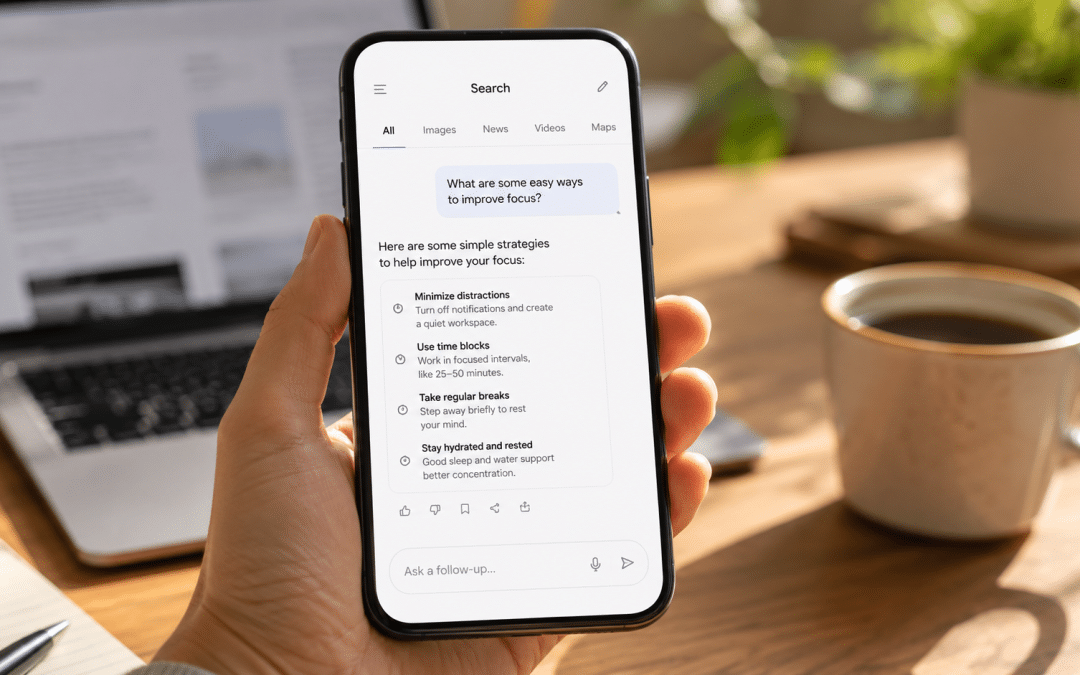
Google AI Mode South Africa is Google's full conversational search experience — a dedicated tab that answers a query with an AI conversation instead of a list of links — and because it's grounded in Google's own index, optimising for it builds directly on the search foundations you already have, as our complete guide to answer engine optimisation in South Africa sets out.
AI Mode passed a billion monthly users within roughly a year and now supports SA languages including Afrikaans, isiZulu and Setswana. It isn't Google's default results page yet, but it's where Google ships its newest search features first — so the businesses that get cited here early own the recommendations before the rollout deepens. This guide covers exactly how, building on what answer engine optimisation is.
Quick Answer
To optimise for Google AI Mode in South Africa, treat it as a layer on top of strong Google visibility, not a separate channel. Because AI Mode is grounded in Google's index, your existing rankings and crawlability are the foundation. On top of that, add answer-first content, question-shaped headings, complete schema, and genuine trust signals — the same AEO stack that wins AI Overviews and ChatGPT, aimed at Google's conversational surface.
Want to see whether Google AI Mode names your business or a competitor? We'll test it for you — free.
Get a Free AI Mode Visibility TestWhat Google AI Mode South Africa Actually Is
Google AI Mode is a dedicated conversational search experience that lives as its own tab alongside All, Images, Videos and News — where the entire results page becomes an AI-led back-and-forth rather than a list of blue links. Users ask a question, get a synthesised answer citing a handful of sources, then keep asking follow-ups without returning to a traditional results page.
The critical distinction is between AI Mode and AI Overviews, and confusing them leads to wasted effort. AI Overviews are the AI summary boxes that appear above ordinary search results; the blue links still sit below. AI Mode is a step beyond that — a full conversational surface where there is no traditional list at all. Our guide to appearing in Google AI Overviews covers the summary-box surface; this post covers the conversational one.
Both run on Google's index and both are powered by Gemini, which is why the underlying optimisation overlaps heavily. But AI Mode's conversational depth means it pulls sources across a multi-turn exchange, rewarding content that answers not just the first question but the natural follow-ups a buyer asks next. Because AI Mode still draws on Google's index, the foundations in our complete guide to SEO in South Africa still apply, from crawlable pages to content that answers a buyer's follow-up questions.
Key Takeaway
AI Mode and AI Overviews are different surfaces. AI Overviews are summary boxes above normal results; AI Mode is a full conversational tab that replaces the results list entirely. Both are grounded in Google's index, so they share optimisation foundations — but AI Mode rewards content that also answers the follow-up questions in a buyer's conversation, not just the opening query.
Why Google AI Mode Matters for SA Businesses Now
Google AI Mode matters now because it's where Google debuts its frontier search features, and South Africa is already inside the rollout rather than waiting on the sidelines. SA users searching in English — and increasingly in Afrikaans, isiZulu, Setswana and Sesotho — are already seeing AI-led answers, which means the shift is underway whether a business has noticed or not.
The strategic point is timing. Getting cited in Google AI Mode South Africa is easier before the surface becomes dominant: South Africa typically gets these Google rollouts after the US, and that lag is an advantage: you can build visibility before AI Mode becomes the dominant experience locally. The businesses that treat this as a priority now will be the named sources when more SA searches move into the conversational surface.
The behaviour is already visibly mobile-led. Mobile is 45% of clicks from 25% of impressions across Growth Pulse Media's own 382-post site — a first-party single-site case study, not a national benchmark — and AI Mode is designed mobile-first, sitting inside the Google app SA users open every day. The buyers most likely to use it are the ones already searching on their phones.
Not sure where you stand as the rollout deepens? Ask us for a free position check across Google's AI surfaces.
Get a Free AI Search Position CheckHow Optimising for Google AI Mode Works
Optimising for Google AI Mode works by strengthening the Google visibility it draws from, then layering answer-engine tactics on top so your content is easy to synthesise and cite. Because the surface is grounded in Google's index, there's no separate crawler to unlock as there is with some other engines — your existing crawlability and rankings are the starting capital.
The layering has three parts. First, the Google foundation: crawlable pages, solid rankings, and clean technical health — a page Google can't rank well is one AI Mode won't cite. Second, answer-engine structure: answer-first openings, question-shaped headings, and self-contained passages the model can lift into a reply.
Per Google's own I/O 2026 Search announcement, the surface flows from an Overview into a deeper conversation, so your content must serve both the opening answer and the natural follow-ups a buyer asks next.
Third, the conversational depth layer. Map the natural follow-up questions a buyer asks after the first one — "how much," then "how long," then "what about X" — and answer them on the same page or a tightly linked cluster. AI Mode's multi-turn nature rewards businesses whose content anticipates the whole conversation, not just the entry point.
Key Takeaway
There's no separate crawler gate for AI Mode — it draws from Google's index, so your existing rankings are the foundation. Win by strengthening core Google visibility first, then adding answer-first structure and, crucially, content that answers the follow-up questions in a buyer's conversation. AI Mode's multi-turn design rewards pages that anticipate the whole exchange, not just the opening query.
The SA-Specific Playbook
The local playbook for AI Mode is built on specificity that generic global content can't match — Rand pricing, regional context, and the languages South African buyers actually search in. When AI Mode answers a South African query, it favours sources that clearly serve this market over international pages that happen to rank — which is the core opportunity in Google AI Mode South Africa right now.
Three local moves matter most. Publish real Rand prices and local timelines, because "how much does X cost in South Africa" is exactly the query AI Mode handles well and generic content loses. Reflect regional context — load-shedding, local couriers, local regulations — that proves your content serves this market. And note that AI Mode now handles local-language queries, so businesses whose customers search in Afrikaans or isiZulu have an early-mover opening. If you want help making your content reflect that local context, our SEO services in South Africa cover technical, content and local SEO, starting with a free audit.
Strong: A Johannesburg accounting firm publishes SARS-specific guidance with real Rand fee ranges and answers the follow-up questions clients ask next. AI Mode cites it for local tax queries because nothing generic competes on that specificity.
Weak: A competitor runs a polished but generic "accounting services" page with no local detail, no pricing and no follow-up answers. AI Mode skips it for sources that actually address the South African context of the question.
This is where operator knowledge compounds. Businesses that understand their customers' real questions — the ones asked in enquiry emails and WhatsApp threads — can build content that maps the full conversation, which is exactly what this surface rewards.
Real-World Example: A Durban Professional Services Firm
A Durban professional services firm was invisible in Google AI Mode despite decent traditional rankings, because its content answered opening questions but nothing beyond them. We restructured its top pages to answer-first format, mapped and answered the natural follow-up questions for each service, added FAQ schema, and reinforced its Google review profile over a quarter.
| Metric | Before | After (120 days) | Change |
|---|---|---|---|
| Cited in AI Mode answers (20-query test) | 2 of 20 | 10 of 20 | +8 queries |
| AI-surface referral visits / month | 28 | 264 | +843% |
| Qualified enquiries / month | 9 | 22 | +144% |
| Monthly pipeline value | R280,000 | R640,000 | +129% |
The unlock was the follow-up mapping. Their pages already answered "what do you do" — but AI Mode conversations move fast to "how much," "how long" and "what about my situation," and those were the answers the firm had never published. Filling that gap is what moved it from occasionally cited to consistently named.
How to Measure Whether It's Working
Measuring your visibility in Google AI Mode South Africa combines a manual query test with analytics, because there's no single dashboard for it yet. Once a month, ask AI Mode the 15 to 20 highest-intent questions in your category, including the natural follow-ups, and record whether you're cited. That naming rate over time is the clearest signal of progress.
Analytics provides the second read. Referral traffic from Google's AI surfaces shows up in Google Analytics, and while attribution is messier than a clean referrer tag, watching the trend alongside branded-search growth in Search Console tells you whether the work is landing. Buyers who see you cited often search your brand directly afterward, so rising branded impressions is a real signal even when referral counts stay modest.
Set expectations by phase. The Google foundations and content restructuring take the first month or two. First improvements in citation frequency typically appear around weeks four to eight after implementing structured data and answer-first content. From there it compounds as your follow-up coverage and trust signals deepen across the cluster.
Key Takeaway
There's no single AI Mode dashboard, so measure with a monthly manual query test plus analytics trends. Track your citation rate across your top queries and their follow-ups, and watch branded-search growth in Search Console as a proxy — buyers cited in AI Mode often search your brand directly afterward. First improvements usually show four to eight weeks after implementing answer-first content and schema.
The Growth Pulse Media Difference
Most agencies will sell you a "Google AI Mode package" as if it's a brand-new channel needing brand-new work. We won't — because AI Mode is grounded in Google's index, and pretending otherwise means charging you twice for the search foundations you should already own. We build the one stack that serves traditional rankings, AI Overviews and AI Mode together.
Our AEO services for South African businesses apply an operator's lens: strong Google foundations first, then answer-first content that maps the full buyer conversation, then the schema and trust signals that get you cited across Google's AI surfaces. If you'd rather see where you stand before committing, we can run an LLM visibility audit across AI Mode, AI Overviews and the other engines first.
Who This Is NOT For
Optimising for Google AI Mode fits most SA businesses — but not every situation. Here's when it doesn't apply cleanly.
Not for you if your Google foundations are broken. AI Mode draws from Google's index, so if your site can't rank or be crawled cleanly, there's nothing for it to cite. Fix core technical and ranking health before layering AI-Mode tactics on top.
Not for you if you expect instant results. Citation frequency builds over weeks to months as content and trust signals accumulate. If this quarter's targets depend on leads this week, fund performance channels first and build this in parallel.
Not for you if you won't publish specifics. AI Mode rewards real prices, timelines and local detail, and it especially rewards answering the follow-up questions. If you keep everything vague to protect margins, you give the model nothing concrete to cite.
Not for you if you're chasing a one-off tactic. This is a compounding programme built on covering whole buyer conversations, not a single trick. Businesses wanting a quick hack rather than a content foundation will be disappointed.
Still reading? Then your foundations are probably worth building on. Let's find where AI Mode is naming competitors instead of you.
Book Your Free AI Mode Gap SessionFrequently Asked Questions
What is Google AI Mode South Africa?
It is Google's conversational search experience available to SA users — a dedicated tab that answers a query with an AI-led conversation citing sources, rather than a list of blue links. It runs on Google's index and Gemini, supports SA languages including Afrikaans and isiZulu, and lets users ask follow-up questions without returning to a traditional results page.
How is AI Mode different from AI Overviews?
AI Overviews are AI summary boxes that appear above ordinary search results, with the blue links still shown below. AI Mode is a full conversational tab where the entire page becomes an AI back-and-forth and there's no traditional results list. Both use Google's index and Gemini, but AI Mode goes deeper, pulling sources across a multi-turn conversation.
Is Google AI Mode available in South Africa?
Yes. AI Mode is live in South Africa and has expanded to include SA languages such as Afrikaans, isiZulu, Setswana and Sesotho. It isn't Google's default results experience yet, but SA users searching in English and these languages already encounter AI-led answers, so the shift is actively underway.
How do I optimise my SA business for Google AI Mode?
Strengthen your core Google visibility first, since AI Mode draws from Google's index, then add answer-first content, question-shaped headings and complete schema. Crucially, map and answer the natural follow-up questions buyers ask after their first query — AI Mode's conversational design rewards pages that cover the whole exchange, not just the opening question.
Does AI Mode use the same optimisation as normal Google SEO?
Largely, yes — it's the foundation. Because AI Mode is grounded in Google's index, strong traditional rankings and clean technical health are prerequisites. On top of that, answer-engine tactics like self-contained answers, schema and follow-up coverage determine whether your well-ranked page actually gets cited in the conversation.
How long does it take to appear in Google AI Mode?
First improvements in citation frequency typically appear around four to eight weeks after implementing structured data, answer-first content and follow-up coverage, assuming your Google foundations are already healthy. It compounds from there as trust signals and conversational depth build. Broken foundations extend the timeline, since the fixes there must come first.
Worried AI Mode will just cannibalise your clicks? For most SA businesses the bigger risk is absence — if buyers are getting answers in AI Mode and your competitors are the cited sources, the traffic you'd lose to zero-click results goes to them, not back to you.
Find Out Where You Stand in Google AI Mode
We'll test 20 real buyer queries in your category across Google AI Mode, AI Overviews and the follow-up questions that matter, then send you a citation gap report showing where competitors are named instead of you — plus the three fixes with the fastest payoff. Built by operators who run PayFast, Klaviyo and The Courier Guy stacks daily, not theorists chasing the newest acronym. No obligation — we'll get back to you within 24 hours.
Get My Free AI Mode Citation Report