
 Add to Preferred Sources
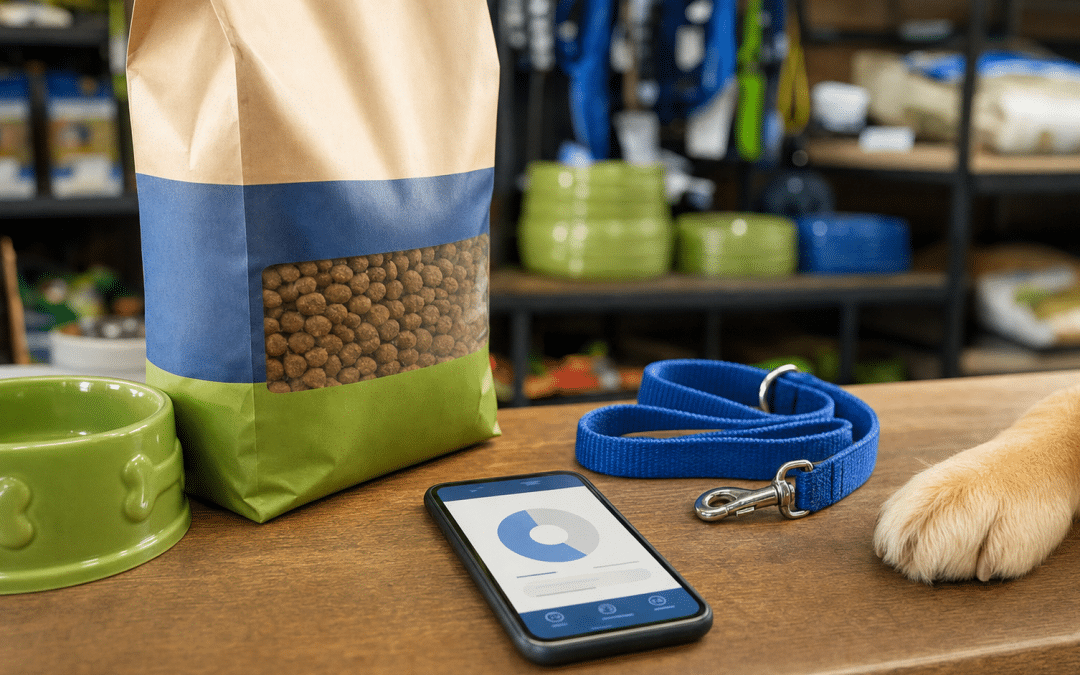
WhatsApp marketing for pet shops means using the free WhatsApp Business app (or, later, the paid API) to take repeat food orders, remind customers before a bag runs out and confirm grooming slots, only with people you are allowed to message under POPIA. It works because pet food is a consumable with a predictable run-out date, which is the one retail category where "message them at the right moment" is a calculation rather than a guess. This post sits under our WhatsApp marketing guide for South Africa and applies it to the counter, the delivery bakkie and the grooming diary.
The sections below give you the run-out formula, a POPIA table for deciding who you can message, and the point at which the free app stops being enough. Nothing here needs a developer to start.
Quick Answer
WhatsApp marketing for pet shops starts on the free WhatsApp Business app: a catalogue of your top food lines, labels by pet type, quick replies for stock and delivery questions, and one reorder message per customer timed to when their bag runs out. Message existing customers about the same or similar products, ask new contacts for consent once, and move to the paid API only when classic broadcast lists (capped at 256 recipients, per practitioner guidance) and manual replies start costing you sales. The free app can already link up to 10 devices and agents.
Not sure your pet shop's WhatsApp set-up is pulling its weight?
Send us your current business profile and the last few customer chats and we will point out where repeat orders are leaking.
Why Does WhatsApp Marketing for Pet Shops Suit South African Retail?
WhatsApp suits pet retail because the purchases repeat on a schedule, and the customer is already texting a person they trust, while the competition, supermarkets and on-demand delivery apps, sells on convenience rather than advice. The demand underneath is large: Trade Intelligence's South African Pet FMCG Landscape Report, as reported by Business Explainer, values the pet care market at R10.4 billion, growing 15.8% in 2025.
Ownership is broad. Stats SA's General Household Survey 2025 estimated that 21.0% of South African households own dogs and 6.4% own cats, with roughly 7.5 million dogs and 2 million cats kept by households (figures as summarised on Wikipedia's Pets in South Africa entry; we did not retrieve the Stats SA release itself).
Pet shops are one case of whatsapp marketing for retail, but with a tighter buying cycle than clothing or homeware.
The same Trade Intelligence report says supermarkets remain the main place people buy dog and cat food, and that owners build a "base plus supplement" basket: dry food as the anchor, with treats, wet food or fresh options layered on top. For an independent shop that is the opening for pet shop WhatsApp marketing: you rarely beat a supermarket on the anchor bag's price, but you can win the supplement, the advice and the reminder.
The delivery side is contested. The same report puts specialist pet stores at close to 350 across the major chains and says Checkers Sixty60 has "95% penetration among shoppers who buy dog food on demand". A shop's own delivery round competes with that on familiarity and advice, not on speed.
Takeaway: where an independent pet shop can win
Supermarkets own the anchor product, so a pet shop's WhatsApp advantage is advice and timing: a reorder message before the bag runs out, a recommendation for treats or wet food, and a fast answer to "do you have this in stock?".
What Should a Pet Shop Set Up on the Free WhatsApp Business App?
A pet shop's free-app set-up is five features, each doing a specific counter job: a business profile, a catalogue, labels, quick replies and an away message. WhatsApp describes these in its Business app features list, and none of them need a monthly fee.
| Feature | Pet shop use | Best for |
|---|---|---|
| Business profile | Trading hours, address, website, delivery areas in the description | Every shop; first thing a new contact sees |
| Catalogue | Group items into collections such as dog food, cat food, treats, aquatics | Customers who ask "what brands do you stock?" |
| Labels | Tag chats by pet (dog, cat, bird, fish), by "weekly delivery" or by "grooming" | Shops with a repeat-delivery round |
| Quick replies | Saved answers for stock, delivery days, payment details, returns on opened bags | Owner-run shops answering the same ten questions |
| Away message | Tells people when you will reply outside trading hours | Shops closed on Sundays or after 17:00 |
Labels are where most of the value sits, because they turn a chat list into a customer list. A label for "dog, large breed, monthly delivery" tells you whom to message, and what to say, without scrolling. For catalogue sharing, see our walkthrough of the WhatsApp Business catalogue link, and if more than one person answers the phone, read how a whole team shares one number.
How Do You Time a Reorder Message to When the Food Runs Out?
A reorder message is timed by dividing the bag size by the pet's daily feeding amount, then sending the message a few days before that date. This is the single most useful calculation in pet retail messaging, because it replaces a calendar-based "monthly special" with a message that arrives when the customer genuinely needs the product.
Worked example (assumed inputs, not measured data)
Take an 8 kg bag and a dog fed 0.25 kg a day. 8 kg ÷ 0.25 kg per day = 32 days. If you send the reminder 5 days early, it goes out on day 27 after purchase. Use the feeding guide on the actual bag for the real figure, and adjust for the pet's size and any supplementary food.
Record the purchase date and the bag size on the customer's chat (a label such as "8kg, bought 3 Nov" works on the free app). A spreadsheet or your point-of-sale system can hold the same dates if your volume is higher. Then send one short message: the product, a one-tap reorder question and your delivery day.
Pet owners also switch food for a sick or ageing animal, so ask before assuming. "Same food again, or has anything changed?" is a better prompt than a discount code, and it gives you a reason to recommend a supplement item.
Running reorder reminders by hand?
Tell us your customer count and delivery routes and we will assess whether the free app still fits or when you will need to move up.
Which Pet Shop Customers Can You Message Under POPIA?
Under POPIA section 69, electronic direct marketing, which includes WhatsApp messages, is prohibited unless the person has consented or is your customer and the section 69(3) conditions are met. That produces three groups with different rules, summarised from MJK Inc's section 69 summary and ENS's note on the Information Regulator's Guidance Note, which was published in December 2024.
| Who they are | What the rules say | Practical move |
|---|---|---|
| Existing customer who bought food or products from you | Section 69(3) exception: details were obtained in the context of a sale, the message concerns the same or similar products, and the customer was given a clear chance to refuse | Reorder reminders for what they bought; offer a way to opt out when you collect the number (till slip, delivery form) and a simple "reply STOP" on each message |
| Someone who messaged you with a question but never bought | Not yet a customer; you may ask for consent once, and that first message must be a consent request, not a promotion | Send one plain consent ask; record the reply |
| Contact scraped from a group, a competition list or a friend's number | No consent and no sale; opt-out does not count as consent (Regulation 6.4) | Do not message for marketing |
Two further points. Practical order and appointment notices, such as "your order is on its way" or "your groomer slot is tomorrow at 10:00", are service messages about something the customer asked for, but we have not checked the Guidance Note on where the line falls; once a message carries a promotion it should be treated as direct marketing. And legitimate interests do not replace consent for electronic marketing: per ENS's summary of the guidance, that basis is aimed at non-electronic marketing. This table is general information, not legal advice.
For the practical side of collecting consent at the till, a QR code or a tick-box on the delivery form, see our posts on WhatsApp opt-in strategies and POPIA for marketing. This is general information, not legal advice.
Takeaway: the consent test for a pet shop
Before sending a promotional WhatsApp message, check whether the person bought from you and whether the message concerns the same or similar products. If not, send one consent request and wait for a yes; silence and opt-out wording do not count.
When Does a Pet Shop Outgrow the Free WhatsApp Business App?
A pet shop outgrows the free app when its customer list no longer fits in the broadcast tools the app offers, or when it needs routing and automation that a handful of linked devices cannot give it. Practitioner guidance on the broadcast limit says classic broadcast lists hold a maximum of 256 recipients and reach only contacts who have saved your number.
WhatsApp's own Business app features page describes a newer business broadcasts feature that lets you message people even if they have not saved your number, available to eligible users in select countries, and it states no recipient cap there. Check what your own app offers before planning around either limit. The app also supports linking up to 10 devices and agents, so a small team can share the number without the API.
If your app only offers classic broadcast lists, the arithmetic is simple. A shop with 1,000 customers who have saved its number needs 1,000 ÷ 256 = 3.9, so four lists, each maintained by hand. That is workable for a monthly message and painful for weekly ones. Our comparison of broadcast lists and groups covers the trade-offs.
| Situation | Stay on the free app | Move to the API |
|---|---|---|
| Customers reachable by message | Hundreds, within classic broadcast lists (256 per list, per practitioner guidance) | Thousands, or sends that need scheduling and automation |
| Who answers | The owner and a few staff on linked devices (the app links up to 10) | A team that needs routing, a shared inbox tool and audit trails |
| Message types | Replies, manual reorder nudges | Automated order updates, reminders, scheduled campaigns |
| Cost | Meta's pricing page covers the API only; the app itself is not listed there | Meta charges per delivered message by category, plus any provider fee |
| Best for | Single-store and delivery-round shops | Multi-branch shops or online pet stores |
Meta's WhatsApp Business Platform pricing page states that businesses are charged when a message is delivered, across marketing, utility, authentication and service categories. The page dates the changes: per-message pricing took effect on 1 July 2025, and from 1 October 2026 Meta bills service messages again, with a free tier of 1,000 service messages per month for each business phone number. Conversations that start from a click-to-WhatsApp ad get a free window of up to 7 days. Check the current South African rate card instead of relying on a rate quoted in a blog post. Our WhatsApp Business app versus API comparison goes further into the decision.
What Should a Pet Shop's WhatsApp Message Actually Say?
A pet shop WhatsApp message should name the product, give the reason for sending now and ask for one easy reply, in under three lines. These examples describe the wording only; none carries a measured result.
Good: reorder reminder to an existing customer
"Hi Thandi, the 8 kg bag of Max's food should be running low about now. Same food again? Reply YES and we will deliver Thursday. Reply STOP if you would rather not get these."
Weak: blanket promotion
"BIG SALE this week on ALL pet products!! Forward to your friends and groups!!" It names no product, ignores what the customer bought and invites forwarding to people who never consented.
Good: consent request to a recent enquiry
"Hi, thanks for asking about puppy food last week. May we send you the occasional message about food and delivery days? Reply YES to agree. If not, we will not contact you again."
Adding "this is a message about food you bought before" is optional, but it helps the existing-customer test: it reminds you, and the customer, why the message exists. For ideas on running paid advertising into a chat, see click-to-WhatsApp ads, which can feed new enquiries to the same inbox.
Want a second pair of eyes on the numbers?
Request an audit of your WhatsApp set-up, consent wording and reorder flow, and we will list the fixes in order of effort.
Who Is Growth Pulse Media and What Does an Audit Cover?
Growth Pulse Media is a Johannesburg agency founded by Dirk van Greuning, who built and scaled a large South African ecommerce business before starting the agency, so the advice comes from running a retail operation, not only advising on one. All work is executed in-house and the client load is limited so senior attention stays on every account. Our WhatsApp marketing South Africa service page sets out the scope, including WhatsApp business for pet shops and other retailers, and a free audit with no obligation starts with the contact form; we will get back to you within 24 hours.
Who Is This Approach NOT For?
This approach does not suit four kinds of shop: those buying lists, those not recording purchases, those wanting full automation immediately and those seeking medical messaging.
Shops that want to blast a purchased list
If the plan is to message numbers bought or scraped from groups, POPIA's direct-marketing rules stand in the way and WhatsApp is the wrong channel.
Shops with no way to record purchases
Reorder timing depends on knowing who bought what and when. If nothing is recorded, fix that first, even if it is only labels and a notebook.
Shops that want full automation on day one
Automation needs the API, a provider and per-message fees. If you have a few hundred customers, the free app and a disciplined routine will teach you more first.
Shops looking for veterinary or medical messaging
Advice about a sick animal, medication or vaccination belongs with a vet. This post covers retail and grooming communications only.
FAQ
Can a small pet shop use WhatsApp for marketing for free?
Yes, WhatsApp marketing for pet shops can start at no software cost. The WhatsApp Business app includes a catalogue, labels, quick replies and an away message, and Meta's per-message pricing applies to the paid API, not to everyday app chats. Classic broadcast lists are reported to be capped at 256 recipients who have saved your number, so check what your own app offers.
Do I need consent to WhatsApp my pet shop customers?
Not always. POPIA section 69 allows electronic marketing to existing customers about the same or similar products if the contact details came from a sale and they were given a clear chance to refuse. For anyone who has not bought from you, you may ask for consent once.
How often should a pet shop send WhatsApp messages?
Tie frequency to the buying cycle instead of a calendar. For food, one reminder shortly before the bag runs out is usually enough, and extra promotional messages risk blocks and opt-outs.
Can I send bulk WhatsApp messages to pet owners?
Practitioner guidance says classic broadcast lists in the free app hold up to 256 recipients who have saved your number, while WhatsApp describes a newer business broadcasts feature for eligible users in select countries. Larger or automated sends generally move to the WhatsApp Business API, where Meta charges per delivered message.
What should a pet shop put in a WhatsApp catalogue?
List the lines customers ask about most, grouped into collections such as dog food, cat food, treats and accessories. Keep the catalogue to items you can reliably stock and update it when prices or availability change.
Ready to turn WhatsApp into repeat orders for your pet shop?
Send us your current set-up and we will review your WhatsApp Business profile, consent wording and reorder flow against POPIA section 69 and Meta's rules. No obligation, and we will get back to you within 24 hours.
