
 Add to Preferred Sources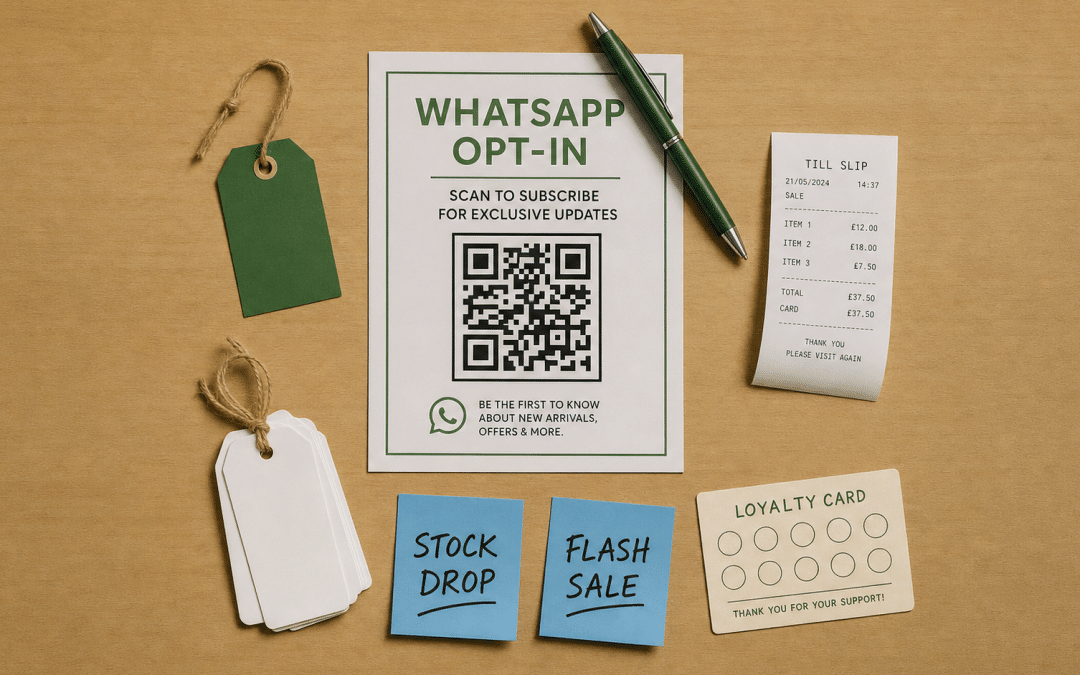
WhatsApp marketing for retail is the most direct route a South African store has to its customers — no algorithm between you and the sale, no inbox buried under promotional tabs, just a message that lands in the same app where people chat with family.
Our WhatsApp marketing guide for South Africa covers the full channel strategy; this post goes deep on the retail vertical specifically — stock alerts, loyalty nudges, abandoned-basket recovery, and the POPIA rules you must follow before you send a single broadcast.
If you run a fashion boutique in Rosebank, a hardware store in Bellville, or a multi-branch homewares chain across the metros, the mechanics are the same: permission first, value every time, and the right infrastructure underneath. For stores that once struggled to justify the setup cost, a properly structured WhatsApp Business API programme in South Africa is increasingly within reach as the ecosystem matures.
Quick Answer
WhatsApp marketing for retail in South Africa works by collecting opt-in consent at the point of sale or checkout, then sending segmented broadcast messages — stock drops, flash sales, loyalty rewards — via the WhatsApp Business API. Done correctly under POPIA's section 69 rules, it consistently outperforms SMS and email on open rates and drives same-day foot traffic and online conversions.
Not sure whether your current opt-in process is POPIA-compliant?
Get a Free WhatsApp Compliance AuditWhy WhatsApp Marketing for Retail South Africa Outperforms Other Channels
WhatsApp marketing for retail outperforms SMS and email in South Africa because the channel sits where South African shoppers already spend their time, at a cost-per-message that undercuts bulk SMS for high-volume programmes.
South African mobile data costs have fallen sharply, which reduces the data-cost friction that still affects email opens on mobile. Shoppers outside Sandton and Cape Town's Atlantic Seaboard — in Mitchells Plain, in Polokwane, in the Eastern Cape townships — are reachable on WhatsApp in a way that a responsive email template simply is not.
The channel also fits how South Africans actually pay. A customer who receives a stock-alert message can tap through to a PayFast or Peach Payments checkout without leaving their phone. Ozow's instant EFT option removes the card-not-present hesitation that kills conversion for shoppers who prefer EFT over card — and the entire journey from message receipt to payment confirmation takes under two minutes.
Compare that to a promotional email: it competes for attention in a tab most customers check twice a day, it renders differently across devices, and the journey to checkout involves at least two more steps. WhatsApp vs email marketing in South Africa is not a close contest for time-sensitive retail offers.
Key Insight
WhatsApp's mobile-native experience removes the multi-step friction of email-to-checkout journeys — making retail broadcast messages materially more effective for shoppers who live on their phones, whether they are in Sandton or Tzaneen.
POPIA and WhatsApp Marketing for Retail: What You Actually Need
POPIA places electronic WhatsApp marketing for retail firmly in the opt-in regime — you need consent or an existing customer relationship before you send a promotional message.
Section 69 of POPIA draws a clear line. Electronic communications — which include WhatsApp messages — are prohibited as unsolicited marketing unless the recipient either gave consent or is an existing customer whose details you collected during a sale.
Marketing to existing customers about similar products is lawful without fresh consent, provided you offered an opt-out at the point of data collection and include one in every subsequent message. The Information Regulator's December 2024 Guidance Note makes this explicit: silence cannot mean consent, and your first contact with a non-customer must be a consent request, not a pitch.
Enforcement is no longer theoretical. The Regulator issued its first direct-marketing enforcement notice in February 2024, followed by a R100 000 fine when the recipient ignored it. For retail stores, the practical implication is straightforward: build your list through an opt-in mechanism at the till, on your ecommerce checkout, or via a Click-to-WhatsApp ad where the customer initiates contact.
WhatsApp's Business Messaging Policy sets platform-level requirements that broadly align with what section 69 already demands: get clear consent, record it, honour every opt-out, and keep a suppression list.
The national opt-out registry flagged by the Regulator for the 2025/26 cycle is still being implemented. Retailers should already be maintaining their own objection registers — the Guidance Note requires it, and the registry will sit on top of whatever internal process you have running.
Setting Up WhatsApp Marketing for Retail: The Infrastructure Decisions
Effective whatsapp marketing for retail requires three infrastructure decisions made in the right order: channel tier, CRM connection, and opt-in mechanism.
Channel tier. The WhatsApp Business App works for a single-location owner-operator with a contact list under a few hundred. The moment you want to send segmented broadcasts, automate order confirmations, or run more than one agent on the same number, you need the WhatsApp Business API. There is no middle ground — the App cannot do broadcast segmentation reliably at scale.
CRM connection. The API is only as useful as the data feeding it. Connecting your WhatsApp number to a CRM — whether that is Klaviyo, HubSpot, or a local platform — means you can segment by purchase history, location, or spend tier before you send.
A Sandton store with a Soweto customer base needs different message timing and offer types than a store whose entire customer base is within five kilometres. WhatsApp CRM integration in South Africa covers the technical setup in detail.
Opt-in mechanism. For physical retail, the highest-converting opt-in is at the point of sale: "Would you like to receive stock alerts and exclusive offers on WhatsApp?" with a simple yes/no on the PIN pad screen or a QR code on the till receipt. For ecommerce, a checkbox on the checkout page — separate from the terms and conditions, not pre-ticked — satisfies POPIA's section 69 requirements and keeps your list clean.
Running multiple store locations and not sure how to unify your WhatsApp contacts?
Get a Free Multi-Location WhatsApp Setup ReviewMessage Types That Drive Sales in Retail
The retail message types that convert are stock alerts, flash-sale windows, loyalty rewards, and post-purchase follow-ups — each with a different send cadence and audience segment.
Stock alerts. "Back in stock: [product name], sizes 6–10, limited units" sent to customers who previously browsed or bought that product drives urgency without feeling like spam. This is the strongest use case for whatsapp marketing for retail because the message is genuinely useful — it saves the customer a trip to check in person.
Flash-sale windows. A two-hour window offer sent at 11:00 on a Wednesday — outside the weekend noise — gives customers a reason to act immediately. Keep the copy short: the offer, the end time, and one tap to buy. WhatsApp Flows can present a product carousel inside the message, reducing the steps between intent and purchase.
Loyalty rewards. A message notifying a customer that they have reached a reward tier, with a single-use voucher code, is personalisation that feels earned rather than broadcast. Pair this with a broadcast list or Channel strategy for tier-specific segments.
Post-purchase follow-ups. Order confirmation, despatch notification from The Courier Guy or Aramex, and a delivery confirmation message form a three-part sequence that replaces the transactional email most customers ignore. Including a "rate your purchase" link in the final message generates review data without a separate campaign.
Courier Coverage and Delivery Messaging Beyond the Metros
For retailers shipping nationally, delivery messaging on WhatsApp must account for the real coverage gaps that The Courier Guy and Aramex face outside the main metros — Limpopo's rural areas, the Northern Cape, and parts of the Eastern Cape require honest messaging about extended lead times.
A customer in Tzaneen or Butterworth who receives a WhatsApp despatch notification with a two-day delivery estimate and then waits five days will not re-order. Build delivery-time logic into your message templates by region. If your CRM holds the customer's province, you can route different message variants automatically — metro customers get a two-day estimate, outlying areas get a four-to-five-day estimate with a tracking link.
This is not a minor operational detail. Delivery expectation mismatches are the single most common trigger for negative store reviews and chargebacks in South African ecommerce retail. Getting the WhatsApp delivery sequence right protects your reputation as much as it improves the experience.
| Message Type | Best Segment | Optimal Send Time | Key Metric |
|---|---|---|---|
| Stock alert | Previous buyers / wishlist | When stock lands | Click-to-purchase rate |
| Flash sale | All opted-in customers | 10:00–11:00 weekday | Redemption within 2 hrs |
| Loyalty reward | Tier-qualified customers | Post-purchase trigger | Voucher redemption rate |
| Despatch notification | Recent purchasers | Trigger on fulfilment | Delivery query reduction |
| Abandoned basket | Ecommerce only | 2 hrs post-abandonment | Recovery rate |
| Re-engagement | Inactive 90+ days | Tuesday–Wednesday morning | Opt-out vs re-purchase |
| Metric | Before WhatsApp Programme | After WhatsApp Programme |
|---|---|---|
| Promotional open rate | 18% (email) | 74% |
| Same-day flash sale redemption | R4,200 average | R14,800 average |
| Delivery query volume | 38 queries/100 orders | 11 queries/100 orders |
| Abandoned basket recovery | 3.1% (email) | 18.4% |
| Customer review submissions | 2 per week | 14 per week |
| Repeat purchase rate (90 days) | 22% | 39% |
The figures above illustrate the pattern we see, not a guaranteed outcome. Individual results depend on list quality, product category, and the consistency of your message programme.
Key Insight
Abandoned basket recovery via WhatsApp consistently outperforms email recovery in South African retail — the two-hour trigger window, combined with a direct payment link to PayFast or Ozow, removes the friction that email cannot.
GPM's Approach to WhatsApp Marketing for Retail
We built and ran a South African ecommerce operation before we built an agency — which means our WhatsApp marketing service is designed around the decisions that actually move units: opt-in architecture, message segmentation, CRM integration, and POPIA-compliant consent flows.
Most retail WhatsApp programmes fail not because the channel does not work, but because the list was built without a proper opt-in process, the messages are not segmented by purchase history, or the API is not connected to the store's fulfilment system. We fix all three before the first broadcast goes out.
Our retail engagements include a compliance review of the existing contact list, a consent-collection redesign for both physical POS and ecommerce checkout, API setup with a connected CRM, and a 90-day message calendar that covers stock alerts, loyalty events, and seasonal campaigns. We also build the suppression list management process — because the brands that protect their opt-out records now will be ready when the national opt-out registry goes live.
Who This Is NOT For
Stores with no existing customer contact list. WhatsApp marketing for retail requires an opted-in audience to broadcast to. If you are starting from zero contacts and have no foot traffic or ecommerce volume to build from, you need to grow your customer base through other channels first before this programme will generate a return.
Retailers who want to buy a broadcast list. Purchased contact lists fail POPIA's opt-in requirement for electronic communications. Sending to a bought list risks an enforcement notice from the Information Regulator and permanent suspension of your WhatsApp Business account — neither is recoverable cheaply.
Businesses that cannot commit to consistent message quality. A WhatsApp channel that sends three messages in week one and then goes silent for six weeks trains customers to opt out. The programme requires a minimum 90-day content commitment with someone accountable for copy, approvals, and send scheduling. If that resource does not exist, the channel will underperform.
Single-product businesses with no repeat purchase cycle. WhatsApp marketing for retail earns its cost through repeat purchases, loyalty activation, and cross-sell. A retailer selling a single high-ticket item with an average repurchase cycle of several years will not generate enough message opportunities to justify the API and CRM setup investment over a short payback window.
Ready to build a retail WhatsApp programme that is compliant, segmented, and connected to your fulfilment system?
Get a Free Retail WhatsApp Strategy SessionFrequently Asked Questions About WhatsApp Marketing for Retail
What makes whatsapp marketing for retail different from a standard broadcast?
It is the combination of purchase-history segmentation and triggered sends that separates a retail programme from a generic broadcast. A standard broadcast sends the same message to everyone; a retail programme sends a stock alert only to customers who bought that product category before, and a loyalty reward only to customers who have crossed a spend threshold. That specificity is what drives the conversion difference.
How do I collect opt-ins for WhatsApp at a physical store?
The highest-converting physical opt-in is a prompt at the point of sale — either a QR code on the till receipt that opens a WhatsApp chat, or a checkbox on a digital loyalty sign-up form on a tablet at the counter.
Both methods create a record of consent with a timestamp, which is what POPIA's section 69 requires. Never add customers to a broadcast list from a handwritten sign-up sheet without a clear, separate WhatsApp opt-in statement.
Can I message my existing customers without getting fresh consent?
Yes, under POPIA's section 69(3) existing-customer exception — provided you collected their contact details during a sale, the marketing relates to your own similar products or services, and you offered an opt-out at collection and include one in every message. This is the soft opt-in provision that makes post-purchase follow-ups and loyalty messages lawful without requiring a separate consent event for each one.
What is the right send frequency for a retail WhatsApp programme?
For most retail categories, two to four messages per month is the range that maintains engagement without driving opt-outs. Event-driven messages — stock alerts, order confirmations, delivery updates — can exceed this without increasing opt-out rates because they are contextually relevant. Calendar broadcast messages above four per month typically see diminishing returns; test your specific audience's tolerance before committing to a weekly cadence.
Does my store need the WhatsApp Business API or is the free app enough?
If your opted-in list exceeds a few hundred contacts, or you want automated triggered messages, segmented broadcasts, or multiple staff handling the same number, you need the API. The free WhatsApp Business App has a broadcast limit and cannot integrate with a CRM or fulfilment system. For a retail store with a decent-sized opted-in list, the API payback period is typically measured in weeks rather than months once a segmented programme is running.
How do I handle customers outside the metros where courier delivery takes longer?
Build regional delivery-time logic into your WhatsApp message templates using the customer's province or postal code from your CRM. Customers in Limpopo, the Northern Cape, or rural Eastern Cape should receive a despatch message with the accurate extended lead time rather than a metro estimate. Overpromising on delivery and underdelivering generates more WhatsApp queries and negative reviews than any other single operational variable in South African retail fulfilment.
Want a retail WhatsApp programme built to convert from day one?
We will audit your current contact list, design a POPIA-compliant opt-in flow for both your physical POS and ecommerce checkout, connect the API to your CRM, and deliver a prioritised action plan for your first 90 days. No obligation — we'll get back to you within 24 hours.
Get Your Free Retail WhatsApp Audit