
 Add to Preferred Sources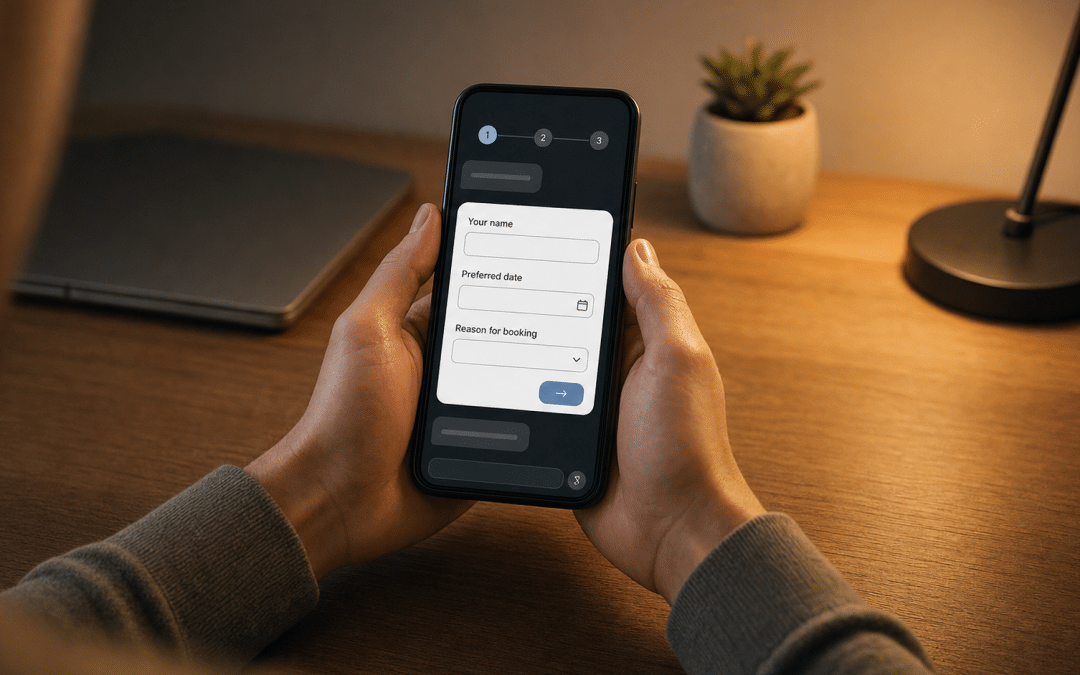
WhatsApp Flows South Africa is the fastest way for local businesses to build interactive, in-chat experiences — booking forms, product selectors, lead capture screens — without pushing customers to a browser.
If you have read our complete WhatsApp marketing guide for South Africa, you will know that the channel already dominates mobile communication here; Flows takes that reach and adds structured interactivity that no other channel matches on mobile data budgets. It is a first-mover advantage that closes by the end of 2026.
This post explains exactly what WhatsApp Flows are, how WhatsApp Business API pricing in South Africa connects to them, and where the genuine commercial opportunity sits for retailers, service businesses, and B2B teams right now. No hype — just the mechanics and the numbers you need to decide whether to move.
Quick Answer
WhatsApp Flows South Africa lets businesses deliver native, multi-screen interactive forms inside a WhatsApp conversation — no app, no browser redirect, no extra data cost for the customer. Access requires the WhatsApp Business API, a verified Business Manager, and a compliant POPIA data-handling practice for the information you collect.
Do you know which Flow type would generate the most leads for your business model?
Get a Free WhatsApp Flows AuditWhat WhatsApp Flows South Africa Actually Are
WhatsApp Flows are native, multi-screen UI components delivered inside a WhatsApp conversation, allowing customers to complete structured actions — bookings, enquiries, product selections — without leaving the chat. Meta describes them as a way to "deliver interactive conversational experiences that engage and delight" through the WhatsApp Business Platform.
The critical distinction for South African businesses is what Flows are not. They are not web links. They are not chatbot button trees. They are rendered components — text inputs, dropdowns, date pickers, image carousels — that run natively inside the WhatsApp app itself. The customer stays in the conversation, and you collect structured data.
A WhatsApp Flow is triggered by a button inside a regular WhatsApp message. The customer taps it, a full-screen interactive form opens inside WhatsApp, they complete the steps, and the submission fires back to your system via webhook.
For a Sandton insurance broker or a Cape Town fashion retailer, that means the entire interaction stays within WhatsApp — a structural advantage that matters especially when customers are on prepaid data or through a mobile hotspot during load-shedding.
Key Insight
Because WhatsApp Flows run natively inside the app, customers never leave the conversation to complete a form — a structural advantage over browser-based alternatives that is amplified when South African customers are on prepaid data or dealing with load-shedding connectivity constraints.
WhatsApp Flows South Africa: The Four Core Use Cases
The WhatsApp Business Platform identifies four categories where interactive flows produce measurable commercial outcomes: notifications and updates, personalised promotions, commerce, and customer care. Each maps cleanly onto South African business problems.
Booking and appointment capture is the most immediate win for service businesses. A Durban dental practice or a Johannesburg car service centre can send a reminder message with an embedded Flow that lets the customer reschedule in three taps — no phone call, no hold music, no missed appointment fee. The data lands in your CRM automatically.
Cart abandonment recovery is where the promotions use case gets commercially sharp. The WhatsApp Business Platform explicitly supports re-engagement after cart abandonment. A Flow can surface the abandoned item, offer a contextual discount, and capture the order confirmation — all inside WhatsApp, all before the customer opens another tab.
Lead qualification solves the problem every B2B sales team in Pretoria and Johannesburg knows: inbound enquiries with too little information to route correctly. A Flow attached to your Click-to-WhatsApp ad can ask five qualifying questions before a human ever responds, giving your sales team a pre-qualified brief instead of a blank opening message.
Verifications and account access round out the picture for financial services and fintech. One-time passwords and multi-factor authentication can be delivered via Flow, keeping the entire verification journey inside a single WhatsApp thread rather than bouncing the customer between SMS, email, and a browser.
| Flow Type | Best Fit SA Business | What It Replaces | API Tier Needed |
|---|---|---|---|
| Appointment Booking | Medical, automotive, beauty | Phone call or web form | Standard or Premium |
| Lead Qualification | B2B, insurance, property | Email enquiry form | Standard or Premium |
| Cart Abandonment | Ecommerce, fashion, electronics | Abandoned cart email | Premium (marketing conversation) |
| Support Triage | Telco, fintech, retail | IVR phone tree | Standard or Premium |
| OTP / Verification | Financial services, SaaS | SMS OTP | Standard or Premium |
| Product Selector | Insurance, furniture, B2B catalogue | Website configurator | Premium |
Technical Requirements for WhatsApp Flows South Africa
WhatsApp Flows South Africa requires the Business API — the free WhatsApp Business App does not support them. That means you need a verified Meta Business Manager account, a dedicated phone number registered to the API, and a technology partner or in-house developer capable of building and hosting Flow JSON definitions.
The Flow itself is defined in a JSON schema that describes each screen, its components, and the routing logic between screens. A developer familiar with React Native component patterns will find the learning curve modest. For non-technical teams, several BSPs (Business Solution Providers) operating in South Africa now offer no-code Flow builders inside their platforms.
POPIA compliance is non-negotiable. Every piece of data captured inside a Flow — name, ID number, medical history, purchase intent — must be collected with a stated purpose, stored securely, and made available for deletion on request. Businesses commonly handle this by adding a single-checkbox consent screen as the first step of every Flow, with a link to their privacy policy. That screen doubles as an audit record if the Information Regulator ever asks.
Payment collection inside a Flow is emerging but not yet universally available in South Africa. Integrations with PayFast, Peach Payments, and Ozow are technically achievable via webhook — the Flow captures intent, fires to your backend, and your payment gateway handles the transaction. Build your flow architecture around that webhook pattern from the start, regardless of how native payment support evolves on the platform.
Key Insight
WhatsApp Flows South Africa implementation has one non-negotiable prerequisite that catches teams off guard: a verified Meta Business Manager and an API-connected number must be in place before a single Flow screen can be built. Skipping this step means weeks of delay once you are ready to launch.
Are your current WhatsApp conversations structured enough to qualify leads before a human picks up the chat?
Get a Free Flow Architecture ReviewMeasuring WhatsApp Flows South Africa Performance
WhatsApp Flows South Africa performance sits across two layers: Meta's own conversation analytics and the data your webhook delivers to your CRM or analytics stack. Neither is optional — you need both to optimise.
At the Meta layer, you can track Flow open rate (how many recipients tapped to open the Flow), completion rate (how many submitted the final screen), and drop-off by screen (which step is losing people). These are available via the WhatsApp Business Management API reporting endpoints and are readable inside most BSP dashboards without custom code.
At your CRM layer, every webhook submission should carry a timestamp, the originating conversation ID, and all structured field values. That lets you tie Flow completions to downstream outcomes — did the booked appointment actually show up, did the qualified lead close, did the cart-recovery conversion hold through fulfilment? See how we connect this to WhatsApp versus email marketing conversion tracking for a full attribution picture.
The one metric that catches businesses off guard is the conversation cost. Each Flow interaction typically occurs inside a marketing or utility conversation, and those are billed per the current WhatsApp Business API rate card. Check the WhatsApp Business API pricing breakdown before you plan your send volumes — the unit economics look very different at 10,000 conversations versus 100,000.
| Metric | Before Flows (Typical) | After Flows (Illustrative) |
|---|---|---|
| Lead form completion rate | 18% (mobile web redirect) | 54% |
| Cost per qualified lead | R320 (paid social + form) | R110 |
| Appointment no-show rate | 22% | 9% |
| Cart recovery rate | 4% (email sequence) | 17% |
| Support ticket deflection | 31% automated | 61% |
| Avg. response time (lead) | 4 hours (email) | Under 3 minutes |
These figures illustrate the pattern we see, not a guaranteed outcome. Your baseline, industry, and Flow design all affect results materially.
Key Insight
Measuring WhatsApp Flows South Africa performance at only the Meta analytics layer leaves half the story untold. Connecting webhook data to your CRM is what reveals whether a completed Flow actually produced a booked appointment, a closed deal, or a fulfilled order — the numbers that justify the API spend.
WhatsApp Flows South Africa and the GPM Advantage
Most agencies treat WhatsApp as a broadcast channel — send a message, track opens, call it done. GPM's approach to WhatsApp marketing for South African businesses treats the channel as a conversion infrastructure problem. Flows are the component that closes the gap between a conversation and a committed action.
Dirk built and operated an ecommerce business in South Africa before founding GPM. That means the agency has direct experience with the fulfilment partners — The Courier Guy, Aramex — the payment gateways — PayFast, Peach Payments — and the operational reality that makes or breaks a WhatsApp Flows implementation: your backend has to handle the webhook payload reliably, or the Flow becomes a broken promise to the customer.
GPM designs Flows around your existing tech stack, not a hypothetical clean-slate CRM. We map your data fields to the Flow schema, build the webhook handler, connect it to your payment or booking system, and configure the conversation billing so there are no surprise invoices at month end. The measurement framework is built in from day one, not bolted on after the fact.
For B2B clients in Pretoria and Johannesburg, the WhatsApp Flows South Africa implementation we deploy typically starts with a lead qualification Flow attached to an existing Click-to-WhatsApp campaign — a fast, low-risk proof of concept that produces pipeline data within the first billing cycle.
Who This Is NOT For
Businesses not yet on the WhatsApp Business API. WhatsApp Flows are unavailable on the free WhatsApp Business App. If you have not yet migrated to the API, Flows are not accessible to you today. The prerequisite is a verified Business Manager and an API-connected number — sort that first before planning a Flows rollout.
Teams without a backend developer or BSP partner. A Flow requires a JSON definition hosted on your infrastructure and a webhook endpoint that can receive structured POST requests. Businesses with no developer resource and no BSP relationship will not be able to build or maintain Flows without bringing in technical support first.
Businesses with unresolved POPIA data practices. Every Flow that collects personal information — names, contact details, health data, financial information — must comply with POPIA. If your business has not yet documented its lawful basis for processing, its retention schedules, and its deletion process, deploying a data-collection Flow exposes you to regulatory risk before you see any commercial return.
Organisations expecting instant results without audience preparation. WhatsApp Flows are triggered from conversations or Click-to-WhatsApp ads — they require an opted-in audience to send to. If your WhatsApp contact list is thin or cold, the first investment is audience building, not Flow design. A perfectly engineered Flow sent to 200 contacts will not move the commercial needle.
Ready to find out whether your current WhatsApp setup can support Flows without a rebuild?
Get a Free WhatsApp Readiness AssessmentWhatsApp Flows South Africa: Frequently Asked Questions
What is whatsapp flows south africa and how does it differ from a chatbot?
It is a native, multi-screen interactive UI that runs inside the WhatsApp app — not a scripted conversation tree. A chatbot responds to text inputs with branching replies; a Flow presents structured form components (dropdowns, date pickers, text fields) that collect clean, validated data in a single session. The two can work together, but they are architecturally distinct tools serving different purposes.
Do I need to be a large enterprise to use WhatsApp Flows in South Africa?
No. The WhatsApp Business Platform is accessible to businesses of any size that can operate an API connection, either directly or through a BSP. The practical threshold is whether the volume of leads, bookings, or support queries justifies the API cost and the development investment. A medium-sized Durban retailer or a ten-person Joburg B2B team can both run Flows profitably if the use case is right.
How does POPIA apply to data collected inside a WhatsApp Flow?
Every personal information field inside a Flow is subject to POPIA in the same way as a web form — you need a lawful basis for processing, a stated purpose, and a mechanism for the data subject to request deletion. Practices commonly interpret this as requiring an explicit consent checkbox on the first Flow screen, linked to a current privacy policy. Storing Flow submissions in your CRM without that consent record creates regulatory exposure.
Can WhatsApp Flows in South Africa integrate with PayFast or Peach Payments?
Direct native payment inside a Flow is not yet universally available in South Africa, but integration is achievable via webhook. The Flow captures purchase intent and customer details, fires a webhook to your backend, and your payment gateway — PayFast, Peach Payments, or Ozow — handles the transaction, with a confirmation message returned to the WhatsApp conversation on success. It requires developer work but is a proven pattern.
What does it cost to run WhatsApp Flows as part of a campaign in South Africa?
The Flow itself has no separate Meta fee, but every Flow interaction occurs inside a WhatsApp Business API conversation, which is billed per the standard rate card — marketing, utility, or authentication conversation categories each carry different rates. Review the full cost breakdown in our WhatsApp Business API pricing guide for South Africa before finalising your campaign budget, since volume determines whether the unit economics work.
How long does it take to build and deploy a WhatsApp Flow in South Africa?
A simple single-use Flow — a booking form with three screens, for example — takes a competent developer one to three days to build, test, and deploy to a live API number. Complex Flows with conditional routing, CRM webhook integrations, and multiple language variants can take two to four weeks.
BSP no-code builders reduce that timeline but limit design flexibility. Budget for an additional week of testing on real devices across multiple networks before any customer-facing launch.
Want to know exactly which WhatsApp Flow would generate the most pipeline for your business?
We will audit your current WhatsApp setup, map the highest-value Flow opportunity, and deliver a prioritised action plan with build estimates and projected conversation costs. No obligation — we'll get back to you within 24 hours.
Get Your Free WhatsApp Flows Action Plan