
 Add to Preferred Sources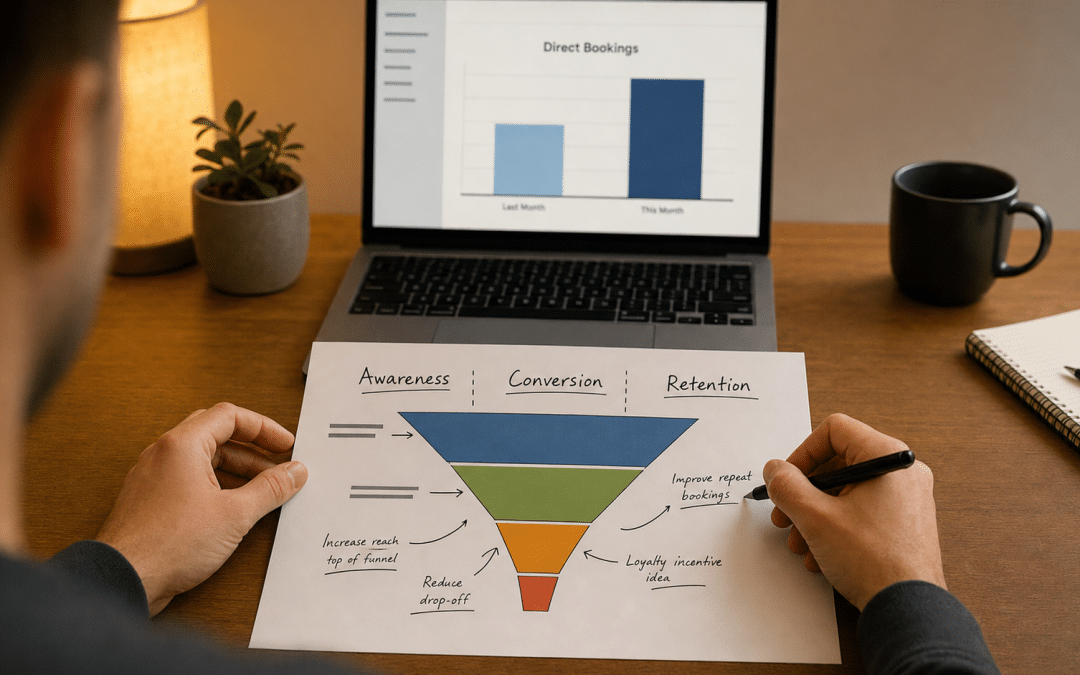
Marketing for tourism cape town businesses requires a fundamentally different playbook to generic digital marketing — the buying cycle is international, the competition is global, and the search intent is hyper-local in ways that generalist agencies consistently miss.
If you run a guest house in Camps Bay, a shark-diving operator in Gansbaai, or a wine-tour company leaving from the V&A Waterfront, the strategies that work for a Sandton law firm will actively harm your conversion rate. Our Cape Town digital marketing agency has built this guide from the ground up for operators who live and work in the tourism economy.
Cape Town tourism is not a niche — it is the engine of the Western Cape economy, and the digital competition for every relevant search phrase is fierce year-round, not just in summer.
Getting your Google Business Profile optimised, your booking funnel airtight, and your social proof visible to the right international audiences at the right moment is a full-time discipline. This post breaks down exactly what that looks like in practice, including what it costs to do it properly in Cape Town.
Quick Answer
Marketing for tourism cape town businesses centres on three pillars: a fully optimised Google Business Profile that surfaces in local pack results, a booking-ready website with fast mobile load times, and targeted paid and organic social that reaches international travellers before they finalise their itineraries. Without all three working together, you are handing bookings to competitors.
Are you losing direct bookings to OTAs because your own digital presence is not working hard enough?
Get a Free Tourism Marketing AuditWhy Marketing for Tourism Cape Town Demands a Dedicated Approach
Marketing for tourism cape town is a distinct discipline because the customer journey begins months before arrival and often in a different country, currency, and language. A traveller in Amsterdam researching a Table Mountain hike is not responding to the same signals as a Joburger deciding on a weekend getaway — and your marketing architecture needs to account for both simultaneously.
The standard local SEO playbook focuses on proximity and category. Tourism marketing for Cape Town operators has to layer in seasonal demand curves, international paid media targeting, multi-currency trust signals, and review management across platforms like TripAdvisor, Google, and Booking.com. None of those levers exist in the retail or B2B marketing stack.
Load-shedding added another complexity layer. International guests researching Cape Town properties now regularly ask about backup power, and operators who surface that information clearly in their listings and website copy convert better than those who ignore it. That is a Cape Town-specific trust signal with no equivalent in most other markets.
Camps Bay Boutique Hotel: After adding load-shedding contingency details to their Google Business Profile Q&A and homepage, one operator saw a measurable uptick in direct booking enquiries from guests who had previously abandoned to OTAs mid-consideration.
Google Business Profile: The Non-Negotiable Foundation
A fully completed and actively managed Google Business Profile is the single highest-leverage asset in marketing for tourism cape town operators at the local search level. How your listing surfaces in local results is directly influenced by how relevant your profile is to the search, how close you are to the searcher, and how prominent your business appears across the web — and all three of those factors respond to consistent, active profile management.
You can review Google's guidance on improving local ranking for the full detail on what they look for.
For tourism operators specifically, this means: primary category set correctly (e.g. "Tour Operator" or "Boutique Hotel"), every attribute filled in, a consistent stream of photo uploads showing actual experiences, and — critically — a response strategy for every review. Operators who engage actively with reviews signal to the platform that the listing is well-managed, and Cape Town tourism listings that sit dormant lose ground to competitors who treat their profile as a live marketing channel.
The Q&A section of your profile is consistently underused. Pre-seed it with the questions your guests actually ask — parking at the V&A, generator availability, dietary options — and you control the narrative before a potential guest even clicks through to your website.
What "fully optimised" actually means: Primary and secondary categories correct, business description using natural keyword language, 20+ photos across all categories, opening hours current, booking link active, and at least one post published in the last 30 days.
SEO Strategy for Cape Town Tourism Operators
SEO for marketing for tourism cape town businesses splits into two tracks that must run in parallel: international organic, targeting travellers in source markets like the UK, Germany, and the United States; and local organic, targeting in-destination searches from guests already in the city. Most agencies only optimise for one and leave the other on the table.
International organic requires building topical authority around experiential content — "best whale watching Western Cape", "Cape Town wine tour from city centre" — that earns links from travel publications and captures early-funnel demand. This content strategy takes six to twelve months to compound. If you haven't started, you are already behind your competitors who did.
Local organic and near-me searches, by contrast, are won at the Google Business Profile and on-page level. Your service pages need to contain suburb-level specificity — not just "Cape Town" but Hout Bay, Constantia, Boulders Beach, Stellenbosch — because that is how guests actually search once they have narrowed their decision. Understanding the true cost of SEO in Cape Town helps operators plan a realistic 12-month investment.
Key Insight
Tourism SEO in Cape Town requires two separate content strategies running simultaneously: one for international early-funnel traffic in source markets, and one for in-destination near-me searches. Most operators only build one and wonder why organic growth stalls.
Paid Media: Meta and Google Ads for Tourism in Cape Town
Paid media is where marketing for tourism cape town businesses can generate fast, attributable returns — provided the campaign structure mirrors the way travellers actually make decisions. The funnel is longer than most operators expect, and campaigns that only target bottom-of-funnel "book now" intent routinely underperform.
Google Search campaigns should target branded terms, competitor terms, and high-intent activity searches. Meta campaigns serve a different purpose: they build awareness and desire among international audiences who are in the research phase but have not yet committed to Cape Town as a destination.
A Meta campaign running Reels of a sunset boat cruise off Clifton to a UK lookalike audience of previous Cape Town visitors is doing fundamentally different work to a Google ad targeting "Cape Town wine tour booking".
Retargeting is where the margin lives. A visitor who has viewed your rates page but not enquired is your warmest audience. A retargeting campaign with a specific offer — a complimentary transfer, an early-bird rate for shoulder season — converts at a multiple of cold traffic costs, with a fraction of the spend.
Is your paid media spend building a full-funnel pipeline, or just chasing bottom-of-funnel clicks that OTAs are winning anyway?
Get a Free Paid Media ReviewSocial Media Marketing for Cape Town Tourism Businesses
Social media is a visual credibility channel for tourism operators, not a direct-response tool — and treating it as the latter is the most common mistake we see in marketing for tourism cape town businesses at every size. Instagram, TikTok, and YouTube are where potential guests form desire; the conversion happens later on your website or via WhatsApp.
For Cape Town operators, the content formula that consistently builds an engaged following is: 60% experience documentation (authentic, unscripted moments), 30% social proof (guest testimonials, user-generated content reposted with permission), and 10% direct offers. Operators who invert this ratio and lead with promotions see their organic reach collapse because the platforms deprioritise overtly promotional content.
WhatsApp Business has become a genuine booking channel for Cape Town tourism operators catering to Southern African and European markets. Guests increasingly prefer to confirm details over WhatsApp rather than email.
Integrating a WhatsApp Business API number into your digital touchpoints — website, Google Business Profile, email signature — is a practical conversion lever that costs almost nothing to implement. Explore what a full social media marketing programme in Cape Town looks like for operators at different scales.
Email Marketing and Repeat Guest Strategy
Email marketing is the most underused revenue channel in Cape Town tourism, largely because operators treat their guest database as a compliance obligation rather than an asset. POPIA requires explicit consent for marketing communications — and operators who collect that consent properly at booking can build a remarkably powerful direct channel. Our digital strategy service for tourism brands can help you weigh that guest database against paid and search channels, planning the mix with the Growth Pulse Matrix before anything is built.
A guest who has already experienced your product and opted in to future communications is worth pursuing actively. A Klaviyo sequence that triggers 90 days after checkout, offers a returning-guest rate for the next season, and showcases what is new or different converts at rates that no cold acquisition channel can match.
This is not complicated to build, but it requires someone to actually build it. The email marketing options available to Cape Town businesses range from DIY platforms to fully managed agency programmes.
Marketing for tourism cape town operators via email works best when the sequence is triggered by booking behaviour rather than calendar dates. A post-stay email sent three days after checkout, followed by a seasonal offer 90 days later, outperforms generic newsletter blasts to your full list every time.
Key Insight
A POPIA-compliant guest email list, worked consistently with Klaviyo or a comparable platform, is the highest-margin channel available to Cape Town tourism operators. It costs almost nothing to run and compounds every season you invest in it.
Booking Funnel Optimisation and Payment Infrastructure
No amount of investment in marketing for tourism cape town operators will compensate for a broken booking funnel. International guests abandoning at the payment step is one of the most common and most fixable revenue leaks we encounter.
Cape Town operators accepting international bookings need to ensure their payment infrastructure supports international cards without friction. PayFast, Peach Payments, and Ozow are all solid for domestic transactions; for international guests, a gateway that explicitly supports Visa and Mastercard 3D Secure without unnecessary redirect loops is essential. Every additional step in the checkout flow costs you bookings.
Page speed on mobile is non-negotiable. A guest in a London coffee shop browsing your rates page on a 4G connection will not wait for a slow-loading page. Google's Core Web Vitals data is openly available in Search Console — slow Largest Contentful Paint scores are worth fixing before you increase any campaign spend, because new traffic sent to a slow page is wasted spend.
Delivery and Logistics: What Tourism Operators Get Wrong
Product delivery — transfers, experiences, equipment — is a marketing problem as much as an operational one. Guests who encounter friction in the post-booking phase leave negative reviews, and in tourism, reviews are currency.
For operators using courier services to send experience kits, gift vouchers, or pre-trip welcome packs, The Courier Guy and Aramex both service Cape Town reliably, but confirmation tracking links sent to the guest proactively are what separate operators who earn five-star logistics reviews from those who get complaints.
Getting this operational layer right matters directly for marketing for tourism cape town businesses because every five-star review it generates feeds back into your Google Business Profile ranking and your social proof stack — the two assets that drive the next booking.
Framework: Full-Funnel Tourism Marketing Architecture
The table below maps the marketing channels that matter for Cape Town tourism operators to the funnel stage each one serves. Use it to diagnose gaps in your current activity.
| Funnel Stage | Primary Channel | Goal | Cape Town-Specific Note |
|---|---|---|---|
| Awareness | Meta Ads (Reels/Stories), YouTube | Build destination desire | Target UK, DE, NL, USA source markets |
| Consideration | SEO (international blog content), Pinterest | Capture research-phase intent | Seasonal content around Cape Town weather windows |
| Decision | Google Search Ads, Google Business Profile | Convert intent to enquiry | Suburb-level keywords; load-shedding trust signals |
| Conversion | Website booking funnel, WhatsApp Business | Secure the booking | Peach Payments / PayFast for domestic; international card support essential |
| Retention | Email (Klaviyo), Retargeting | Drive repeat and referral | POPIA-compliant opt-in at point of booking |
The before/after figures below illustrate the pattern we see, not a guaranteed outcome. They reflect a composite of tourism operator engagements in the Cape Town metro.
| Metric | Before GPM Engagement | After 6 Months |
|---|---|---|
| Direct booking rate (% of total) | 18% of bookings direct | 41% of bookings direct |
| Google Business Profile views (monthly) | 1,200 profile views | 4,800 profile views |
| Average cost per direct booking | R680 blended CAC | R310 blended CAC |
| OTA commission as % of revenue | 22% of revenue to OTAs | 11% of revenue to OTAs |
| Email list active open rate | 14% open rate | 34% open rate |
How GPM Approaches Marketing for Tourism Cape Town Businesses
Most agencies that take on tourism clients in Cape Town apply a standard digital marketing template and adjust the photos. GPM's approach is different because the team includes people who have actually built and scaled customer acquisition in the Southern African market — not consultants who learned it from case studies.
We begin every tourism engagement with a full-funnel audit: Google Business Profile health, website technical performance, paid media account structure (if one exists), email list quality, and booking funnel conversion rate. That audit surfaces the two or three highest-leverage interventions and allows us to sequence the work in order of revenue impact rather than agency convenience.
For tourism operators specifically, we focus first on direct booking rate. Every booking that goes through an OTA costs you commission — typically a material percentage of the booking value — that could instead build your own database and margin.
The fastest way to improve direct booking rate in marketing for tourism cape town engagements is almost always Google Business Profile optimisation combined with a retargeting campaign, and that is where we start. You can see the full scope of what we offer at our Cape Town marketing agency services page.
Who This Is NOT For
Operators wanting overnight results. Marketing for tourism cape town businesses compounds over time. SEO takes months, email lists take seasons to build, and Google Business Profile authority accumulates through consistent activity. If you need bookings in the next two weeks, paid ads can help — but a sustainable digital marketing programme requires a 6-to-12-month commitment.
Businesses unwilling to invest in content. Tourism is a visual, experiential category. Without a consistent flow of authentic photography, video, and written content, the channels that drive bookings — organic search, social, email — have nothing to work with. If you are not willing to document your product properly, no agency can compensate.
OTA-dependent operators with no direct booking infrastructure. If your website has no booking engine, no payment gateway, and no enquiry form that actually works on mobile, marketing spend drives traffic to a dead end. Before we can improve your direct booking rate, the basic infrastructure to receive and process a direct booking must exist.
Operators in genuine regulatory conflict. POPIA governs how guest data is collected, stored, and used for marketing. If your current operations involve collecting email addresses without consent, purchasing contact lists, or sending bulk marketing to guests who have not opted in, a marketing programme cannot begin until that is resolved. We will flag the issue and refer you to appropriate guidance, but we cannot operate outside the law.
Ready to stop paying OTA commission on bookings your own marketing should be winning?
Get a Free Direct Booking Strategy SessionFrequently Asked Questions About Marketing for Tourism Cape Town
What does marketing for tourism cape town typically cost per month?
It depends heavily on the channel mix and whether you include paid media spend. A managed programme covering Google Business Profile, SEO, and email typically starts from R8,000 to R15,000 per month in agency fees. Adding active paid media management and creative production moves the investment higher. Our Cape Town digital marketing cost guide breaks this down by channel and business size.
How important is Google Business Profile for a Cape Town tourism operator?
It is the single most important free asset in the local search stack. How prominently your listing surfaces depends on how relevant your profile is, how close you are to the searcher, and how well-established your business appears online — all of which respond directly to active, consistent profile management. An incomplete or dormant listing loses ground to competitors every week it sits unattended.
Should Cape Town tourism businesses invest in SEO or paid ads first?
Paid ads produce faster results; SEO compounds over time and ultimately costs less per booking at scale. The most effective approach for most operators is to run a targeted Google Search campaign immediately to generate direct enquiries, while building SEO authority in parallel. Running only one channel means accepting either a slow start or a permanent dependency on paid spend.
How does POPIA affect email marketing for tourism operators?
POPIA requires that marketing communications are sent only to people who have given explicit consent. Operators commonly interpret this as collecting a clear opt-in at the point of booking — a checkbox on the reservation form works — and honouring unsubscribe requests promptly. Guest data collected for operational purposes cannot automatically be used for promotional marketing without that separate consent.
Which social media platforms work best for Cape Town tourism marketing?
Instagram and TikTok are strongest for building desire among international leisure travellers in the 25–45 age bracket, which represents a large share of Cape Town's inbound tourism market. YouTube works well for longer-form experience content that earns organic search traffic. Pinterest drives meaningful referral traffic for operators in the wedding, food, and nature-experience categories. The right platform depends on your specific product and guest profile.
Can AI search tools replace traditional SEO for tourism operators?
They shift the emphasis rather than replace it. AI-powered search features have increasingly drawn from structured, authoritative, locally specific content — the kind that strong SEO programmes produce anyway. The fundamentals of building topical authority and earning quality links remain relevant; what changes is how that content needs to be structured and attributed. Our AI search optimisation guide for South Africa covers the practical implications in detail.
Want to know exactly where your tourism business is losing direct bookings?
We will audit your Google Business Profile, website booking funnel, and current channel mix, then deliver a prioritised action plan showing the two or three highest-leverage changes. No obligation — we'll get back to you within 24 hours.
Get Your Free Tourism Marketing Audit