
 Add to Preferred Sources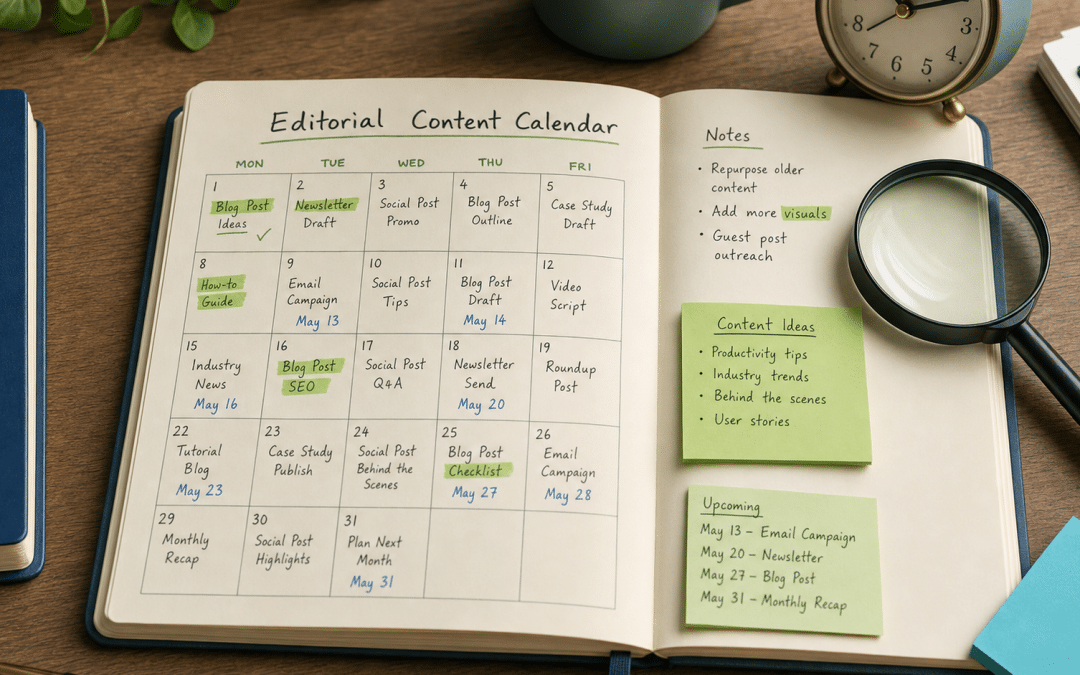
AI search source freshness guide: AI engines show a measurable preference for recently updated content, with approximately 50% of AI citations drawn from pages under 13 weeks old (Amsive, 2026). If your business relies on AI search optimisation to reach South African customers through ChatGPT, Perplexity, Gemini, or Google AI Overviews, the publication date on your content is now a ranking variable — not a cosmetic detail.
Understanding how freshness signals work, and which platforms weight them differently, is the difference between a content library that compounds in authority and one that quietly fades from AI citations. This post covers the mechanics, the data, and the practical refresh schedule your team can run without a full-time content operation.
Quick Answer
The ai search source freshness guide for SA businesses in 2026: AI engines prefer recently updated sources because their Retrieval-Augmented Generation (RAG) systems are designed to surface accurate, current information. Roughly 75% of AI-cited pages were updated within the last year (Seer Interactive, 47,097 citations), and content updated within 30 days earns an estimated 3.2x more citations than older pages (ConvertMate, 80M+ citations analysed). Freshness is signalled through dateModified schema, sitemap lastmod tags, and visible update dates — not by changing a publish date without changing content. Different platforms weight recency differently: Perplexity favours current-year content most strongly; ChatGPT is the least sensitive to raw age.
What This Guide Covers
Not Sure if Freshness Is Actually Your Gap?
Tell us about your current content cadence and last update schedule — we will assess whether freshness signals are your biggest AI citation barrier or whether authority signals need attention first.
Get a Free Freshness AssessmentWhy Do AI Engines Prioritise Fresh Sources?
AI search engines have a structural incentive to prefer up-to-date content: accuracy. When ChatGPT recommends the best accounting software for South African small businesses and cites a page last updated in 2022, the recommendation risks being wrong — pricing changes, products are discontinued, regulations shift. The systems are designed to minimise that risk by pulling from sources that have been maintained.
Google's own AI Optimization Guide explains that its Retrieval-Augmented Generation (RAG) technique improves "quality, accuracy, and freshness of AI responses by relying on our core Search ranking systems to retrieve relevant, up-to-date web pages." That is a direct statement that freshness is part of the retrieval decision, not a secondary bonus.
The data confirms the preference is real and measurable:
- Roughly 50% of all AI-cited content is under 13 weeks old (Amsive / Lily Ray, 2026 analysis of LLM-surfaced URLs).
- 75% of AI-cited pages had been updated within the last year, and 88% within the last two years (Seer Interactive, 7,683 pages, 47,097 citations, March–June 2026).
- AI-cited content averages 25.7% fresher than top-10 organic Google results (Ahrefs, ~17 million citations).
- Content loses roughly 40–60% of AI citation visibility annually — two-year-old content without updates operates at around 33% of its peak citation rate (Gander, 194,077 URLs, Q1 2026).
How Each AI Platform Weights Freshness Differently
Not all platforms apply the same freshness filter. If you want to appear in Google AI Overviews versus Perplexity, the recency requirements are materially different — and a single "update everything quarterly" approach may be under-serving the platforms that matter most to your sector.
| Platform | Freshness Bias (2026:2025 content ratio) | % of cited pages updated ≤1 year | Best for |
|---|---|---|---|
| Perplexity | 1.69x (strongest bias) | 65% | News, financial data, product comparisons |
| Google AI Overviews | 1.06x | ~75% (blended) | Authoritative guides, E-E-A-T-heavy content |
| Gemini | 0.78x | 78% (highest per-engine) | Marketplace and comparison content |
| ChatGPT | 0.28x (weakest recency bias) | 73% | Blogs and guides with high topical authority |
Source: Gander (194,077 unique URLs, Q1 2026) for freshness ratios; Seer Interactive (7,683 pages, 47,097 citations, March–June 2026) for per-engine ≤1-year figures. Note: Gemini's 0.78x ratio reflects sparse 2026 content at the Q1 2026 measurement point; the 78% ≤1-year figure captures all content updated in the prior 12 months including 2025 material — both readings are accurate and measure different things.
Perplexity's 1.69x bias means it is almost twice as likely to cite a page from the current year compared to the prior year, all else equal. ChatGPT's 0.28x ratio shows it leans more on topical depth and authority than raw recency — which explains why some older, high-authority pages still appear in ChatGPT results. For SA businesses targeting answer engine optimisation across multiple platforms, the priority should be keeping commercially important pages current enough to remain in the candidate pool on every engine.
Key Takeaway: Platform Mix Determines Your Refresh Priority
If your audience uses Perplexity for product research — increasingly common for B2B buyers — your comparison and pricing pages need the most aggressive update cadence. If Google AI Overviews is your primary target, authority and depth matter alongside recency. ChatGPT rewards breadth of coverage and consistent maintenance over chasing the most recent publication date.
The Technical Freshness Signals AI Crawlers Read
Freshness signals are the technical metadata layer that proves to AI crawlers a page has been substantively updated — without them, a fully revised page can still be retrieved as stale. The signal stack, in priority order, is:
- dateModified schema (JSON-LD) — the most explicit signal. AI engines parse the
dateModifiedproperty in Article or WebPage schema directly. This must update automatically when substantive changes occur — not manually on a schedule or artificially to game recency. Typos, formatting tweaks, and copyright year changes do not warrant a dateModified update; new statistics, revised pricing, expanded sections, or corrected facts do. Pairing this with schema markup for AI search is the single highest-leverage technical move for freshness signalling. - HTTP Last-Modified header — returned by your server when a crawler requests the page. Most WordPress and Shopify configurations set this correctly when content updates, but check if you use heavy caching layers — cached pages can return stale headers.
- Visible update dates — a "Last updated: August 2026" label near the article title. Humans and crawlers both read this. It must match the actual modification date.
- Sitemap lastmod — the
<lastmod>element in your XML sitemap. Google's Gary Illyes stated in July 2026 that inaccurate sitemap dates undermine trust: Google either trusts your lastmod values or ignores them wholesale. If your sitemap generator refreshes lastmod on each sitemap regeneration (a common plugin default), fix this — it signals that every page changed every day, which the crawler learns to ignore.
How Often Does Each Content Type Need Refreshing?
The right update cadence depends on how quickly the underlying facts decay. Pricing pages and software comparisons go stale within weeks. Foundational concept guides can remain accurate for a year or more. As a working guide for SA businesses — and aligned with data from the Seer Interactive and Foglift research — here is a practical refresh schedule:
| Content Type | Refresh Cadence | What to Update | SA-Relevant Example |
|---|---|---|---|
| Pricing / service pages | Every 4–8 weeks | Prices, package inclusions, VAT implications, competitive positioning | Agency retainer pricing, Shopify plan costs in Rand |
| Comparison / best-of content | Every 4–8 weeks | Rankings, feature tables, any vendor that has changed its offer | PayFast vs Peach Payments fee comparisons, payment gateway reviews |
| Statistics and benchmarks | Quarterly (or when a new study releases) | Replace outdated figures with current-year data, visible sources | SA ecommerce market data, digital marketing spend benchmarks |
| How-to guides | Quarterly | Screenshot-dependent steps, platform UI changes, tool updates | Google Ads setup guides, Meta Business Suite walkthroughs |
| Evergreen concept content | Every 6 months | Terminology shifts, new context, updated examples | What is AEO, what is schema markup, foundational SEO explainers |
South African businesses have an additional driver that global decay curves do not capture: hard regulatory deadlines. SARS VAT changes, POPIA guidance updates, and DTI-driven amendments make compliance content time-critical — a factually outdated page creates legal exposure, not just a citation gap. Treat every regulatory announcement as an automatic trigger to review related pages, regardless of where they sit in your planned refresh schedule.
The 13-week threshold is not arbitrary — Seer Interactive found that more than half of the pages cited within the past year had been touched in the previous three months. Pages not updated for over three months are around 3x more likely to lose AI citations than pages maintained on a rolling quarterly schedule.
For SA businesses with lean teams, the most pragmatic approach is a rolling refresh calendar: identify the 20–30 pages most valuable to AI citation, sequence them so a subset is updated each month, and treat updating older posts as a permanent part of the content operation rather than a remediation project.
Key Takeaway: The 83% Commercial Threshold
AirOps' 2026 State of AI Search found that 83% of commercial AI citations — the type that drive purchasing decisions — came from pages updated within the past year, and 60% from pages updated within the past six months. For SA businesses selling products or services through AI-surfaced recommendations, a six-month content refresh cycle is the minimum credible threshold for staying in the commercial citation pool.
What Genuine Freshness Looks Like — and What AI Engines Can Detect
Simply changing a publication date without changing content is not a freshness strategy. A date change without substantive content change does not move a page into the fresh content pool and wastes the update cycle. What AI systems actually reward is substantive accuracy — a page that contained a 2023 statistic now showing a 2026 figure from a named study, with a visible changelog note explaining what changed and why.
Genuine updates that register as fresh include:
- New or updated statistics — replacing a 2024 figure with a 2026 figure and citing the source visibly in the text.
- Revised recommendations — if a tool's pricing changed, a platform shut down, or a new option entered the market, the comparison table reflects it.
- Expanded sections — adding a new H2 that addresses a question the original draft did not cover, triggered by a shift in how users are searching.
- Corrected facts — when a regulation changes (POPIA guidance, VAT rules, SARS thresholds), the update corrects the original claim rather than leaving the stale version live.
Content that only updates the date, adds filler sentences, or changes cosmetic formatting does not move the freshness needle — and it wastes the update cycle. The goal is to make each refresh genuinely more accurate and complete than the previous version, which is exactly what AI systems are trying to identify when they evaluate source quality alongside recency. This is also the principle behind writing content AI Overviews cite: substance and accuracy, not surface signals.
Want a Prioritised Refresh Calendar for Your Top Pages?
Share your top 10 content URLs and we will map which are inside the 13-week citation window, which are approaching the edge, and what a substantive update looks like for each — returned as a ready-to-action calendar.
Get My Refresh CalendarWhy South African Businesses Choose Growth Pulse Media for AI Search Visibility
Managing AI search source freshness is a permanent operational rhythm, not a one-time fix. Dirk built and scaled a South African ecommerce business before founding GPM — the advice is grounded in what actually happens when you update a Shopify product page, refresh a Google Ads guide, or revise a POPIA compliance post, not in agency theory.
Our AEO agency services include structured content audits that identify which pages are inside the 13-week citation window, which are approaching the threshold, and which have already fallen off the curve. We maintain the dateModified schema, sitemap lastmod hygiene, and update calendars as part of the engagement — not as extras.
If you want to see how your current content stack sits against the citation thresholds, start with an LLM visibility audit — it maps which pages AI engines are currently citing and which have quietly dropped out of the pool.
Key Takeaway: Freshness Compounds Over Time
A page that is consistently maintained within the 13-week window builds compounding citation authority — it appears in AI results reliably, and over time the engines treat it as a trustworthy, current source. A page that is refreshed once after a long gap generates a short-lived citation spike, then decays again. The operational advantage belongs to SA businesses that treat content maintenance as infrastructure, not as a remediation task.
Who This AI Search Freshness Approach Is NOT For
A content freshness strategy delivers results only when there is a sustained maintenance commitment behind it. Here are four situations where this approach is the wrong fit.
Ready for a Full LLM Visibility Audit?
See exactly which pages AI engines are citing today — and which have quietly dropped out of the pool. We audit against 13-week freshness thresholds across ChatGPT, Gemini, Perplexity, and Google AI Overviews, and return a prioritised action list. No obligation.
Book the LLM Visibility AuditFrequently Asked Questions: AI Search Source Freshness Guide
How old can a page be and still get cited by AI search engines?
There is no hard cutoff, but the data shows citation probability falls sharply beyond six months without an update. Seer Interactive's 2026 study found 88% of AI-cited pages were updated within two years, which means there is still a citation pool for older content — particularly high-authority cornerstone pages. However, for commercially competitive content where multiple sources cover the same topic, pages updated within the past three months have a structural advantage because many AI retrieval systems weight recency heavily alongside authority.
Does changing a published date count as a freshness update for AI engines?
No. AI crawlers, particularly Google's RAG-based systems, assess whether the content inside a page changed — not just whether the date metadata changed. Gary Illyes (Google, July 2026) confirmed that inaccurate sitemap lastmod dates are treated as a trust signal failure, not a freshness signal. A date change without substantive content change is detectable and does not move a page into the fresh content pool. What counts is updated statistics, revised recommendations, corrected facts, or expanded sections backed by accurate dateModified schema and visible changelog notes.
Which AI platform is most sensitive to content freshness?
Perplexity shows the strongest freshness bias among major AI search engines, favouring current-year content at 1.69x the rate of prior-year content (Gander, Q1 2026). ChatGPT shows the weakest raw recency bias — it relies more on topical authority and content depth than publication age alone. Google AI Overviews sits close to neutral (1.06x), blending freshness with its standard E-E-A-T signals. If Perplexity is a meaningful traffic source for your sector, comparison and pricing pages need the most frequent updates.
How do I signal to AI crawlers that my content has been updated?
The most effective signal stack is: (1) update the dateModified property in your Article or WebPage JSON-LD schema to match the actual update date; (2) ensure your server returns an accurate HTTP Last-Modified header; (3) add or update a visible Last updated label near the article title; and (4) ensure your XML sitemap lastmod reflects the real modification date — not your sitemap regeneration date. All four signals working together create a consistent, verifiable proof of update. If you only have capacity to do one thing, implement accurate dateModified schema — it is the signal AI engines parse most directly.
How does content freshness relate to AI search authority signals?
Freshness and authority are complementary, not competing factors. Fresh content gets into the retrieval candidate pool; authority determines which candidates the AI actually cites. A page with strong authority but stale content may still get cited (particularly on ChatGPT, which is less recency-sensitive), but it will lose ground over time as fresher, equally authoritative sources enter the pool. The full picture requires managing both — which is why freshness strategy is part of a broader AI search optimisation plan, not a standalone tactic.
Let's Map Your Content Freshness and AI Citation Gap
Growth Pulse Media's AEO team audits your content stack against the current AI citation thresholds — identifying which pages are inside the window, which are approaching the edge, and which have already fallen out. We work with a limited number of SA clients at any time, so every audit gets senior attention, not a junior report. We handle the schema, the sitemap hygiene, the update calendar, and the substantive content revisions — on South African platforms, in Rand, with local context built in.
No obligation — we'll get back to you within 24 hours.
Book a Content Freshness Audit