
 Add to Preferred Sources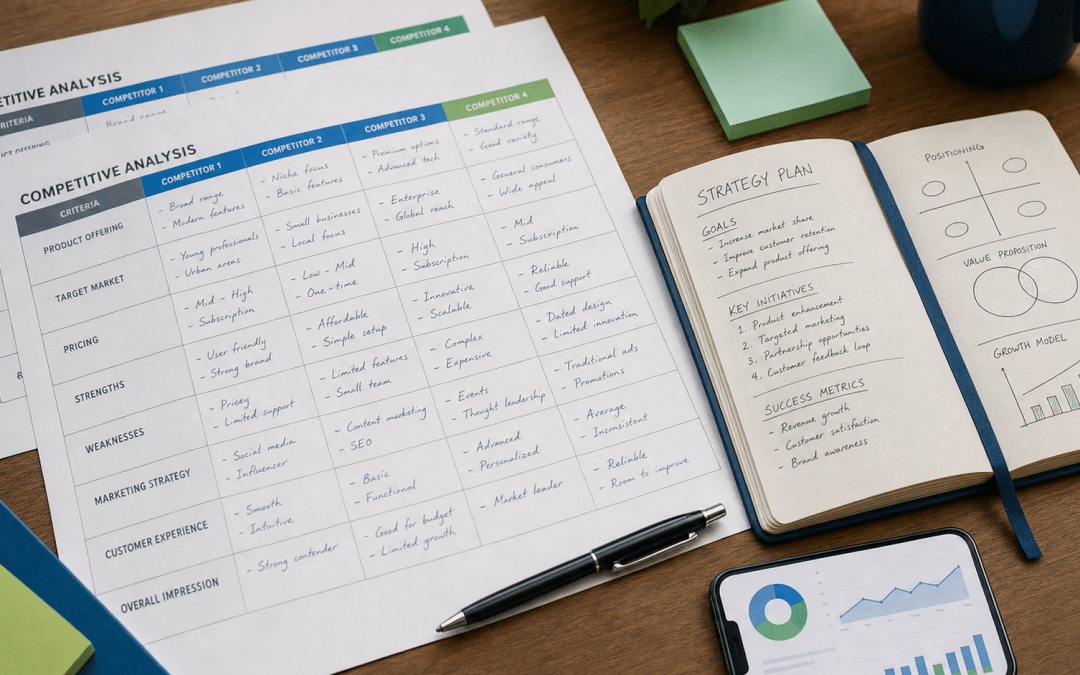
AI search competitor analysis is the process of identifying which brands AI engines — Google AI Overviews, ChatGPT, Perplexity, Gemini — recommend over yours, why they are cited instead of you, and what you need to change to close that gap. It is a fundamentally different exercise from checking who ranks on page one of Google, and understanding that difference is the starting point for any business that wants to win in AI search optimisation in South Africa.
With 70% of South African adults now using AI chatbots, the brands dominating AI recommendations are already capturing a growing share of buyer attention — often without appearing in the top ten organic results at all.
Traditional competitor research tells you who owns Google's blue links. AI search competitor analysis tells you who owns the recommendations customers receive before they ever click a link. In South Africa, where AI search adoption is accelerating faster than the global average, these two leaderboards frequently show completely different businesses at the top. This guide gives you the step-by-step method to map that competitive AI landscape and act on what you find.
Quick Answer
AI search competitor analysis means systematically querying AI platforms with the prompts your customers use, recording which competitors are cited and why, and identifying the content and authority gaps that explain the difference.
The process covers at least four platforms — Google AI Overviews, ChatGPT, Perplexity, and Gemini — because only 11% of domains appear in both ChatGPT and Perplexity results, meaning a competitor invisible on one platform can dominate another. Run the analysis quarterly and use it to prioritise your content and authority-building work.
What's Covered
Why this approach differs from traditional competitive research
The 5-step competitive intelligence framework
Tools that work for SA businesses
Not Sure Which Competitors Are Winning AI Recommendations in Your Category?
We run a structured prompt sweep across the major AI platforms for your business, so you can see exactly who is being cited, where, and why — before your next content decision.
Why Does AI Search Competitor Analysis Differ From Traditional Research?
Traditional SEO competitor analysis measures organic rankings — who appears at position one through ten for a keyword. AI search competitor analysis measures something different: who gets cited, mentioned, or recommended when an AI engine synthesises an answer from across the web.
The gap between these two leaderboards is now stark. In mid-2024, roughly 76% of Google AI Overview citations came from pages ranking in the organic top ten. By February 2026, that figure had collapsed to 17%.
Today, five out of six AI Overview citations pull from content that is not on Google's first page. A business that ranks number one for a keyword may not appear in the AI answer at all — while a competitor on page three is consistently cited.
Wrong assumption: "We rank first for 'Johannesburg accountants', so we must be dominating AI recommendations too."
Correct approach: Run the actual prompt "which accounting firms in Johannesburg handle small business tax?" through ChatGPT, Perplexity, and Google AI Mode, then record which firms appear and which sources they draw from.
The second structural difference is platform fragmentation. Research analysing 100,000 prompts across ChatGPT and Perplexity found only 11% domain overlap between the two platforms. A competitor that owns Perplexity recommendations may be almost invisible on ChatGPT. Traditional competitor analysis uses a single search index — AI competitor analysis requires monitoring several systems that draw from different source pools.
If you want to understand how this sits within the broader shift from traditional ranking to answer-engine visibility, the guide on AEO vs SEO for SA businesses covers the foundational distinction. Google's own AI search optimisation guidance confirms that the same quality signals driving traditional SEO also underpin AI citation — which means the ranking and citation leaderboards are related, but by no means identical.
Key Takeaway
Your Google ranking and your AI search ranking are increasingly unrelated. By February 2026, only 17% of AI Overview citations came from pages in the organic top ten — meaning five out of six AI-cited sources sit below page one of Google. Running a competitor analysis that only checks Google rankings misses most of the competitive picture.
How Do You Map Your AI Search Competitive Landscape?
A structured five-step approach gives you a repeatable, defensible picture of where competitors lead in AI recommendations — and what the gap looks like in concrete terms.
Step 1: Build Your Competitive Prompt Set
Start with 20–40 prompts that mirror how real customers ask about your category. Group them into three types:
| Prompt Type | Example (Professional Services) | What It Reveals |
|---|---|---|
| Category queries | "Best tax accountants in Cape Town for small business" | Who owns the category in AI answers |
| Problem queries | "How do I fix my SARS e-filing issue in South Africa?" | Who gets cited for expertise |
| Comparison queries | "Which Cape Town accountant is better for sole proprietors?" | Who AI engines trust enough to compare |
Include geographic variants (Johannesburg, Cape Town, Durban, Pretoria) and, where relevant for your market, Afrikaans or isiZulu versions of the same prompts — AI engines handle multilingual queries and may cite different sources for different languages.
Step 2: Run Structured Platform Sweeps
Run every prompt through at least four platforms in a single session: Google AI Overviews (via AI Mode), ChatGPT, Perplexity, and Gemini. For each response, record:
- Which brands or business names are cited or mentioned
- Which sources (URLs) are linked or referenced
- Whether your brand appears — and in what position
- How competitors are described (tone, framing, specific attributes named)
Do this manually for your first sweep. Manual testing reveals nuances that automated tools sometimes flatten — the specific phrasing AI uses when recommending a competitor tells you what that competitor's content has established in the AI's source material.
Step 3: Build a Citation Gap Matrix
Create a simple table with prompts in rows and competitors in columns. For each cell, mark: cited (with source URL), mentioned without citation, or absent. After populating the matrix, patterns emerge quickly:
- Which competitors appear consistently across platforms
- Which prompts your business is absent from entirely
- Which platforms each competitor dominates
- Which source pages are driving citations for competitors
Step 4: Diagnose Why Competitors Earn Citations
For each competitor page driving citations, ask: what does this page have that ours does not? Common answers in South African markets include:
- Detailed, directly-answerable content (FAQs, how-to steps, definitions)
- Structured data (schema markup) that makes content machine-readable
- Consistent brand mentions in third-party sources (directories, trade press, media)
- More recently updated content — pages refreshed within 30 days are cited more frequently than older material (widely-cited industry estimates put this advantage at roughly 3× or more)
The guide on writing content AI Overviews cite covers the structural signals that drive citation. The guide on schema markup for AI search covers the technical layer.
Step 5: Establish a Tracking Cadence
AI search is not static. A competitor can move from absent to dominant within weeks if they publish and distribute the right content. Run your full prompt sweep quarterly at minimum, and track any significant platform changes — like Google's ongoing AI Mode expansion — as trigger events for an ad-hoc sweep. Log results consistently so you can identify trends, not just snapshots.
Key Takeaway
The citation gap matrix is the practical output that makes AI competitor analysis actionable. It converts "we're not appearing in AI answers" into "these six prompts show Competitor A being cited from this specific page type, which we do not have." That is a work order, not a problem statement.
Which Metrics Reveal Your Competitive AI Search Position?
Six metrics give you a complete picture of competitive AI visibility — and they are meaningfully different from traditional SEO metrics.
| Metric | What It Measures | Why It Matters |
|---|---|---|
| Share of AI voice | % of prompts where your brand appears vs. total prompts tested | Your overall competitive position |
| Citation frequency | How often a specific URL is cited as a source | Identifies which content pages drive AI visibility |
| Mention vs. citation rate | Named (mention) vs. sourced with a link (citation) | Only 28% of brands achieve both — citations indicate trusted authority |
| Platform overlap | Consistency of visibility across ChatGPT, Perplexity, AI Overviews, Gemini | 11% overlap between ChatGPT and Perplexity — each platform needs separate attention |
| Sentiment framing | How AI describes competitors — "trusted", "affordable", "specialist" | Reveals the brand attributes competitors have established |
| Source influence | Which third-party domains are feeding competitor citations | Identifies high-priority PR, directory, and media targets |
The mention-versus-citation gap deserves particular attention. Industry analysis of Semrush data (Rankscience, September 2025) found that only 28% of brands achieve both frequent mentions and consistent citations in AI-generated answers. Industry research citing Ahrefs data suggests brand mentions are roughly three times more predictive of AI visibility than backlinks — a significant shift from conventional SEO, where link authority dominates.
If your competitor is mentioned in industry directories, trade publications, and media but your brand is absent from those conversations, that explains the citation gap better than any on-page difference.
Ready to See Exactly Where Competitors Beat You in AI Search?
Tell us your three key competitors and the queries that matter most — we'll show you the visibility gap and the specific content moves that close it fastest.
What Tools Work for AI Competitive Monitoring in South Africa?
No single tool covers all AI platforms comprehensively, and the category is evolving quickly. The most practical approach combines manual prompt testing with one or two purpose-built platforms.
Manual Prompt Testing (Free, Always Start Here)
Before spending anything on specialist tools, run your prompt set manually across Google AI Mode, ChatGPT, Perplexity, and Gemini. As a working rule of thumb, a first sweep of 20–30 prompts across four platforms takes three to four hours. Manual testing reveals framing, tone, and source patterns that aggregated dashboards can miss.
Log results in a spreadsheet. This baseline also tells you whether you need a paid tool at all — some SA businesses find that their competitive AI landscape is narrow enough to monitor manually on a monthly basis.
Semrush AI Toolkit
Semrush now includes an AI Toolkit that monitors Google AI Overviews, ChatGPT, Gemini, and Microsoft Copilot, tracking brand mentions, citation frequency, share of voice, and competitive gap data. It is the most accessible entry point for SA businesses that already use Semrush for SEO work. The competitor benchmarking view shows side-by-side visibility scores across tracked prompts.
Otterly and Peec AI
Otterly and Peec AI are purpose-built for AI visibility tracking. Both allow you to input a list of prompts, track results over time, and compare your brand against named competitors. Otterly's prompt-specific competitor tracking is particularly useful for identifying which individual queries competitors own — and which ones are genuinely contestable.
Profound and AthenaHQ
Profound offers enterprise-grade empirical AI citation tracking with daily data capture. AthenaHQ includes competitor benchmarking showing how often rivals are cited compared to your brand across tracked topics. Both are better suited to larger SA businesses or agencies managing multiple clients, given their pricing and complexity.
Practical note for SA businesses: Most AI visibility tools are priced in US dollars and billed internationally. Factor in currency conversion and assess whether the query volume in your SA niche justifies a full platform subscription, or whether a quarterly manual sweep plus a focused audit with a specialist covers your needs more cost-effectively.
For a broader view of the tracking landscape, the post on AI search visibility tools covers current options in more detail. If you have not yet run an LLM visibility audit to establish your baseline AI footprint, that is a logical prerequisite before investing in ongoing competitor tracking.
What Do SA Businesses Typically Find When They Run This Analysis?
Running a structured AI search competitor analysis in South African markets consistently surfaces four types of gap that are not visible in traditional SEO reporting.
The English-Only Content Gap
Most SA businesses publish content exclusively in English. When customers query AI platforms in Afrikaans or isiZulu — particularly for local service queries — AI engines draw from whatever content exists in those languages, which is often thin. A competitor who has published even basic content in local languages can dominate AI recommendations for a significant portion of the SA market without ranking for a single English keyword.
The Third-Party Source Gap
AI engines do not cite your website exclusively — they synthesise from directories, media, review platforms, trade associations, and industry publications. If your competitors appear in sources like Professionals SA, the SA Board for People Practices, local media coverage, or industry body directories and you do not, those third-party appearances explain the citation gap. Your website content may be excellent; the problem is that the AI has no external signal to confirm it.
The Category-Level vs. Brand-Level Gap
Some businesses are cited at the brand level ("Company X is a good option for…") while others are only cited at the category level ("solar installers in Pretoria include…"). Brand-level citation requires established authority signals — consistent mentions across multiple independent sources, not just your own website. Businesses that appear only at the category level in AI answers are one step away from being replaced by whichever competitor earns a stronger brand-level mention next.
The Platform Coverage Gap
Given the minimal overlap between ChatGPT and Perplexity citations, it is common to find that a competitor dominates one platform and is barely present on another. A business optimising solely for Google AI Overviews — the most obvious target — can miss the audiences querying Perplexity, which handles users who want sourced, research-style answers. The GEO framework for South Africa addresses this multi-platform challenge.
Key Takeaway
The most common finding SA businesses report from a first AI competitor analysis is not that competitors have better websites — it is that competitors have stronger presences in the sources AI engines use to form answers. Directories, trade media, local news coverage, and third-party review platforms are the primary citation drivers — a pattern consistent with research showing brand mentions are roughly three times more predictive of AI visibility than backlinks.
Why South African Businesses Choose Growth Pulse Media for AI Competitive Intelligence
Our AI competitive intelligence work begins with a structured prompt audit across the platforms your customers actually use, mapped against your specific SA competitive landscape — not a generic global benchmark. Dirk founded Growth Pulse Media after scaling a South African e-commerce operation, which means the brief he gets from a client sounds familiar: "We think a competitor is winning recommendations we should be getting, but we don't know where or why."
We work across a deliberately limited roster so that every AI visibility engagement gets direct senior attention — not a junior analyst with a subscription to one tool. Our process combines manual platform sweeps with specialist tracking tools, and we translate findings into concrete content and authority-building priorities rather than raw data reports.
If you are evaluating whether specialist AI search support is the right move, our AEO agency services page covers how we approach ongoing AI visibility management for South African businesses.
The competitive intelligence layer — understanding who is winning in AI and why — requires a different lens than rank tracking alone provides. That is where structured prompt analysis, citation gap mapping, and authority-building strategy come together.
Who Is AI Search Competitor Analysis Not For?
Businesses that haven't established basic digital foundations. If your website has no content strategy, no local listings, and no third-party presence, a competitor analysis will tell you what to fix — but the fixes are foundational, not competitive. Start with the basics before investing time in benchmarking.
Businesses in hyper-niche B2B markets with no AI search presence. If your buyers are three-letter procurement officers in a single industry and they do not use AI chatbots to find suppliers, this competitive monitoring is not your priority yet. Validate whether your customers use AI to find you before investing in tracking it.
Businesses looking for a one-time fix. This competitive tracking is a repeatable process, not a project deliverable. If you run one sweep and file the results, the data is outdated within two months. It produces value through regular iteration, not a single report.
Businesses expecting AI visibility to replace all other marketing. Being cited in AI answers drives real commercial outcomes — Seer Interactive's research found cited brands received 35% more organic clicks and 91% more paid clicks than non-cited competitors on the same queries — but AI citation is one channel among several, not a replacement for paid acquisition, email, or conversion work.
Want a Full AI Competitor Gap Report for Your SA Market?
We build the prompt set, run the multi-platform sweep, and deliver a prioritised action plan — so you know exactly which moves close the gap fastest in your specific category and location.
Frequently Asked Questions About AI Search Competitor Analysis
How is AI search competitor analysis different from regular SEO competitor analysis?
Traditional SEO competitor analysis tracks organic ranking positions in Google's blue-link results. AI search competitor analysis tracks which brands are cited, mentioned, or recommended when AI engines generate synthesised answers. The two leaderboards are increasingly unrelated — by February 2026, only 17% of Google AI Overview citations came from pages in the organic top ten. A business can rank first for a keyword and still be absent from the AI answer, while a competitor on page three is consistently cited.
Which AI platforms should I track for South African markets?
At minimum: Google AI Overviews (via AI Mode), ChatGPT, Perplexity, and Gemini. These cover the majority of AI search behaviour in South Africa, where 70% of adults have used an AI chatbot. Track each platform separately — citation sources overlap very little between platforms, so visibility on one does not guarantee visibility on another. Microsoft Copilot is worth adding if your customers tend to be corporate or enterprise users.
How often should I run an AI search competitor analysis?
Quarterly is the minimum for a full structured sweep. Monthly monitoring is worth the time in fast-moving categories — financial services, health, legal, and tech — where competitor content and authority signals shift frequently. Treat any major platform update as a trigger for an unscheduled sweep, since competitive positions can shift significantly around platform changes.
Why do some competitors appear in AI answers when they don't rank well in Google?
AI engines draw citations from a much wider source pool than Google's organic rankings. They weight content that is directly answerable, recently updated, and corroborated by third-party mentions across independent sources. A competitor who publishes clear FAQ-format content and appears consistently in industry directories, trade publications, and local media may be heavily cited in AI answers despite ranking at position 15 in organic search. The authority signals AI engines use overlap with but are not identical to traditional SEO ranking factors.
Can I do AI search competitor analysis myself, or do I need a specialist?
The manual prompt-testing methodology in this guide is something any business owner can execute with a spreadsheet and a few hours of focused time. Where a specialist adds value is in the diagnostic layer — understanding why competitors earn citations and building a prioritised action plan — and in the ongoing tracking infrastructure. Starting with a manual sweep yourself, then bringing in specialist support to interpret the findings and build a response strategy, is a practical approach for most SA businesses.
Map Your AI Search Competitive Landscape
Growth Pulse Media runs structured AI competitor analysis for South African businesses — covering Google AI Overviews, ChatGPT, Perplexity, and Gemini, with findings translated into a prioritised content and authority-building plan. We work with a limited client roster so every engagement gets direct senior attention. No obligation — we'll get back to you within 24 hours.
