
 Add to Preferred Sources
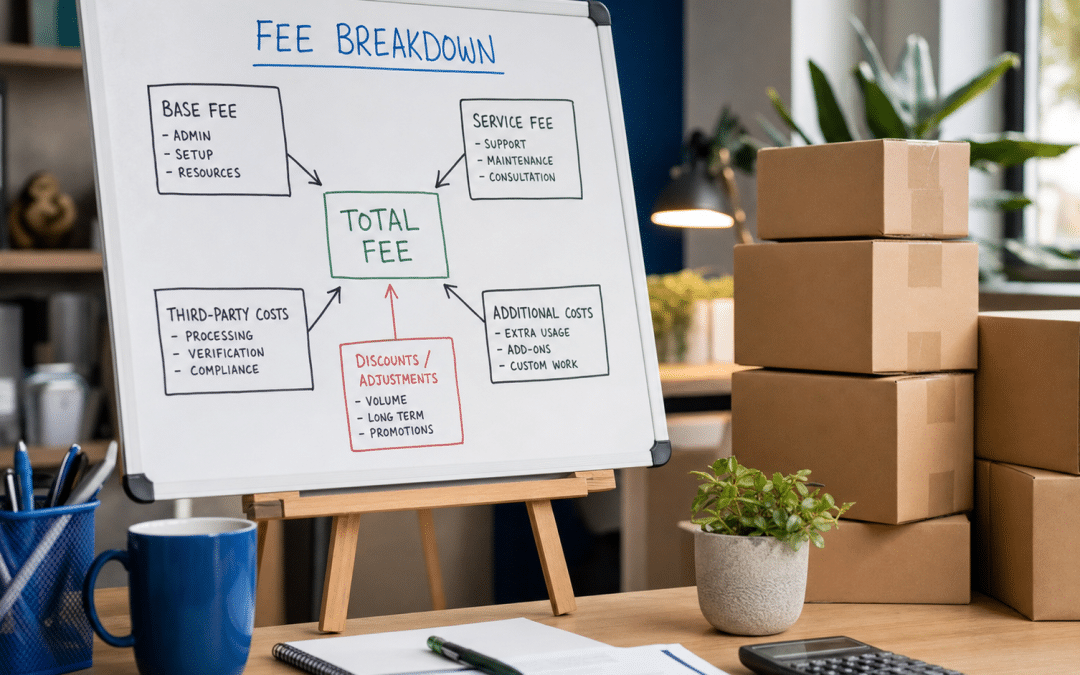
A makro seller is a South African business that lists its own products on Makro's third-party marketplace, sets its own selling price and pays Makro a R230 monthly platform fee, a category-based commission and a transport fee on each unit. It is one route into the growing ecommerce market in South Africa, and it rents you demand instead of building your own.
The fees are published, but they are spread across several help-centre articles and quoted partly including VAT and partly excluding it. This guide pulls them together, runs them on one R1,150 sale and shows where VAT status, fulfilment route and listing structure change what lands in your bank account. Every Makro figure below comes from Makro's own seller help centre, as shown in November 2026.
Quick Answer
To become a Makro seller, register on the seller portal with your CIPC or ID details and bank proof, get listings approved, then choose between fulfilling orders yourself (FBS) or letting Makro ship them (FBM). You pay R230 a month including VAT, a category commission on each unit sold, and a size-and-weight transport fee that starts at R41 for FBS. On a R1,150 sale at Makro's example 10% commission, a VAT-registered seller keeps R859 before product cost.
Jump to
Not sure Makro fits your margins?
Send us your product range and average selling price and we will tell you which of your lines can carry marketplace fees and which cannot.
Request a margin reviewHow to Become a Makro Seller: Registration Requirements
Makro seller registration is an online application in which Makro verifies your business details against Home Affairs and other systems, and asks for documents only if that automatic check fails. Makro's registration article says that "in most cases, you won't need to upload documents if your information is successfully verified."
The makro seller requirements are short. If manual verification is needed, the documents depend on how you trade:
- Company: a CIPC document.
- Sole proprietor: an ID document.
- VAT-registered: a SARS VAT document.
- Everyone: proof of a bank account that is not older than three months.
The practical risk is typos. Makro tells applicants to enter details with no spelling errors or missing information, because mismatches slow approval. Copy your company name and registration number straight from the CIPC document, and use a bank letter dated inside the last three months.
Registration only opens the door. A Makro Marketplace seller still has to create listings, which Makro can reject, and some brands need separate approval. That is why makro seller registration is the quick part of the job and listing quality is the slow part.
What Does Selling on the Platform Cost? Fees With a Worked Sale
Makro seller fees have three parts: a flat monthly platform fee, a commission on each unit sold, and a transport fee on each unit that depends on package size and weight. Makro's fee article sets out the structure, and the table below summarises it as listed in November 2026.
| Fee | Amount | VAT treatment | What it means for you |
|---|---|---|---|
| Platform fee | R230 a month | Including VAT | Charged on the 1st to sellers with at least one active listing |
| Commission | Percentage by product category | VAT added to the fee | Look up your category in Makro's commission table |
| FBS transport (final mile and returns) | R41 to R1,800 per unit | Excluding VAT | Set by package dimensions and weight |
| FBM transport (final mile and returns) | R34 to R1,500 per unit | Excluding VAT | Same size-and-weight logic, lower range |
| FBM first-mile | R45 to R1,500 per consignment from 1 December 2026 | Excluding VAT | Free until 30 November 2026 |
| FBM storage | Charged only above 35 days of stock cover | See fee article | No storage fees for the rest of 2026 |
Transport fees come from the package dimensions and weight you capture in the listing. A wrong measurement therefore changes your fee on every unit, not just the first. Returns carry their own cost: if a delivered unit comes back, Makro charges a separate return transport fee for that unit.
Worked sale: R1,150 through FBS, VAT-registered seller
Makro's own commission example uses a R1,150 selling price and a 10% commission. Treat 10% as an illustration, because your category rate will differ. Taking VAT out of the price gives R1,150 / 1.15 = R1,000. Commission is 10% of that, R100 before VAT or R115 including VAT. The lowest FBS transport fee is R41 excluding VAT.
R1,000 minus R100 commission minus R41 transport leaves R859. That is R141 in fees, or 14.1% of the ex-VAT price, before the platform fee, your product cost, packaging and any return. A bulky item at the top of the transport range pays up to R1,800 a unit, which can exceed the price of a low-cost product.
A seller who is not VAT-registered works from the full R1,150. Commission is R132.25, and the R41 transport fee, quoted excluding VAT, becomes R47.15 if VAT is added on top. That leaves R970.60 before the platform fee, product cost and packaging. The two totals are not like for like: R970.60 is higher only because a non-VAT seller does not pass R150 of VAT on to SARS, so ask your accountant how the VAT on Makro's fees is treated in your case.
The platform fee is flat, so it matters least for volume sellers and most for slow lines. Spread across monthly units, R230 is R23 a unit at 10 units, R4.60 at 50 units and R2.30 at 100 units. A catalogue that sells a handful of units a month needs a higher margin per item to carry it. R230 includes VAT; a VAT-registered seller can read it as R200 before VAT (R230 / 1.15).
Takeaway: price from the fee stack, not the product cost
On Makro Marketplace your payout is the selling price minus commission, minus a transport fee fixed by package size and weight, minus the R230 monthly fee spread across your units. On a R1,150 sale at a 10% commission and the lowest FBS transport tier, a VAT-registered seller keeps R859 before product cost, and a non-VAT seller R970.60 under the VAT assumption above. Work backwards from your own number to a minimum selling price.
Does VAT Registration Change What You Pay in Commission?
VAT status changes the base on which Makro calculates commission: VAT-registered sellers have the VAT stripped out of the selling price first, while non-VAT sellers pay commission on the full price. Makro's commission calculation article gives both formulas and works the same R1,150 sale at a 10% commission for each.
| Seller status | Makro's formula | Fee on a R1,150 sale at 10% | Verdict |
|---|---|---|---|
| VAT-registered | ((Price / 1.15) x commission %) x 1.15 | R115 | Commission falls on the ex-VAT price |
| Not VAT-registered | (Price x commission %) x 1.15 | R132.25 | Pays R17.25 more, which is 15% more commission for the same percentage |
In our view that 15% gap is a weak reason to register for VAT, because registration brings its own obligations. SARS sets the thresholds: since 1 April 2026, registration is a legal duty once taxable supplies exceed R2.3 million in any 12-month period, and voluntary above R120,000. Our guide to VAT for South African online stores covers the wider decision.
Makro's help centre prices both cases, so a non-VAT business is accommodated. Gating rules for your category can still differ, so confirm in the portal before you commit stock.
Selling on Shopify and Makro with one stock count?
Tell us how you manage stock today and we will map where a second sales channel could oversell you.
Get a timeline and fit checkFBS or FBM: Which Fulfilment Route Suits Your Stock?
Fulfilled by Seller (FBS) means you keep stock at your own premises and a courier collects each order, while Fulfilled by Makro (FBM) means your stock sits in a Makro fulfilment centre and Makro picks, packs, delivers and handles returns. Makro's FBS vs FBM comparison lists the trade-offs, and the table adds a verdict for each seller type.
| Factor | FBS | FBM | Best for |
|---|---|---|---|
| Where stock sits | Your premises | Makro fulfilment centre | FBS if you also sell through your own store from the same stock |
| Delivery speed | Depends on your lead times; courier delivers within three business days of collection | Two-day delivery promise for Gauteng customers | FBM for fast-moving lines where speed wins the sale |
| Transport fee range | R41 to R1,800 per unit | R34 to R1,500 per unit; Makro says final-mile is 20% cheaper | FBM for bulky items, once first-mile is costed |
| Extra fees | No first-mile or storage fees (commission and the platform fee still apply) | First-mile from 1 December 2026; storage above 35 days of stock cover | FBS for slow sellers that would breach 35 days |
| Returns | You manage them | Makro manages them | FBM if you lack a returns process |
Makro's "Top Tips" article describes the FBM two-day promise for Gauteng customers. If most of your buyers sit elsewhere, check what FBM delivers to them before you pay to consign stock.
FBS has an operational catch. When you generate a waybill, the order is allocated to a third-party courier, and Makro notes the courier may arrive within an hour. Only generate the waybill when the parcel is packed and labelled. Our guide to courier costs for South African ecommerce shows what to compare against, and the returns management guide covers the process FBS leaves you to run.
One date matters for FBM. First-mile delivery is free until 30 November 2026, and fees of R45 to R1,500 per consignment start on 1 December 2026. Storage is free for the remainder of 2026, so a consignment sent before December 2026 avoids first-mile fees, but a stock plan for 2027 must include both.
How Listings, Brand Gating and Pack-Of Products Work
A Makro listing is built from structured fields rather than free text, and Makro rejects listings whose brand, category, sales package or images do not match the product. Makro's titles article says titles are created from mandatory attributes plus hardcoded text, with a preview shown while you create a single listing. That differs from your own Shopify store, where you write the title yourself.
Makro's help centre names seven common rejection reasons: incorrect vertical, brand mismatch, brand abuse, sales package errors, a SKU that cannot be updated because the product may already exist, legal or compliance errors, and image errors. Clean attribute data and clear photography prevent most of them, and our comparison of DIY versus professional product photos helps with the second.
Some brands are gated. Brand gating means certain brands cannot be listed unless you applied through the seller portal and got approval. Applications are per brand, need proof of purchase, product photographs and supplier details, and are reviewed in 7 to 10 business days. Plan that wait into any launch date.
Fulfilment fees are charged per listing, not per unit inside it. Makro points to this as a saving for low-cost, lightweight items such as pantry and household products.
Transport fees work differently: they are charged on each unit sold and set by the package dimensions and weight in the listing. Whether a pack sits in a heavier size tier than a single is something to test in Makro's Seller Fee Calculator before you build the listing. Makro requires a separate "Pack of" listing with its own SKU, not a conversion of an existing single.
When Do Payouts Arrive?
Makro pays sellers twice a month, on the 15th and the last day of the month, moved to the next business day when the date falls on a weekend or South African public holiday. Sellers who bank with Standard Bank may receive funds one to two business days earlier than those at other banks, according to Makro's 2026 payment schedule.
Makro's schedule page does not say which orders each run includes, so check in the portal how a given sale maps to a payout before you rely on a date. Your working capital needs to cover stock bought for the marketplace until that money arrives.
Is the Channel Worth It for a Shopify Store?
A marketplace is worth using when its fee stack still leaves you a margin on lines you can fulfil reliably, and it is a poor use of effort when it only adds price competition on products you already sell well on your own store. The test is arithmetic, not ambition.
- Pick the price base for your VAT status. If you are VAT-registered, divide the selling price by 1.15 and subtract commission at your category rate from that ex-VAT figure. If you are not, start from the full selling price and subtract the commission Makro's non-VAT formula gives.
- Subtract the transport fee for your package size and weight, and a return allowance for categories where returns run high.
- Subtract your share of the platform fee. Spread R230 (R200 before VAT) across expected monthly units, using the same VAT basis as the steps above.
- Compare the remainder with your product cost. If the margin that survives is thinner than your own-store margin after advertising, the line may not suit the platform.
Makro's help centre tells sellers to check profitability with its Seller Fee Calculator before selling, which does the same sum with your real category rate. For the wider choice between owning a store and renting a marketplace, read our ecommerce versus marketplace comparison, and for another local marketplace, listing costs on Takealot versus Shopify. Our ecommerce project plan shows where a second channel fits in the build sequence.
Takeaway: when a marketplace line works
A product suits a marketplace when its ex-VAT price, after commission, transport fee and its share of the R230 monthly fee, still leaves more margin than selling it on your own store after advertising. Compare the range: a light item at the R41 FBS tier loses a modest slice of a R1,150 price, while a heavy item at the R1,800 top of the range can lose more than the whole price of a cheap product.
Want a second opinion before you register?
Share the three products you would list first and we will review the margin maths with you, free.
Book a free auditWhy South African Businesses Choose Growth Pulse Media
Growth Pulse Media is a Johannesburg agency founded by Dirk van Greuning, who built and scaled a large South African ecommerce business before starting the agency. We are a registered Shopify Partner and an Omnisend Certified Partner, and our work covers Shopify, Google Ads, Meta Ads and GA4. See our Shopify marketing agency services for how that fits an online store. All work is executed in-house with a limited client load.
We do not manage Makro seller accounts, so this guide is independent. Its purpose is to help you decide whether the channel earns a place beside your own store.
Who This Is NOT For
This guide is not for sellers who want a promise of sales, sellers of bulky or very low-priced goods, or businesses without reliable stock control.
Sellers who want a promise of sales. Makro rents you access to its shoppers. Commission, transport and platform fees apply whether or not a listing sells well, and rates can change with advance notice.
Sellers of bulky or very low-priced goods. Transport fees run up to R1,800 a unit and are set by size and weight. If the fee approaches your price, the line does not belong on the platform.
Businesses without stock control. A second channel creates a second place to oversell. If your inventory count is not reliable today, fix that first.
Frequently Asked Questions
How do I become a Makro seller?
Register on the Makro Marketplace seller portal with your business and bank details. Makro verifies them against Home Affairs and other systems, and asks for a CIPC or ID document, a SARS VAT document if you are registered and a bank proof under three months old only if that check fails. After approval you create listings for review.
How much does it cost to sell on Makro?
Makro charges R230 a month including VAT, a category-based commission on each unit sold and a transport fee of R41 to R1,800 per unit for FBS, or R34 to R1,500 for FBM, excluding VAT. FBM first-mile fees of R45 to R1,500 per consignment start on 1 December 2026.
Do I need to be VAT-registered to sell on Makro?
Makro's help centre gives a commission formula for non-VAT-registered sellers, so VAT registration is not a blanket entry requirement. A non-VAT seller pays commission on the full price: R132.25 on a R1,150 sale at 10%, against R115 for a VAT-registered seller. Check your category's rules in the portal.
What is the difference between FBS and FBM on Makro?
With FBS you store, pack and label orders at your own premises and a courier collects them. With FBM your stock sits in a Makro fulfilment centre and Makro handles storage, picking, packing, delivery and returns. Makro states that FBM final-mile fees are 20% cheaper, but FBM adds first-mile and storage fees.
When does Makro pay its sellers?
Makro runs payments on the 15th and the last day of each month, moving the date to the next business day if it falls on a weekend or public holiday. Banking with Standard Bank may bring funds one to two business days sooner than at other banks.
Get a Margin Check Before You List
Tell us what you sell and how you fulfil it, and we will review whether a marketplace channel fits alongside your Shopify store, PayFast checkout and courier costs. No obligation. We'll get back to you within 24 hours.
Request Your Free Audit