
 Add to Preferred Sources
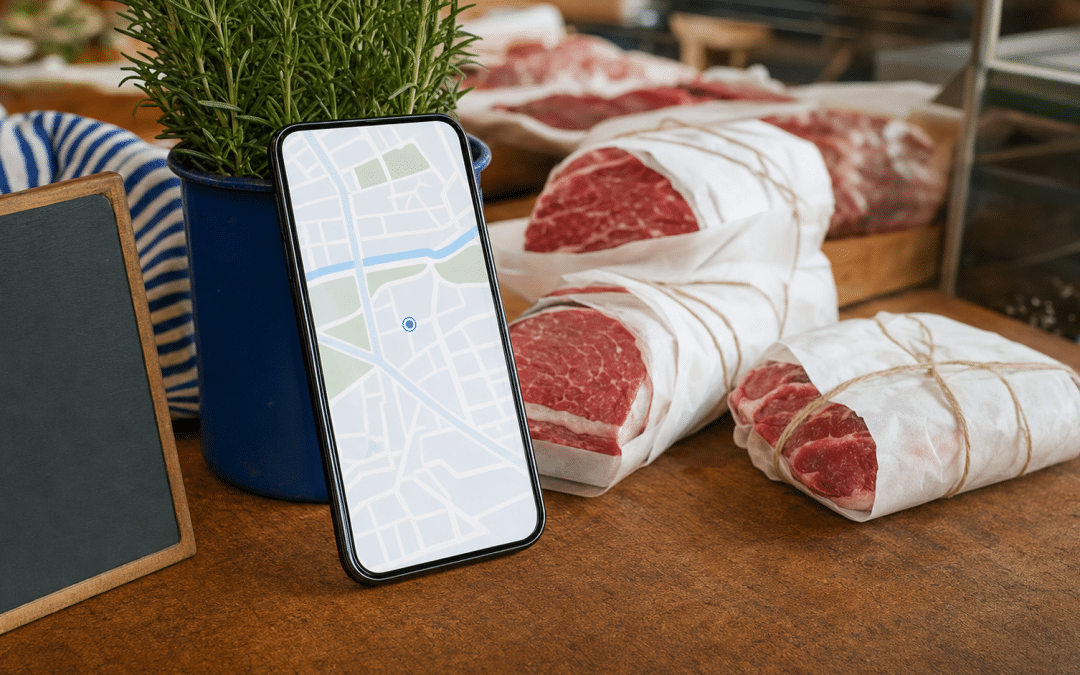
SEO for butcheries is the work of making your shop appear when someone nearby searches for meat, braai packs or a specific cut. It rests on three things: a complete Google Business Profile, website pages that state what you sell and what it costs, and a steady flow of genuine reviews. This post applies our SEO in South Africa pillar guide to SEO for butcheries in South Africa, for a shop with one to three branches.
Butchery searches tend to be local and immediate: the shopper wants meat soon, from somewhere they can reach. That is a practitioner's judgement, not a measured share, but it explains why local SEO for butcheries starts with the map results rather than the ten blue links.
Quick Answer
Google says it ranks local results on relevance, distance and prominence. A butchery can influence relevance by completing its profile and publishing pages that match what shoppers type, and can influence prominence partly through reviews. Distance is fixed by where the shop stands.
In this post
Not sure your butchery shows up on the map?
Contact us to discuss a review of your Google Business Profile.
Request a profile reviewWhat does SEO for butcheries actually compete for?
This work competes for the local results block, where Google lists nearby businesses for searches with local intent. Google's own help page says local results are based mainly on relevance, distance and prominence, and defines each in plain terms.
According to Google's local ranking help page, "Relevance is how well a Business Profile matches what someone is searching for," and "Distance refers to how far each business is from the customer who's searching." Prominence "means how well-known a business is" and, per the same page, relies partly on how many reviews you have. The page also states that more reviews and positive ratings can help your local ranking, and that there is no way to pay for a better position.
Takeaway
Of Google's three local ranking factors, a butchery can influence two and cannot move the third. Relevance follows from how completely the profile and website describe what you sell. Prominence is shaped partly by reviews, though not only by them. Distance is set by where your shop stands, and a profile cannot fix a shop that is far from its customers.
How should a butchery set up its Google Business Profile?
A butchery's Google Business Profile is the listing Google's local results display, and Google says businesses with complete and accurate information are more likely to show up in local search results. Three fields cause many avoidable errors: the name, the category and the hours. Our Google Business Profile guide covers the full setup; the butchery-specific points follow.
Name. Google's representation guidelines require the name to reflect your real-world name as used consistently on your storefront, website and stationery. Marketing taglines, hours and phone numbers do not belong in it. "Prime Cuts Butchery - Best Boerewors in Town" breaks the rule; "Prime Cuts Butchery" does not.
Category. The same guidelines say to use as few categories as possible and to choose ones that are as specific as possible. Test each one with "this business is a...", not "this business has a...". A butchery that also sells biltong and spices is still a butchery first.
Hours. The guidelines ask for your regular customer-facing hours. For a shop whose customers arrive on a Friday afternoon for the weekend braai, a wrong closing time can cost a sale and a bad review in the same visit. Update the profile whenever your trading hours change.
Then verify the profile. Google states that verification tells it you are authorised to represent the business, which makes the listing more likely to show up. Add photos of the counter, the display and the products themselves, and reply to reviews as they arrive.
What do shoppers type when they look for a butchery?
Butchery searches fall into a small number of patterns, and each pattern is answered by a different page or profile field. The table below is a working model of how local searches are typically phrased, not a keyword-volume study, so treat the examples as templates for your own suburb and range.
| Search pattern | Example | What answers it |
|---|---|---|
| Nearest shop | butchery near me | Verified profile, correct category, hours |
| Suburb plus shop | butchery [your suburb] | Profile address, homepage naming the suburb |
| Occasion | braai packs [your town] | A dedicated braai pack page with contents and prices |
| Specific product | boerewors, lamb chops, biltong | A page or section per product line |
| Trust or certification | halaal butchery [your suburb] | Certification stated on the site and in the profile, if you hold it |
| Delivery | meat delivery [your suburb] | A delivery page naming areas, cut-off times and fees |
Only list a certification you hold, and describe it as it appears on the certificate. A claim a shopper cannot verify at the counter does more damage than a missing one.
Selling braai packs but nobody can find the page?
Tell us what you sell and where you trade, and we can discuss which of these search patterns your site can answer.
Ask for a fit assessmentWhat pages does a butchery website need?
A butchery website needs a small set of pages that state, in plain text, what you sell, where you are and what it costs. Search engines and shoppers both read text; a price list that exists only as a photographed chalkboard or a PDF scan answers neither.
A butchery website SEO plan for a single shop can be this short:
- Homepage: shop name, suburb, address, hours and phone number as text, matching the profile exactly.
- Product pages or sections: one per major line, such as beef, lamb, pork, chicken, boerewors and biltong, each with a short description and the cuts you carry.
- Braai pack page: contents, serving size and price per pack.
- Price list: as page text, with a "prices as at" date.
- Contact and directions page: address, map, parking, hours and special trading days.
Why the price list needs a date
A butchery price page goes stale quickly, because meat prices move. Stats SA's Average Monthly Food Price data, as reported by the Sowetan in July 2026, showed boerewors R14.56 per kilogram higher year on year, and beef, pork and mutton sausages up almost R20 per kilogram.
Those are national averages for the period to June 2026, not your prices. They do show how fast a list published last season becomes wrong.
Works: "Boerewors, per kg, prices as at 1 November" on a text page you update when your supplier price changes.
Does not work: A price list uploaded as an image in March and never touched, so the page quotes a price you no longer charge.
Structured data for the shop
Structured data tells search engines your address and hours in a machine-readable form. Google's LocalBusiness documentation lists name and address as required, and opening hours, telephone, URL and price range as recommended. It also advises using the most specific LocalBusiness subtype possible. Our local business schema guide walks through the markup.
Delivery-area pages without the thin-content trap
A delivery page earns its place when it states real information: which suburbs you cover, your order cut-off and your delivery fee. Twenty near-identical suburb pages with only the suburb name swapped are the opposite, and they fall under what our thin content guide warns against. One delivery page with a clear list is the safer build.
How do reviews affect a butchery's local ranking?
Reviews feed a butchery's local ranking because Google ties prominence partly to how many reviews you have, and says more reviews and positive ratings can help. A shopper comparing two nearby shops can also see each star rating before deciding where to go.
The routine is simple. Ask satisfied customers at the till, make the ask easy with a direct review link and a QR code at the counter (our Google review link and QR code guide shows how), and reply to every review, including the poor ones. Google says positive reviews and helpful replies can help your business stand out.
Takeaway
Review count and rating are the part of local visibility a butchery can build at the counter on any trading day. A QR code at the till, a quick reply to each review and an honest answer to a complaint cost attention rather than money.
Want an outside read on your listing and site?
Contact us for a free audit of your Google Business Profile and website.
Request a free auditWhich route fits your butchery?
The best first step depends on how the shop trades: a walk-in shop starts with its profile, a branch group with one profile and one page per branch, and a delivery shop with a delivery page. The table sets out a working order for each of the three shapes.
| Your shop | Do first | Do second | Watch out for |
|---|---|---|---|
| One walk-in shop | Verify and complete the profile | Review routine at the till | Hours that do not match reality |
| Two or three branches | One profile and one page per branch, each with its own address, hours and phone | Branch-specific reviews | Copying one description across every branch page |
| Shop plus delivery | A delivery page with areas, cut-offs and fees | Braai pack and product pages | Suburb pages with no real content |
The one-page-per-branch advice is a practitioner recommendation, not a Google instruction. It follows from Google's structured data documentation, which defines the URL property as the fully-qualified URL of the specific business location.
In what order should the work be done?
A workable order for most butcheries is profile first, reviews second, website pages third. This is a practitioner's working order: profile fixes are quick, review building is an ongoing routine, and new pages take the most writing time. If you have only a few hours a month, spend them in this sequence and stop when you run out. Read the list below as an SEO for butcheries checklist.
- Verify the profile and correct the name, category and hours.
- Put a review link and QR code at the till and reply to existing reviews.
- Rebuild the price list and braai pack page as dated text.
- Add structured data and a branch or delivery page where they apply.
- Check Search Console to see which queries bring people to the site. Our DIY SEO audit in 60 minutes shows what to look for, how local SEO works in South Africa explains the mechanics, and our local search guide covers the wider strategy.
Once search brings people in, keep them. Our posts on WhatsApp marketing for butcheries and email marketing for butcheries cover repeat orders from the customers you have won.
Why South African Businesses Choose Growth Pulse Media
Growth Pulse Media is a Johannesburg agency that executes all work in-house, with a limited client load for senior attention. Founder Dirk van Greuning built and scaled a large South African ecommerce business before founding the agency. Our SEO service in South Africa starts with the fundamentals described in this post.
Who This Is NOT For
These four situations are where the steps in this post are unlikely to pay off.
Shops that want a ranking this month. Local visibility builds from a complete profile, reviews and accurate pages. No one can promise a position by a date.
Owners hoping to pay for the top spot. Google says there is no way to pay for improved local ranking. Paid advertising is a separate channel with its own budget.
Shops that will not answer reviews or keep hours current. Several of the steps here depend on someone at the shop doing them regularly.
Businesses with no fixed trading address. Google defines distance from the searcher to the business, so a pop-up or roadside trader has less for these steps to work with.
Frequently Asked Questions
What is SEO for butcheries?
SEO for butcheries is the work of making a butchery appear in Google's local results and on its own website for searches like "butchery near me" or "braai packs" in your area. It covers the Google Business Profile, website pages with real prices and product information, and reviews.
Does a butchery need a website, or is a Google Business Profile enough?
A verified Google Business Profile is the usual starting point, and for a small walk-in shop it may be enough at first. A website lets you publish price lists, braai packs, delivery areas and structured data that a profile does not hold, so it becomes more useful as the range or the number of branches grows.
How do I get more Google reviews for my butchery?
Ask at the till and give customers a direct review link or QR code so leaving a review takes seconds. Reply to every review. Google says more reviews and positive ratings can help local ranking.
Can I pay Google to rank my butchery higher on the map?
No. Google's help page says there is no way to pay for improved local ranking. Paid advertising runs separately from the organic local results.
Should I publish my prices online?
Yes, if you can keep them current. Publish prices as page text with a "prices as at" date and update them when your supplier prices change, because meat prices move: Stats SA data showed boerewors up R14.56 per kilogram year on year to June 2026.
Get your butchery found by nearby shoppers
Contact us for a free audit of your Google Business Profile and website. No obligation, and we will get back to you within 24 hours.
Get your free audit