
 Add to Preferred Sources
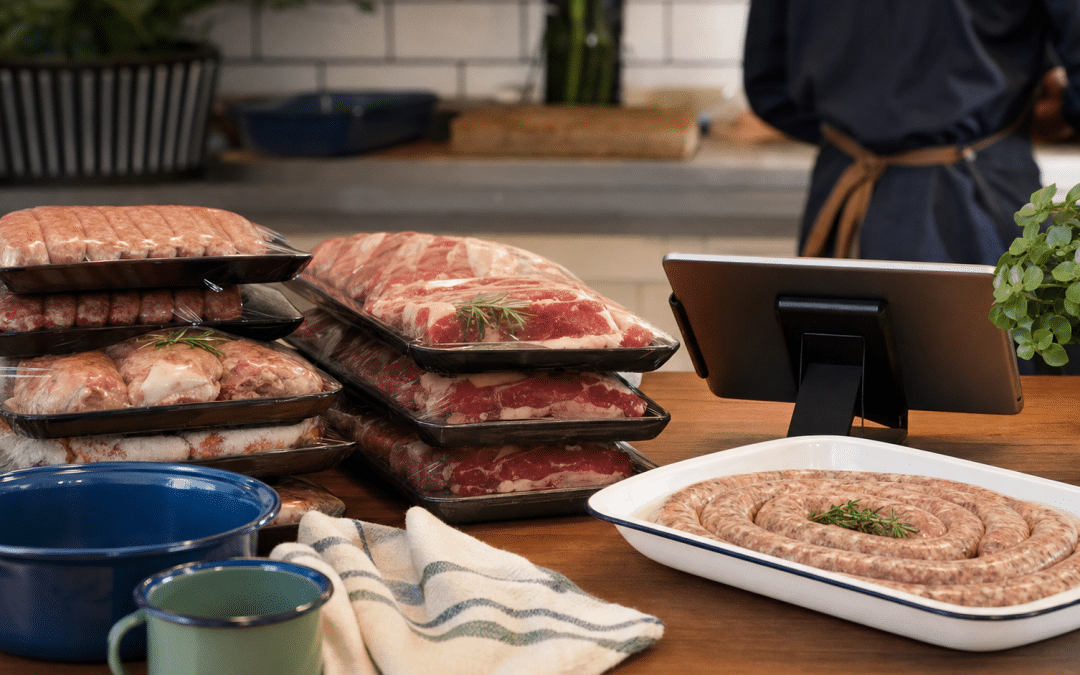
Email marketing for butcheries is a way of telling people who have bought from you, or asked to hear from you, what is in the display this week and the last day they can reserve it, before the stock has to be sold or frozen. It sits inside the wider channel mix in our email marketing South Africa guide, but a butchery has a constraint most shops do not: fresh meat has a short shelf life, so a message is only useful if it arrives while the customer can still act on it.
That changes how you collect addresses, what you send and how much platform you need. This post covers the address sources a butchery actually has and the POPIA basis for each, the five messages worth building, how to plan sends backwards from collection day, and what a weekly specials email costs in Rand on published Omnisend and Mailchimp plan limits.
Quick Answer
Email marketing for butcheries works when each send is tied to a collection day: a weekly specials email, a pre-order window for braai packs and festive meat, a cut-off reminder and a last call. Build the list from till-point and order-form addresses, email only people you can lawfully reach under POPIA section 69, and check your plan's monthly send limit before you commit to a weekly rhythm. A free plan carries a weekly send to only about 100 to 125 contacts, depending on whether the month has four or five weekly sends, and nothing is left for occasion sends.
Taking orders by phone and WhatsApp but not capturing addresses?
Send us how orders reach you today and we will show you where an address could be captured and consented.
Get a list-capture reviewEmail Marketing for Butcheries: What a List Does That a Chalkboard Does Not
A butchery email list is a set of addresses you own, so you can announce the week's specials, a braai-pack pre-order or a festive cut-off to the customers most likely to buy, on the day you choose. A chalkboard or a social post reaches whoever walks past or whoever the platform shows it to.
That matters most for the products that need notice: bulk freezer packs, festive meat, party platters and large braai orders. A butcher already talks to customers on the phone and on WhatsApp, and we cover that channel in WhatsApp marketing for butcheries. Email does a different job. It carries a full price list, photographs and an order link in one message that a customer can keep and come back to.
If you sell through a Shopify store, you can send to your own customers from Omnisend. A counter-only shop can send a plain message that points to a phone number or an order form. Either way the list is the asset and the platform is replaceable.
Takeaway: the list is how perishable stock gets a deadline
A butchery with an owned list can tell its own customers about a special or an order window on the day it opens. A butchery that relies on a window sign and social posts has to rent attention for every announcement.
Who Can a Butchery Lawfully Email Under POPIA?
A butchery may email only people who have consented, or existing customers who meet the conditions in POPIA section 69(3). Section 69 prohibits electronic direct marketing such as email to anyone outside those two groups, however good the special is.
The same section applies to email marketing for butcheries South Africa wide, whatever the size of the shop. Section 69(2) lets you approach a person only once to ask for consent, provided they have not previously withheld it, and the request must follow the prescribed manner and form.
Section 69(3) allows marketing to a customer whose details you obtained in the context of a sale, for your own similar products or services, provided they had a reasonable chance to opt out when you took the details and get one with every message. Section 69(4) requires each message to identify the sender and give contact details for stopping the messages. The full wording is on popia.co.za's reproduction of section 69.
Applied to the addresses a butchery really collects, the picture looks like this:
| Where the address came from | Likely basis | What to watch | Best for |
|---|---|---|---|
| Customer placed an order and gave an address on the order form or invoice | Existing-customer exception, s69(3) | Offer the opt-out when you take the address; keep messages to your own similar products | Bulk, festive and platter orders |
| Address written on a loyalty or competition form at the till | Depends on what the form said | If it presented a purchase and an opt-out, s69(3) may fit; otherwise ask for consent in the form itself | Regular walk-in customers |
| Web sign-up form on your site | Consent | State what they will receive; ask once, in the prescribed manner and form | Regulars who have not yet ordered ahead |
| Social media follower or Facebook commenter who never bought | No basis on its own | Following you is not consent to be emailed; invite them to your sign-up form through a public post or a counter sign, not an unsolicited email or direct message | Growing the list |
| Restaurant, caterer or function-venue contact | Same tests as any other address | The guidance summary we read does not say whether business addresses are treated differently, so do not assume an exemption | Trade accounts |
| Bought or scraped list | None you can document | Leave it alone | Nobody |
Do not count on legitimate interest to cover a weak list. In Mayet's law-firm summary of the Information Regulator's December 2024 guidance note, legitimate interests are discussed for non-electronic marketing, while electronic marketing such as email and SMS is framed around opt-in consent with the existing-customer exception. We could not fetch the guidance itself, so treat that as a summary and read the note before you rely on a borderline case. Our POPIA email compliance guide goes through the wording in more detail.
Takeaway: orders are the cleanest list source a butchery has
A customer who gives an address while ordering a braai pack or a festive leg of lamb is an existing customer under section 69(3), as long as you offered an opt-out when you took the address and keep marketing to your own similar products. A follower who has never bought has to be invited to consent first.
Which Five Messages Does a Butchery Actually Need?
A butchery needs five message types: a welcome, a weekly specials email, a pre-order opening for occasions, a cut-off reminder with last call, and a post-order collection note. Together they cover the week and the big occasions without a generic newsletter, which is how butchery email marketing stays tied to the counter.
| Message | Job | What goes in it | Best for |
|---|---|---|---|
| Welcome | Set expectations after sign-up | What you send, how often, trading hours and the opt-out line | New sign-ups and first-time customers |
| Weekly specials | Move the stock you want sold this week | Three to five items with prices, the collection days and one order link or phone number | Regular households |
| Pre-order opening | Announce an occasion and its dates | Packs and platters, prices, and the cut-off date in the first lines | Braai Day, Father's Day, Easter, December |
| Cut-off reminder and last call | Catch people who read but did not order | The date, what is already sold out, one button | Anyone who opened the first send |
| Collection note | Confirm the order and the pick-up | Collection time, place and any storage or thawing notes you want to give | Everyone who ordered |
Put the deadline where a phone inbox shows it. The subject line and preheader are the only parts many readers see, so give the cut-off a place in one of them; the mechanics are in our email preheader text guide.
The collection note is the one most shops skip, and it is the one that needs no persuasion. It confirms the order, repeats the pick-up details and gives you a second contact with someone who has just bought from you.
Not sure which message to build first?
Tell us your busiest occasion and we will assess where these five would fit your timeline.
Get a timeline assessmentHow Do You Plan Sends Backwards From Collection Day?
A send plan for a butchery starts with the date the customer collects, subtracts the lead time you need to order in and prepare, and places the sends before that cut-off. The lead time is yours to set, because it depends on your supplier, what you are preparing and how many hands you have.
Here is a worked example with an input chosen for illustration, not a benchmark. Suppose collection is on a Saturday and you need two days to order in and prepare a platter. Counting back two days gives a Thursday cut-off. As a working rule of thumb, send the opening message a week or more before that, the reminder on the Tuesday and the last call on the Wednesday. Swap in your own lead time and the dates move with it.
The formula
Collection date, minus your lead time, equals the order cut-off. Place the opening send early enough that someone who is away for a weekend still sees it before the deadline. As a working rule of thumb, not a measured result, give the opening message at least one full week before the cut-off.
The occasions are predictable, so you can plan the year at once. Public holiday dates below come from the South African government's public holiday list. Father's Day comes from a calendar listing, not a government source, so confirm it for your year.
| Occasion | When it falls | Planning note | Best for |
|---|---|---|---|
| Braai Day (Heritage Day) | 24 September; a Friday in 2027 | Braai Day is the informal name for Heritage Day. With collection on the day itself and a two-day lead time, the 2027 cut-off is Wednesday 22 September | Braai packs, boerewors, steak and chop bundles |
| Father's Day | Third Sunday of June | A Sunday occasion means a mid-week cut-off for Saturday collection | Braai packs and steak boxes |
| Easter | Good Friday moves: 3 April in 2026 and 26 March in 2027 | Check the year before you schedule; the date is not fixed | Lamb, gammon and family-lunch orders |
| Youth Day and Freedom Day | 16 June and 27 April | When either falls on a Sunday, the Monday is a public holiday and trading days shift | Long-weekend braai orders |
| December | Day of Reconciliation 16 December; Christmas Day 25 December; Day of Goodwill 26 December | Three public holidays cut the trading days, so close the order book early and say so in the email | Festive roasts, gammon, platters |
Religious and cultural calendars that move each year, such as Eid, matter for many butcheries. Check those dates against your own customer base each year rather than relying on a fixed template.
The calendar also tells you when not to send. If a weekend is fully booked, send a "sold out, next window opens on" note instead of another promotion. It keeps the list warm and gives the next opening message a head start.
What Does a Weekly Specials Email Cost, and Which Plan Fits?
Platforms limit a butchery on two counts, contacts and monthly sends, and on the free tiers the send limit binds first. A send is one email to one person, so a weekly specials email multiplies fast: four weeks to 250 contacts is 1,000 sends.
The figures below come from each vendor's pricing page as read on 27 October 2026. Both price in US dollars, so the Rand cost moves with the exchange rate. The Rand figures use the R16.42 per US dollar assumption behind the SA Digital Cost Index (SADCI, August 2026), which is an index assumption and not a live rate. Omnisend's page shows a 30% saving for paying three months upfront; the table shows the rate with that saving, and the rate the page's three-month total implies without it.
| Plan | Price (USD, about Rand) | Contacts | Sends per month | Best for |
|---|---|---|---|---|
| Omnisend Free | $0 a month | 250 | Up to 500 | A fortnightly specials email to 250 contacts, or a test |
| Omnisend Standard | $11.20 a month (about R184) paid three months upfront; the $48 three-month total implies $16 a month (about R263) without the saving | 500 | Up to 6,000 | A weekly specials email plus occasion sends |
| Mailchimp Free | $0 a month | 250 | Max 500 a month, or 250 a day | A fortnightly specials email to 250 contacts, or a test |
| Mailchimp Essentials | From $13 a month (about R213), the entry tier of up to 500 contacts | Varies by tier | 10 times your contact count | Basic scheduled campaigns |
| Mailchimp Standard | From $20 a month (about R328) | Varies by tier | 12 times your contact count | Lists that need more sends per contact |
The send arithmetic
On a free tier with 250 contacts and a cap of 500 sends, a weekly specials email for four weeks needs 1,000 sends (250 × 4), double the cap. Divide the cap by four weekly sends and a free plan carries a weekly email for only about 125 contacts (500 ÷ 4), or about 100 in a five-week month (500 ÷ 5).
A fortnightly email to 250 contacts uses exactly 500 sends (250 × 2), so nothing is left for an occasion. Add the three occasion sends (opening, reminder, last call) and the month needs 1,250 sends (250 × (2 + 3)).
With 500 contacts, four weekly emails plus three occasion sends use 3,500 sends (500 × (4 + 3)). That fits inside Omnisend Standard's 6,000 and Mailchimp Essentials' 5,000 (10 times 500 contacts). A five-week month with an occasion uses 4,000 (500 × (5 + 3)), which still fits Essentials.
Here is a scenario with an illustrative list size, not a benchmark. A butchery with 300 contacts is already over the 250-contact free tier. Four weekly specials emails to 300 contacts are 1,200 sends (300 × 4), and an Easter pre-order of three sends is 900 more (300 × 3). That is 2,100 sends for the month, well inside Omnisend Standard's 6,000.
That tells you where the free tier stops. A butchery with more than about 100 to 125 contacts that wants a weekly rhythm needs a paid plan or a fortnightly rhythm, and a fortnightly rhythm leaves no room for occasion sends on a 250-contact free list.
Paid plans are priced by contact count, so clean the list before you pay: email list cleaning shows how to remove addresses that only inflate the bill. Omnisend's page also lists SMS as a separate charge, which matters if you plan to pair the two channels.
The cheaper question than "which plan" is "how many extra orders does it take to pay for it". Divide the monthly plan cost by the gross profit you make on one extra order. The table uses Mailchimp Essentials at about R213, the cheapest paid entry price in the plan table, and three gross-profit inputs chosen for illustration. Replace them with your own margin, and divide your own plan's Rand cost if you choose Omnisend.
| Gross profit per extra order (your input) | Best for | Extra orders a month to cover about R213 |
|---|---|---|
| R50 | Small baskets of everyday cuts | Five orders |
| R100 | Mixed weekly baskets | Three orders |
| R150 | Bulk packs and platters | Two orders |
Orders are rounded up, because a fraction of an order does not pay a bill. The plan cost is the small number; the real cost is the time it takes to write the email each week, which is why a fortnightly rhythm you keep beats a weekly one you drop.
Takeaway: on a free tier, sends bind before contacts
In email marketing for butcheries, the free tiers from Omnisend and Mailchimp both cap a list at 250 contacts and 500 sends a month. A weekly specials email fits that cap for only about 100 to 125 contacts, depending on whether the month has four or five sends, so a larger list needs a paid plan or a fortnightly rhythm without occasion sends.
Unsure whether a paid plan would pay for itself?
Send us your contact count and how you take orders, and we will map it against these plan limits.
Get a plan-fit checkHow Should a Butchery Split Its List?
A split list sends each customer only what they buy, which keeps send counts down and the message relevant. Butcheries usually have natural groups already, so the splits can follow what customers order and how they collect.
Three splits cover most counters. The first is product interest: everyday cuts and mince, braai packs, and bulk or festive orders. The second is collection or delivery area, so a Saturday special for pick-up does not go to someone across the city. The third is household versus trade, because a restaurant or caterer wants a price list and lead times, not a Father's Day steak box. Email segmentation explains how to build the groups.
Keep the groups simple. A small list split into eight segments gives you eight tiny audiences and no time to write for any of them. For a butchery, email marketing campaigns for butcheries rarely need more than the three splits above.
Why South African Businesses Choose Growth Pulse Media
Growth Pulse Media was founded in Johannesburg by Dirk van Greuning, who built and scaled a large South African ecommerce business before starting the agency. All work is executed in-house and the client load is kept limited for senior attention. We are a registered Shopify Partner and an Omnisend Certified Partner, and our email marketing service centres on Shopify stores sending campaigns and automations through Omnisend, which is the route to look at first for butcheries that take orders online.
Who This Is NOT For
This guide does not suit butcheries that sell only walk-in trade with no advance orders, shops without a lawful way to collect addresses, or shops already at capacity; the three cases below show why.
You sell only walk-in trade and never take orders ahead. With no order window and no addresses, a list has nothing to announce. A window sign or a WhatsApp broadcast to regulars fits better; see WhatsApp marketing for butcheries.
You hope to email everyone who follows you on social media. A follow is not consent. Invite followers to a sign-up form through a public post or a counter sign, and do not import addresses you cannot trace to a sale or a consent.
You expect a platform to fix a capacity problem. If you cannot prepare more orders on your busiest days, a stronger campaign only adds orders you cannot fill. Fix the cut-off first.
Frequently Asked Questions
Is email marketing worth it for a small butchery?
Email marketing for small butcheries is worth it when you take orders ahead or run weekly specials, because the list lets you announce them to your own customers. It is less useful for a counter that sells only on the day. A free tier carries a fortnightly email to 250 contacts with no room for occasion sends, or a weekly email to about 100 to 125 contacts.
Can I email customers who gave me their address when they ordered?
Under POPIA section 69(3) you can, if you took the address in the context of a sale, offered an opt-out when you collected it, and market your own similar products. Every message also has to name you and give an address for stopping the messages.
Can I email people who follow my butchery on social media?
Not on that basis alone. A follow is not consent to receive email, and electronic marketing needs consent or the existing-customer exception. Invite followers to a sign-up form through a public post or a counter sign rather than a direct message, and ask once, in the prescribed manner and form, as section 69(2) provides.
How often should a butchery send email?
Send when you have something dated to announce. As a working rule, a weekly specials email suits a list inside your plan's send limit, and a fortnightly one suits a free tier. Occasion sends (opening, reminder, last call) sit on top of that, so count them against the monthly limit before you schedule.
Which email platform should a South African butchery use?
Choose by monthly send limit and by whether you sell online. A butchery with a Shopify store can send from Omnisend, and a counter-only shop can test on a free tier from Omnisend or Mailchimp. Both bill in US dollars, so the Rand cost moves with the exchange rate.
Turn your order windows into a send plan
We work with Shopify and Omnisend and will map your calendar, list sources and POPIA basis into a plan you can run. No obligation — we'll get back to you within 24 hours.
Talk to Growth Pulse Media