
 Add to Preferred Sources
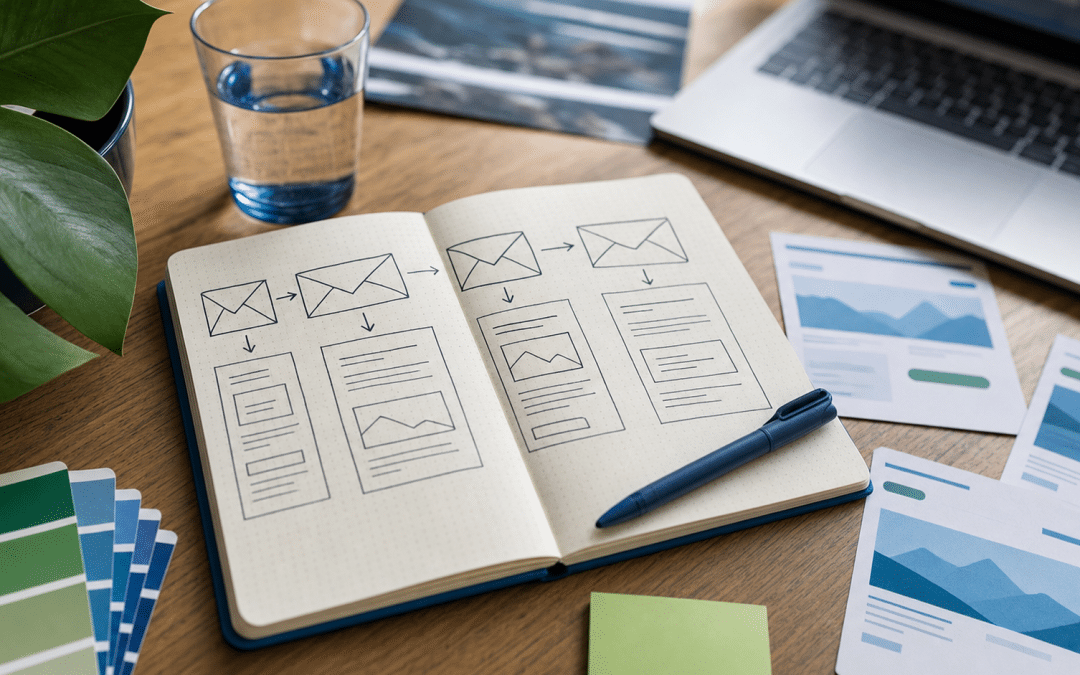
Email marketing examples show a campaign's trigger, structure and the single action each message is built to produce, so you can copy the mechanism instead of the design. This post breaks down 12 campaign types that recur across the big inspiration galleries, borrows technique from Klaviyo's descriptions of overseas emails, and adapts each type to the rules of email marketing in South Africa.
The galleries that rank for this search are built around overseas brands. The Really Good Emails page we fetched in October 2026 showed international brands and no South African senders, and Klaviyo's roundup of B2C emails, dated 29 September 2026, names brands we did not identify as South African. That suits layout ideas. It does not help an operator who must collect consent under POPIA, price in Rand and send from a list that may be much smaller.
No first-party campaign data went into this post. Where an overseas brand is named, Klaviyo's roundup describes that email and only the technique is borrowed. Each campaign type also carries the South African constraint that changes how you build it.
Quick Answer
The most useful email marketing examples are triggered campaigns, not designs: a welcome, an abandoned cart, a browse follow-up, a post-purchase guide, a win-back. In Omnisend's 2025 data from its own merchants on paid plans (not a South African sample), abandoned cart, welcome and browse abandonment emails accounted for 87% of automated orders. Build those first, then add the broadcast types, and check each against POPIA's consent rules and Gmail's sender requirements before you send.
Jump to
Not sure which of these your list is ready for?
Send us your platform and the flows you already run and we will show you which of the 12 you are missing.
Get a free auditEmail Marketing Examples: How to Read a Campaign Before You Copy It
Good email campaign examples name four things: what triggers the send, what the reader is asked to do, what the message must prove, and what could go wrong for your list in particular. A screenshot gives you none of the four, and email marketing examples South African operators can act on need the local rule that changes the build. The sections below answer all of it for each campaign type.
Two rules sit underneath every example. First, consent: section 69 of POPIA prohibits electronic direct marketing, including email, unless the person has consented or is a customer under the s69(3) conditions. Under s69(2), a person who is not your customer and has not previously withheld consent may be approached only once to request it. MJK Attorneys' summary adds that the first communication must be that consent request, so a promotional first message to a prospect is the wrong opener.
According to ENS's summary of the Information Regulator's Guidance Note on Direct Marketing (3 December 2024), legitimate interest cannot replace consent for electronic direct marketing such as email, though it can apply to non-electronic direct marketing. We read the guidance only through that summary, which does not say whether business email addresses are treated differently, so do not assume a B2B exemption. This is a plain-language reading, not legal advice.
Second, mailbox rules, which split by volume. Google's sender guidelines apply to all senders to personal Gmail accounts, who must set up SPF or DKIM and keep the spam rate reported in Postmaster Tools below 0.3%.
Senders of more than 5,000 messages a day to Gmail accounts are bulk senders and must also have SPF and DKIM together, set up DMARC, and support one-click unsubscribe with a clearly visible unsubscribe link in marketing messages. As of the page we read in October 2026, Google also recommends a spam rate below 0.10%. For the full picture, see POPIA email compliance.
| # | Campaign | Trigger | South African constraint | Best for |
|---|---|---|---|---|
| 1 | Welcome | Consented sign-up | Consent record must exist before it sends | Every list |
| 2 | Preference and consent confirmation | Form submit | POPIA s69(2): one approach, which is itself the consent request, if consent was not withheld before | Lists built from events, forms, competitions |
| 3 | Lead-magnet delivery | Download request | Check what the form said the person agreed to before adding them to marketing sends | B2B and services |
| 4 | Abandoned cart | Cart left, no order | Check how your platform labels orders awaiting EFT payment | Shopify and other online stores |
| 5 | Browse follow-up | Product viewed, no cart | Needs identified visitors only | Stores with a large catalogue |
| 6 | Post-purchase guide | Order placed or delivered | Courier tracking and delivery expectations | Products that need setup or care |
| 7 | Newsletter | Calendar | List size and sending rhythm | Brands with content to share |
| 8 | Review or feedback request | Delivery confirmed | Send after the parcel arrives, not after dispatch | Repeat-purchase categories |
| 9 | VIP or loyalty tier | Spend or order threshold | Rand thresholds you can afford to honour | Stores with repeat buyers |
| 10 | Sale announcement | Calendar or stock event | Big sale periods crowd every inbox | Retail and ecommerce |
| 11 | Win-back | Silence over a window you choose | Opens alone are a weak signal, so segment on clicks and purchases too | Lapsing customers |
| 12 | Sunset | No response to the win-back | Good practice: keep a suppression record of opt-outs when you remove | Any list that has aged |
Campaigns 1 to 3: What Happens When Someone First Subscribes?
First-contact campaigns are the welcome, consent-confirmation and lead-magnet messages that turn a sign-up into a confirmed, understood relationship. They are the cheapest to build because every new subscriber triggers them automatically.
1. Welcome message
A welcome message is the first send after consent, and its job is to deliver whatever was promised at sign-up and set expectations for what follows. Klaviyo's roundup describes a Little Sleepies welcome that combines a founder introduction, a product showcase, a discount and a request for more data about the subscriber. The transferable move is the data request: one question that lets you segment from day one. The step-by-step build is in welcome sequence setup.
Among email marketing campaign examples, the welcome is the easiest to get right because it needs only one next step. The South African adjustment is the offer. State discounts in Rand as they appear at checkout, and make sure the sign-up form records when and how consent was given before this message ever fires.
2. Preference and consent confirmation
A confirmation message proves that the person who gave the address wants the mail, and it records the choice in a form you can show later. For a prospect who is not yet a customer, s69(2) allows one approach to request consent, so this message has to be clear. Section 69(4) also requires every direct marketing message to identify the sender and give an address for requests to stop, so include who you are, what you will send and how to opt out. Offer a short choice of topics rather than a single yes or no. A preference centre lets people narrow what they get instead of leaving.
3. Lead-magnet delivery
A lead-magnet delivery message hands over a guide, checklist or price list and positions the next step, and it matters most for B2B and service businesses where there is no cart to recover. Our reading of s69(1) is that downloading a file is not the same as agreeing to ongoing marketing, so the sign-up wording should say that a newsletter or follow-up will come. If the form did not say so, take advice before adding the person to marketing sends. The list-building guide covers form wording.
Campaigns 4 to 6: Which Triggered Messages Recover Revenue?
Revenue-recovery campaigns are the abandoned cart, browse follow-up and post-purchase messages that recover or extend revenue from people who have already shown intent. In Omnisend's 2025 data, abandoned cart, welcome and browse abandonment emails, its top three automation types, accounted for 87% of automated orders. That sample is Omnisend merchants on paid plans, not South African stores, so treat it as direction, not a benchmark.
4. Abandoned cart
An abandoned cart message reminds a shopper who added items and left without ordering, and the strongest versions show the exact items, the price and the next step. Klaviyo's roundup describes a Pulp & Press version built on product reminders plus recommendations. These abandoned cart email examples all share one rule: the reminder is only as good as the exclusion logic behind it.
The South African wrinkle: many South African shoppers pay by EFT or instant EFT, for example through Ozow or PayFast, so check whether your platform treats an order awaiting that payment as an order or as an abandoned cart. If it can look abandoned, exclude recently created orders from the reminder as a working rule, so you do not chase a customer who is mid-payment.
On Shopify the mechanics, timing and incentive logic are in abandoned cart recovery on Shopify.
5. Browse follow-up
A browse follow-up is a lighter nudge to a visitor who viewed products without adding to cart, and it works only when the platform can identify the visitor, which means they have already given you an address. Klaviyo's roundup describes a Taylor Stitch version that uses premium photography and removes risk, the objection that stops people at the product page. Keep it softer than a cart reminder: show what they looked at, and answer returns or delivery questions instead of pushing a discount.
6. Post-purchase guide
A post-purchase guide tells a new customer how to use, set up or care for what they bought, and it reduces the support queries and returns that follow a confusing first week. Klaviyo's roundup describes an ILIA email built as a product tutorial for immediate use. In South Africa, put the courier tracking link and the realistic delivery expectation in the transactional message, and keep the guide separate. The overlap with transactional email is worth settling before you build.
Takeaway
Triggered campaigns for first contact and recovery are the highest-priority builds because they fire on intent the reader has already shown. Build each with a trigger, one next step for the reader, and a rule for who must not receive it.
Chasing customers who already paid?
Share your cart flow and we will check whether it excludes pending orders and recent buyers.
Get a free auditCampaigns 7 to 9: How Do You Keep Customers Reading?
Relationship campaigns are the newsletter, review request and loyalty-tier messages that keep a customer engaged between purchases. They are calendar or threshold-driven, so they need more judgement than the triggered ones above.
7. Newsletter
A newsletter is a regular send that earns attention with content first and a product mention second. Klaviyo's roundup describes a Graza newsletter that pairs product education with lifestyle content. For a South African brand with a modest list, the lesson is consistency over volume: a rhythm you can keep beats a design you cannot. If you want the format and cadence in detail, read newsletter strategy.
8. Review or feedback request
A review request asks a recent buyer for a rating after they have used the product, and its timing depends on delivery, not dispatch. Trigger it from a delivered status, or from a delay that covers your slowest courier, so nobody is asked to review a parcel that has not arrived. Keep the ask to one click where your platform allows it.
9. VIP or loyalty tier
A loyalty-tier message tells a customer they have crossed a spending threshold and what they now unlock. Klaviyo's roundup describes a SABA email that gives a discount based on spending tiers. Set the thresholds in Rand from your own average order value, and only promise a perk you can fund on the cheapest qualifying order. Overpromising here is a margin problem, not a copy problem. For the retention logic behind it, see customer retention emails.
Takeaway
Relationship campaigns depend on timing and thresholds you set yourself: send a review request after delivery, not dispatch, and set loyalty tiers in Rand that you can fund on the cheapest qualifying order. A newsletter you can keep sending beats a polished one that stops after three issues.
Campaigns 10 to 12: Broadcast Sales and List Clean-Up
Broadcast and clean-up campaigns are the sale announcement, win-back and sunset messages that move volume, reactivate lapsing customers and then retire the rest. They are where list quality and deliverability are decided.
10. Sale announcement
A sale announcement is a time-bound broadcast built around one offer, one deadline and one button. Klaviyo's roundup describes several promotions that add a countdown, a gamified incentive or a themed hook. In South Africa the crowded period is the late-year sale season, when every sender competes for the same inbox, so list quality and sending authentication deserve attention before subject-line tricks.
Planning for that period is covered in Black Friday email planning, and subject-line support text is covered in preheader text.
11. Win-back
A win-back message goes to customers or subscribers who have gone quiet, and it either restarts the relationship or gives you grounds to stop mailing them. The segment is the hard part. Opens are a weak signal on their own, so as a working practice define silence by clicks and purchases together, not opens alone. Mechanics are in email re-engagement, and the segment itself is a build question on platforms such as Klaviyo, covered in lists vs segments.
12. Sunset
A sunset message is the final send to non-responders, telling them they will stop hearing from you unless they act. Klaviyo's roundup describes a Grüns sunset that uses humour and a lifetime discount to tempt a reply. Many practitioners trim recipients who never engage. Remove them, and as good practice keep a suppression record of opt-outs, as email list cleaning explains.
In What Order Should a South African Operator Build These?
A sensible build order for these email marketing examples starts with the campaigns that fire on intent and finishes with the ones that need history, because the later campaigns need data the early ones create. This is a working sequence, not a published standard.
- Welcome and consent confirmation (1 and 2). Nothing else is safe to send until consent is recorded.
- Abandoned cart (4). It fires on the strongest intent signal a store has.
- Post-purchase guide (6). It protects the order you just won.
- Browse follow-up (5) and review request (8). Add them once cart and delivery data flow cleanly.
- Newsletter (7) and sale announcements (10). Broadcasts come after the automated base exists.
- Win-back and sunset (11 and 12). They only make sense once the list has aged.
A service business without a cart swaps in the lead-magnet delivery (3) and a nurture sequence. Run the whole programme through the email marketing audit checklist once it is live to find the gaps.
Why South African Businesses Choose Growth Pulse Media
Growth Pulse Media is a Johannesburg agency founded by Dirk van Greuning, who built and scaled a large South African ecommerce business before starting it. All work is executed in-house, with a limited client load for senior attention.
GPM is a registered Shopify Partner and an Omnisend Certified Partner, and our email marketing service is built around Shopify stores and Omnisend. If you want the flows above reviewed against your own store, send us your setup and we will tell you what to build first.
Who This Is Not For
This breakdown is the wrong fit if you want brand-by-brand South African teardowns, legal advice, or a campaign calendar.
You want named South African brand teardowns. This post paraphrases Klaviyo's descriptions of overseas emails and has no first-party data, so it describes campaign types, not specific South African brands' emails.
You need a legal opinion on consent. The POPIA points here are read through law-firm summaries. Whether your sign-up wording is compliant needs a qualified adviser.
You have no list and no consent records yet. Start by building the list and the sign-up wording, then come back to these campaigns.
Want an outside audit of your current campaigns?
We will look at your flows, consent wording and list health and tell you what to fix first.
Book a free auditFrequently Asked Questions
What are good email marketing examples for a small South African business?
Start with a welcome message, an abandoned cart reminder and a post-purchase guide, because each fires on intent the customer has already shown. In Omnisend's 2025 data from its own paid-plan merchants, abandoned cart, welcome and browse abandonment emails accounted for 87% of automated orders, though that sample is not South African.
What should a welcome email example include?
A welcome email should deliver what the sign-up promised, say what will follow and ask one question that lets you segment the subscriber. State any discount in Rand as it appears at checkout, and make sure the consent record exists before the message sends.
Do abandoned cart email examples work for EFT shoppers?
They can, if the flow does not chase people who are mid-payment. Check whether your platform treats an order awaiting EFT payment as an order or as an abandoned cart, and if it can look abandoned, exclude recently created orders from the reminder as a working rule.
Does POPIA let me email someone who downloaded my guide?
Not automatically. POPIA s69 prohibits electronic direct marketing unless the person has consented or the existing-customer exception under s69(3) applies, and a prospect who has not withheld consent can be approached only once to request it. Our reading is that you should add marketing only if the sign-up wording said it would follow, and take advice if it did not.
What is a sunset email and should you send one?
A sunset email is the final message to subscribers who ignored your win-back, telling them they will stop hearing from you unless they act. Send one if your list has aged, then remove non-responders. As good practice, keep a suppression record of opt-outs so nobody who asked to stop is mailed again.
Ready to Build Campaigns That Fit Your List?
Growth Pulse Media works from Johannesburg with Shopify and Omnisend and plans email around South African rules such as POPIA. No obligation — we'll get back to you within 24 hours.
Get Your Free Audit