
 Add to Preferred Sources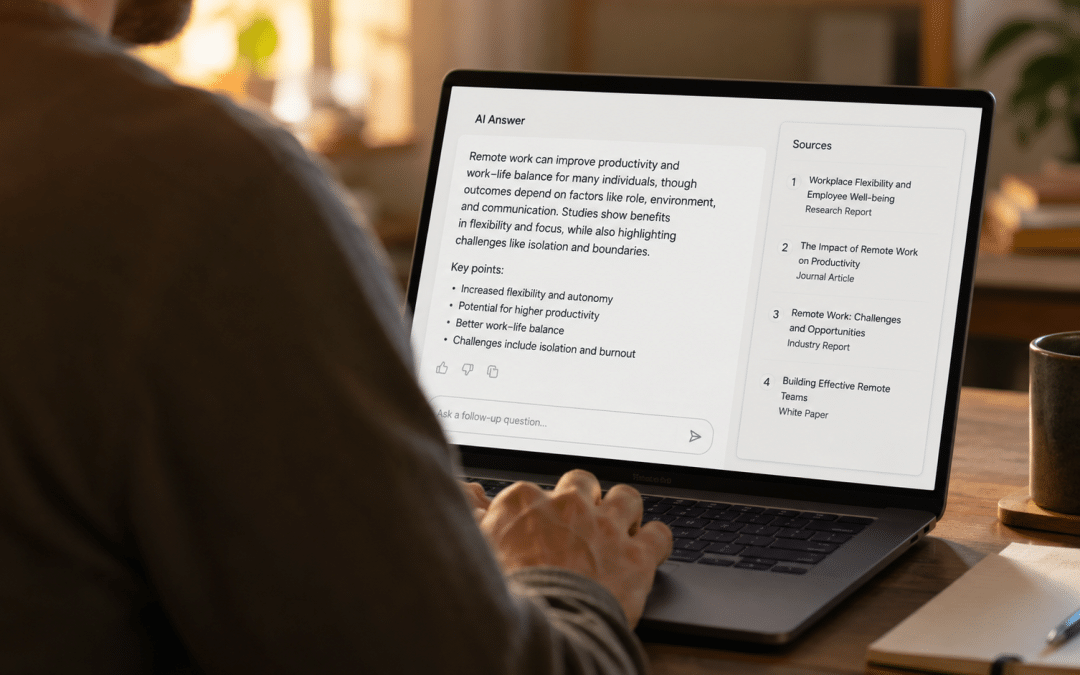
Perplexity optimisation is the practice of structuring your content so Perplexity cites it as a numbered source in its answers — and it's the most measurable answer-engine channel there is, because Perplexity shows its sources on nearly every response, as our full guide to answer engine optimisation in South Africa covers.
Perplexity is built differently from every other answer engine, and that difference is your opening. It never answers without showing its work, listing real, clickable sources on each search. Getting cited is the entire goal, and its rules for who it cites are unusually specific. This guide covers them, building on what answer engine optimisation is.
Quick Answer
Perplexity optimisation earns citations by passing two gates: retrieval (Perplexity can crawl and find your page) and absorption (your evidence is strong enough to shape the answer, not just sit as a footnote). Because Perplexity runs a live web search on nearly every query and weights freshness heavily, the winners are crawlable, recently updated pages that answer the exact question with concrete, checkable facts.
Curious whether Perplexity cites you or a competitor for your key queries? We'll test it for free.
Get a Free Perplexity Visibility TestHow Perplexity Optimisation Actually Works
Perplexity optimisation works by earning a place among the sources Perplexity retrieves and cites for a query. Perplexity runs on retrieval-augmented generation — it queries the live web in real time rather than leaning on a frozen training snapshot, then builds an answer from the pages it pulls.
That real-time behaviour is the defining trait. On nearly every query, Perplexity searches, evaluates roughly ten pages, and cites three to five of them with numbered links. Your page has to be found in that retrieval step, then be convincing enough to make the shortlist.
The payoff is high-intent traffic. Those citations reach people in the middle of making a decision, and the click-through on a cited source runs well above a normal search result. Being named is worth more here than a mid-page ranking is in classic search.
Key Takeaway
Perplexity searches the live web on nearly every query, reviews around ten pages, and cites three to five. That makes it a real-time retrieval engine, not a memory-based one — so freshness and crawlability matter more than they do for engines that lean on training data. The goal isn't ranking; it's being one of the handful of sources named in the answer.
Why Perplexity Is Different From Other Answer Engines
Perplexity differs from other answer engines in being citation-first and freshness-obsessed, which makes it both the most transparent and the most SEO-like of them. Every answer ships with numbered citations linked to source URLs, so you can count your citation share directly rather than inferring it.
The freshness weighting is the other big difference. Perplexity favours recent, factual content more aggressively than engines that rely on training data, so stale dates and outdated numbers quietly decay your citation rate. This rewards businesses that keep content genuinely current.
It also leans on community reputation, Reddit especially. Perplexity surfaces what real users recommend, so accurate information about your brand living in the conversations where your category is debated becomes a genuine citation signal — one most competitors ignore entirely.
Treat that community angle as a reputation channel, not a billboard. Find the forums and threads where your category is actually debated, become genuinely useful there over time, and make sure accurate information about your brand exists in those conversations. The aim is to be the answer real users recommend.
Key Takeaway
Perplexity is the most citation-transparent engine — every answer shows numbered sources, so measuring your share needs no guesswork. It weights freshness harder than rivals and leans on community reputation like Reddit. That combination means the winners are current, factual, well-structured pages backed by a genuine presence in the conversations where buyers ask for recommendations.
Want your exact Perplexity citation share measured against competitors? Ask us for a free count.
Get a Free Citation Share CountThe Technical Gate: Getting Crawled by PerplexityBot
The technical gate is crawler access — Perplexity can only cite what it can reach. Per Perplexity's own crawler documentation, it runs two agents: PerplexityBot, which builds the search index, and Perplexity-User, which fetches pages live on a user request. Both must be able to reach your site.
Two things block businesses here. First, robots.txt or a WAF quietly disallowing PerplexityBot — one audit found a client's bot blocked at the firewall, and removing the rule earned a dozen new citations within a month. Second, JavaScript: these crawlers read raw HTML and cannot render JavaScript, so content that only appears after scripts run is invisible to them.
Strong: A Johannesburg firm added explicit allow rules for both Perplexity agents, confirmed its WAF let their IP ranges through, and served its key content in server-rendered HTML. Perplexity began crawling and citing its pages within weeks.
Weak: A competitor's main copy loaded only after JavaScript ran, so the text-based crawler saw an empty page. Beautiful in a browser, invisible to Perplexity — it was never a citation candidate for any query.
The Two Gates: Retrieval and Answer Absorption
Getting cited requires passing two separate gates, and most businesses fail the second. The first is retrieval selection — is your page found and shortlisted for the query? The second is answer absorption — is your evidence strong enough to actually shape the generated answer buyers read?
The common failure is subtle. Your page shows up as a footnote source, but a competitor's content is what actually shapes the answer text. The buyer reads the competitor's framing and never registers that you were cited at all. A footnote without influence wins nothing.
Passing the second gate is about evidence density. Perplexity's retrieval layer matches pages to specific questions, and generic overviews lose to pages that answer the precise question asked. Lead with a direct answer in the first 100 words, then prove it — don't make the retrieval system infer relevance from a long preamble.
Key Takeaway
Perplexity citation has two gates: retrieval (are you found?) and answer absorption (does your evidence shape the answer?). Most brands pass the first and fail the second — cited as a footnote while a competitor's content frames the response. The fix is a direct answer in the first 100 words backed by concrete, checkable facts, so your evidence is strong enough to lead.
The Signals That Earn Perplexity Citations
The signals that earn Perplexity citations are accessibility, direct answers, freshness, strong entity signals, and concrete evidence — the patterns that repeat across pages Perplexity cites consistently. Get these aligned and you clear both gates.
Structure and specificity lead. Answer the question in the opening, use question-shaped headings, and support claims with checkable facts — a Rand figure, a named source, a specific timeline. Vague content gives the retrieval layer nothing to match and the absorption step nothing to quote.
Then freshness, schema, and reputation. Keep content genuinely current, since recency is weighted heavily. Add Article and FAQ schema so the engine parses your content cleanly, and consider an llms.txt file pointing crawlers to your priority pages — a low-cost positive signal. Reinforce it all with a real presence in the community conversations Perplexity draws on.
Key Takeaway
Consistently cited pages share the same traits: crawlable, answer-first, recently updated, entity-clear, and backed by concrete evidence. Add Article and FAQ schema and an llms.txt pointing to priority pages, and reinforce with genuine community presence. Specificity is the multiplier — real numbers and named sources give the retrieval and absorption steps something solid to match and quote.
Real-World Example: A Cape Town B2B Services Firm
A Cape Town B2B services firm was crawlable but almost never cited, because its pages buried answers under long intros and carried stale dates. We rebuilt the top pages answer-first, tightened each to a precise question, refreshed the content genuinely, added FAQ schema, and seeded accurate information into the community threads where its category is discussed.
| Metric | Before | After (120 days) | Change |
|---|---|---|---|
| Cited in Perplexity answers (20-query test) | 1 of 20 | 10 of 20 | +9 queries |
| Perplexity referral visits / month | 16 | 241 | +1,406% |
| Qualified enquiries / month | 7 | 19 | +171% |
| Monthly pipeline value | R240,000 | R560,000 | +133% |
The decisive change was moving the answer to the top of each page. Once the first 100 words directly answered the query with concrete detail, the firm stopped being a footnote and started shaping the answers — the difference between the two citation gates, made visible in the pipeline.
How to Measure Your Perplexity Citation Share
Measuring Perplexity visibility is easier than any other engine, because the citations are explicit. Once a month, ask Perplexity the 15 to 20 highest-intent questions in your category, then simply count how many name you versus competitors — no inference required, since every source is listed.
Server logs add a second read. PerplexityBot leaves traces, so the pages it visits most often are your strongest citation candidates. Watching which URLs it crawls tells you where to focus your freshness and evidence work for the fastest return.
Referral analytics closes the loop. Perplexity referral visits appear in Google Analytics, and because cited buyers arrive mid-decision, this traffic tends to convert above site average. Track the citation count, the crawl pattern, and the referral trend together for a complete picture.
Use those three reads to set priorities. If PerplexityBot isn't crawling your key pages at all, fix accessibility first. If it crawls but you're rarely cited, your answers aren't direct or specific enough. And if you're cited but only as a footnote, the absorption gate is where the work is — tighten the evidence until your page leads the answer.
The Growth Pulse Media Difference
Most agencies treat every answer engine the same. We don't — because Perplexity rewards freshness and precise answers in ways ChatGPT and Gemini don't, and a one-size playbook leaves citations on the table. We tune the work to each engine while building the one content foundation that serves them all.
Our AEO services for South African businesses apply an operator's lens: crawler access confirmed first, then answer-first pages with concrete SA evidence, genuine freshness, schema, and community reputation. If you'd rather measure before committing, we can run an LLM visibility audit and count your citation share across the engines first.
Who This Is NOT For
Perplexity optimisation fits most SA businesses — but not every situation. Here's when it doesn't apply cleanly.
Not for you if your content lives behind JavaScript. Perplexity's crawlers read raw HTML and can't render scripts, so copy that only appears after JavaScript runs is invisible to them. Fix server-side rendering before anything else, or nothing downstream matters.
Not for you if you can't keep content current. Freshness is weighted heavily, so this rewards genuine, ongoing updates. Businesses wanting to publish once and never touch a page again will watch their citation rate quietly decay.
Not for you if you refuse to publish specifics. Both citation gates depend on concrete, checkable claims. If you keep prices and detail vague to protect margins, the retrieval step finds nothing to match and the absorption step nothing to quote.
Not for you if your brand has no community footprint and won't build one. Perplexity leans on reputation signals like Reddit. If accurate information about you exists nowhere buyers discuss your category, you're missing a lever competitors can use against you.
Still reading? Then your foundations are probably worth building on. Let's find where Perplexity cites competitors instead of you.
Book Your Free Perplexity Gap SessionFrequently Asked Questions
What is Perplexity optimisation?
It is the practice of structuring your content so Perplexity cites it as a numbered source in its answers. Because Perplexity runs a live web search on nearly every query and always shows its sources, the work combines classic SEO accessibility with engine-specific signals: freshness, direct answers, concrete evidence, and a genuine community reputation.
How does Perplexity decide which sources to cite?
Perplexity searches the live web, evaluates roughly ten pages per query, and cites three to five. It passes two gates: retrieval, whether your page is found and shortlisted, and absorption, whether your evidence is strong enough to shape the answer. It favours crawlable, recently updated pages that answer the precise question with checkable facts.
Do I need to allow PerplexityBot to get cited?
Yes. PerplexityBot builds the index that powers cited answers, and Perplexity-User fetches pages live on a user request. If robots.txt or a WAF blocks them, your content is far less likely to be indexed and cited. Allowing both crawlers and serving content in raw HTML is the technical prerequisite behind every citation.
Why does freshness matter so much for Perplexity?
Because Perplexity runs a real-time search on nearly every query rather than relying on training data, it favours recent, factual content and quietly demotes stale pages. Genuinely updating content keeps your citation rate healthy, especially for fast-moving topics like pricing and comparisons. Fake date changes without real updates are increasingly ignored.
Does Perplexity cite South African businesses?
Yes, increasingly for research and comparison queries. Perplexity favours sources that answer the precise question with concrete, local specificity — Rand pricing, local timelines, SA-relevant context. Businesses that publish that detail and keep it current get cited ahead of generic global pages for South African buyer questions.
How do I measure my Perplexity citations?
Perplexity is the easiest engine to measure, because every answer lists its sources. Ask it your top buyer queries monthly and count how often you appear versus competitors. Add server-log analysis to see which pages PerplexityBot crawls most, and track referral traffic in Google Analytics to close the loop on conversions.
Worried Perplexity is too small to matter for SA businesses? It processes tens of millions of searches a day and its cited-source click-through runs far above normal search, so even a modest citation share reaches buyers at the exact moment they're deciding.
Find Out Your Perplexity Citation Share
We'll test 20 real buyer queries in Perplexity, count exactly where you're cited versus where competitors are named instead, and send you a report with the three highest-impact fixes ranked by payoff. Built by operators who run PayFast, Klaviyo and The Courier Guy stacks daily — not theorists chasing the newest acronym. No obligation — we'll get back to you within 24 hours.
Get My Free Perplexity Citation Report