
 Add to Preferred Sources
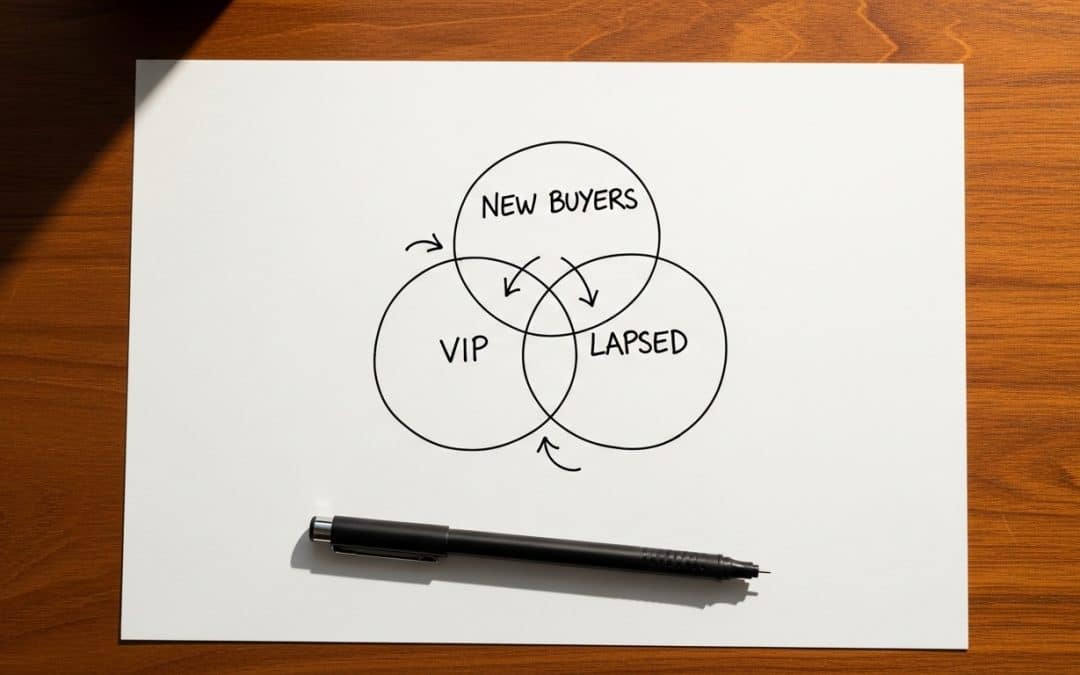
Email segmentation in South Africa is the practice of dividing an email subscriber list into smaller, targeted groups based on customer behaviour, purchase history, engagement level, or demographic data — and sending each group a message relevant to where they are in their customer journey.
Most businesses send the same email to their entire list and wonder why open rates are low, unsubscribes are rising, and email revenue is flat.
The answer is almost always segmentation — or the lack of it. This guide explains email segmentation for South African businesses — the core segments every email list needs, how to build them in Klaviyo or Omnisend, and the revenue difference that correct segmentation produces.
Email segmentation is the intermediate step between having a subscriber list and running a high-performing email automation programme — you cannot personalise automated flows without first understanding which customer groups your list contains and what each group needs to hear.
Quick Answer
Email segmentation in South Africa means splitting your subscriber list into groups — such as new subscribers, active buyers, VIP customers, lapsed customers, and cart abandoners — and sending each group relevant email content rather than broadcasting the same message to everyone.
Segmented email campaigns consistently outperform unsegmented broadcasts across every metric: open rates are 14–20% higher, click-through rates are 60–100% higher, and revenue per recipient (RPR) is 2–3x higher for segmented sends compared to batch-and-blast campaigns. For Shopify and WooCommerce stores using Klaviyo, segmentation is built from real-time purchase data and on-site behaviour — no manual list management required.
Running an email list without segmentation — and watching open rates drop while unsubscribes climb? We configure Klaviyo segmentation for SA stores so every email reaches the right subscriber.
Get a Free Email Segmentation AuditEmail Segmentation South Africa: Why Unsegmented Lists Underperform
Email segmentation in South Africa is best understood as the difference between speaking to a crowd and speaking to an individual.
An unsegmented email list treats a first-time subscriber who joined yesterday the same as a VIP customer who has spent R15,000 over three years — sending both the same promotional email at the same send time.
The first-time subscriber has no relationship context yet. The VIP customer does not need a welcome discount. Both receive irrelevant content — and both are more likely to ignore, delete, or unsubscribe.
Email inbox providers (Gmail, Outlook, Yahoo) use engagement signals — open rates, click rates, spam reports — to determine whether future emails from your domain reach the inbox or the spam folder.
Businesses that send unsegmented broadcasts to disengaged subscribers consistently damage their sender reputation, which reduces deliverability across their entire list — including to their most engaged customers. Segmentation protects deliverability by ensuring emails are only sent to subscribers who are likely to engage with them.
Unsegmented email send (common mistake): An ecommerce store with 4,200 subscribers sends a 15% off promotion to their entire list every Friday.
1,800 of those subscribers have not opened an email in 6+ months. 600 purchased last week and receive the same discount they did not need at checkout. 200 are VIP customers who feel undervalued receiving the same generic offer as everyone else. Open rate: 11%. Unsubscribe rate: 0.9%. Domain reputation: declining.
Segmented email send (correct approach): Same store sends the 15% off promotion only to subscribers who have not purchased in 45–90 days (lapsed segment, 1,100 subscribers).
VIP customers receive an exclusive early-access email the day before. New subscribers receive a welcome discount through a dedicated welcome series flow. Recently purchased customers receive a cross-sell email instead of the promotion. Open rate: 34%. Unsubscribe rate: 0.2%. Domain reputation: stable and improving.
Email Segmentation South Africa: The 6 Core Segments Every List Needs
According to Klaviyo's email segmentation research, the most effective ecommerce email programmes build segments from customer behaviour data rather than demographic data alone — because what customers do (purchase, browse, abandon cart) predicts what messaging will be relevant far more accurately than who they are. These six segments are the foundation of every well-structured email list.
Segment 1: Active Engaged Subscribers
Active engaged subscribers are contacts who have opened or clicked at least one email in the past 90 days.
This is your core sending audience — the subscribers most likely to open, click, and convert. Engaged segments should receive your most frequent email sends, including promotional campaigns, new product launches, and content newsletters. Limiting high-frequency sends to your engaged segment protects sender reputation while maximising revenue from your most responsive subscribers.
Segment 2: New Subscribers (0–30 Days)
New subscribers have joined your list within the past 30 days but have not yet purchased.
This segment should be in your welcome series flow — receiving a sequence of 3–5 emails introducing your brand, bestsellers, social proof, and a first-purchase incentive. New subscribers should not receive general promotional campaigns until they have completed or exited the welcome series, as overlapping send timing dilutes the welcome flow's conversion performance.
Segment 3: One-Time Buyers
One-time buyers have made exactly one purchase but have not returned. This segment represents significant revenue opportunity — converting a one-time buyer into a repeat buyer costs far less than acquiring a new customer, and a repeat purchase establishes a customer relationship pattern that drives long-term customer lifetime value.
One-time buyers should receive post-purchase cross-sell sequences, product education content, and re-engagement incentives at 45 and 90 days post-purchase.
Segment 4: VIP Customers
VIP customers are your highest-value subscribers — typically defined as customers who have made 3+ purchases or spent above a defined Rand threshold (e.g.
R3,000+ lifetime). VIP customers should receive exclusive early access to sales and new products, personalised product recommendations, and recognition messaging that acknowledges their loyalty.
Sending VIP customers the same generic promotional emails as first-time buyers consistently underperforms — VIP customers respond to exclusivity, not discounts they can get on a public email list.
Segment 5: Lapsed Customers (90–180 Days No Purchase)
Lapsed customers purchased previously but have not bought in 90–180 days. This segment is the win-back target — subscribers who know your brand, have purchased before, and may have simply been inactive rather than lost.
Lapsed segments should receive a win-back sequence: Email 1 at 90 days (check-in, no discount), Email 2 at 120 days (new arrivals or bestsellers since their last purchase), Email 3 at 150 days (time-limited win-back incentive). Customers who do not re-engage by 180 days should be moved to a sunset segment before list suppression.
Segment 6: Unengaged Subscribers (180+ Days No Open)
Unengaged subscribers have not opened an email in 180+ days. Continuing to send emails to this segment damages sender reputation and reduces deliverability across your entire list.
Unengaged subscribers should receive a single re-engagement email ("Do you still want to hear from us?") before being suppressed from active sending. List hygiene — removing or suppressing unengaged contacts — consistently improves open rates, deliverability, and revenue per email send for the active portion of your list.
The List Size vs List Quality Reality
An email list of 2,000 highly engaged subscribers consistently outperforms a list of 10,000 subscribers with 8,000 unengaged contacts — in revenue, deliverability, and long-term sender reputation.
Businesses that prioritise list size over list quality consistently spend more on email platform fees, generate lower open rates, and face deliverability problems that reduce revenue from their active subscribers. List hygiene and segmentation are the operational levers that keep email ROI high as list size grows.
Want to know which segments your Klaviyo or Omnisend list already contains — and which revenue opportunities your current sending strategy is missing?
Get a Free Email List Segmentation AssessmentEmail Segmentation South Africa: Illustrative Results
This example is illustrative: the figures are modelled to show how the approach works, not a client's measured results.
A Cape Town lifestyle ecommerce store had a Klaviyo list of 5,800 subscribers but was sending the same weekly promotional email to all 5,800 every Thursday. Open rate was 13.4%, click rate was 0.8%, and email was generating R9,200/month in attributed revenue. After implementing the six core segments and send-strategy adjustments over 8 weeks, email performance changed significantly.
| Metric | Before Segmentation | After Segmentation (Month 3) |
|---|---|---|
| Average open rate | 13.4% | 31.2% |
| Average click rate | 0.8% | 3.1% |
| Monthly email revenue | R9,200 | R38,400 |
| Unsubscribe rate per send | 0.8% | 0.2% |
| Active sending list size | 5,800 (all) | 2,900 (engaged segment only for promos) |
| Klaviyo plan cost | $150/month (5,800 profiles) | $75/month (2,900 active profiles after suppression) |
Email revenue increased from R9,200 to R38,400/month while the Klaviyo plan cost halved — because suppressing unengaged contacts dropped the active profile count below the next pricing tier. Segmentation improved email ROI by reducing platform cost and increasing revenue simultaneously.
Segmentation and Platform Cost
Email segmentation reduces Klaviyo and Omnisend monthly costs by enabling list hygiene — suppressing unengaged subscribers drops the active profile count and moves accounts to lower pricing tiers.
A store with 6,000 total profiles but only 2,800 engaged profiles pays for 2,800 active profiles after segmentation and suppression — not 6,000. Segmentation is one of the few email marketing actions that simultaneously increases revenue and reduces platform cost.
How Growth Pulse Media Configures Email Segmentation
Growth Pulse Media configures Klaviyo email segmentation for South African ecommerce businesses — building all six core segments, configuring send strategies per segment, suppressing unengaged contacts to protect deliverability, and connecting segmentation logic to automated flows.
Segmentation is always configured as part of a complete Klaviyo email strategy — not as a standalone tool disconnected from automation and campaign planning.
We have direct operator experience with Klaviyo segmentation on Shopify stores — including purchase frequency segments, average order value segments, category preference segments, and geographic segments for SA businesses with regional distribution constraints. All segmentation configuration is executed in-house. We do not outsource Klaviyo configuration offshore.
Who This Is NOT For
Email segmentation is not equally valuable at every list size or business stage.
Your email list has fewer than 500 active subscribers. Email segmentation requires sufficient list volume to create segments with meaningful sample sizes.
Below 500 active subscribers, segmenting into 6 groups creates segments of 50–80 contacts each — too small for statistical reliability and A/B testing. At this stage, focus on list building first through website popups, checkout email capture, and social lead forms. Add segmentation once your active list reaches 500+ contacts.
You have not set up basic automation flows yet. Email segmentation without automation is incomplete — segments identify who your subscribers are, but automation flows are what act on that information.
Businesses that build segments before configuring welcome series, abandoned cart, and post-purchase flows are segmenting a list they are not yet using effectively. Build core automation flows first — segmentation enhances flows that already exist.
You want to segment by demographics alone. Demographic segmentation (age, gender, location) is the least predictive segmentation method for ecommerce email performance.
Behavioural segmentation — based on purchase history, email engagement, on-site activity — consistently outperforms demographic segmentation for revenue per recipient. If your Klaviyo or Omnisend account does not have purchase data connected from Shopify or WooCommerce, fix the integration before building segments.
You want to create 20+ micro-segments immediately. Over-segmentation at early stages creates operational complexity without proportional revenue benefit.
Businesses that build 20 micro-segments before mastering the 6 core segments consistently maintain segments poorly — outdated segment logic, overlapping criteria, and conflicting send schedules. Start with the 6 core segments, optimise performance for 3–6 months, then expand segmentation depth as list data matures.
Ready to find out which revenue-generating segments are already hiding in your Klaviyo list — and what sending strategy would unlock them?
Get Your Free Email Segmentation ConsultationEmail Segmentation South Africa: Frequently Asked Questions
What is email segmentation in South Africa?
Email segmentation in South Africa is the practice of dividing a subscriber list into smaller, targeted groups based on customer behaviour, purchase history, engagement level, or demographic data — and sending each group relevant email content rather than broadcasting the same message to all subscribers.
Segmented email campaigns consistently generate higher open rates, click rates, and revenue per recipient than unsegmented broadcast emails sent to the entire list.
What are the most important email segments for ecommerce stores?
The six most important email segments for South African ecommerce stores are: active engaged subscribers (opened in the past 90 days), new subscribers (0–30 days, in welcome flow), one-time buyers (purchased once, not returned), VIP customers (3+ purchases or high lifetime value), lapsed customers (90–180 days no purchase), and unengaged subscribers (180+ days no open, pre-suppression).
These six segments cover the full subscriber lifecycle and enable targeted messaging at each stage of the customer relationship.
How does email segmentation improve email deliverability?
Email segmentation improves deliverability by ensuring emails are only sent to subscribers who are likely to open and engage with them.
Inbox providers (Gmail, Outlook) use engagement signals — open rates, click rates, spam reports — to assess whether future emails from your domain reach the inbox or the spam folder.
Sending promotional campaigns to unengaged subscribers generates low open rates and spam reports that damage sender reputation across your entire list. Segmenting active sends to engaged subscribers keeps engagement rates high and deliverability strong.
What email segmentation platform is best for Shopify stores?
Klaviyo is the best email segmentation platform for South African Shopify stores — syncing customer purchase history, on-site behaviour, and cart events in real time to power dynamic behavioural segments.
Klaviyo builds segments automatically from Shopify data without manual list management — new buyers, repeat buyers, lapsed customers, and VIP customers are automatically identified as purchase data flows in. Omnisend is a strong alternative for Shopify stores under R50,000/month revenue, with comparable core segmentation at lower monthly cost.
How often should email segments be updated?
Email segments in Klaviyo and Omnisend update dynamically in real time — subscribers move between segments automatically as their behaviour changes.
A subscriber who purchases moves from the lapsed segment to the active buyer segment immediately.
A subscriber who stops opening emails for 90 days automatically qualifies for the unengaged segment. Segments do not require manual updating — they reflect current subscriber behaviour at the moment of each send, which is why behavioural segmentation in Klaviyo consistently outperforms static list-based segmentation in older email platforms.
What is the revenue impact of email segmentation for ecommerce stores?
Email segmentation typically increases email revenue per recipient by 2–3x compared to unsegmented broadcast campaigns — because relevant messages generate higher open rates, click rates, and conversion rates.
Beyond direct revenue impact, segmentation reduces Klaviyo or Omnisend platform costs by enabling list hygiene (suppressing unengaged contacts reduces active profile count and lowers monthly fees).
Businesses that implement segmentation consistently alongside email automation generate the highest overall email ROI — combining automation revenue with campaign revenue from highly relevant segmented sends.
Ready to Turn Your Email List into 6 Revenue-Generating Segments That Each Receive the Right Message?
Growth Pulse Media configures Klaviyo email segmentation for South African ecommerce businesses — six core segments, send strategy per segment, list hygiene, and automation flow integration. Built by operators who have managed Klaviyo accounts at scale. No obligation — we will get back to you within 24 hours.
Get Your Free Email Segmentation Consultation