
 Add to Preferred Sources
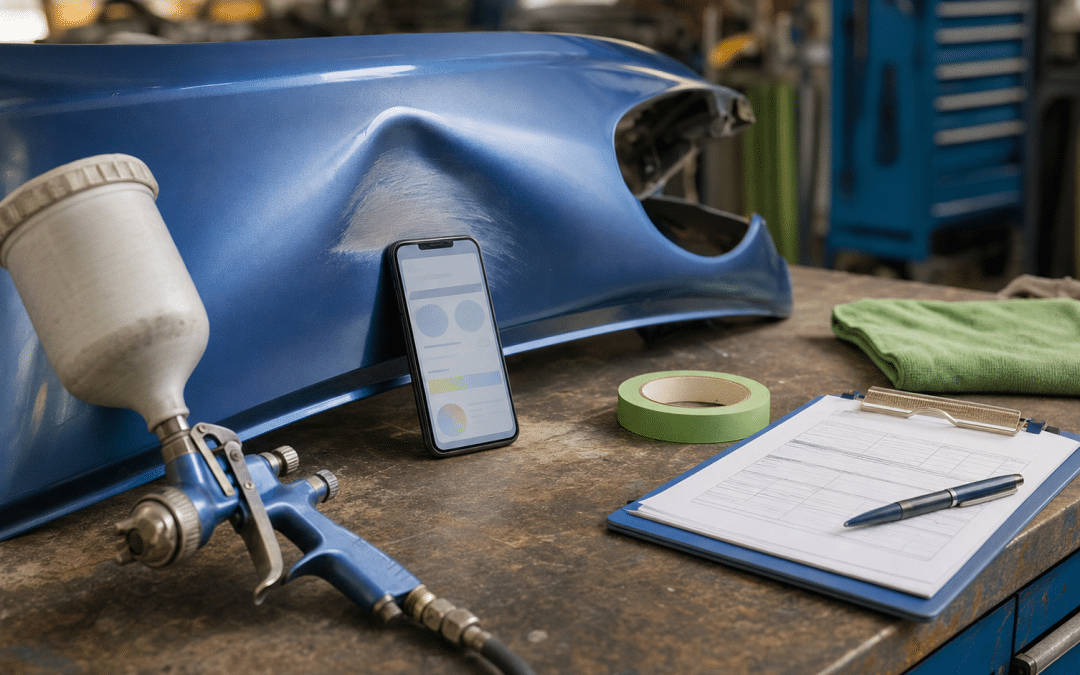
WhatsApp marketing for panel beaters means running photo quotes, insurer-approval waits, repair updates and collection messages through one WhatsApp number, then asking customers who have opted in for a review. A repair job is a chain of waiting steps, and most customers phone because nobody has told them where the job stands. The WhatsApp marketing guide for South Africa covers the channel for any industry; this post applies it to a workshop that sells a repair, not a product.
The channel is where your customers already are. The Global Digital Report 2025 from Meltwater and We Are Social puts WhatsApp use at 93.8% of active social media users in South Africa, a share of the 26.7 million social media users rather than of all adults. This post separates three things most articles blur: the customers WhatsApp can win you, the messages that cost nothing, and the messages that need permission.
Pricing and policy pages were read in October 2026. Where Meta's own page and press reports disagree, the text says so, and no per-message rand rate is printed because none could be confirmed from Meta itself.
Quick Answer
WhatsApp marketing for panel beaters works as a repair-job desk: a photo request fixes the first quote, a label tracks each car through insurer approval, and a status message at each stage replaces the "is my car ready?" call. It wins private-pay, excess-paying, fleet and broker customers; it does not create insurer-allocated work. Start on the free Business app and move to the paid API only when you need automatic updates.
In this post
Customers phoning for status updates?
Send us a screenshot of how a quote request reaches your workshop today and we will show you where the first reply is slipping.
WhatsApp Marketing for Panel Beaters: The Repair Job in One Chat
The repair lifecycle is the sequence from the first photo to the review request, and WhatsApp has a job at each of its seven stages, so the useful messages follow the car through the shop rather than a promotional calendar. Insurer-facing guides describe the same spine: the claim is lodged, the vehicle is assessed, the repairer submits a quote to the insurer for approval, and repairs begin once it is approved.
| Stage | What the message does | On the API | Best for |
|---|---|---|---|
| Enquiry | Greets, asks for photos, the vehicle and whether it is an insurance claim | Free reply inside the customer's window, per Meta's page (press reports dispute this; see the window section) | Capturing the brief before the customer calls the next shop |
| Quote | Sends an indicative estimate, or confirms the assessment slot | Free reply inside the window, per Meta's page (press reports dispute this; see the window section) | Private-pay customers deciding between workshops |
| Waiting for insurer approval | Tells the customer what you have submitted and what happens next | Template once the window has closed | Stopping "have they approved it?" calls |
| Hidden damage found | Sends photos of what stripping revealed and explains the supplementary claim, which insurer-facing guides describe as the usual route (check your insurer's process) | Template once the window has closed | Keeping the customer on side when the job grows |
| Repair in progress | Sends a short update at each stage, such as panels done or in the paint shop | Template once the window has closed | Reducing status calls |
| Ready for collection | States collection hours, what to bring and any balance or excess due | Template once the window has closed | Collection that does not need a phone call |
| After collection | One thank-you and one request for a review | Only for customers who opted in; whether a review request counts as marketing is arguable (see the POPIA section) | Reviews and word-of-mouth |
Most stages are operational messages about a job the customer already gave you. Two stages raise the permission question covered in the POPIA section below: the review request and any later offer. When customers find you through search first, Google Business Profile is where those reviews end up.
Build around the collection date
A message earns its place in a workshop when it moves the car one step closer to collection: a photo received, an approval requested, a part ordered, a spray booth slot booked. A message that does none of those is one you can skip.
Which Customers Can WhatsApp Actually Win a Panel Beater?
WhatsApp wins you customers who choose their own repairer, and it does not win you work that an insurer allocates.
Insurer-facing guides and summaries of the Competition Commission's Automotive Aftermarket Guidelines describe insurers using an electronic system to allocate repairs to a provider on their panel, often the closest one. A workshop on that panel gets the job from the system, and the chat then shapes how the customer feels about it.
Those same guides say a policyholder may choose their own repairer and that an insurer may recommend a network, so a share of insured customers can still be won on reputation. The Right to Repair SA site summarises the Guidelines as saying insurers must publish the standards used to accredit repairers and a list of their repairers on their website. These are secondary descriptions, not the Guidelines themselves, so check your own insurer agreements for the terms that apply to you.
| Where the job comes from | What WhatsApp can do | What it cannot do | Best for |
|---|---|---|---|
| Insurer-allocated claim | Keep the customer informed and handle collection | Create the referral | Protecting your standing with the insurer |
| Insured customer choosing their own repairer | Answer fast, take photos, explain the claim steps | Remove the insurer's approval step | Workshops with strong local reviews |
| Private-pay or uninsured customer | Run the whole job: photo quote, price, booking, updates | Hold a price after hidden damage appears | Smaller jobs and walk-in work |
| Fleet or company vehicles | Give a fleet controller one thread per vehicle and a status trail | Replace the supplier agreement or purchase order | Repeat commercial work |
| Brokers and repeat referrers | Give a named contact who answers photos quickly | Earn trust without repair quality | Referral relationships |
The honest reading is that WhatsApp for panel beaters is least valuable as a lead-generation channel and most valuable as a conversion and retention channel. A customer who has already decided on your shop but cannot get an answer is the one you lose, and a saved reply fixes that cheaply. For other industries where a quote precedes a date, the same logic appears in WhatsApp marketing for moving companies and WhatsApp marketing for caterers.
Be clear about whose customer it is
For work allocated by an insurer, WhatsApp marketing for panel beaters protects the customer experience; for customers who choose you, it wins the job. Count the two groups separately before judging whether the channel pays for itself.
What Must a Photo Quote Chat Capture Before You Estimate?
A photo quote chat is a short scripted exchange that collects what an estimator needs, so the first number you send is close to the number the job ends on. WhatsApp quotes for panel beaters are indicative by nature: hidden damage can only be seen when the car is stripped, so the estimate should say so and say what happens if the job grows.
The script lives as saved quick replies sent in a fixed order.
Capture seven items: whether the repair is an insurance claim and with which insurer, the make, model and year, photos of the damaged area from four angles plus a wider shot, whether the car is driveable, the date and place of the incident if it is a claim, the customer's preferred collection-and-delivery arrangement, and the best contact number. Label each chat "Photos received", "Quote sent", "Awaiting insurer", "In repair" or "Ready" so the status shows at a glance.
Photo request (structure): "Thanks, [name]. To estimate the repair, please send a photo of each damaged panel from four angles, one wider shot of the whole side, and the make, model and year. Tell us whether this is an insurance claim and with which insurer. The estimate is indicative; if stripping the vehicle shows hidden damage, we will send you photos and explain before any extra work."
Vague version: "Bumper smashed, how much?" answered with "about R-something, bring it in." No photos, no insurer question, no statement that the price can change, and a customer who now feels misled when it does.
Photos of a customer's car, its registration number and claim details are personal information once linked to a person, so use them only for the job and keep them out of social posts. Saved replies cover the repeat questions; away message best practice covers the after-hours greeting, which matters when most damage happens in the evening.
Does the 24-Hour Window Break Repair Updates on the API?
The 24-hour customer service window is the period after a customer's last message in which the paid API lets you reply freely, and a repair that runs for days is exactly the kind of job that outlasts it. According to Meta's pricing documentation, all non-template messages are free inside an open window, utility templates sent inside an open window are free, and you are only charged when a template message is delivered.
The practical effect for a workshop is that the insurer's approval often lands after the window has closed. A customer sends photos on Monday and the approval arrives later in the week; unless they wrote to you in the last 24 hours, an API update has to go as a pre-approved template. The free Business app has no such rule, because a person simply types the message. How message templates are written and approved is covered in WhatsApp message templates.
Ads change the window. A chat started from a Click to WhatsApp ad or a page call-to-action opens a 72-hour free entry point window in which, per Meta's page, you can send any type of message at no charge. A workshop running those ads has more room before a template is needed; the set-up is in click-to-chat ads in South Africa.
Check the current rate before budgeting. Meta's page as fetched says service conversations have been free since 1 November 2024. South Africa has its own rate card there, but this post did not confirm a rand figure from Meta itself.
A South African press report, an Evetech guide, claims that replies inside the 24-hour window on the Business Platform became chargeable from 1 October 2026 at about 12 cents ($0.0076) each, with the free Business app unaffected. Meta's page as fetched in October 2026 does not show that charge, and the guide cites no primary source. Treat it as unconfirmed and check your provider's latest invoice or rate card now. The detail sits in WhatsApp Business API pricing in South Africa.
Why long repairs need a plan
Plan for the gap between a customer's last message and your next update. The free app is unaffected by it, which is one reason small workshops often start there.
WhatsApp Business for Panel Beaters: Which Setup Fits Your Workshop?
WhatsApp Business for panel beaters starts with the free, phone-based app, and the API (the WhatsApp Business Platform) is the paid route for automation and larger sends, so the right choice depends on how many jobs you run and who answers. According to WhatsApp Business, the app includes a business profile, greeting and away messages, quick replies, labels, a catalogue, business broadcasts and up to 10 linked devices and agents.
Ten linked devices suit a workshop, where the estimator, the receptionist and the workshop manager all handle the same customer. One number then represents the business, and the customer is not passed between three cellphones.
| Your operation | Business app | API | Best for |
|---|---|---|---|
| Owner-run shop, one estimator | Yes: labels per stage, saved photo-request replies | Not yet | Small workshops |
| Workshop with a receptionist and an estimator | Yes, with linked devices and labels; updates typed by hand | When stage updates should go out automatically | Teams where more than one person answers |
| High job volume or an insurer-integrated process | Hard to track many open jobs in one inbox | Yes: shared inbox, system links, templates | Busy multi-bay workshops |
| Several branches | Hard to keep consistent | Yes: one platform and reporting | Multi-branch groups |
For a closer comparison, read WhatsApp Business app versus API. A realistic set of panel beater WhatsApp templates covers only a handful of messages: insurer submission sent, hidden damage found, repair progress update, ready for collection and a review request.
The honest default
For most workshops, WhatsApp for panel beaters should start on the free app: it handles photo requests, labels and a status trail. Pay for the API when a specific job demands it, such as automatic stage updates or one inbox across branches.
Not sure the API is worth paying for yet?
Tell us how many jobs you book a month and how many status calls you take, and we will tell you in a free consultation whether to stay on the app or move.
Do Repair Updates and Review Requests Need Permission Under POPIA?
In South Africa, a promotional WhatsApp message to a past customer is direct marketing by electronic communication under POPIA section 69, which prohibits it unless the person has consented or is your customer under the section 69(3) conditions. The text on popia.co.za sets those conditions out: the contact details were obtained in a prior sale, the message promotes similar services, and the customer was given a clear chance to decline at collection and in each message.
As a working reading, not legal advice, a status update on the customer's own repair is operational rather than promotional, so it sits outside the direct marketing question. A seasonal offer or a "service your car with us" message is promotional, so put it behind consent or the s69(3) conditions. Whether a plain review request is direct marketing is a contested reading, and s69(3) covers only your own similar services, so the cautious route is to ask for the review only from customers who opted in. Section 69(2) allows one approach to ask a non-customer for consent, and section 69(4) requires each promotional message to identify the sender and give an address for stop requests.
WhatsApp's own rules sit on top of the law. Its Business Messaging Policy says you may only contact people on WhatsApp if they have given you their number and you have received opt-in permission confirming they wish to receive subsequent messages, and that you must respect requests to opt out. Details are in POPIA for marketing and opt-in strategies.
At vehicle drop-off or quote acceptance: an unticked option, "Send me repair updates, and a short feedback request after collection, on WhatsApp", with the sender named and a clear way to stop. Ask once, in plain words.
Do not: add every past customer, every insurer-allocated claimant or every quote enquirer to a broadcast list because they once sent photos. Sending photos is not consent to marketing.
This post found no source exempting business numbers from these rules, so treat a fleet controller's number like a consumer's unless an attorney advises otherwise. Have your own terms checked by an attorney.
Two kinds of message, two rules
On a working reading, updates about a repair the customer has already booked are operational messages. Offers are marketing and need consent or the POPIA section 69(3) customer conditions; for review requests, ask opted-in customers only, and always give a way to opt out.
Why South African Businesses Choose Growth Pulse Media
Growth Pulse Media is a Johannesburg digital agency founded by Dirk van Greuning, who built and scaled a large South African ecommerce business before starting the agency, so advice here is judged by what a message has to earn. All work is executed in-house, with a limited client load for senior attention. We are a Registered Shopify Partner and an Omnisend Certified Partner, and our paid channel work sits in Meta Ads, Google Ads, GA4 and Search Console.
Our WhatsApp marketing service page sets out the channel work we offer, and a free consultation is available with no obligation.
Who This Is NOT For
WhatsApp marketing for panel beaters is not for workshops that expect the channel to replace insurer referrals, anyone messaging a bought list, or owners wanting a promised booking count.
Workshops hoping WhatsApp will replace insurer-allocated work. If most of your jobs arrive through an insurer's allocation system, the channel improves the customer experience and the review trail; it does not send you jobs.
Anyone planning to message a bought or scraped list. Without consent or the section 69(3) conditions, a promotional send risks a POPIA problem, whatever the platform technically allows.
Owners wanting a promised booking count. Nothing here forecasts enquiries or jobs, and no first-party results are claimed.
Want a second opinion on your repair-status messages?
Send us the messages a customer receives between dropping the car and collecting it, and we will audit them for gaps and for anything that needs consent.
Frequently Asked Questions
How can a panel beater use WhatsApp to get more customers?
A panel beater wins more customers on WhatsApp by answering photo enquiries fast with saved replies, giving an indicative estimate that explains hidden damage, and keeping the customer updated through the repair. It helps most with customers who choose their own repairer, not with work an insurer allocates.
Is the WhatsApp Business app free for a panel beating workshop?
The Business app is the free, phone-based route, with a business profile, greeting and away messages, quick replies, labels, a catalogue, broadcasts and up to 10 linked devices. The paid API is a separate product that bills per delivered template message.
Can I send a panel beating quote over WhatsApp?
You can send an indicative quote over WhatsApp once you have photos, the vehicle details and the insurance position. State that hidden damage found when the car is stripped can change the price, and that an insurance job also needs the insurer's approval.
Do I need permission to send review requests on WhatsApp?
For anything promotional, yes: consent, or the POPIA section 69(3) customer conditions, with the sender named and a way to opt out. Whether a plain review request is direct marketing is a contested reading, so ask opted-in customers and have an attorney confirm your wording.
Does WhatsApp cost anything for repair updates?
The Business app has no per-message charge. On the API, Meta's page says non-template replies and utility templates inside an open 24-hour window are free, while a template sent after the window has closed is charged on delivery. A press report claims in-window replies became chargeable from 1 October 2026, which Meta's page does not show, so check your provider's latest invoice or rate card.
Plan your repair-job desk the South African way
Send us how photo quotes, insurer approvals and collection messages reach your customers today and we will help you decide between the free app and the API, with POPIA in mind. No obligation — we'll get back to you within 24 hours.
