On-page SEO for SA businesses is the practice of optimising every element within a web page that Google can read — title tags, headings, content structure, internal links, meta descriptions, and image alt text — so that Google correctly understands what each page is about and ranks it for the SA search queries it targets.
Unlike link building or technical SEO, on-page SEO is entirely within your control and can be implemented immediately without waiting for external factors. It is the foundation of SEO for South African businesses — and the most consistently under-executed element of most SA websites in 2026.
This guide covers what on-page SEO actually means for South African businesses, which on-page elements have the most ranking impact, how to optimise each one correctly, and the specific on-page mistakes that cost SA websites rankings they would otherwise earn from their content.
Quick Answer
On-page SEO for SA businesses covers six primary elements: the title tag (what Google displays as your headline in search results), the H1 and H2 heading structure (how Google understands your content hierarchy), the focus keyword placement (where and how often your target SA keyword appears), and internal linking (how you connect related SA pages to distribute authority).
The remaining two elements are meta description (the preview text that influences SA click-through rate) and image alt text (how Google reads your images). Getting all six right on every SA page is the baseline for competitive on-page SEO in the SA market.
Want to know which on-page SEO elements your SA website is missing — and which fixes will move rankings fastest?
Get a Free On-Page SEO AuditOn-Page SEO for SA Businesses: Why It Matters More Than Most SA Businesses Realise
On-page SEO for South African businesses is the element of SEO that Google evaluates first — before it considers your domain authority, your backlink profile, or your technical performance. A page that does not clearly communicate what it is about through correct on-page signals will not rank for the SA queries it targets, regardless of how many links point to it.
The gap between SA businesses that execute on-page SEO correctly and those that do not is significant — and it is often the difference between ranking on page 1 and ranking on page 3 for the same SA keyword.
Most SA competitors are not optimising on-page elements correctly. Title tags are generic, H2 structures are absent, internal links are sparse, and image alt text is empty or irrelevant. This creates a genuine competitive advantage for SA businesses that apply on-page SEO systematically to every page they publish.
The On-Page SEO Compounding Effect
On-page SEO for SA businesses compounds across every page of your website — not just the pages you are actively trying to rank. A SA website where every page is correctly optimised with focused keywords, clear heading structures, and strong internal linking distributes ranking authority across the entire domain more efficiently than one where only a few pages are optimised.
Every page you publish is an opportunity to compound your SA topical authority — or to dilute it with under-optimised content that confuses Google about what your domain is about.
On-Page SEO for SA Businesses: Element 1 — Title Tags
The title tag is the single most important on-page SEO element for South African websites — it is what Google displays as the clickable headline in SA search results and what it uses as the primary signal for understanding what a page is about. Every page on your SA website must have a unique, descriptive title tag that contains the exact focus keyword for that page.
According to Google's title link documentation, the HTML title tag is used as the title link in search results more than 80% of the time — making it the most reliable on-page SEO lever available. Google may rewrite your title tag if it is too long, too short, keyword-stuffed, or not descriptive enough — but a well-written, keyword-specific title tag is displayed as written in the vast majority of cases.
Title Tag Formula for SA Pages
The optimal title tag for a South African business page follows a consistent formula that includes the primary keyword, a benefit or outcome, and a geographic or SA-specific qualifier where relevant.
Strong SA title tag examples:
"On-Page SEO for SA Businesses: The Complete Guide to Higher SA Rankings (2026)"
"Google Ads Management South Africa: Reduce Cost Per Lead by 40% (2026)"
"Shopify South Africa: The Complete Setup Guide for SA Ecommerce Stores"
Weak SA title tag examples:
"SEO Services" — no SA context, no benefit, no year
"Home | Growth Pulse Media" — describes the page type, not the content
"Google Ads Google Ads South Africa Google Ads Agency" — keyword stuffing that Google will rewrite
| Title Tag Element | What to Include | SA-Specific Note |
|---|---|---|
| Focus keyword | Exact target phrase — at the start of the title | Include "South Africa" or "SA" where relevant to the query |
| Benefit or outcome | What the SA reader gains from this page | Use Rand figures, % improvements, or SA-specific outcomes |
| Year (where relevant) | 2026 for guides, statistics, and how-to content | SA searchers filter for current information — year increases CTR |
| Length | 50–60 characters for full display in SA SERPs | Google truncates longer titles — test in a SERP preview tool |
On-Page SEO for SA Businesses: Element 2 — Heading Structure (H1, H2, H3)
Heading structure is how Google understands the hierarchy and coverage of your SA page content. A well-structured heading hierarchy — H1 for the page topic, H2s for major subtopics, H3s for supporting points — tells Google exactly what your page covers and enables it to match the page to a broader range of SA search queries.
H1 Tag Rules for SA Pages
Every SA page should have exactly one H1 tag that contains the page's primary focus keyword. The H1 is the most prominent heading on the page and should match or closely mirror the title tag. In WordPress using Rank Math, the post title automatically becomes the H1 — make sure it contains your exact SA focus keyword phrase.
H2 Tag Structure for SA Content
H2 tags are subheadings that divide your SA content into major sections. Each H2 should introduce a distinct subtopic related to the main SA keyword and — ideally — contain either the exact focus keyword or a close variation. A SA blog post targeting "on-page SEO for SA businesses" should have H2s that include the phrase naturally: "On-Page SEO for SA Businesses: Title Tags," "On-Page SEO for SA Businesses: Heading Structure," and so on.
This H2 pattern serves two purposes: it reinforces keyword relevance across the page for Google, and it creates a scannable structure that SA readers use to navigate long-form content quickly.
Strong H2 structure for SA content: Each H2 introduces a new major section, contains a natural variation of the focus keyword or a directly related SA term, and is followed by a direct definition-style opening sentence that answers the section question immediately — giving Google a clear extractable answer for featured snippet consideration.
Want to know if your SA website's heading structure is optimised — or if it is costing you rankings through poor hierarchy and missing keywords?
Get a Free Heading Structure AuditOn-Page SEO for SA Businesses: Element 3 — Focus Keyword Placement
Focus keyword placement is how often and where your target SA keyword appears throughout the page content. Google uses keyword frequency and placement as a relevance signal — but the goal is natural density, not repetition. A SA page targeting "on-page SEO for SA businesses" should include the exact phrase in the opening sentence, at least two H2 headings, and naturally throughout the body content at a density of 0.5–1.5%.
Where the Focus Keyword Must Appear
| Location | Requirement | Why It Matters |
|---|---|---|
| Title tag | Exact phrase, at the beginning | Primary relevance signal for Google |
| H1 tag | Exact phrase or close match | Reinforces the page topic |
| First paragraph (bolded) | Exact phrase in first sentence | Featured snippet eligibility — Google checks the first 10% of content |
| At least 2 H2 headings | Exact phrase or close variation | Extends keyword relevance across sections |
| Image alt text | Exact phrase + descriptive context | Image search ranking + page relevance signal |
| Meta description | Exact phrase at or near the start | Rank Math and Google use this for snippet relevance |
| URL slug | Focus keyword hyphenated | URL relevance signal — short and keyword-specific |
On-Page SEO for SA Businesses: Element 4 — Internal Linking
Internal linking is one of the most underutilised on-page SEO elements for South African businesses — and one of the highest-impact levers for building topical authority across your SA domain. Every page you publish should link to related pages on your SA website using descriptive anchor text that signals to Google what the linked page is about.
For SA businesses using a topical cluster architecture, internal linking is the mechanism that builds cluster authority — supporting posts link back to the pillar page, the pillar page links to all supporting posts, and cross-cluster links connect related SA topic areas. A SA website with 90 posts where every post links to 6–10 related posts distributes ranking authority across the entire domain simultaneously rather than concentrating it on a single page.
Correct SA internal linking: "For a complete overview of how SEO content strategy for South African businesses works, including cluster architecture and publishing cadence, read our dedicated guide." The anchor text is descriptive, contains the target keyword of the linked page, and the link is placed naturally within body content.
Incorrect SA internal linking: "For more information, click here." Generic anchor text provides no keyword signal to Google about what the linked page contains. It wastes one of the most valuable on-page SEO levers available.
On-Page SEO for SA Businesses: Element 5 — Meta Descriptions
The meta description is the preview text that appears below your title in Google's SA search results. While it is not a direct ranking factor, it is a significant click-through rate (CTR) driver — and higher CTR from SA search results sends a positive behavioural signal that supports rankings over time.
An effective meta description for a SA page includes the exact focus keyword phrase at or near the start (so Google bolds it in SA search results when it matches a SA query), a clear benefit statement that tells the SA searcher what they will get from the page, and a length of 140–160 characters to avoid truncation in SA search results.
Strong SA meta description: "On-page SEO for SA businesses explained — title tags, heading structure, keyword placement, internal linking, and the exact elements that determine whether your SA pages rank or get ignored."
Weak SA meta description: "We offer SEO services for South African businesses. Contact us today to learn more." No keywords, no benefit, no reason to click over any other SA search result.
On-Page SEO for SA Businesses: Element 6 — Image Alt Text
Image alt text is the descriptive text attached to every image on your SA website. Google cannot see images — it reads alt text to understand what an image depicts and uses it as a relevance signal for both image search and page relevance. Every image on your SA website should have descriptive alt text that includes the page's focus keyword where natural.
The most common SA on-page SEO image alt text error is leaving it blank or using the image filename as alt text ("IMG_0042.jpg"). This wastes a direct keyword signal on every image. A SA website with 500 images and no alt text is missing 500 separate keyword relevance opportunities — each one small individually but significant in aggregate.
The Alt Text Formula for SA Pages
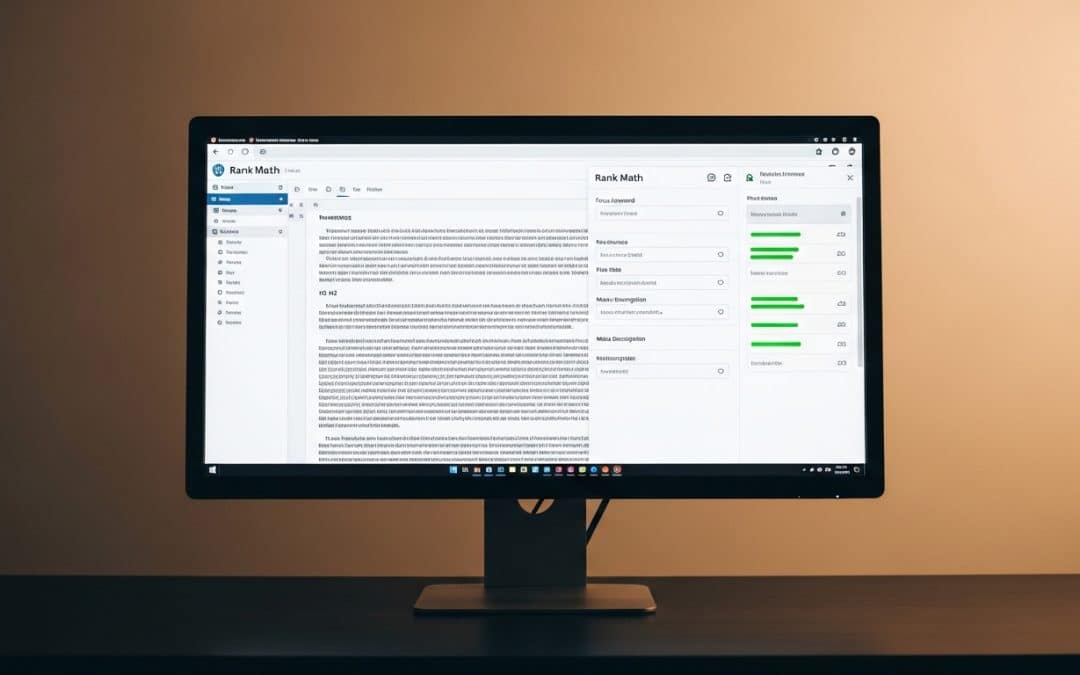
Write SA image alt text as a brief descriptive sentence that includes the focus keyword and describes what the image shows: "On-page SEO for SA businesses — Rank Math score panel showing green optimisation indicators for a South African blog post." This approach satisfies Google's image understanding requirements, passes accessibility standards, and adds keyword relevance to every SA page image simultaneously.
On-Page SEO for SA Businesses: Real Impact of On-Page Optimisation
A Johannesburg professional services firm with 42 published blog posts and a domain authority of 18 applied a systematic on-page SEO audit across all posts — updating title tags, restructuring H2 headings, adding missing internal links, and fixing image alt text. No new content was published. No new links were built. The only change was on-page optimisation applied to existing SA content.
| Metric | Before On-Page Audit | 60 Days After Audit |
|---|---|---|
| GSC impressions/month | 8,400 | 22,600 |
| Average position (all SA queries) | 24.6 | 17.2 |
| Pages ranking in top 10 (SA) | 4 | 18 |
| Monthly organic clicks | 210 | 890 |
| Monthly organic leads | 2 | 9 |
The same 42 SA pages. The same domain authority. The same link profile. On-page SEO optimisation alone moved 14 additional SA pages into the top 10 and increased organic leads from 2 to 9 per month within 60 days. This is the compounding return on systematic on-page SEO that most SA businesses leave on the table by publishing content without optimising it correctly.
On-Page SEO for SA Businesses: How Growth Pulse Media Approaches On-Page Optimisation
Growth Pulse Media applies a consistent on-page SEO standard to every piece of content we produce for South African businesses — focus keyword in the first sentence bolded, exact phrase in at least two H2s, descriptive image alt text containing the SA keyword, internal links using descriptive keyword-rich anchor text, and a meta description starting with the exact focus keyword phrase.
Every post we write for SA clients is validated against the V3.4 on-page SEO checklist before delivery — word count, keyword frequency, heading structure, internal link count, external link verification, and paragraph length are all checked by bash script before any file is delivered. We use Rank Math Pro on every SA WordPress site to validate on-page scores at 88–94/100 before publishing.
We do not outsource SA on-page SEO work offshore. Every piece of content is reviewed by the SA team against the same standard we apply to our own domain at growthpulsemedia.co.za — which is growing from zero to thousands of daily SA organic impressions through systematic on-page SEO applied to every page published.
Who This Is NOT For
On-page SEO as a standalone investment is not the right priority for every SA business right now.
Your SA website has fewer than 10 published pages. On-page SEO compounds across many pages — the impact on a 5-page brochure site is marginal. Focus on publishing consistent, cluster-structured content first. Apply on-page SEO systematically from the first post, but do not invest in retroactive audits until you have enough pages to make the audit worthwhile.
Your SA website has serious technical SEO problems. On-page optimisation has no ranking impact on pages Google cannot crawl or index. Fix crawlability, indexation errors, and Core Web Vitals failures before investing in on-page refinement. Optimising pages that Google cannot read is wasted effort.
You want on-page SEO fixes to produce rankings within 2 weeks. On-page changes take 2–8 weeks to be recrawled, reprocessed, and reflected in Google SA search rankings. The impact is real but not immediate. If your timeline requires results within 2 weeks, Google Ads generates immediate SA traffic while on-page SEO compounds in the background.
You are looking for keyword density tricks rather than genuine optimisation. On-page SEO in 2026 is about helping Google understand your content clearly — not about hitting a specific keyword frequency target.
SA businesses that stuff keywords into pages to hit a density percentage consistently produce content that reads poorly for SA users and gets deprioritised by Google's helpful content systems. Write for SA humans first and apply on-page SEO as a structural framework around that content.
On-page SEO done correctly on every SA page you publish is one of the most cost-efficient and compounding investments in your SA organic search performance — and one of the most consistently overlooked.
Ready to find out which on-page SEO gaps are costing your SA website rankings it has already earned through content quality?
Get Your Free On-Page SEO AuditOn-Page SEO for SA Businesses: Frequently Asked Questions
What is on-page SEO for South African businesses?
On-page SEO for South African businesses is the practice of optimising every element within a web page that Google can read — title tags, heading structure, focus keyword placement, internal links, meta descriptions, and image alt text — so that Google correctly understands what each page is about and ranks it for the SA search queries it targets.
Unlike off-page SEO (link building) or technical SEO, on-page SEO is entirely within the SA business's control and produces ranking improvements through systematic optimisation of existing content.
What is the most important on-page SEO element for SA websites?
The title tag is the single most important on-page SEO element for South African websites — it is what Google displays as the clickable headline in SA search results and what it uses as the primary signal for understanding what a page is about.
Google uses the HTML title tag as the title link in search results more than 80% of the time. A title tag that starts with the exact SA focus keyword phrase and includes a specific benefit or outcome consistently outperforms vague or generic title tags for comparable SA content.
How many times should a focus keyword appear on a South African web page?
A SA focus keyword should appear 6–15 times naturally throughout a 2,000–3,000 word page — equivalent to a keyword density of approximately 0.5–1.5%. It must appear in: the first sentence (bolded), the title tag, at least two H2 headings, the image alt text, and the meta description.
Within the body content, use natural variations — "for SA businesses," "in South Africa," "for South African companies" — rather than repeating the exact phrase mechanically. Google evaluates natural language, not keyword frequency targets.
How long does it take for on-page SEO changes to affect SA rankings?
On-page SEO changes typically take 2–8 weeks to reflect in South African search rankings — depending on how frequently Google crawls your SA domain and how significant the changes are. Title tag and heading structure changes are typically processed faster than content additions.
SA businesses that request Google to recrawl updated pages through Google Search Console URL Inspection can accelerate this timeline. The impact of systematic on-page SEO across an entire SA website is typically visible within 60 days of implementation.
What is the difference between on-page SEO and off-page SEO for SA businesses?
On-page SEO for SA businesses covers everything within your web pages that you control — title tags, content, headings, internal links, images. Off-page SEO covers external factors that signal your SA domain's authority — primarily backlinks from other SA and global websites pointing to your content.
Both are required for competitive SA rankings: on-page SEO tells Google what your pages are about, off-page authority signals tell Google how much to trust your SA domain relative to competitors. Start with on-page SEO (immediate control, no external dependency) and build off-page authority in parallel.
How do I check if my SA website's on-page SEO is correctly optimised?
Check on-page SEO optimisation for your SA website using four tools: Rank Math Pro in WordPress (scores each SA page out of 100 against on-page criteria), Google Search Console (shows which SA queries each page is appearing for), PageSpeed Insights (checks page speed as an on-page experience factor), and a manual review against the six on-page elements in this guide.
A Rank Math score of 88+ on every SA page is the benchmark for well-optimised SA content. The V3.4 standard we apply to every GPM-managed SA website uses bash validation to confirm all six elements are present before any page is published.
Ready to Systematically Fix On-Page SEO Across Your SA Website?
Growth Pulse Media audits and optimises on-page SEO for South African websites — title tags, heading structure, keyword placement, internal linking, and image alt text — applied against the same V3.4 standard we use on our own SA domain. We report on ranking improvements per page and GSC impressions growth. No obligation — we will get back to you within 24 hours.
Get Your Free On-Page SEO Consultation