
 Add to Preferred Sources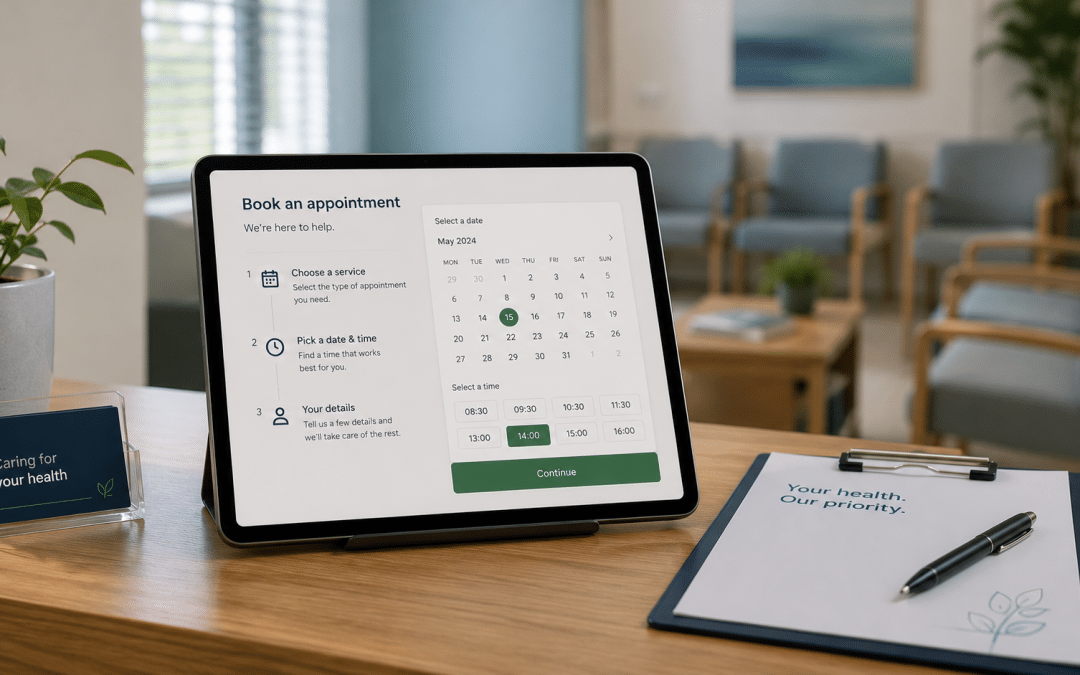
Web design for healthcare sits apart from every other industry for one reason: what a medical practice may say about itself is tightly regulated. A doctor, dentist, or allied practitioner cannot market like a normal business, so the site builds trust through clarity and accuracy — not the usual marketing claims. For the build fundamentals, see our web design guide; this page covers the website a practice specifically needs.
The distinction matters because the rules are strict and the stakes are high. Patients searching for care want fast, factual answers and an easy way to book — while the practice must stay inside the HPCSA's advertising rules and protect sensitive health data under POPIA. A site that ignores either loses patients or invites a compliance problem.
Quick Answer
Effective web design for healthcare is built around three things: factual, compliant information that respects HPCSA advertising rules; secure, POPIA-aware handling of patient data; and a fast, easy path to book an appointment. A medical practice cannot use testimonials that mislead or claims of being "the best" — so trust is earned through accurate credentials, clear services, and a professional, accessible site, not marketing hype.
Want a compliant healthcare website that books more appointments?
Get a Free Healthcare Website PlanWhat a Healthcare Website Must Do
A healthcare website has to reassure a patient and make booking easy, all within strict professional rules. A person looking for care is often anxious and wants clear answers fast: what does this practice treat, who are the practitioners, where are they, and how do I make an appointment. The site's job is to answer those calmly and accurately.
Because of the regulations, the trust has to come from substance rather than salesmanship. Accurate practitioner credentials, registration details, the scope of services, consulting hours, and medical aid information do the reassuring. There is no room for the superlative claims or persuasion tactics a normal business might use, which actually suits anxious patients who want facts, not a pitch.
The conversion goal is almost always a booked appointment, so that path must be obvious and simple. A clear "Book an appointment" option on every page — ideally online booking rather than only a phone number — removes friction for a patient ready to act. For someone managing a health concern, an easy booking experience is itself a signal that the practice is well run.
Reassure, Inform, Book
A healthcare site succeeds by reassuring an anxious patient with accurate information and making the appointment easy to book. Trust is built on facts — credentials, scope, hours, medical aid — not marketing claims, because the rules forbid the hype other businesses rely on. Get the facts and the booking right, and the site does its job within the lines the profession draws.
The HPCSA Rules That Shape a Medical Website
The single biggest difference in healthcare web design is that the HPCSA strictly limits how practitioners may advertise. Under the HPCSA's ethical rules, advertising is allowed only if it is truthful, accurate, professional, and not misleading — and practitioners may not "tout" or "canvass" by drawing attention to superior knowledge, quality of service, or personal qualities.
In practice that rules out a lot of standard marketing. Claims like "the best dentist in Johannesburg", comparative boasts, and testimonials that imply superior outcomes are not permitted, because they can mislead or create unwarranted expectations. A practice site that copies a normal business template, complete with five-star review walls and superlative headlines, is a compliance risk, not a clever marketing move.
What is allowed is substantial: factual information about qualifications, registration, scope of practice, services, fees, and how to book. Good healthcare web design works within those lines — presenting genuine expertise clearly and professionally, so a patient feels confident without the practice ever stepping over an ethical rule.
Facts In, Hype Out
HPCSA rules allow truthful, factual information but forbid touting, canvassing, superlative claims, and misleading testimonials. That reshapes the whole brief: a medical site earns trust through accurate credentials, clear scope, and professionalism — not review walls or "best in town" headlines. A web partner who does not know these rules can quietly expose a practice to a complaint.
Not sure if your current practice site stays inside the HPCSA rules? Let us review it.
Get a Free Compliance ReviewProtecting Patient Data: POPIA and Health Information
Healthcare sites carry an unusually heavy data-protection duty because health information is treated as special personal information under POPIA. Any appointment form, contact form, or patient portal that captures health details must handle that data with extra care — secure transmission, careful storage, explicit consent, and a clear privacy policy built in from the start.
This is not a box-ticking exercise for a medical practice. A booking form that quietly emails unencrypted patient details, or a portal with weak security, is both an ethical breach and a legal exposure. A properly built healthcare site treats every point where patient information is collected as something to be protected by design, not patched later.
The Features a Healthcare Site Needs
The essential features of a healthcare site combine compliant information, secure capture, and easy access. Online appointment booking comes first, followed by factual practitioner profiles, a clear list of services and conditions treated, consulting hours, location with directions, and medical aid details that patients always look for.
Local discovery and mobile matter enormously. Most patients search on a phone for care "near me", so a fast, mobile-first site with an accurate Google Business Profile and correct location data is what turns a local search into a booking. The mobile experience, covered in our mobile website design guide, is not optional for a practice that wants to be found.
Accessibility deserves special attention here. Healthcare sites serve elderly and unwell users, so clear typography, strong contrast, simple navigation, and fast loading are part of doing the job properly. A site that is hard to read or slow to load fails exactly the patients who most need straightforward access to care.
The Healthcare Feature Set
Six features carry a practice site: online appointment booking, factual practitioner profiles, clear services and conditions, consulting hours and location, medical aid information, and accessible, mobile-first design. Secure, POPIA-aware forms underpin all of it. Skip online booking or accessibility and you fail the anxious, often elderly patient the whole site exists to serve.
What It Costs and How to Choose a Partner
The cost of a healthcare site depends on scope — a single-practitioner site, a multi-practitioner practice site, and a site with an integrated booking or patient portal sit at different price points. The general ranges are in our web design pricing guide, and the familiar rule applies: the cheapest quote usually omits secure booking, accessibility, and the compliance care a medical site needs.
When choosing a partner, the decisive question is whether they understand healthcare's rules. The web design for healthcare that actually serves a practice comes from a team that knows the HPCSA limits on advertising, treats POPIA health-data protection as a design requirement, and builds booking and accessibility in from the start — not one that drops a clinic into a generic business template and adds compliance risk in the process.
| What to ask | A healthcare-aware answer | A red flag |
|---|---|---|
| Do you know the HPCSA advertising rules? | Yes — factual, no touting or superlatives | "We'll add five-star reviews" |
| How is patient data protected? | Secure, POPIA-aware, consent built in | "Forms just email you" |
| Is online booking included? | Yes, on every page | "Just your phone number" |
| Who owns the site and patient data? | You do, entirely | "We manage all that" |
A Real-World Example: Before and After
The clearest illustration is a representative practice that replaced a dated, hard-to-use site with a compliant, booking-focused build. Patient numbers searching online barely changed; the site simply started converting them into booked appointments, because it answered their questions clearly and let them book in a tap — all within the rules.
| Metric (monthly) | Before — dated practice site | After — compliant, bookable site | Change |
|---|---|---|---|
| Website visitors | 1,800 | 1,900 | About the same |
| Mobile load time | 5.9s | 2.1s | −64% |
| Online appointment bookings | 12 | 41 | +242% |
| Phone enquiries from site | 15 | 33 | +120% |
| Visitor-to-booking rate | 0.7% | 2.2% | +214% |
The online-bookings row is the one that matters. Going from twelve booked appointments a month to forty-one, on near-identical traffic, is the difference between a site that merely exists and one that fills the practice diary — achieved entirely within the HPCSA rules. The lift came from clarity, accessibility, and easy booking, not from any marketing the profession forbids.
What Drove the Result
Traffic stayed flat; the site got faster, clearer, accessible, and easy to book on. Online appointments more than tripled and phone enquiries roughly doubled — all without a single claim that would breach the rules. For a healthcare practice, that is the whole point: more booked patients earned through clarity and access, not through marketing the HPCSA prohibits.
The GPM Differentiator
Most web design for healthcare is sold on how modern the site will look, with the HPCSA rules and POPIA treated as afterthoughts — or ignored until a complaint arrives. We come at it from an operator's seat, having scaled South African businesses where compliance and results both mattered — so our web design services start with the rules a practice must follow, then build a site that books patients within them.
For healthcare clients that means factual, compliant content that respects the HPCSA limits, secure and POPIA-aware data handling, online booking that removes friction, and accessible, mobile-first design for anxious and elderly patients. You own the site, the domain, and your patient data, with no lock-in — and an honest answer when a focused fix beats a full rebuild.
Who This Is NOT For
A compliant, booking-focused practice site is right for committed practitioners, but wrong for some. Being honest about that upfront saves everyone wasted spend — so here is who should hold off.
Practitioners who want aggressive marketing claims. If you want "best in the city" headlines and testimonial walls promising outcomes, a compliant partner is the wrong fit — those breach the HPCSA rules. We build trust factually, so a practice set on marketing hype will be frustrated by what the profession allows.
Anyone wanting the cheapest possible site. A site with secure booking, accessibility, and compliance care costs more than a generic template. If price is the only filter, you will get a site that ignores the rules and the patient experience — and may expose the practice to risk it cannot afford.
Practices unwilling to protect patient data properly. Health information is special personal information under POPIA, so casual handling is not an option. If you are not willing to do secure, consent-based data capture, a serious partner is the wrong fit — the legal and ethical stakes are simply too high.
Anyone with no capacity to manage bookings. A booking-focused site will produce appointment requests, but if nobody confirms or manages them, the investment is wasted. Fix the front-desk process first, or the improved site simply generates requests that frustrate patients when they go unanswered.
Think a compliant, booking-first site is the right move for your practice? Start free.
Get a Free Healthcare Website ReviewFrequently Asked Questions
What makes web design for healthcare different from a normal website?
Healthcare sites must follow the HPCSA's advertising rules and protect patient data under POPIA, which a normal business site does not. Practitioners cannot use superlative claims, touting, or misleading testimonials, so trust is built on factual credentials, clear services, and easy booking. The site's job is to reassure and convert within strict professional limits, which is a very different brief.
Can a medical practice use patient testimonials on its website?
Only with great care. The HPCSA rules prohibit advertising that is misleading or that claims superior outcomes, so testimonials implying a practitioner is "the best" or guaranteeing results are not permitted. Many practices avoid outcome-based testimonials entirely. The safest approach is factual information about qualifications and services rather than persuasion-style reviews.
How should a healthcare website handle patient data?
Health information is special personal information under POPIA, so any form or portal capturing it needs secure transmission, careful storage, explicit consent, and a clear privacy policy. A booking or contact form that emails unencrypted patient details is both an ethical and legal risk. Data protection must be built into the site by design, not added afterwards.
What is the most important feature on a healthcare website?
Online appointment booking, made obvious on every page, is usually the most valuable feature, because it removes friction for a patient ready to act. Paired with factual credentials, clear services, location, and medical aid information, it turns an anxious searcher into a booked appointment. Accessibility and fast mobile loading make that path work for every patient.
Will a healthcare website help patients find my practice on Google?
Yes. A fast, mobile-first site with accurate location data and a maintained Google Business Profile helps you appear for local "near me" searches, which is how most patients look for care. Correct, consistent details across your site and profile are often the single biggest driver of new local patients a healthcare site can deliver.
Will I own the website and patient data?
Yes, you should fully own your site, your domain, and the patient data it captures. Never accept an arrangement where the agency keeps control of your site or your patient information. Ownership and proper data handling are among the most important questions to settle before any build begins, and a good partner is completely comfortable confirming both.
If you are weighing whether a proper practice site is worth it over your current one, that caution is fair — many practices have paid for sites that neither booked patients nor respected the rules. The difference is a build designed around compliant information, secure data, and easy booking, so the patients already finding you become appointments without the practice ever crossing an ethical line.
Get a Free Healthcare Website Plan
We will map a compliant, booking-focused website for your practice — HPCSA-aware content, secure POPIA-conscious data handling, online appointment booking, and an accessible, mobile-first build — delivered as a one-page plan you own outright, with the highest-impact priorities first. No obligation — we will get back to you within 24 hours.
Get My Free Healthcare Website Plan