
 Add to Preferred Sources
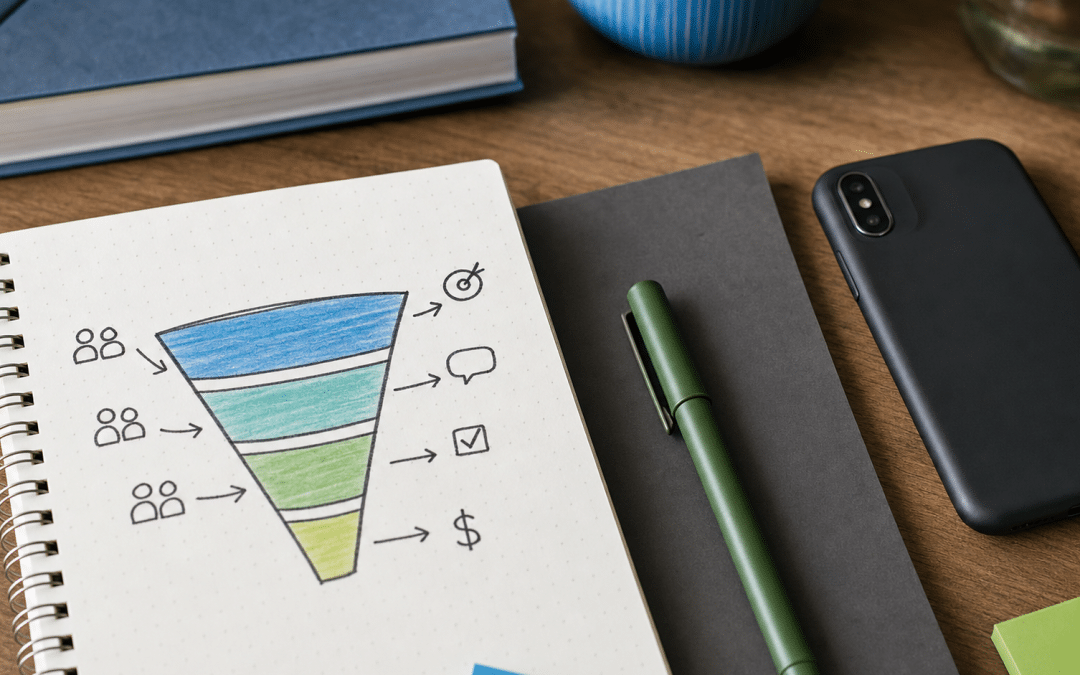
The leads meaning in business is simple: a lead is a person or company that has shown enough interest in what you sell, and given you enough contact detail, for you to follow up. It is the stage between a stranger and a customer, and where it starts and ends is the first thing to settle in any digital strategy.
The trouble is that the word means different things to the person running ads, the person answering the phone and the person paying the invoice. This post sets out the leads meaning in marketing at each stage, sorts the lead types you will meet in a South African business, and shows who should own each one and what POPIA allows you to do with it.
Quick Answer
A lead is a contact who has raised their hand through a form, a call, a WhatsApp message or a similar action, and whom you may legitimately follow up. The leads meaning changes by stage: a lead has converted but not yet been judged, a marketing qualified lead (MQL) is one marketing has qualified as ready for the sales team, and a sales qualified lead (SQL) is one the sales team has qualified as a potential customer. Write your own definition down, because sales and marketing will otherwise count different things.
Not sure what your business counts as a lead?
Send us the last ten enquiries you received and we will sort them into lead types and show you which ones were worth a call.
What Is the Leads Meaning in Marketing and Sales?
A lead is a contact who has interacted with your business beyond a passive visit, and who has given you a way to reach them. HubSpot's knowledge base defines a lead as "a contact or company that has converted on your website or through some other interaction with your organization beyond a subscription sign up" (HubSpot lifecycle stages).
Two things in that definition matter. First, the action is a conversion, not a page view: a form submission, a call, a quote request, a download. Second, a newsletter sign-up sits one step before a lead in HubSpot's model, as a "subscriber". Not every tool or company draws the line in the same place, which is why the definition has to be yours.
In South Africa the contact route often is not a web form at all. Many of your leads will arrive as a WhatsApp message or a phone call, which is why call tracking belongs in the same conversation as form tracking. The online audience is large: DataReportal counted 51.7 million internet users in South Africa at the end of 2025, a penetration of 79.6% (DataReportal, Digital 2026 South Africa). A lead who messages you on WhatsApp is still a lead.
If your reporting only counts forms, you are under-counting. The practical sales leads meaning for a South African business is wider than a web form: any channel where a buyer can reach you counts, not only the one on your website.
What Are the Main Lead Types?
Lead types are categories that tell you how warm a contact is and who should act next, and the most useful split is by qualification stage rather than by traffic source. The stages below follow HubSpot's default lifecycle model, which you can customise or rename.
| Lead type | What it means | Who acts next | Best for |
|---|---|---|---|
| Subscriber | Opted in to hear more by signing up for a blog or newsletter | Marketing (content, email) | Building an owned audience |
| Lead | Converted on your site or through another interaction beyond a subscription sign-up | Marketing triage | Deciding who deserves attention |
| Marketing qualified lead (MQL) | Marketing has qualified them as ready for the sales team | Marketing hands to sales | Protecting sales time |
| Sales qualified lead (SQL) | Sales has qualified them as a potential customer | Sales | Quotes, calls, meetings |
| Opportunity | Associated with a deal | Sales | Forecasting revenue |
| Customer | At least one closed deal | Account management | Repeat and referral sales |
The stage definitions in the second column paraphrase HubSpot's documentation; the "Who acts next" and "Best for" columns are our suggested working practice, and another CRM may use different names or stage logic. The point of the table is the owner column. A lead that nobody owns has already cost you the spend that produced it and is not being worked. How fast you reply matters here, and we cover it in lead response time.
Takeaway: lead types in one line
Lead types describe where a contact sits between first interest and a closed sale: subscriber, lead, MQL, SQL, opportunity, then customer. Each stage should have one named owner and one next action, otherwise contacts stall in the middle.
Types of leads by source
The other way to sort types of leads is by how they reached you, because source changes both intent and your legal position. In rough order of intent:
- Inbound, high intent: a quote request, a phone call from a search ad, a WhatsApp message asking about price.
- Inbound, lower intent: an ebook download, a webinar registration, a Meta lead form filled on a phone in a few taps.
- Outbound contacts: people you found and approached first, through cold email, LinkedIn or calls. They are prospects until they respond.
- Purchased-list contacts: people who never asked to hear from you. They are contacts, not leads, until they respond.
Only the first two groups raised their hand, which is why they fit the definition above. The trade-off between inbound and outbound is covered in inbound vs outbound lead generation. Purchased lists carry a legal problem covered further down, plus a quality problem: see lead generation vs buying leads.
How Is a Lead Different From an Enquiry, a Prospect or a Customer?
A lead is a contact who has converted and whom you can follow up; an enquiry is the single message that often starts it. In this post's working vocabulary, a prospect is a lead who also fits your ideal customer, and a customer has paid. The words overlap in everyday speech, but separating them stops you reporting noise as pipeline.
Consider a plumbing supplier in Johannesburg that receives a WhatsApp saying "Do you sell 22mm copper pipe?" That is an enquiry. If the sender is a contractor asking for a bulk quote, it becomes a lead. If the contractor operates in a region the supplier does not deliver to, it is a lead that is not a prospect. The categories are decisions you make about each contact, not measurements.
The same logic applies to the difference between a lead and a booked sales conversation. A booked meeting is a far stronger signal, as we explain in qualified lead vs booked meeting.
Leads coming in but nothing closing?
Tell us your current lead sources and what happens after the form is submitted, and we will map where contacts drop out of your process.
How Do You Write Your Own Qualified Leads Meaning?
A qualified leads meaning is a written rule that says which contacts sales will accept, so marketing and sales count the same thing. Without it, an agency can report a healthy count of "leads" while the sales team says there were none, and both are technically right. Answer four questions in one document:
- Fit: what must be true of the person or company (location you serve, company size, role, budget range)?
- Intent: which actions count as a hand raised (a quote request, a call over a set duration, a pricing page enquiry)?
- Exclusions: what is never a lead (job seekers, suppliers pitching you, existing customers with support issues, spam)?
- Owner and clock: who takes the lead, and how soon must they respond?
Use a "working rule" for thresholds rather than copying someone else's: the right call length or company size for a Pretoria security firm differs from a Cape Town SaaS startup. When the volume justifies it, you can formalise the rule into points, which is the subject of what lead scoring is. For B2B sales teams with longer cycles, B2B lead qualification frameworks give structured question sets.
A usable definition: "A lead is anyone who requests a quote, books a call or messages us asking about price, from a location we deliver to. Job applications, supplier pitches and existing-customer support requests are excluded. Sales responds to every lead the same working day."
An unusable definition: "A lead is anyone interested in our services." It cannot be counted, cannot be assigned, and will be defended differently by every person on the team.
What Does POPIA Allow You to Do With a Lead?
POPIA section 69 restricts unsolicited electronic direct marketing to people who have consented or who qualify as existing customers, and that restriction decides how you may follow up each lead type.
Under s69(1), that kind of marketing is prohibited unless the data subject has given consent or is a customer. Section 69(2) allows one approach to ask for consent, and only if the person has not previously withheld it. Section 69(3) covers existing customers: the contact details must have been obtained in the context of a sale, the marketing must be for your own similar products or services, and the person must have had a reasonable opportunity to object, free of charge, at collection and with each message. Section 69(4) requires every message to identify the sender and give an address to stop receiving it (POPIA section 69).
Takeaway: POPIA and leads
Following up a person who contacted you is not the same as marketing to them. Under POPIA s69, unsolicited electronic direct marketing needs consent or the existing-customer exception, so ask for consent on the form and keep a record of it. Section 69 also reaches cold calls and direct messages, not only email.
In practice that changes how you treat each lead type. The Information Regulator's Guidance Note on Direct Marketing (4 December 2024) lists telephone calls, email, SMS and direct messages on Instagram or LinkedIn among unsolicited electronic communications, so cold outbound by those routes raises the same s69 question as a purchased list. Answering a question someone put to you is a different act from promoting your services to them, but the line is yours to check: ask for consent on the form before adding a lead to a newsletter or nurture sequence, and keep a record of it. For the compliance detail, read POPIA-compliant lead generation and, for the data side, first-party data strategy under POPIA. This is general information, not legal advice; check your own situation with a qualified adviser.
How Do You Count and Track Leads Properly?
Counting leads properly means recording each one once, with its source, at the moment it converts, in a system the whole team can see. Three habits cover most of the value:
- One event per conversion. Fire a single form-submit, call or WhatsApp-click event, and mark it as a key event in Google Analytics 4 so it appears in reports. See Google Analytics 4 for South African businesses.
- Keep the source. Store the campaign or channel with the contact record so you can later judge paid media by the leads that became customers, not the ones that merely arrived. Lead tracking covers the setup.
- Report the stage, not just the total. a bare total says little; the total plus how many sales accepted says whether the advertising is working. When you want to put a Rand figure on it, see cost per lead benchmarks.
Paying for leads you cannot trace?
Book an audit of your Google Ads, Meta Ads and GA4 conversion tracking and we will show you which sources your leads really come from.
Why South African Businesses Choose Growth Pulse Media
Growth Pulse Media is run by Dirk van Greuning, who built and scaled a large South African ecommerce business before founding the agency. All work is executed in-house, with a limited client load so a senior person stays on your account. We run Google Ads and Meta Ads, and set up conversion tracking in GA4 so that a lead means the same thing in your reports and in your sales conversations. For the wider plan around lead capture, see our digital strategy service.
Who This Is NOT For
You want a number to benchmark against. There is no single South African "good" lead volume. This post defines terms; it does not publish conversion benchmarks.
You plan to buy a contact list and email it. People on a bought list have not raised their hand, so they are contacts rather than leads under the definition above, and POPIA s69 makes unsolicited electronic marketing to them a risk.
You sell only over the counter. If every sale happens in person with no follow-up, a formal lead process will add paperwork without adding sales.
Frequently Asked Questions
What is the leads meaning in business?
In business, a lead is a person or company that has shown interest in your product and given you a way to contact them. The interest is shown by an action such as a form, call or message. A lead has not bought yet.
What are the different types of leads?
The common lead types are subscriber, lead, marketing qualified lead (MQL), sales qualified lead (SQL), opportunity and customer. Leads can also be sorted by source, such as a quote request, a call or a form download. Contacts you approached first, or bought, are prospects or contacts until they respond. Names vary between CRMs, so confirm your own definitions.
What is the difference between an MQL and an SQL?
An MQL is a lead that marketing has qualified as ready for the sales team. An SQL is a lead that the sales team has qualified as a potential customer. The difference is who made the judgement, and the handover between them should be written down.
Is a WhatsApp message a lead?
It can be. A WhatsApp message that asks about price, availability or a quote is a lead, while a one-off general question may only be an enquiry. Decide the rule in your lead definition and count WhatsApp alongside forms and calls.
Can I email contacts from a bought list under POPIA?
Be very careful. Section 69 of POPIA prohibits unsolicited electronic direct marketing unless the person has consented or is an existing customer meeting the s69(3) conditions. A bought contact has usually done neither, so get advice before sending.
Get Your Lead Definition and Tracking Sorted
We work with Google Ads, Meta Ads, GA4 and Search Console for South African businesses, and can review how your leads are defined, tracked and followed up. No obligation — we'll get back to you within 24 hours.
