
 Add to Preferred Sources
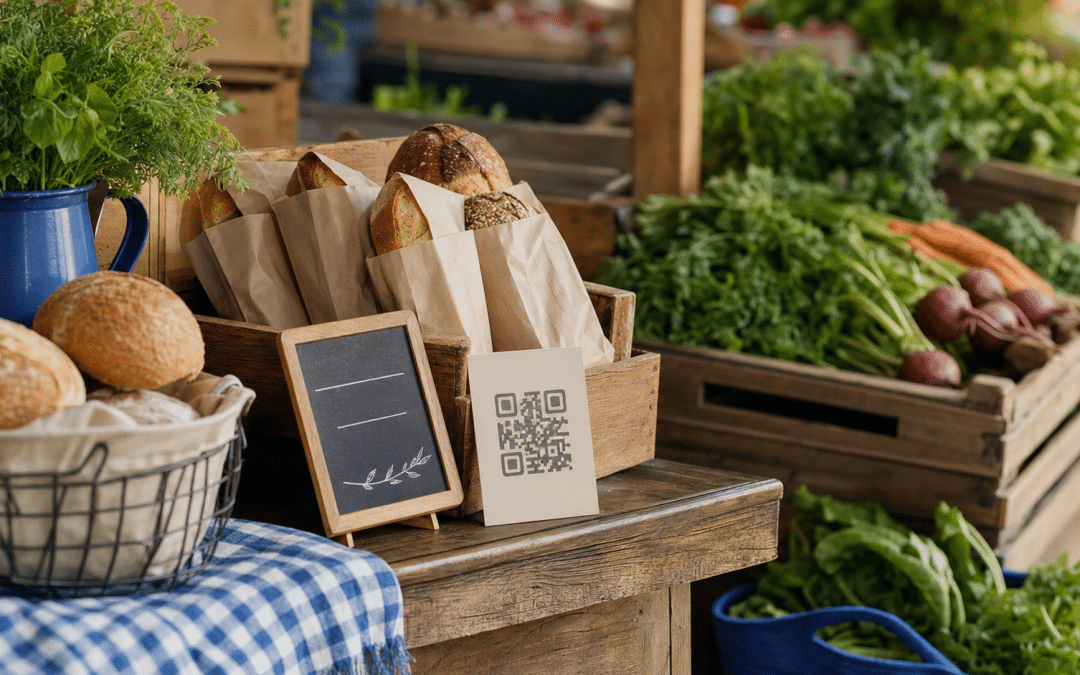
Email marketing for markets turns a stall's weekend foot traffic into a list you own, then uses short emails to say where you will be and what is in. It sits inside the wider email marketing in South Africa system, and it solves a problem unique to market trading: the crowd belongs to the market, but the email address you collect across the table belongs to you.
This post covers how to capture addresses at a stall without slowing the queue, which POPIA basis applies to each capture method, what a realistic weekly send looks like, and how far the free plans of Omnisend and Mailchimp stretch. We found no published South African data on email results for market traders, so no benchmarks are printed here.
Quick Answer
Email marketing for markets works when every stall visit has a low-friction way onto a list: a QR code or tablet form with a plain consent line, or a pre-order form for buyers. Send one short "where we are this week" email a few days before each trading day. Mailchimp Free caps the list at 250 contacts and 500 sends a month, and Omnisend Free allows 500 emails a month with campaigns only to segments of 250 or fewer, so a growing stall list will need a paid plan or a smaller segment.
In this guide
Collecting names on a notepad that never gets used?
Send us your current sign-up method and we will show you where addresses are being lost between the stall and the first email.
What is email marketing for markets actually for?
Email marketing for markets is for reaching the same people again on the days you trade, because a market gives you a crowd you do not control and a list gives you one you do. The market organiser promotes the market; nobody promotes your stall except you.
Three jobs justify the effort in email marketing for market traders, whether the stall is a regular fixture or a weekend slot.
- Tell people where you are. Stalls move between markets, skip weeks and sell out. A short email is the cheapest way to say "back this Saturday, same spot".
- Take reservations. A baker, butcher or plant seller who knows what people want can set stock aside instead of guessing at dawn.
- Bring back the one-time visitor. Tourists and first-timers buy once. A welcome email gives them a reason to find you next time they pass through.
The reach is there. DataReportal's Digital 2026 report counted 51.7 million internet users in South Africa, equal to 79.6% of the population, in its October 2025 data. The same report notes 13.3 million people remained offline, so email reaches the regulars who are online and the stall itself still has to do the work for everyone else.
How do you capture email addresses at a market stall?
A stall can capture email addresses by putting a form in front of the shopper at the moment they are already engaged, which means a QR code, a tablet or a pre-order form rather than a notepad left on the counter. The method decides how many addresses you get, how clean they are and which POPIA basis you rely on.
| Method | Speed at a busy stall | Main risk | Best for |
|---|---|---|---|
| Paper sign-up sheet | Slow; one person writes at a time | Illegible addresses, and later signers can read earlier entries | Quiet stalls with a few regulars |
| QR code on a sign linking to a short form | Fast; the shopper uses their own phone while you serve the next customer | Poor signal in a crowded or covered venue | Most stalls |
| Tablet form handed to the shopper | Medium; ties up a device | Typos and a device left unattended | Higher-value sales where the shopper waits anyway |
| Pre-order or reservation form | Done before they arrive | Only reaches people who already know you | Bakeries, butcheries, plant and produce sellers |
The QR code works best printed on the same sign as your prices, with one line saying what the shopper receives: "Where we are each week, and what is in. Unsubscribe any time." A shopper who knows what they are signing up for is a better subscriber than one who gave an address to be polite.
Ask for the address and, at most, a first name. Every extra field costs sign-ups, and for a weekly stall email nothing else is needed. A market stall email list becomes valuable through repeat sends, not through detailed profiles.
Capture at the point of attention
The best moment to ask for an email address at a market is while the shopper is holding your product or waiting to pay. Put the QR code at that point, not on a banner above the stall that nobody reads. Offer a clear reason to join, such as weekly stock or location updates, rather than a vague "join our newsletter".
What does POPIA require for a stall sign-up?
POPIA section 69 prohibits electronic direct marketing, which includes email, unless the person has given consent or is an existing customer under the s69(3) exception. For a stall that gives you two routes, and which one you use depends on whether the person bought something. The text of section 69 is short and worth reading in full.
Under the customer route, the address must have been obtained in the context of a sale, the emails must promote your own similar products, and the person must have had a free, simple chance to object at collection and in every message. Werksmans' summary of the Information Regulator's December 2024 Guidance Note lists those same three requirements.
| Situation at the stall | Likely basis | What to do | Typical case |
|---|---|---|---|
| Shopper bought from you and gave their email for a receipt or reservation | Existing-customer exception, s69(3), if its limbs are met | Offer an opt-out at collection and in every email; mail only about your own similar products | Pre-order and repeat buyers |
| Shopper scanned your QR code and ticked a consent line | Consent | State plainly what they will receive; keep the date, place and wording | Browsers and first-timers |
| Shopper only browsed, bought nothing, and you wrote their address down unprompted | Not a customer on a plain reading of s69(3), so consent is the route, and none was given | Do not add them; ask them to scan the code and consent themselves | A friendly chat at a quiet stall |
| Addresses from another trader or a bought list | None to rely on | Do not mail them | A swap offered by a neighbouring stall |
Every email must name the sender and give an address or other contact to which a stop request can be sent, under s69(4). Section 69(2) also lets you approach a person who has not previously withheld consent only once to ask for it, in the prescribed manner and form. As Werksmans summarises the Guidance Note, that form is Form 4 or a substantially similar one. The Note is regulator guidance, not statute, and we did not read the Information Regulator's own PDF, so check it before relying on the detail. Either way, keep the consent line on your sign-up page plain and specific.
The summaries we read do not address business email addresses or in-person collection, so do not assume an exemption for either. This is general information, not legal advice; the POPIA email compliance guide goes further.
Consent is a record, not a feeling
For every address on a market stall email list, you should be able to say when, where and on what wording the person joined. A QR form set up to store the time of sign-up and the consent wording shown beats a paper sheet where nobody can reconstruct what was agreed. Not every form tool records both by default, so check yours.
Unsure your sign-up wording would hold up?
Send us the line your stall uses today and we will check it against the section 69 points above and tell you what to tighten.
What should a market stall email each week?
A market stall email is one short message sent a few days before each trading day, telling subscribers where you will be, what is in and how to reserve. Keep to that rhythm and a list stays useful; add promotions every other day and it gets muted.
- Welcome email. Sent when someone joins. It says which markets and days you trade, how to reserve and how to leave. The welcome email sequence guide covers the build.
- Weekly "this week" email. Location, trading hours, two or three items in stock, a reservation link. As a working rule of thumb, send it two to three days ahead so there is time to reserve, and adjust to how your regulars actually order.
- Schedule-change email. Sent only when something differs: you are away, the venue moves or a public holiday changes the day. Because it is rare, it gets read.
- Seasonal email. A few times a year, for the lines tied to a season or festive period, with a reservation deadline stated in the first line.
Subject lines should carry the where and when, so the email works even if it is never opened. The preheader text guide shows how to use the preview line for the second half of that message.
A usable weekly email
Subject: "Saturday: back at our usual spot from 9am". Body: three short lines for what is in, one button to reserve, the sender's name and an unsubscribe link. No story, no banner, nothing that needs scrolling.
A weekly email that gets muted
A long newsletter with a founder story, six products, a discount code and no mention of where you are trading. The shopper who needed one fact has to hunt for it.
How far do the free plans of Omnisend and Mailchimp stretch?
Mailchimp Free caps the list at 250 contacts and Omnisend Free sends campaigns only to segments of 250 or fewer, and both allow 500 emails a month, so a weekly send to a full 250-person segment does not fit. Once a stall list passes a few hundred people, that calculation decides the plan before any feature comparison does.
| Plan (as shown October 2026) | Contacts and sends | Automation | Best for |
|---|---|---|---|
| Omnisend Free | Up to 500 emails a month; campaigns to a segment of 250 contacts or fewer | Included; Omnisend logo on emails | A new stall list, welcome email included |
| Mailchimp Free | 250 contacts; max 500 sends a month or 250 a day | Not included | Manual weekly sends to a very small list |
| Omnisend Standard | From $16 a month at the entry tier (about R263 at the index assumption of R16.42/USD, not a live rate); price rises with contacts; credits are contacts x 12 | Included | A list past 250 that wants the logo gone |
| Mailchimp Essentials | From $13 a month at the entry tier (about R213 at the same assumption); contact and send limits not checked | Check the plan page | A small list sending only broadcasts |
The send arithmetic
On either free plan, 500 sends divided across a 250-recipient send is 2 emails per recipient per month. A weekly "this week" email needs roughly four to five a month. Omnisend's page does not say whether automated emails such as a welcome message count toward the 500, so assume they might. On Omnisend Standard, credits are the contact count x 12, so a 500-contact list gets 500 x 12 = 6,000 emails a month, or 12 per contact, which covers a weekly send plus a few extras. The $16 figure is a starting price, so check what your own list size costs. Rand figures use the SA Digital Cost Index (SADCI) exchange-rate assumption of R16.42/USD, not a live rate.
Work out the monthly send count before you pick a plan, not after the allowance runs out. Pricing pages change, so confirm on Omnisend's plans page and Mailchimp's pricing page before you commit. For a fuller tool comparison, see Omnisend vs Mailchimp.
Should a market trader use email or WhatsApp?
A market trader should treat email and WhatsApp as two channels with different jobs: email carries the scheduled weekly message and the permission record, while WhatsApp suits quick replies and last-minute stock. Neither replaces the other for a stall with more than a handful of regulars.
If your regulars already message you on WhatsApp to reserve stock, keep that and use email for the broadcast, because a weekly send to many people is easier to manage, and to stop, in an email tool. For email marketing for weekend markets, the same split holds. Our WhatsApp marketing for markets post covers the conversational side, and the WhatsApp marketing guide covers the channel as a whole.
Keeping a stall list clean and worth sending to
A clean stall list is one where bounced, mistyped and long-silent addresses are removed, so that the weekly email reaches inboxes instead of damaging your sending reputation. Addresses typed on a tablet or written on paper are the likeliest to contain mistakes.
As general practice rather than a platform rule, remove addresses that hard-bounce and periodically review ones nobody has opened for a long stretch. The email list cleaning guide shows the process, and the email programme audit checklist gives a full review once the list is running.
Why South African Businesses Choose Growth Pulse Media
Growth Pulse Media is a Johannesburg agency founded by Dirk van Greuning, who built and scaled a large South African ecommerce business before starting it. Our email marketing service is executed in-house on a limited client load, and GPM is an Omnisend Certified Partner, so the welcome and weekly flows above can be built on the platform from the free plan up.
For a market trader the work that usually stalls is the capture point: a QR form with the right consent line, a record of when each person joined, and a welcome email that fires without anyone touching it. That is where we start.
Who Is This NOT For?
This approach is not a fit for traders with no regular stall, no phone signal to rely on and no appetite for a weekly routine, or for anyone planning to mail addresses they did not collect themselves.
One-off event traders
If you trade at a single festival and never return, a list has no next date to announce. Spend the effort on your social page or a simple contact card instead.
Anyone planning to mail addresses they were handed
Lists from another trader, a market group or a competition entry you did not run have no consent record you can point to. We will not build a programme on them.
Stalls that cannot commit to a weekly send
A list that hears from you twice a year will not remember you. If you cannot send one short email on trading weeks, the capture work will not pay back.
Want the whole set-up checked?
Send us your sign-up page, welcome email and last three sends and we will audit them against the points above.
Frequently Asked Questions
These answers cover what South African stallholders ask before they start a list.
Is email marketing for market stalls worth it for a small trader?
Yes, if you trade regularly and can send one short email a week. The list lets you announce where you are, take reservations and bring back one-time visitors. It costs nothing to start on a free plan, within the limits of 500 emails a month and, on Mailchimp, 250 contacts.
How do I collect email addresses at my market stall?
Put a QR code on your price sign linking to a short form that asks for an email address, one consent line and at most a first name. It lets the shopper sign up on their own phone while you serve the next customer. A tablet or a pre-order form works for stalls where shoppers wait or reserve.
Do I need consent to email people from my market stall?
Not always. Under POPIA s69(3), people who bought from you and gave their address in that sale can be emailed about your own similar products if they had a free chance to object at collection and in every message. Someone who bought nothing is not a s69(3) customer on a plain reading, so consent is the route; that is our reading, not legal advice.
Can I use the free Mailchimp or Omnisend plan for a market stall?
Yes, to start. As shown in October 2026, Mailchimp Free caps the list at 250 contacts and 500 sends a month, while Omnisend Free allows 500 emails a month with campaigns only to segments of 250 or fewer. That is two emails per recipient per month on a 250-person send, so a weekly send to a full list needs a paid plan or a smaller segment.
How often should a market trader send an email?
Once per trading week is a sensible working rule of thumb, sent two to three days before you trade, plus an extra message only when your schedule changes. Adjust it to how your regulars actually order, and cut back if unsubscribes rise.
Turn Weekend Browsers into a List You Own
Email marketing for markets starts with a QR sign-up, a consent record that holds up under POPIA section 69 and a welcome email that sends itself. We build Omnisend flows for South African traders. No obligation. We will get back to you within 24 hours.
