
 Add to Preferred Sources
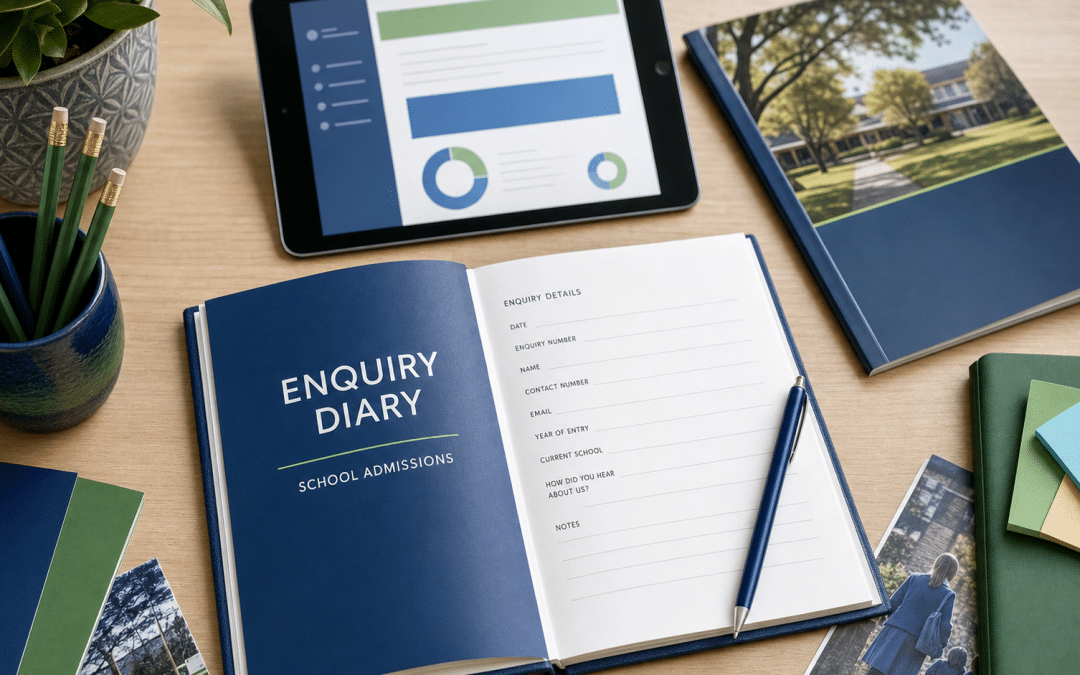
CRM for schools is software that tracks each family from first enquiry through tour, application and offer to an accepted place, and it sits beside the administration system that holds enrolled learners' records rather than replacing it. The wider CRM software in South Africa guide covers the platforms; this post covers the school-specific decision, which is where the funnel ends and the admin system begins.
Schools carry one constraint most sectors do not: the person being enquired about is a child. POPIA restricts processing a child's personal information, so the enquiry form, the follow-up emails and the retention of lost enquiries all need a deliberate design before a tool is chosen.
Quick Answer
CRM for schools works when the learner record, marks, attendance and fees stay in your school administration system, and the CRM holds only enquiries, tour bookings, applications and offers, with the purpose stated and the parent's consent recorded as the cleanest evidence of a lawful basis. A school that fills its places without paid or competitive enquiry flow often does not need one. A private school or group that buys enquiries and competes for places usually does.
In This Guide
Losing families between the tour and the application?
Send us how enquiries currently reach your admissions office and we will show you where families drop out before they apply.
Request a Flow ReviewCRM for Schools: What It Adds Beyond the Admin System
A CRM adds a record of relationships before a learner exists on your roll, while the school administration system owns the learner once enrolled. That boundary is the whole product decision, because the two tools are built for different people: the registrar's office and teachers on one side, the admissions and marketing office on the other.
Many public schools use SA-SAMS as their administration system, but using it is not compulsory. Schoolscape, relaying information from d6 Education, quotes the position as “the use of SA-SAMS as an administration system is NOT MANDATORY”.
The same article says a school may use any system that complies with the SA-SAMS data format standard, in the context of the national LURITS learner data collection. Independent schools should confirm their own reporting duties with their provincial department or association. Either way, check what your current system already does before buying anything.
What most admin systems do not do well is the funnel. Ask whoever runs your system three questions: can it show which campaign or referrer produced an enquiry, can it show how many tour bookings became applications, and can it record why a family declined an offer? Those are CRM jobs, and they are the reason CRM software for schools exists as a separate category from learner administration.
Which Records Belong in the Admin System and Which Stay in the Funnel Tool?
Enquiry, source and pipeline data belong in an admissions CRM, while anything that describes the learner's life at school stays in the admin system. The reason is practical and legal: the less information about a child that sits in a marketing tool, the smaller the POPIA exposure if that tool is misconfigured or its vendor changes.
The table below is a working boundary. The classifications are our reading for an operator, not statements from the Act or the Information Regulator.
| Record | Where it belongs | Why |
|---|---|---|
| Marks, attendance, discipline, class lists | Admin system only | Belongs to the enrolled learner and to reporting duties; no marketing use |
| Fees, debit orders, account status | Admin or billing system | Financial records tied to the enrolment contract |
| Medical, learning-support or counselling detail | Admin system, collected at application or enrolment stage | Sensitive, and not needed to decide whether to book a tour |
| Parent name, number, email, child's grade of interest | CRM | Enough to follow up and to plan intake by grade |
| Source of the enquiry (search, social, referral, open day) | CRM | Lets you measure what each channel produces |
| Tour booked, attended, application received, offer made, outcome | CRM | The funnel stages are the point of the tool |
| Reason a family declined or withdrew | CRM, picked from a short list | The only way to learn what the school is losing on |
| Child's ID number, birth certificate, previous reports | Admin system or application portal, after an application is submitted | Excessive at the enquiry stage and unnecessary to hold twice |
Key Takeaway
A school CRM should hold who enquired, through which channel, and how far they got. It should not hold what happens to the learner once enrolled. If the CRM never receives marks or medical notes, it never becomes a second learner-record system.
How Does POPIA Treat a Child's Details on an Enquiry Form?
POPIA restricts processing a child's personal information unless an exception in section 35 applies, and consent of a competent person, usually a parent, is one of those exceptions. Section 35(1)(a) reads “carried out with the prior consent of a competent person”, and the full text of section 35 lists other exceptions, including processing “necessary for the establishment, exercise or defence of a right or obligation in law”.
Consent is therefore one route among several, not the only one. Which route covers which step of an admissions process is a question for your POPIA adviser. As a design choice, a form that states the purpose, names who will see the details and records the parent's consent is the cleanest evidence you can hold.
Mondaq's school-focused POPIA checklist adds the operational rules: explain the purpose and any sharing, do not retain data indefinitely, do not reuse it for a new purpose without further consent, and collect only what is necessary. Applied to a CRM, that gives four habits:
Four habits for a school enquiry form
Ask for the minimum. Parent contact details and the child's first name and grade of interest are enough to start. Leave ID numbers and health or support needs for the application stage.
State the purpose in one sentence. Say what the details will be used for and who at the school sees them.
Separate marketing consent. Leave an optional, unticked box for newsletters and event invitations rather than bundling it into the enquiry.
Set a deletion date for lost enquiries. A family that never applied should not sit in the system forever; pick a retention period with your adviser and automate it.
Electronic marketing is a separate rule. POPIA section 69 allows email, SMS and similar direct marketing only with consent or under the existing-customer exception, requires each message to identify the sender and give a way to ask for it to stop, and lets you approach a person once to request consent if they have not refused before.
A prospective family is not yet a customer, so promotional broadcasts to them need consent. Whether a scripted follow-up to an enquiry the parent initiated counts as direct marketing is a question to settle with your adviser before you automate it. Broadcasting to current parents relies on the existing-customer exception, which has conditions of its own. Our guide to WhatsApp CRM integration covers how consented conversations reach the CRM.
Not sure what your enquiry form collects?
Send us the form your admissions office uses and we will assess where the details are going and what the follow-up measures.
Get a Timeline and Fit AssessmentWhat Should the Enquiry-to-Enrolment Pipeline Track?
An enquiry-to-enrolment pipeline is a short, ordered set of stages that tells you how many families are at each step and who owns the next action. The structure comes before the software: a school that can name its stages can run them in a spreadsheet, and a school that cannot will waste a paid tool.
The stages below are a practical template for CRM for schools in South Africa that run an admissions process. Adjust the wording to your own process, but keep each stage tied to one observable event.
| Stage | What triggers it | What to record | Who owns the next step |
|---|---|---|---|
| Enquiry | Form, call, WhatsApp or walk-in | Source, grade of interest, purpose stated and consent recorded | Admissions officer |
| Tour or open day booked | Family picks a slot | Date, attendees | Admissions officer |
| Tour attended | Attendance confirmed on the day | Attended or no-show, questions raised | Admissions officer |
| Application received | Form and any fee submitted | Date, grade, siblings | Registrar |
| Assessment or interview | Date set by the school | Outcome in neutral terms, held in the admin system if sensitive | Head of admissions |
| Offer made | Offer letter sent | Date, offer deadline | Admissions officer |
| Accepted or declined | Deposit or written reply | Decision, decline reason from a short list | Registrar |
| Enrolled | Learner created in admin system | Handover date only; the record continues in the admin system | Registrar |
The first column also tells you what to measure: the share of enquiries that book a tour, the share of attended tours that become applications, and the share of offers accepted. Each ratio points at a different fix, from enquiry response time to the tour itself to fee communication.
The source field is where paid acquisition earns or loses its budget. If the families came from Google Ads for private schools or a lead form, the CRM can show which campaign led to an application rather than just an enquiry. The Meta lead ads CRM integration guide explains how to push those leads in without retyping them.
Key Takeaway
Define the stages and their owners first, then choose a tool that can hold them. Schools that can name stage, trigger and owner can use a spreadsheet or a free CRM plan well. Schools that cannot will not be fixed by a paid platform.
What Does a Free or Starter Plan Actually Cover?
A school CRM can start on a free plan for a small admissions team, and a starter plan serves a larger one at a low per-seat fee, but both have limits that matter for a school. Prices below are as shown on each vendor's site in October 2026 in US dollars, so the Rand cost moves with the exchange rate.
HubSpot states that its free CRM comes “with up to two users, 1,000 contacts, and no limits on customer data”, and lists its Starter tier from $15 per month per seat. A footnote on that page says the discount is “available for new customers only” and “can be discontinued at any time”, so treat $15 as a promotional entry price and confirm the current Starter price and billing terms before budgeting. Zoho's pricing page lists a free plan for up to three users with contact management, follow-up reminders and workflow automation.
Worked example: three admissions seats
At the SA Digital Cost Index (SADCI) assumption of R16.42 per US dollar (August 2026, not a live rate), one HubSpot Starter seat at the promotional $15 is about R246 per month. Three seats at $45 come to about R739 per month, before any add-ons, and only while that new-customer price is available.
The 1,000-contact cap is the limit to watch: each parent can be a contact, and a school that handles many families a year will hit it if lost enquiries are never deleted. That is another reason for the retention habit above.
Those are entry prices, not a full cost. Data cleaning, integration with your admin system and staff time are the larger items, and the CRM software pricing guide sets out what sits above the licence fee. For a head-to-head on the higher tiers, see HubSpot vs Pipedrive and Zoho CRM vs Bigin.
Which Institution Types Need a CRM and Which Should Skip It?
CRM for private schools and school groups that buy enquiries and compete for places pays off, while public schools with waiting lists and no paid acquisition can usually skip it. The best CRM for schools is the one your admissions team will actually update, so match the tool to the team before you match it to the feature list.
| Situation | Recommended setup | Best For |
|---|---|---|
| Public school with a waiting list and no paid acquisition | Admin system and a spreadsheet; revisit only if enquiries become hard to track | Schools where a CRM would duplicate what the office already does |
| Small independent or pre-primary school, one admissions person | Free plan or spreadsheet with the stages above | Single-person admissions with modest enquiry volume |
| Single-campus private school buying search or social enquiries | Starter-tier CRM that records source, tour, application and outcome | Schools that need to know what advertising returns |
| Multi-campus group or several admissions staff | Check the admin vendor's modules first, then add a CRM with role-based access and a data processing agreement | Groups that need shared reporting without sharing learner records |
Before signing, ask where the data is hosted, which sub-processors handle it, and what the vendor's agreement says about your obligations as the responsible party. The CRM data governance checklist turns those questions into a form you can complete with the vendor.
Why South African Businesses Choose Growth Pulse Media
Growth Pulse Media is a Johannesburg agency founded by Dirk van Greuning, who built and scaled a large South African ecommerce business before starting the agency. All work is executed in-house, with a limited client load so senior attention stays on each account. We run Google Ads, Meta Ads, GA4 and Search Console work, and we do not implement or configure school administration systems or CRMs.
What we can help with is the demand side: deciding what to measure from the first ad click to an accepted place, so whichever tool you choose receives clean source data. That sits upstream of any tool choice, in digital strategy. For the same boundary logic in other regulated, appointment-led sectors, see CRM for medical practices and CRM for financial advisors.
Want a second opinion on your enquiry tracking?
Send us your current set-up and we will audit where source data is lost between the ad, the form and the application.
Request a Free AuditWho This Is Not For
This guide is the wrong starting point for four kinds of reader, each described below.
Schools wanting a learner-management system
A CRM is not an administration system. If you need marks, attendance, timetabling or fee billing, you need school administration software, not a funnel tool.
Schools that fill every place without effort
If your classes fill by catchment or waiting list and nobody tracks where families come from, a CRM adds work without answering a question you are asking.
Schools planning to message all parents freely
If the idea is to broadcast promotions to the whole parent body, POPIA section 69 needs consent or the existing-customer exception, with its conditions. Get advice before choosing any tool.
Anyone expecting legal sign-off from a blog post
This post reads the statutes for operators; it is not a POPIA opinion. Your adviser signs off the final set-up.
Frequently Asked Questions
Do South African schools need a CRM?
Not always. A school that fills its places through a waiting list and does not track enquiry sources often does not need one. A private school or group that buys search or social enquiries, and competes for places, usually benefits from a CRM that tracks each family from enquiry to accepted offer.
Can a CRM replace a school administration system like SA-SAMS?
No. A CRM tracks families before enrolment, while an administration system holds the learner record, marks and attendance. SA-SAMS is not compulsory, according to d6 Education as relayed by Schoolscape, though schools reporting learner data through LURITS need a system that meets the SA-SAMS data format standard. Independent schools should confirm their own reporting duties.
Can a school put a child's details into a CRM under POPIA?
POPIA restricts processing a child's personal information unless a section 35 exception applies, and consent of a competent person such as a parent is one of those exceptions. Collect the minimum at the enquiry stage, record the parent's consent and take advice on which exception covers each step.
How much does CRM software for schools cost in South Africa?
Entry plans cost little or nothing: HubSpot's free CRM allows two users and 1,000 contacts, and Zoho's free plan allows three users. A HubSpot Starter seat at its promotional new-customer price of $15 per month is about R246 at R16.42 per US dollar, so three seats come to about R739 per month before add-ons. HubSpot says that discount can be discontinued at any time, so confirm current terms.
What should a school CRM track from enquiry to enrolment?
Track the source of the enquiry, tour booked and attended, application received, offer made, and the outcome with a decline reason. Hand the enrolled learner over to your administration system at that point, so the CRM never holds marks, health or counselling detail.
Get Your Admissions Funnel Reviewed
We work with Google Ads, Meta Ads, GA4 and Search Console for South African businesses, and we will look at how source data moves from your campaigns to your applications. No obligation — we’ll get back to you within 24 hours.
Get Your Free Consultation