
 Add to Preferred Sources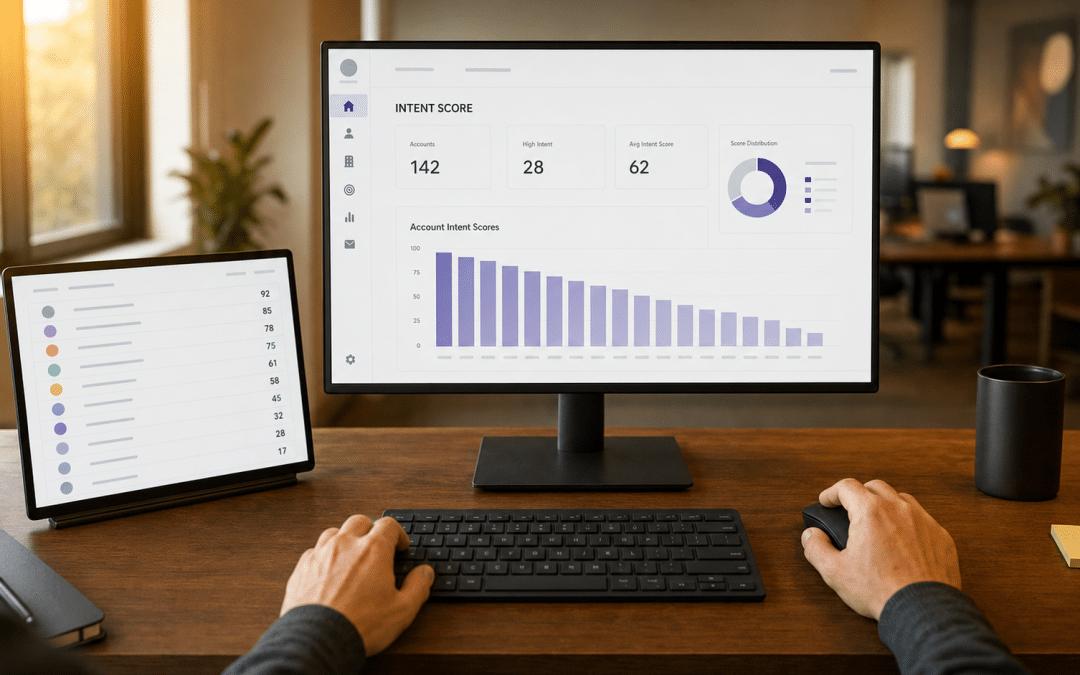
B2B buyer intent data is the intelligence that tells you which South African companies are actively researching a solution like yours right now — so your sales team calls in-market buyers instead of cold lists. Our B2B lead generation guide for South Africa covers the full funnel; this post goes deep on intent signals specifically, and how to act on them before your competitors do.
Most local B2B teams are still working from static databases and gut feel. The shift to account-based marketing makes intent data the missing piece — without it, ABM is just expensive guesswork. Get the signal right and your cost per qualified meeting drops materially.
Quick Answer
B2B buyer intent data reveals which accounts are in-market by tracking topic searches, content consumption, and job-posting patterns. South African teams can access intent signals through LinkedIn, G2, Bombora, and first-party website behaviour — then prioritise outreach to the accounts showing the strongest buying signals.
Do you know which Johannesburg or Cape Town companies are researching your solution this week?
Get a Free Intent AuditWhat B2B Buyer Intent Data Actually Measures
B2B buyer intent data captures behavioural signals — search queries, content downloads, review-site visits, and job postings — that indicate an account is actively evaluating a purchase. It goes beyond firmographics to show timing: not just who could buy, but who is looking right now.
There are three layers worth separating. First-party intent comes from your own website: pages visited, pricing pages viewed, case studies downloaded. Second-party intent comes from platforms you have a direct relationship with, such as LinkedIn Campaign Manager's Matched Audiences. Third-party intent aggregates anonymous research behaviour across publisher networks — Bombora is the best-known provider globally, and its co-op includes several South African business media properties.
Each layer has different accuracy and latency. First-party signals are the most precise — you know exactly which company visited your solutions page at 10:42 on a Tuesday. Third-party signals are broader and arrive with a lag of days to a week, but they surface accounts you have never heard of yet.
Key Insight
First-party intent data is the highest-confidence signal available to any South African B2B team. Invest in identifying anonymous visitors with tools like Clearbit Reveal or RB2B before you spend budget on third-party data subscriptions.
Why South African B2B Teams Need a Local Lens on Intent
The South African B2B market has structural quirks that make intent data both more valuable and harder to apply than in the US or UK. Deal cycles are long, procurement committees are large, and the number of genuine enterprise accounts in most verticals is small — sometimes fewer than 300 companies nationally.
Load-shedding shifted buyer behaviour in measurable ways: IT and energy-solutions companies saw extended research phases as procurement teams built multi-vendor shortlists. That pattern has eased in 2026, but the cautious evaluation mindset it created has persisted. Buyers research longer before contacting a vendor.
LinkedIn's own research shows that the typical B2B buyer consumes 7 to 10 pieces of content before making a purchase decision, and that anywhere from 3.1 to 4.6 internal groups — IT, finance, HR, and others — can influence the outcome. In a market where the decision committee is large and the account universe is small, identifying which accounts have entered that research phase is a decisive advantage.
POPIA adds a compliance dimension that overseas guides ignore. You cannot legally store or act on personal data collected without a lawful basis. Most third-party intent data is aggregated and anonymised at account level, which generally sits outside POPIA's personal-information definition — but your first-party tracking and any enrichment that attaches names to behaviour must be handled correctly. See our POPIA-compliant lead generation guide for the detail.
The Four Signal Types That Drive B2B Buyer Intent Data
Strong intent programmes layer multiple signal types rather than relying on a single source. Each type answers a different question about where an account sits in the buying journey.
Topic surge signals fire when an account's employees are consuming content about a specific category at a rate well above their historical baseline. Bombora's co-op model aggregates this across thousands of B2B publishers. A Sandton financial-services firm suddenly reading heavily about "cloud ERP migration" is surfacing a topic surge you want to know about.
Review-site activity is high-confidence intent: a company visiting G2 or Capterra comparison pages for your category is deep in evaluation mode. These signals are available natively inside some CRMs or through intent platforms that partner with review sites.
Job posting signals are free and underused in South Africa. A logistics company in Durban advertising for a "Head of Supply Chain Technology" is signalling a technology investment cycle. Scraping or monitoring LinkedIn Jobs and Careers24 for role patterns is a legitimate first-party intent-building exercise any team can run.
LinkedIn engagement signals are available directly. When a prospect engages with your Company Page content or clicks a Lead Gen Form ad, that individual-level signal can be actioned immediately. According to LinkedIn's lead generation resources, 89% of B2B marketers use LinkedIn for lead generation, and 70% of buyers regard LinkedIn as one of the most trusted sources of professional information — making engagement there a strong proxy for active research intent.
Key Insight
Job-posting signals are the most underused free source of b2b buyer intent data in South Africa. A company advertising for technology or operations leadership roles is signalling an investment cycle weeks before any vendor conversation begins — and monitoring Careers24 and LinkedIn Jobs costs nothing but analyst time.
Building a B2B Buyer Intent Data Stack for the South African Market
A practical intent stack does not require enterprise budget. The architecture below scales from R8,000 per month to R80,000 per month depending on the tools you layer in.
Start with your own website. Install a visitor identification tool — IP-to-company resolution services like RB2B or Clearbit Reveal match anonymous sessions to company names and pass them to your CRM. This costs a fraction of third-party intent subscriptions and delivers the highest-confidence signal you can get.
Layer LinkedIn Website Demographics and retargeting on top. Any company whose employees have visited your pricing or services pages becomes a named account you can target with sponsored content. This is particularly effective for IT and MSP companies where the decision-maker is active on LinkedIn and the deal value justifies the cost-per-click.
Add a third-party intent feed once your first-party programme is running cleanly. Bombora's "Company Surge" data is the most commonly integrated option; it connects to HubSpot, Salesforce, and most major CRMs. Filter for South African company names and your specific topic categories before importing — raw global feeds are noisy for a market this size.
Finally, build a free job-posting monitor. A weekly export from LinkedIn Jobs filtered by your target industries and role types gives you a pipeline of accounts entering investment cycles, at zero incremental cost. For manufacturing sector and logistics companies, operations and technology hiring patterns are particularly reliable leading indicators.
Is your CRM receiving live intent signals from your highest-value South African accounts?
Get a Free Stack AssessmentTurning Intent Signals Into Prioritised Sales Outreach
Raw b2b buyer intent data is worthless without a prioritisation model that tells your sales team which accounts to call today versus next month. The scoring framework below is the one we use internally at GPM for client programmes.
Assign a base score to every intent signal: first-party pricing-page visit (25 points), first-party case-study download (15 points), LinkedIn engagement (10 points), third-party topic surge above 60 on Bombora's 0-100 scale (20 points), job-posting signal matching your solution category (10 points). Cap the total at 100 and route accounts above 60 to SDR outreach within 24 hours.
Sequence matters as much as speed. The first touch after a high-intent signal should reference the signal without being creepy about it. "I noticed [Company] has been exploring cloud ERP options — we work with several Gauteng manufacturers who made that transition" is specific and credible. A generic cold email sent to the same contact is wasted.
For appointment setting teams, intent scoring transforms the call list from alphabetical to prioritised. Callers who work from a scored intent list consistently reach more decision-makers in fewer dials. The signal does not replace conversation skill; it removes the random-number-generator problem from prospecting.
Key Insight
Intent signals decay fast. The value of a first-party signal roughly halves every three to five days as the account moves through its research cycle without you. Routing scored accounts to SDR outreach within the same business day is the single most important process decision in any b2b buyer intent data programme.
| Signal Type | Source | Confidence Level | Latency | SA Availability |
|---|---|---|---|---|
| Website visitor ID | First-party (Clearbit/RB2B) | Very High | Real-time | Yes |
| LinkedIn engagement | Second-party (LinkedIn) | High | Same day | Yes |
| Review-site activity | Third-party (G2/Capterra) | High | 1–3 days | Partial |
| Topic surge (Bombora) | Third-party co-op | Medium | 3–7 days | Partial |
| Job posting signals | Free (LinkedIn Jobs / Careers24) | Medium | Same day | Yes |
| Metric | Before Intent Data | After Intent Data |
|---|---|---|
| Accounts contacted per week (SDR) | 80 cold accounts | 80 scored accounts (top 60+ only contacted) |
| Connect rate (decision-maker reached) | 8% | 22% |
| Qualified meetings booked per month | 4 | 11 |
| Cost per qualified meeting (Rand) | R9,500 | R3,800 |
| Pipeline created per month | R280,000 | R740,000 |
The figures above illustrate the pattern we see, not a guaranteed outcome. Results depend on deal size, industry, and the quality of the outreach sequence that follows the intent trigger.
GPM's Approach to B2B Buyer Intent Data in South Africa
At Growth Pulse Media, we have built intent-driven lead programmes for South African B2B clients across financial services, logistics, construction, and technology. Our edge is not the tools — every agency can buy a Bombora licence. It is the account selection and the outreach architecture that converts intent signals into booked meetings.
We start every engagement by auditing what first-party signals the client is already generating and ignoring. In almost every case, there are high-intent accounts visiting the website every week that the sales team has never heard of. Fixing that alone produces a material improvement in pipeline, usually within the first month.
From there we connect the intent layer to a disciplined outreach sequence — whether that is LinkedIn Sales Navigator, an SDR calling programme, or an email nurture via Klaviyo. The signal tells us when; the sequence tells us how. Our B2B lead generation service combines both into a managed programme with clear KPIs tracked against the metrics that matter in a South African context.
We also ensure every programme is POPIA-compliant from day one. That means lawful-basis documentation, opt-out mechanisms, and data handling agreements with any third-party intent provider that processes information on behalf of our clients.
Who This Is NOT For
Sub-R500k annual revenue businesses. The minimum viable intent stack — even using free tools — requires SDR time to action signals. If your business cannot dedicate at least one person to outbound follow-up, intent data will sit unused in your CRM and deliver no return.
Companies selling to consumers, not businesses. B2B buyer intent data is built on professional network and publisher behaviour. If your buyers are individuals rather than procurement teams, consumer-side intent tools are a different category entirely and this framework does not apply.
Teams without a CRM or basic marketing automation. Intent signals need a system to land in and a workflow to trigger. If you are managing leads in a spreadsheet, the priority is CRM implementation — intent data layered on top of manual processes degrades quickly into noise.
Businesses expecting intent data to replace sales skill. A high-intent signal tells you an account is researching; it does not tell you what to say. Teams that substitute scoring for preparation and conversation quality will see higher connect rates but the same poor conversion rates as before.
Ready to see which South African companies are researching your solution right now?
Get a Free Intent Discovery SessionFrequently Asked Questions About B2B Buyer Intent Data
What is b2b buyer intent data and how does it differ from a contact list?
It is behavioural intelligence that shows which companies are actively researching a purchase category, as opposed to a static list that shows who exists. A contact list tells you that a company is the right size and industry; b2b buyer intent data tells you that company's team is reading about your solution category this week, making your outreach timely rather than random.
Which intent data providers work well for South African B2B companies?
LinkedIn Sales Navigator and Campaign Manager are the strongest starting points because local professional data is dense and accurate. Bombora's topic surge data covers some South African publishers and works well for mid-market to enterprise programmes. For small teams, free job-posting monitoring via LinkedIn Jobs and Careers24 combined with first-party website visitor identification is a cost-effective entry point before committing to paid subscriptions.
Does POPIA restrict how we can use b2b buyer intent data in South Africa?
Third-party intent data aggregated at account level — showing that a company, not a named individual, is surging on a topic — generally falls outside POPIA's definition of personal information. However, first-party tracking that links browsing behaviour to an identified person, and any enrichment that attaches names to intent signals, requires a lawful basis. Consult a qualified privacy practitioner and review our dedicated guide before building a first-party identification programme.
How quickly should we act on an intent signal?
First-party signals — a named account visiting your pricing page — should trigger outreach within the same business day where possible. Third-party topic surge signals carry a lag of several days and a lower confidence level, so same-week follow-up is sufficient. The principle is that intent signals decay: the value of the signal halves roughly every three to five days as the account moves through its research cycle with or without you.
What KPIs should we track to measure an intent-driven programme?
Track intent-to-meeting conversion rate (how many high-scored accounts convert to a booked call), cost per intent-qualified meeting, and pipeline created from intent-sourced accounts. Compare these against your baseline non-intent outreach using the same SDR team and time period. Our B2B lead generation KPIs guide covers the full measurement framework for South African teams.
Can smaller B2B companies in South Africa afford an intent data programme?
Yes, if they start with free and low-cost signals. Website visitor identification tools often have free tiers sufficient for companies with under 500 monthly visitors. Job-posting monitoring costs nothing but analyst time. LinkedIn's native intent features are included in a Sales Navigator licence that most serious B2B sales teams already hold. A meaningful programme can be operational for under R5,000 per month in tool costs before any agency fees.
Want to know which SA companies are in-market for your solution today?
We will audit your current intent signals, identify the accounts you are missing, and deliver a prioritised action plan showing exactly where to focus outreach first. No obligation — we'll get back to you within 24 hours.
Get Your Free Intent Audit