
 Add to Preferred Sources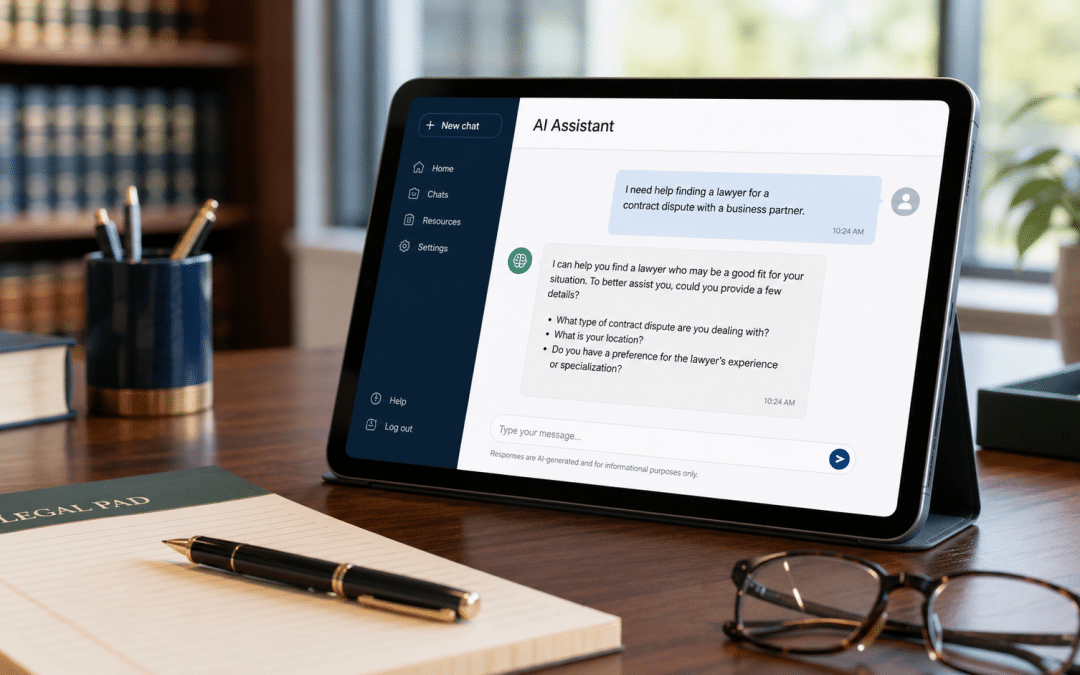
AEO for law firms is how your practice becomes the firm an AI names when a potential client asks it to recommend a lawyer — and in South Africa, those legal queries are shifting to AI faster than most firms realise. Answer engine optimisation puts your firm inside the AI's answer, and it is a very different discipline from ranking in traditional search versus AI search, where clients now ask and act on a single recommendation.
This guide explains why AEO for law firms matters now, how clients search for a lawyer with AI, and what South African firms must do to be the one recommended. It sits within our AI search optimisation guide.
Quick Answer
AEO for law firms means optimising your firm so AI assistants recommend it when someone asks for a lawyer. Because AI answers legal questions with a short list of named firms, the practice with the strongest entity, reviews, credentials, and question-based content gets named — and the rest stay invisible. For high-value legal work, being that named firm is worth far more than a page-two organic ranking.
Want to know if AI recommends your firm when clients ask for a lawyer?
Get a Free Legal AEO AuditWhy Law Firms Cannot Ignore AEO
Law firms cannot ignore AEO because clients are increasingly asking AI assistants to recommend a lawyer instead of scrolling a page of search results. When a potential client asks ChatGPT or Google's AI for "a good divorce attorney in Sandton," the assistant returns a short list of named firms — and if yours is not on it, you were never in the running.
The stakes are unusually high in legal work. A single matter can be worth tens or hundreds of thousands of Rand, and clients asking AI for a lawyer are typically high-intent, ready to act on the recommendation they receive. AEO for law firms is about being the firm that recommendation names, at the exact moment a client is choosing who to contact.
This is also a winner-takes-most channel. Where a page of Google results shows ten options, an AI answer often names just two or three firms. That compression makes AEO for law firms far more decisive than a mid-page organic ranking — you are either in the short list the client sees, or effectively absent.
Key Insight
An AI answer names two or three firms, not ten. That compression is why AEO for law firms matters more than a mid-page ranking — being one of the few named is the whole game, and everyone else is invisible at the moment of choice.
How Clients Now Search for a Lawyer With AI
Clients now search for a lawyer by asking a conversational, specific question and acting on the named answer, rather than researching a page of links themselves. The behaviour has shifted from "search, open ten tabs, compare" to "ask, get two or three names, contact one" — which changes what a firm must optimise for.
These queries are strikingly specific. People ask for a particular practice area in a particular place — "a POPIA compliance lawyer in Cape Town," "an estate attorney in Durban" — and expect a direct, local recommendation. This is the same behaviour we see across AI search for local businesses, sharpened by the high stakes of choosing legal help.
The new client journey: A small-business owner asks an AI assistant, "who's a good commercial contracts attorney in Pretoria?" The assistant names two firms with strong profiles, reviews, and clear expertise. The owner contacts the first — never opening a search page. That firm won the client through AEO.
The old assumption: A firm assumes clients will Google "attorneys Pretoria," scroll the results, and compare several websites. For a growing share of clients that journey no longer happens — the AI already narrowed the choice to a couple of names before the firm's website was ever seen.
What AEO for Law Firms South Africa Involves
AEO for law firms involves building the specific signals AI systems use to decide which practice to recommend, from your firm's entity to its reviews and expertise content. Each signal gives the assistant another reason to name your firm over a competitor.
| Signal | Why it matters for legal AEO | What to do |
|---|---|---|
| Firm entity and profile | AI must resolve your firm as a real practice | Complete Google Business Profile, consistent details |
| Reviews and reputation | Trust proxy AI leans on for legal choices | Earn steady, recent client reviews |
| Credentials and expertise | Legal is high-stakes; proof matters | Named attorneys, qualifications, practice areas |
| Question-based content | Matches how clients ask AI | Answer real legal questions clearly |
| Local signals | Legal queries are hyper-local | City and practice-area specificity |
The firm entity is the foundation. A complete, consistent Google Business Profile and matching details across the web let an AI resolve your practice as a real, established firm — the baseline before any recommendation is possible. Without it, the other signals have nothing to attach to.
Reviews and question-based content do the heavy lifting from there. Steady, recent client reviews give the AI a trust signal it weighs heavily for legal choices, while content that answers the exact questions clients ask — by practice area and city — matches your firm to those queries. Together they turn a resolvable firm into a recommended one.
Not sure which of these legal AEO signals your firm is missing?
Get a Free Signal Gap ReviewThe Legal Trust Bar: Why Credentials Matter More Here
Legal services clear a higher trust bar than most industries because AI systems treat them as a high-stakes "Your Money or Your Life" topic where a bad recommendation causes real harm. That means AI leans even harder on credibility, credentials, and reputation before naming a law firm than it would for an ordinary business.
Regulation is part of that evidence. In South Africa, all attorneys and advocates are regulated by the Legal Practice Council, and a firm that clearly presents its practitioners, their admission, and their areas of practice gives an AI concrete signals of legitimacy. Named, credentialed attorneys read as far more trustworthy than an anonymous "our team."
The practical implication is that AEO for law firms leans heavily on visible expertise. Real attorney bios, stated qualifications, clear practice areas, and genuine client reviews are the evidence an AI needs to feel safe recommending a firm for a consequential legal matter. Vague, anonymous positioning fails this bar precisely where it matters most.
Key Insight
Legal is a high-stakes topic, so AI holds law firms to a higher trust bar. Visible, credentialed attorneys and genuine reviews are not optional polish — they are the evidence that decides whether an AI feels safe naming your firm for a matter that genuinely affects someone's life.
The South African Legal Market Opportunity
South African law firms have an unusually open opportunity because almost none of their competitors have optimised for AI recommendations yet. The local legal market is still competing on traditional search and referrals, which means the firms that move early on AEO for law firms can own the AI recommendation for their practice areas before rivals notice the shift.
The advantage is sharpest at the intersection of practice area and city. Broad terms like "lawyer Johannesburg" are crowded, but specific combinations — "medical negligence attorney in Bloemfontein," "trademark lawyer in Stellenbosch" — are wide open, and a firm that builds clear expertise content and local signals for those can become the default AI answer with little competition.
This mirrors what works in local search across South Africa, but the payoff is faster in AI because the field is emptier. A focused firm can establish itself as the recommended local specialist in months, not years, simply by being the one that structured its expertise for how clients now ask.
Owning the niche: A boutique Cape Town firm builds clear content and reviews around "commercial lease disputes in the Western Cape," with named attorneys and strong profiles. AI assistants begin naming it for that specific query — a high-value niche no large general firm had structured for.
Real-World Impact: AEO for a Law Firm
The clearest way to see the payoff is a before-and-after view of a mid-sized firm that built its legal AEO over two quarters. The figures below illustrate the pattern we see, not a guaranteed outcome.
| Metric | Before | After | Change |
|---|---|---|---|
| Named in AI legal answers | No | Yes, regularly | New channel |
| Google reviews | 19 | 96 | +405% |
| Practice-area questions answered | 4 | 38 | +850% |
| Monthly qualified enquiries | R41,000 | R118,000 | +188% |
The mechanism is straightforward: a resolvable firm entity, strong recent reviews, and content answering real practice-area questions gave AI systems everything they needed to recommend the firm confidently. Because legal enquiries are high-value, even a modest number of AI-driven recommendations moved the pipeline sharply.
The compounding effect matters too — each new review and answered question widened the range of legal queries the firm could be named for, so the channel kept growing quarter on quarter rather than plateauing.
Key Insight
In legal work, a handful of AI recommendations can outweigh a flood of low-intent traffic. Because each matter is high-value and each AI answer names only a few firms, being the recommended practice for even a few specific queries can reshape a firm's pipeline.
The GPM Difference: AEO Built for SA Law Firms
Most agencies still sell law firms traditional SEO; we build AEO for law firms designed for how clients actually choose legal help now. We structure your firm's entity, reviews, credentials, and practice-area content so AI assistants recognise and recommend you — and we know legal clears a higher trust bar, so we build the credentialed, reviewed foundation that bar demands.
Having scaled a South African business ourselves, we focus on the recommendations that convert to real matters, not vanity visibility. That operator lens shapes our AEO services.
Our approach is practical and legal-specific: resolve the firm entity and Business Profile first, build a steady review engine, present named attorneys and clear practice areas, then create question-based content mapped to how clients ask AI for a lawyer.
We prioritise the practice areas and cities with real matter value, because for a law firm a few high-intent AI recommendations are worth more than broad, unqualified traffic. For firms also investing in organic, it complements our work on SEO for law firms.
Who This Is NOT For
Firms unwilling to show named attorneys. Legal AEO depends on visible, credentialed practitioners. If the preference is anonymous "our team" positioning, the firm fails exactly the trust bar AI applies most strictly to legal, and the approach cannot work.
Practices that won't build reviews. Reviews are a core trust signal for legal recommendations. If a firm won't put a system in place to earn steady, genuine client reviews, one of the strongest AI recommendation signals stays absent.
Firms wanting the cheapest possible provider. Legal AEO is a considered, credibility-driven build, not a bargain package. A firm shopping purely on lowest price will not commit to the entity, review, and content work that being recommended actually requires.
Anyone needing matters this week. AEO builds recommendation authority over months as reviews, content, and signals accumulate. If the immediate need is instant enquiries, paid search is the right tool while the AEO foundation builds in parallel.
Ready to make your firm the one AI recommends? Let's map your practice areas.
Get a Free Law Firm AEO RoadmapFrequently Asked Questions
What is AEO for law firms?
It is the practice of optimising a law firm so AI assistants recommend it when someone asks for a lawyer. Because AI answers legal questions with a short list of named firms, AEO focuses on the signals that get your practice named — a resolvable firm entity, strong reviews, visible credentials, and content answering the exact questions clients ask. It is how firms win clients in AI search.
How is AEO for law firms different from SEO?
SEO aims to rank your firm's pages in Google's organic results, while AEO aims to make your firm the one an AI assistant names in its answer. AEO leans more on your firm entity, reviews, credentials, and question-based content than on page rankings. The two complement each other, but AEO targets the moment a client asks AI for a direct recommendation.
Why do legal queries matter so much for AI recommendations?
Legal work is high-value and high-stakes, so clients asking AI for a lawyer are usually high-intent and ready to act. AI also treats legal as a sensitive topic and names only a few trusted firms, so being one of them at the moment of choice is extremely valuable. A single AI-driven legal recommendation can be worth far more than broad traffic.
What do South African law firms need to be recommended by AI?
They need a complete, consistent firm entity and Google Business Profile, steady recent client reviews, clearly presented named attorneys with credentials and practice areas, and content answering real legal questions by area and city. Because legal is a high-trust topic, visible credibility matters more than in most industries. Local specificity is essential, as legal queries are hyper-local.
Do reviews affect whether AI recommends a law firm?
Yes, significantly. Reviews are a core trust proxy that AI leans on for legal recommendations, where credibility is paramount. A firm with steady, recent, positive reviews gives the AI strong evidence it is safe to recommend, while a firm with few or stale reviews is far less likely to be named. Building a genuine review habit is essential.
How long does AEO for a law firm take to work?
It builds over months as the firm entity, reviews, credentials, and content signals accumulate and AI systems gain confidence. Firms that commit consistently often see meaningful AI recommendations within a few months, especially for specific practice-area and city combinations where competition is thin. The effect strengthens as the foundation matures.
Ready to Be the Firm AI Recommends?
We'll audit whether AI currently names your firm, benchmark you against local competitors, and deliver a prioritised action plan covering the entity, reviews, credentials, and content that make your practice the one AI recommends for your key practice areas. No obligation — we'll get back to you within 24 hours.
Get Your Free Law Firm AEO Strategy Session