
 Add to Preferred Sources
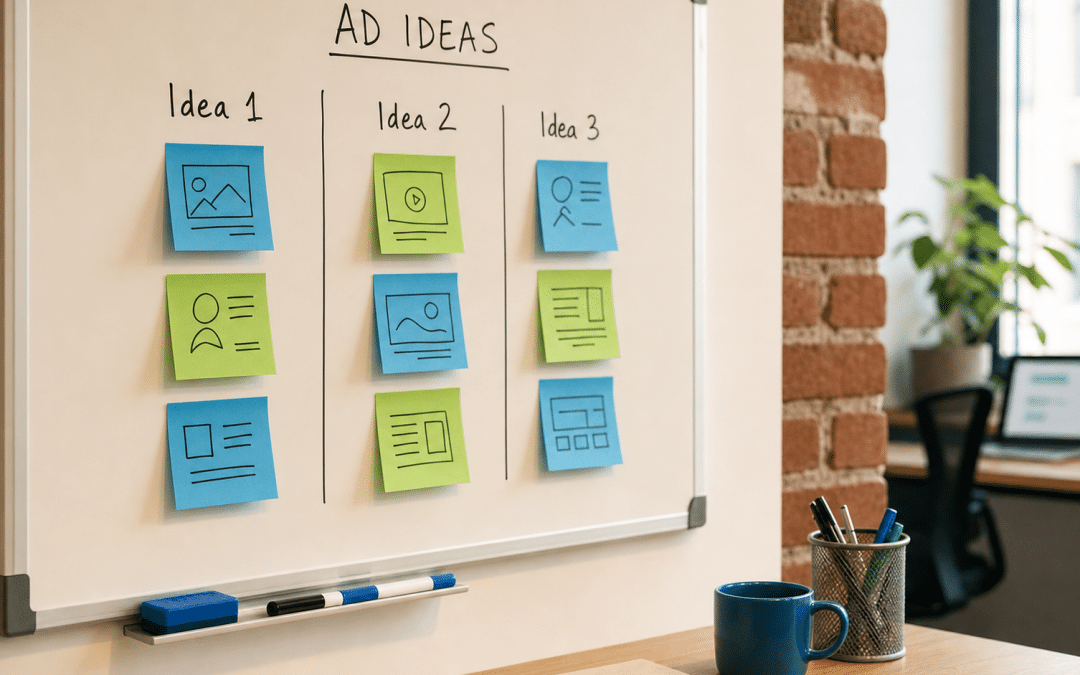
The facebook ad library is Meta's free, public search tool that shows the ads currently running across Facebook, Instagram and Meta's other apps, so you can see what your competitors are advertising right now. For a South African business it is a research tool for Meta Ads in South Africa, not a spy tool: it shows the creative and the copy, but for ordinary commercial ads aimed at South Africa it does not show spend or targeting.
That limit decides how you should use it. Treat the library as a source of angles to test and a way to see who is actually advertising in your category, then check what you find against your own numbers.
The rest of this post covers the search steps, what each visible signal does and does not prove, and a Rand-costed way to turn three competitor angles into three controlled tests. Good facebook ad library competitor research starts from what is visible, not from what you wish were visible.
Quick Answer
The facebook ad library lets anyone, with no login, search ads that are currently active across Meta's apps by advertiser name or keyword. For an ordinary South African commercial ad you can see the live creative, copy and landing page, but not the budget or audience. Treat run time as a weak signal, remember that ad count shows activity rather than scale, and test the angles yourself.
Not sure which competitor angle to test first?
Send us the three competitor ads you found and we will tell you which one is worth a test in your account.
What Does the Facebook Ad Library Actually Show for South African Ads?
The facebook ad library shows ads that are active right now across Meta's apps and services, and for an ordinary commercial ad delivered only to South Africa that is all it shows. According to Meta's Help Centre, you can search ads that are currently active, while ads about social issues, elections or politics can also be searched once inactive and are stored for 7 years.
Spend ranges and audience reach belong to that political category. Meta's Help Centre describes who funded the ad, a range of how much was spent and the reach of the ad for those ads. A furniture retailer in Pretoria or an online store in Cape Town running a normal sales ad does not get that treatment.
The Ad Library API is narrower still. Meta's Ad Library tools page says it covers ads about social issues, elections or politics and ads that deliver to the EU and associated territories, with access for authorised users. A competitor that also advertises into the EU can therefore carry extra transparency data that its South African-only ads do not. For most South African advertisers, the web interface is the practical tool.
What you can and cannot see on a South African-only commercial ad
Visible, according to Shopify's guide to the tool: the ad copy and creative, the landing page link, whether the ad is active and how long it has run, the platforms it appears on, and the media type. Not shown for these ads: spend, targeting and performance, and ads that are no longer active are not searchable. Only Meta platforms are covered, so Google Ads are not in the library.
Reach is the reason it is worth the time. DataReportal's Digital 2026 South Africa report puts Facebook's ad reach at 27.9 million people in late 2025, equal to 61.7% of adults aged 18 and over. DataReportal notes Meta's caveat that estimated audience size is not a proxy for monthly or daily active users, so read the figure as potential advertising reach.
How Do You Search Competitor Ads in Five Steps?
You search competitor ads by choosing South Africa and All ads, then searching the competitor's Page name first and category keywords second. The steps below follow Shopify's step-by-step guide, and Meta changes the layout and labels from time to time, so check them against the live tool.
- Open the library and choose South Africa. Go to facebook.com/ads/library and pick South Africa for the facebook ad library South Africa view. Shopify's guide says no login is required.
- Set the category to All ads. The political and issue category is a separate view and is not where retailers or service businesses normally appear.
- Search the competitor's brand name first. If the Page appears, open it to look at the ads running under that advertiser.
- Then search category keywords. Try the phrases a buyer would use: "solar installation", "school shoes", "bridal hire". As a practitioner tactic, this surfaces advertisers you had not listed.
- Filter and open the details. Narrow by language, platform, media type and status, then open the ad details to see the full creative and the landing page.
The language filter is worth a deliberate try. English will cover most South African advertisers, and searching in Afrikaans as well may turn up regional or niche competitors that an English-only search misses.
What Can You Learn From a Competitor's Live Ads?
A competitor's live ads tell you what they are willing to keep paying for, not what is working. The library cannot confirm performance, so every observation is a hypothesis. One practitioner guide on Meta Ad Library competitor research puts it this way: an ad live for months is one the advertiser keeps paying for, which suggests it works for them, though the library cannot confirm it.
| What you see | What it may suggest | What it does not prove | What to do with it |
|---|---|---|---|
| Same ad live for months | The advertiser keeps paying for it | That it is profitable; a neglected ad also stays live | Note the hook and offer, then test your own version |
| Many ads launched in a short window | An active creative testing round or a seasonal push | Which version won | Check again a few weeks later, as a practitioner habit, to see which are still live |
| Same offer across video, image and carousel | The offer is the constant and the format is being tested | That the offer converts | Test the offer in your strongest format first |
| Landing page is a WhatsApp link or a lead form | The advertiser is chasing enquiries, not checkout sales | Their lead quality or cost | Compare their friction with your own enquiry path |
| Few or no live ads | Paused, between campaigns, or small budget | That they are not advertising; for SA-only commercial ads, stopped ads are not searchable | Look again in a month before drawing conclusions |
Run time is a clue, not a result
On Meta's library, how long an ad has been live shows that a competitor is still paying for it, not that it makes money. Read it as a prompt to test a similar angle in your own account, where you can measure cost and return yourself.
Landing pages often tell you more than the ad. Click through to see what the ad promises against what the page delivers: price shown or hidden, delivery time, payment options such as PayFast or Ozow, a WhatsApp button, a booking form. Suppose a Gauteng retailer's ads all send people to WhatsApp while yours send people to a checkout page: that tells you how they are handling enquiries, without any performance data. For deeper creative work, the Meta Ads creative best practices guide covers what to do with an angle once you have it.
How Much Does It Cost to Test What You Find?
Testing three competitor angles costs roughly R9,600 in media at the South African average CPM, if you give each angle 50,000 impressions. The CPM is R64 (US$3.92) on the SA Digital Cost Index (SADCI), August 2026, an average across Meta placements that converts at the index assumption of R16.42/USD rather than a live rate. At R64 per 1,000 impressions, 50,000 impressions costs R3,200 per angle, so three angles cost R9,600.
The 50,000 impressions per angle is a working rule of thumb, not a Meta threshold. The point is equal treatment: the same budget and the same window for every angle, so differences come from the idea and not from the spend.
It buys an early read, not a verdict. At that volume you can compare early metrics such as click-through rate and cost per click; a decision on leads or sales needs a target number of conversions set before you start. Your own CPM will differ by audience, season and creative, so treat the Rand figures as a planning starting point and see Meta Ads benchmarks for South Africa before you set targets.
Worked example: three angles, one budget
Suppose a competitor's live ads lean on three angles: price, speed of delivery and a guarantee. You write one ad for each in your own words and visuals.
At R64 CPM, 50,000 impressions per ad is R3,200, and three ads is R9,600. Run them as a split test, or in separate ad sets with audiences that do not overlap, because overlapping ad sets can compete against each other in the same auction. Then compare early metrics once each ad has delivered its share. The method comes from hook testing, and the logic of changing one variable at a time is covered in Facebook Ads creative testing.
Test cost, in Rand
Three competitor angles tested at 50,000 impressions each cost about R9,600 in media at the R64 South African average CPM on the SA Digital Cost Index, August 2026. The 50,000 figure is a working rule of thumb for equal treatment, not a Meta threshold.
Borrow the angle, not the asset. Copying a competitor's image, video or wording invites disputes and gives you nothing to differentiate on. Write your own creative from your own product, your own customers and your own proof. A Meta Ads creative brief keeps the angle you borrowed separate from the execution you own.
What Are the Blind Spots of a Meta Ad Library Search?
The Meta ad library has four blind spots that can mislead a South African advertiser: for ordinary South African commercial ads it hides spend, hides targeting, stops listing ads once they are inactive, and ignores every channel outside Meta. Knowing them keeps you from over-reading a single screenshot.
- No budget. A competitor with ten live ads may be spending less than one with a single ad. Ad count shows activity, not scale.
- No audience. You cannot see who the ad was aimed at on these ads, so do not copy a message without asking who it was written for.
- No history. For South African-only commercial ads, only active ads are searchable, so an ad you did not catch while live is hard to recover. Save screenshots with the date.
- No other channels. A competitor's Google Ads, email and WhatsApp activity sit outside the library. If your buyers compare on TikTok too, see TikTok vs Facebook ads in South Africa.
A simple routine fixes the history problem. Pick five competitors, check them on the same day each month, and log the date, the hook, the offer, the format and the landing page in a spreadsheet. After three months you hold a record of what changed and what stayed, which is something the library does not keep for you. When the same competitor's ad shows signs of wear, the pattern is explained in Meta Ads creative fatigue.
Why South African Businesses Choose Growth Pulse Media
Growth Pulse Media is a Johannesburg-based agency that runs Meta Ads management for South African businesses, with all work executed in-house and a limited client load for senior attention. Founder Dirk van Greuning built and scaled a large South African ecommerce business before starting the agency.
The ad library research in this post is the kind of groundwork that sits before a media plan: find the angles, decide which are worth testing, then measure them against your own cost per result rather than a competitor's guess. The agency works with Meta Ads, Google Ads, GA4 and Shopify.
Want the competitor research done before you spend?
We will review your category, your current ads and the competitor ads you found, and tell you what to test.
Who This Is NOT For
Competitor research from the library is not for anyone who needs data the tool does not publish, wants a template to copy, or has no budget to test with. Three disqualifiers follow.
Anyone hoping to see a competitor's budget. For ordinary South African commercial ads, the library does not show spend, reach or targeting, so searching harder will not produce them.
Advertisers who want a template to copy. The library shows what a competitor runs, not what works for them, and copying their creative leaves you with nothing of your own to stand on.
Businesses without a testing budget. Research only pays off when you can run the tests it suggests. Without the budget to test, you are collecting ideas you cannot check.
Frequently Asked Questions
Is the Facebook Ad Library free to use in South Africa?
Yes. Meta's ad research tool is free and public and, according to Shopify's guide, it does not require a login. Select South Africa as the country, choose All ads and search by advertiser name or keyword.
Can I see how much a competitor spends on Facebook ads?
Not for ordinary commercial ads delivered only to South Africa. According to Meta's Help Centre, a range of spend and the reach of the ad are published for ads about social issues, elections or politics. A competitor's normal sales ad shows its creative, copy, landing page and run time, but no budget.
Does the Meta Ad Library show past ads that have stopped running?
For South African-only commercial ads, no: the library lets you search ads that are currently active. Meta's Help Centre says inactive ads can be searched for ads about issues, elections or politics, which are stored for 7 years. Save dated screenshots of competitor ads you want to remember.
How do I tell if a competitor's ad is working?
You cannot confirm it from the library, because performance data is not shown. A long run time suggests the advertiser keeps paying for the ad, which is a clue, not proof. Test a similar angle in your own account and measure your own cost per result.
Does the Meta Ad Library include Google or TikTok ads?
No. The library covers ads on Meta's apps and services only, so Google Ads and TikTok ads do not appear in it. You need each platform's own tools to research competitors there.
Turn competitor research into a Meta Ads test plan
Growth Pulse Media is a Johannesburg agency that works with Meta Ads, Google Ads, GA4 and Shopify. Send us your category and the competitor ads you found, and we will show you which angles to test and what they should cost in Rand. No obligation — we'll get back to you within 24 hours.
