
 Add to Preferred Sources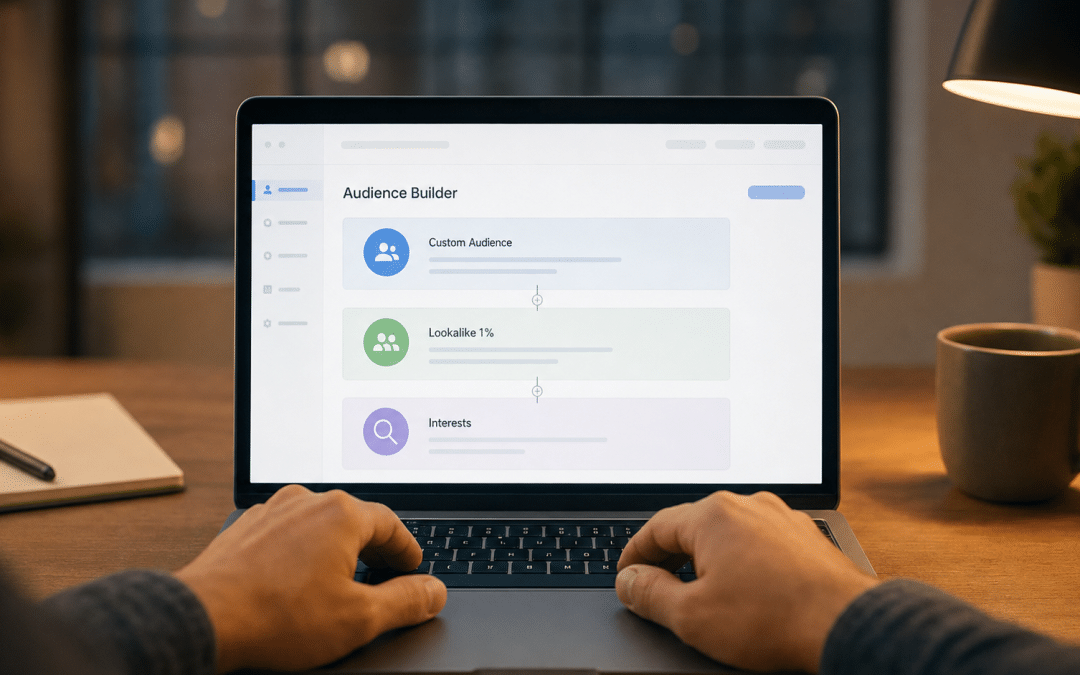
Meta ads audience targeting works best as a layered stack — custom audiences from your own data, a lookalike modelled on real buyers, and narrow exclusions for location and language — rather than one broad interest-based ad set, as we cover in our Meta Ads South Africa guide. Most local accounts still run on interest stacking nobody has touched in years, which is why cost per result quietly climbs the longer a campaign runs.
For South African advertisers, meta ads audience targeting matters more than most other levers because CPMs here are already low by global standards, so wasted budget shows up as wasted opportunity rather than wasted cash. If you are relying purely on Meta's Advantage+ automated targeting, this guide covers the manual layers still worth building underneath it.
Quick Answer
Meta ads audience targeting in South Africa performs best as a layered stack: one or two custom audiences from your own data, a lookalike built from a seed of at least a few hundred purchasers, and narrow exclusions for language, location and existing customers — not a single broad interest-based ad set.
Not sure whether your audiences are actually narrow enough to convert?
Get a Free Meta Ads Audience ReviewWhat Is Meta Ads Audience Targeting?
It is the process of choosing which Meta users see your ads, using a combination of custom audiences built from your own customer data, lookalike audiences modelled on your best buyers, and interest, demographic or location filters layered on top. Done well, meta ads audience targeting reduces how much you pay to reach a genuine buyer instead of a browser.
In our experience, many South African Meta accounts lean heavily toward mobile placements, since desktop reach is often thin outside a handful of B2B categories, and that shapes how granular your targeting decisions can realistically get.
The available signals split into three groups: audiences you build from your own data (custom and lookalike), audiences Meta already understands (interests and behaviours), and audiences Meta assembles automatically once you feed it enough conversion signal through Advantage+.
The Core Targeting Layers You Can Combine
The core layers are custom audiences, lookalike audiences, detailed targeting such as interests and behaviours, and Advantage+ automated expansion — and combining two or three of these usually outperforms leaning on any single layer alone.
Custom audiences work best built from purchasers, not just website visitors, since visitor lists are noisy and include people who never intended to buy. Lookalikes then extend that purchaser signal to strangers who look statistically similar, and detailed targeting narrows the delivery further by interest or behaviour once volume allows it.
Pairing tight meta ads audience targeting with matching creative is why we built a separate creative playbook for Meta ads — targeting narrows who sees the ad, and creative decides whether they stop scrolling once they do.
Key Insight
Stacking more than two or three detailed-targeting interests in a single ad set usually widens reach without improving relevance — Meta's delivery system already expands a well-fed audience on its own.
Custom Audiences and POPIA: What You Can (and Can't) Upload
Custom audiences are lists of your own customers — emails, phone numbers or website visitors — uploaded to Meta so ads reach people you already have a relationship with, and POPIA governs how that list may be gathered, not whether you're allowed to use it at all.
If your list comes from customers who bought from you, POPIA's soft opt-in provision generally allows marketing about similar products without fresh consent, provided you offered an opt-out when you collected their details and offer one in every message. Lists bought or scraped from third parties sit outside that protection and carry real Information Regulator risk.
Practices commonly interpret this as needing a simple internal record: where each list came from, when it was collected, and whether an opt-out was offered at the point of collection. That record is what you'd show the Information Regulator if a complaint ever landed, not a legal defence built after the fact.
Building meta ads audience targeting around a purchased list is the fastest way to combine a poor match rate with a compliance problem in one move — Meta can only match what genuinely belongs in your own customer records.
Unsure if your customer list upload is actually POPIA-safe?
Get a Free Custom Audience Compliance CheckLookalike Audiences: Why Small Seed Lists Fail in the South African Market
Lookalike audiences model new prospects on the traits of an existing group, and they fail in the South African market when the seed list is too small or too generic for Meta's system to find a meaningful pattern.
A Cape Town gym chain we reviewed built lookalikes from a seed of around forty leads collected over one weekend, which is too thin for Meta to generalise from — see how a similar business approaches this in our Meta ads guide for SA fitness brands.
Meta lets you build lookalikes at different size tiers, usually shown as a percentage of the local population — a 1% lookalike is tighter and closer to your seed, while a 5% or 10% lookalike trades precision for reach. In the South African market, starting tight and widening only once results hold up works better than the reverse.
Meta ads audience targeting through lookalikes only earns its keep once the seed audience passes a few hundred people, ideally purchasers rather than page likes or video viewers.
Key Insight
A lookalike built from under a hundred purchasers rarely outperforms a well-built interest audience — the seed is simply too thin for Meta's model to generalise reliably.
Geographic and Language Targeting for South African Buyers
Geographic and language targeting means narrowing meta ads audience targeting to the metros, provinces or language groups where your buyers actually convert, instead of running one national ad set across eleven official languages and nine provinces.
Running national reach without matching it to delivery reality is a common mistake — a retailer advertising nationwide on Meta while reliable next-day courier coverage is often limited to the metros ends up paying for clicks it can't fulfil affordably.
Meta's language targeting lets you split delivery by the language someone has set their device or profile to, which matters in a market where English, Afrikaans and isiZulu creative can each pull differently in the same city. Running one generic English ad set nationally usually leaves conversion on the table in language-diverse metros.
Businesses selling specifically into Durban or Pretoria typically get more from a geo-fenced ad set than from a Johannesburg-and-everywhere default, something we see constantly running accounts through our Pretoria team.
Dynamic Product Audiences: Retargeting Without Rebuilding Every Week
Dynamic product audiences automatically show ads for the specific products someone viewed, added to cart or purchased, pulling from your product catalogue instead of a manually rebuilt list.
Meta's own dynamic product audience documentation describes these audiences as designed to update automatically as customers interact with your catalogue, which typically removes the manual rebuild most SA teams quietly skip once they get busy.
For ecommerce brands running on a South African payment stack — PayFast, Peach Payments or Ozow at checkout — dynamic product audiences are the single highest-leverage meta ads audience targeting layer, because they follow real purchase intent instead of a guess.
None of this works without a properly maintained product catalogue feeding the Meta pixel or Conversions API, since dynamic product audiences are only as accurate as the catalogue data behind them. A catalogue with missing prices or out-of-stock items still showing will quietly undermine even well-built meta ads audience targeting.
Key Insight
Dynamic product audiences update from catalogue behaviour automatically, which is why they typically outperform a static retargeting list that only gets rebuilt once a month.
Broad vs Narrow Targeting: The GPM Framework
Broad targeting lets Meta's delivery system find buyers with minimal input, while narrow targeting restricts delivery to signals you define — and the right choice for meta ads audience targeting depends on how much purchase data is already feeding the algorithm.
Neither approach is universally correct. New accounts with little conversion history usually do better broad, while accounts with a year or more of purchase data extract more value from a narrow, layered structure built around that history.
A simple rule of thumb: audit your ad account for existing purchase volume before choosing a targeting philosophy. Under fifty conversions a month, lean broad and let Advantage+ do the work; above that, layer custom audiences and lookalikes deliberately.
| Factor | Broad Targeting | Narrow Targeting |
|---|---|---|
| Best for | Accounts with under 50 conversions a month | Accounts with strong purchase history data |
| Data required | Minimal — Meta's system fills the gaps | Custom lists, lookalikes, pixel history |
| Main risk | Wasted spend on low-intent clicks early on | Audience fatigue if the seed list is too small |
| Typical use case | New account, cold prospecting | Retargeting and existing customer upsell |
The figures below illustrate the pattern we see, not a guaranteed outcome, when an account moves from a single broad interest ad set to a properly layered targeting structure.
| Metric | Before (single broad ad set) | After (layered structure) |
|---|---|---|
| Monthly ad spend | R15,000 | R15,000 |
| Cost per purchase | R310 | R168 |
| Return on ad spend | 2.1x | 4.3x (+105%) |
| Custom audience match rate | 18% | 52% (+189%) |
Common Meta Ads Audience Targeting Mistakes We See in Audits
The mistakes are consistent across almost every account audit we run: overlapping ad sets competing for the same person, exclusion audiences left empty, and lookalikes built from page likes instead of purchasers.
The GPM South African Digital Cost Index — our analysis of 11 South African providers (August 2026) — found a twenty-fold spread in cost per click among advertisers in the same category, and audience quality is often a major factor behind that gap, not just creative or budget size.
Loose meta ads audience targeting is the single biggest driver of that spread, since accounts running generic interest stacks with empty exclusions pay for clicks that better-targeted competitors simply don't.
That gap closes once exclusions are cleaned up and lookalikes are rebuilt from purchasers instead of engagement.
How GPM Approaches Meta Ads Audience Targeting Differently
Our Meta ads management service starts every new account with an audience audit, not a media plan — we've seen too many accounts burn budget on ad sets fighting each other for the same buyer.
We rebuild meta ads audience targeting around actual purchase data before we touch a single piece of creative, because targeting decides who's in the room before the message even matters.
Dirk van Greuning built and scaled a South African ecommerce brand before founding GPM, so every audience structure we build gets judged on payback period, not on reach as a vanity metric.
Who This Is NOT For
This framework isn't a fit for every advertiser — here's who should hold off before booking a call with us.
Brand-new accounts with no pixel history. If you've never run Meta ads before, there's no purchase or add-to-cart data to build custom audiences or lookalikes from yet. Start with broad delivery and come back to this once you've banked thirty to fifty conversions.
Businesses that can't fulfil outside the metros. If courier coverage or service capacity stops at Johannesburg, Cape Town and Durban, precise national targeting just finds buyers you can't deliver to affordably. Fix fulfilment before you fix targeting.
Anyone unwilling to clean up their customer data. Custom audiences built on outdated, unconsented or purchased lists create compliance exposure and weak match rates. If data hygiene isn't a priority right now, this framework won't help much.
Teams expecting overnight results. Rebuilding an audience structure properly involves a learning phase of several weeks before Meta's delivery stabilises. If you need a result inside three days, audience targeting isn't the lever to pull first.
Wondering which of your ad sets are quietly competing against each other?
Get a Free Audience Overlap CheckFrequently Asked Questions
What is meta ads audience targeting and why does it matter for South African brands?
It is the combination of custom audiences, lookalikes and interest or location filters that decides which Meta users actually see your ads. For South African brands working with CPMs that are already inexpensive by global standards, poor targeting wastes reach rather than rand — the ads still show, just to the wrong people. Getting this right compounds every month the campaign keeps running.
How many custom audiences should a South African Meta ads account have?
Most accounts need two or three: past purchasers, cart abandoners, and email subscribers who haven't bought yet. More than that usually means the account is fragmenting into audiences too small to spend against efficiently. Quality of the list matters more than the count.
Is it legal to upload a customer list to Meta under POPIA?
Generally yes, provided the list came from customers in the context of a sale and you're marketing your own similar products, with an opt-out offered at collection and in every message — the section 69(3) soft opt-in. Lists bought from a third-party data broker don't carry that protection. Keep a record of where every uploaded list originated.
What's a good seed size for a lookalike audience in South Africa?
A few hundred purchasers works better than a few thousand page likes, because Meta is modelling a buying pattern rather than a browsing one. Below roughly a hundred people, the model has too little signal to generalise reliably. Seed quality outweighs seed size once you're past that floor.
Should I target the whole country or specific metros?
Match the ad set to where you can actually deliver and support customers — if courier coverage or in-person service is metro-limited, national reach just buys clicks you can't convert into happy customers. Provincial or metro-level ad sets almost always outperform one national set once volume allows the split. Start narrow and widen once the data justifies it.
How often should audience targeting be reviewed and rebuilt?
Check exclusion lists and audience overlap monthly, and refresh lookalike seeds whenever the underlying purchaser list grows meaningfully — usually every one to two months for an active account. Dynamic product audiences update themselves from catalogue activity, so they need far less manual attention than static lists. Everything else drifts if left untouched for a full quarter.
Ready to stop paying for overlapping audiences?
We'll audit your current ad account, map every audience against your actual customer data, and hand you a prioritised action plan for rebuilding your targeting stack. No obligation — we'll get back to you within 24 hours.
Get Your Free Audience Audit