
 Add to Preferred Sources
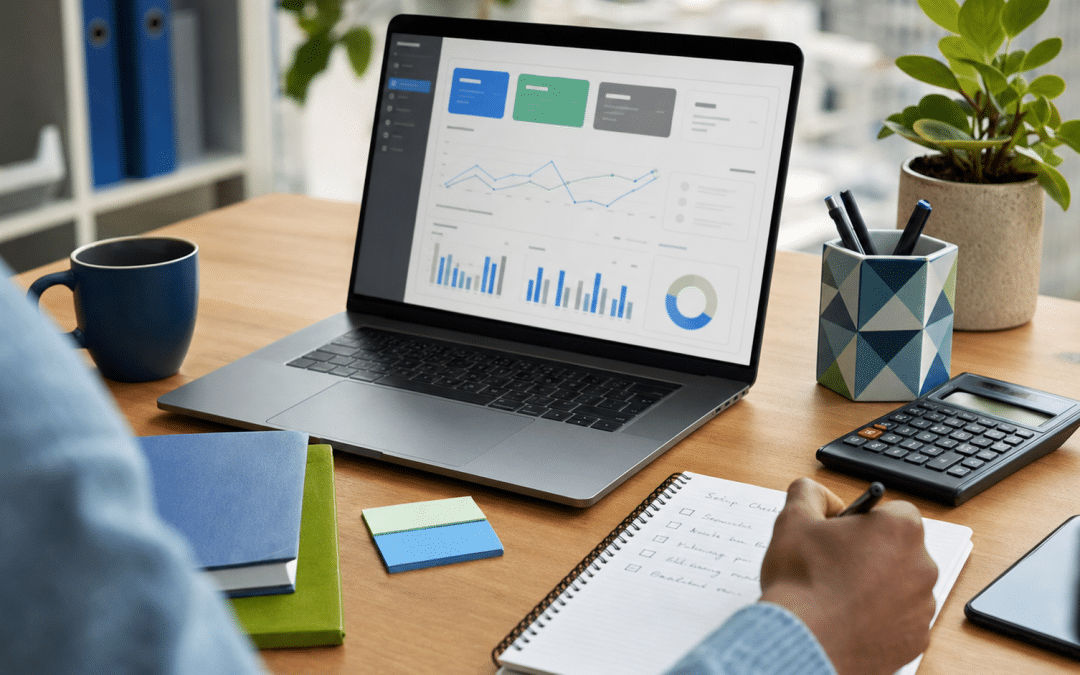
Facebook ads setup is the one-time sequence that takes a business from a Facebook Page and a payment method to a campaign Meta is allowed to deliver and optimise, with a handful of steps that are hard to undo once saved. This walkthrough for the Meta Ads South Africa channel puts those irreversible steps first, then works out in Rand how much budget the account needs before it can learn anything.
The audience is there: DataReportal puts the Facebook advertising audience in South Africa at 27.9 million users in late 2025, a figure of ad-reach identities rather than unique people. For how the auction itself works, read how Facebook ads work in South Africa. This post covers the build.
Quick Answer
Facebook ads setup runs in this order: a Meta business portfolio with two full-control admins, an ad account with the right time zone, a payment method with a South African "Sold To" address, a pixel plus Conversions API tested before launch, then the campaign. Meta adds VAT to SA ad purchases, so R1,000 of ad cost becomes R1,150. Work out your daily budget floor before you choose a budget.
The setup checklist and what cannot be undone
Business portfolio and ownership
Account half-built and not sure what is missing?
Send us your current account layout and we will tell you which setup step is most likely to cost you delivery.
Facebook Ads Setup Checklist: Decide the Irreversible Parts First
A Facebook ads setup checklist is a list ordered by consequence: the settings you cannot easily undo come before the ones you can edit tomorrow. Meta states that changing an ad account's time zone closes the existing account, that ads on the closed account stop running, and that you cannot reactivate it. So the time zone and ownership decisions deserve real thought before you click, and everything else can be corrected as you go.
| Setup item | Easy to change later? | Best for deciding |
|---|---|---|
| Time zone of the ad account | No. Changing it closes the account and starts a new one | Before the first campaign |
| Who owns the Page and ad account | Awkward once a freelancer or agency owns it | Before anyone else is added |
| "Sold To" address and billing details | Check with Meta's billing page; VAT is applied by that address | Before the first payment |
| Pixel and Conversions API events | Yes, but data you did not collect cannot be recovered | Before launch |
| Objective | In practice no: switching usually means a new campaign | At campaign creation |
| Ad copy, images, audiences | Yes, though significant edits restart the learning count | Any time; batch the changes |
Who Owns the Page, the Ad Account and the Data
A Meta business portfolio is the container that holds your Facebook Page, ad accounts, datasets and the people allowed to touch them, so whoever owns the portfolio owns the advertising. The practitioner rule is simple: create it yourself, with a business email address, even if someone else will run the ads.
Add outside people as partners or people with limited access, never as the owner. Keep at least two people with full control of the portfolio, because Meta says domain verification requires full control of it. As practitioner advice, a single admin who leaves can leave you unable to verify the domain or manage the account.
The failure to avoid: a freelancer creates the ad account under their own profile "to get started fast". When the relationship ends, the business may find its pixel and purchase history sit in an account it does not control.
Ad Account, Billing and VAT in South Africa
An ad account is the billing and reporting unit inside the portfolio, and its time zone, payment method and tax details decide how your spend is reported and invoiced. Facebook ads account setup is therefore mostly a record-keeping job, and it is the part most worth getting right first time. Set the time zone to match your reporting day (South African Standard Time for a Johannesburg team), and name the account so you can find it in a year.
For payment, Meta says that if you choose PayPal or a credit or debit card and your bank supports recurring payments on the card, the account is set up for automatic billing. You are then charged whenever you spend a certain amount, called your payment threshold, and again on your monthly bill date for leftover costs. As practitioner advice, add a backup payment method so one declined card does not interrupt your ads.
VAT on Meta ads in South Africa
Meta's own tax page says that since 1 May 2019, if the "Sold To" address on your account is in South Africa, Meta adds VAT at the applicable local rate to the cost of your ad purchase, whether you buy for business or personal reasons. The SARS standard rate is 15%, so R1,000 of ad cost carries R150 VAT and totals R1,150.
Plan budgets as ad cost plus VAT. A VAT-registered business may be able to claim the VAT back as input tax. Whether that applies to you, and whether to add a VAT number to the account if Meta's billing page asks for one, is a question for your accountant.
Pixel, Conversions API and Domain Verification Before Launch
The Meta pixel is a snippet that records what visitors do on your site, and the Conversions API sends the same events from your server, so together they give the delivery system the results it optimises toward. Set both up before launch, because an ad set can only learn from events that were being recorded while it ran.
Meta's developer documentation recommends using the Conversions API in addition to the pixel and sharing the same events through both. It also asks that both copies carry the identical event name plus an event ID (or external ID and fbp) so duplicates are removed. The step-by-step is in our Meta pixel and Conversions API guide, and the Conversions API best practices page is the primary reference.
Verify your domain from the portfolio as well. Meta says verification helps it confirm you are connected to your business, and it needs full control of the portfolio plus admin or developer access to the domain. Whoever controls your DNS or website should be in the room when you do it.
Test before you spend
Before launch, trigger each event yourself on the live site: a page view, an add to cart or enquiry, and a purchase or lead. Confirm each one shows once, not twice, in Events Manager. A campaign launched on broken tracking spends real Rand while teaching Meta nothing.
Which Objective and Campaign Structure to Choose
A campaign objective tells Meta which result to find for you, so it must match the result you can measure on your own site. The six objectives in Ads Manager are Awareness, Traffic, Engagement, Leads, App Promotion and Sales, as WordStream's objectives roundup lists them. In practice, changing objective means building a new campaign, so choose before you build.
| Objective | Optimises for | Best for |
|---|---|---|
| Sales | Purchases or other conversion events | Shopify or WooCommerce stores with a working purchase event |
| Leads | Contact details | Service businesses, schools, dealerships with a form or follow-up process |
| Traffic | Visits to a destination | Content launches, or a site with no conversion tracking yet |
| Engagement | Interactions such as messages | Conversations that start in chat |
| Awareness | Reach or recall | Launches where a sale is not the near-term goal |
| App Promotion | Installs or in-app actions | Businesses with a mobile app |
Start with one campaign, one or two ad sets and a few ads, because every extra ad set splits the budget and delays learning. Our account structure guide shows how to scale this out, and a consistent campaign naming convention from day one saves reporting pain later.
Not sure your budget can support the structure you planned?
Tell us your monthly budget and goal and we will say whether one ad set or three fits, and roughly how long until the account has data worth reading.
The Daily Budget Floor, Worked in Rand
The budget floor is the smallest daily spend at which an ad set can plausibly reach the roughly 50 results Meta needs to leave the learning phase. Meta describes that phase as the period when the delivery system still needs to learn how an ad set may deliver.
Meta says ad sets typically exit it after about 50 results in the week after the last significant edit, and the ad set shows "Learning limited" when it does not collect enough. The formula is: daily floor = (cost per result × 50) ÷ 7. Cost per result is the number that decides everything, and it differs by objective.
Two worked examples
Traffic, link clicks as the result. The SA Digital Cost Index (SADCI, August 2026) puts the average Meta cost per link click in South Africa at R5.12 (about US$0.31 at the index assumption of R16.42/USD). Fifty clicks cost 50 × R5.12 = R256 a week, or about R37 a day. Treat this as a lower bound at average cost per click, not a plan. Your own cost per click will differ from the average and tends to rise as you scale, the result counted must be the event the ad set optimises for, and a click is not a customer. Meta's minimum daily budget per ad set was not verified for this post, so check Ads Manager for the minimum it will accept.
Leads, an assumed R100 cost per lead. The R100 is an illustrative target, not a market benchmark. Fifty leads at that price cost R5,000 a week, about R714 a day or about R21,400 a month. If that is more than you can spend, choose a cheaper result to optimise for, or accept that the ad set will stay Learning limited.
Both figures are ad cost before the 15% VAT described above.
For market context, the SADCI average Meta CPM is R64 per 1,000 impressions, and our Facebook ads budget guide and cost per industry pages show how those figures move by sector. The learning phase explained post covers which edits restart it.
Launch Day and the First Week
The first week of an ad set is its learning period, when results are being collected rather than ads improved. Avoid significant edits to budget, audience or creative during it, because Meta counts results from the last significant edit.
First-week rule
Avoid significant edits in an ad set's first week, since each one moves the starting point for Meta's results count. Minor changes are a judgement call, and Meta's own definition of "significant" is in its learning-phase article.
Before you publish, run through this final checklist:
- Time zone and billing details match your finance records.
- Two people hold full control of the portfolio.
- Pixel and Conversions API events fire once each on the live site.
- The ad's landing page loads fast on mobile data and shows the offer from the ad.
- Ad copy avoids claims likely to be rejected; see why ads get rejected and the fix steps.
If you run several creative variants, read creative testing without wasting spend before you split the budget, since each variant needs its own floor.
Why South African Businesses Choose Growth Pulse Media
Growth Pulse Media is a Johannesburg agency founded by Dirk van Greuning, who built and scaled a large South African ecommerce business before starting it. All work is executed in-house and the client load is limited so each account gets senior attention. Meta Ads, Google Ads, GA4 and Shopify are all part of that scope.
If you would rather hand over the build, our Meta Ads management service covers the setup sequence in this post, and agency versus DIY sets out when each makes sense.
Want a second opinion on a live account?
Request a free audit and we will walk through your setup, tracking and budget against this checklist. No obligation.
Who This Is NOT For
This guide is not for advertisers who cannot fund about 50 results a week, cannot track events on their site, or need a fixed outcome.
Anyone with a budget below the floor. If the maths above shows you cannot fund 50 results a week at your real cost per result, setup is not your problem. Fix the offer or the result you optimise for first.
Businesses without a site that can track events. If you cannot fire a purchase or lead event, begin with Traffic or fix the site first. Spending on Sales or Leads without events is paying to be unmeasured.
Anyone who needs a fixed outcome. A correct setup removes avoidable errors. It does not commit to a number of leads, sales or a return, and this post does not either.
Frequently Asked Questions
How do I set up Facebook ads for the first time?
Create a Meta business portfolio, add your Facebook Page and a new ad account, set the time zone, add a payment method, install the pixel and Conversions API, then build one campaign with one clear objective. Do the irreversible items first: time zone, ownership and objective. This order is the practitioner sequence set out above.
How much does Facebook ads setup cost in South Africa?
The cost that matters is ad delivery plus VAT, rather than the account build itself. Meta adds VAT when your Sold To address is in South Africa, so R1,000 of ad cost totals R1,150 at the 15% rate. The real cost is the daily budget your cost per result demands.
Can I change the time zone on my Facebook ad account?
Only by replacing the account. Meta says changing the time zone closes the existing ad account, ads on it stop running, and it cannot be reactivated. Choose the time zone you will report in before launching anything.
Do I need the Conversions API as well as the Meta pixel?
Meta's developer documentation recommends using the Conversions API in addition to the pixel and sharing the same events through both. You must deduplicate with a matching event name and event ID so each action counts once. Whether it changes your results depends on how much browser tracking you currently lose.
How much should I spend per day to start?
Use (cost per result × 50) ÷ 7. At an average of R5.12 per link click, 50 clicks cost about R37 a day, while an assumed R100 per lead needs about R714 a day. Meta says ad sets typically exit learning after about 50 results in the week after the last significant edit.
Get Your Meta Ads Setup Checked
Share your Page, site platform (Shopify, WooCommerce or other) and monthly budget. We will review your portfolio, pixel and Conversions API setup and budget floor in Rand. No obligation, and we will get back to you within 24 hours.
Talk to Growth Pulse Media