
 Add to Preferred Sources
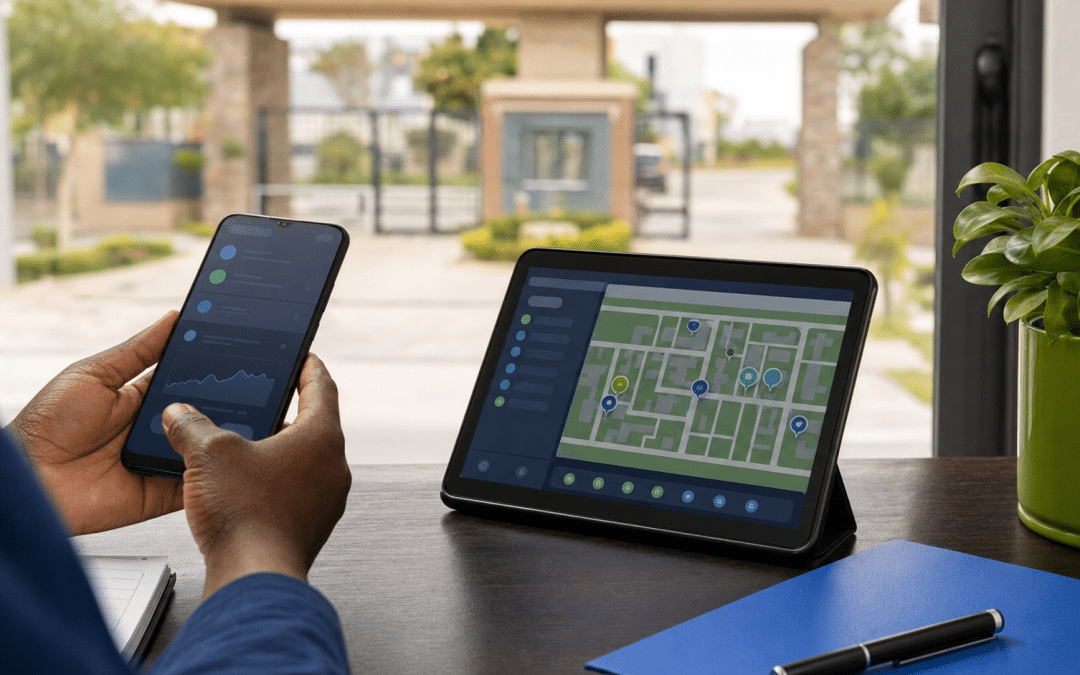
WhatsApp marketing for security companies is the practice of turning WhatsApp conversations into quoted, signed security contracts: answering alarm, guarding and armed-response enquiries in minutes, qualifying the site, and following up with people who have given permission to be contacted. It sits inside the wider WhatsApp marketing guide for South Africa, but security has two constraints most industries do not: buyers are deciding who to trust with their home or premises, and much of what you know about a client (gate codes, guard rosters, alarm zones) must never travel over a marketing channel.
That makes this an unusual WhatsApp problem. The channel is good at speed and proof of legitimacy, and dangerous when it is used loosely. South Africa has about 16,000 active security companies employing over 600,000 officers, according to US International Trade Administration data for 2023/24, so a prospect who messages you has plenty of alternatives one search away. A sensible, fast reply is one of the few things you fully control in that comparison.
This post covers WhatsApp Business for security companies of the usual shapes: residential alarm and armed-response firms, commercial guarding operators, and installers of CCTV and access control. It does not cover the control room's own operational tooling.
Quick Answer
WhatsApp marketing for security companies works best as a fast quote-qualification channel: a prospect messages you, you confirm the site type, address and current system in a short scripted exchange, and a person books the site assessment. Send promotional messages only to contacts who have opted in, because Meta requires opt-in even where POPIA offers an exception such as the existing-customer one. Keep client security details off the channel entirely, and choose the Business app or the API by how many people answer messages, not by how many contacts you have.
Enquiries going cold before the site visit?
Send us your current enquiry-to-quote process and we will point out where prospects are likely to stall. Free audit, no obligation.
Request a free auditHow does WhatsApp marketing for security companies fit the way people buy security?
WhatsApp fits security buying because enquiries are trigger-driven and urgent, so the first reply that looks legitimate has the best chance of winning the site visit. The trigger might be a break-in on the street, a lapsed alarm contract, a new tenant or a failed audit. The prospect is already on the app, can send a photo of the gate or the property, and expects a reply within the hour rather than a call-back tomorrow.
It also changes the shape of your funnel. A web form asks a stressed person to type a paragraph. A WhatsApp message lets them send "Need armed response for our complex in Fourways" and be asked three easy questions in return. If you already run paid search, the same logic applies to Google Ads for security companies: the click is worth more when it lands on a conversation, not a brochure page.
A click-to-WhatsApp ad is the shortest route from a Facebook or Instagram impression to a live chat. Meta's pricing documentation says your first response to such an enquiry opens a free entry point window that can stay open for up to 7 days, during which marketing, utility, authentication and service messages are not charged.
Three jobs WhatsApp does well in this industry
First, instant first response to new enquiries. Second, a repeatable quote-qualification script. Third, lightweight service communication to existing clients who have opted in, such as appointment confirmations and renewal reminders.
How should a security company qualify enquiries on WhatsApp?
For security company WhatsApp marketing, a qualification script is a short, fixed set of questions that tells your team whether an enquiry is a residential alarm, a commercial guarding contract, an armed-response subscription or a CCTV job, and what the next step is. Each service type needs different information, so asking the wrong questions wastes the prospect's patience and your estimator's time.
| Enquiry type | First questions to ask | Next step | Best for |
|---|---|---|---|
| Residential alarm or armed response | Suburb or estate, house or complex, existing alarm panel (yes/no), current provider | Book a site assessment; confirm response coverage for that area | High-volume, fast-reply enquiries |
| Commercial guarding | Business type, site size, shifts needed, current provider or in-house guards | Phone call with an operations manager, then site walk-through | Larger contracts, longer sales cycle |
| CCTV or access control | Number of entry points, existing cabling, whether remote viewing is wanted | Site visit before any price is discussed | Installation quotes |
| Contract renewal or switch | Contract end date, reason for leaving, service issues | Account manager call; check notice period terms | Retention and win-back |
The table is a working template, not a rule: adjust the questions to the services your company is licensed and equipped to deliver. The principle that holds is to ask for the information that decides routing (area, site type, current system) and leave pricing and security-sensitive detail for a call or a site visit.
A reply that works
"Thanks for contacting us. To point you to the right person: is this for a home, a complex or a business, and which suburb? If you have an existing alarm, send a photo of the panel and we will take it from there."
A reply that loses the lead
"Please visit our website and fill in the contact form and a consultant will be in touch."
Qualification works only if someone answers. If several dispatchers or sales staff need to answer from the same number, see how to run WhatsApp Business with multiple users for what the app allows and where the API becomes the better fit. The after-hours gap matters too: an away message that states when a human will reply, and gives your control-room number for genuine emergencies, keeps prospects from assuming silence.
What should a security company never send over WhatsApp?
A security company should treat WhatsApp as a sales and service channel only, never as a place where access details or operational information live, because chats are copied across phones, backups and linked devices that you do not control. The rule is a practitioner recommendation rather than a regulation, but it follows directly from what you do for a living.
Keep these off WhatsApp
Gate and alarm codes, guard duty rosters and patrol times, the schedule of when a property is empty, floor plans with camera positions, and any client's cash-handling routine. Put them in your control-room or client-management system, and tell staff in writing that the policy applies to their personal phones too.
Two practical consequences follow. First, a staff member's personal phone with client chats on it is a data-protection risk the moment it is lost, so move customer conversations onto a business number that the company controls and can lock. The backup and restore guide explains what is and is not recoverable when a handset changes.
Second, route customer details into a CRM rather than leaving them in chat history; the CRM for security companies post and the POPIA and CRM security guide cover that side.
What do POPIA and Meta's rules require before you message prospects?
Before you send a promotional WhatsApp message, two separate rule sets apply: Meta's messaging policy, which requires opt-in permission, and POPIA's direct marketing rules in section 69, which generally require consent for electronic direct marketing, subject to exceptions such as the existing-customer exception in section 69(3). Meeting one set does not satisfy the other.
Meta's policy says you may only contact people on WhatsApp if they have given you their mobile number or username and you have received opt-in permission confirming they want subsequent messages from you, per the WhatsApp Business messaging policy.
On the legal side, the Information Regulator's December 2024 Guidance Note on Direct Marketing, as summarised by DLA Piper Africa, says direct marketing by electronic communication generally requires consent subject to certain exceptions. The same summary says each message must identify the sender and give an address for requests to stop. Legitimate interest is discussed in the guidance for non-electronic marketing, so do not treat it as a way around consent for WhatsApp broadcasts.
What this means in practice
A person who messages you first has started a conversation, and you can reply in free-form text while the 24-hour customer service window that their message opens is running, per Meta's pricing documentation. After the window closes, a business-initiated message needs an approved template, and Meta's opt-in rule still applies. A bulk promotion to a purchased or scraped list needs consent under both rule sets. Capture opt-in on your quote form, at the site assessment and at contract signing, record when and how it was given, and honour "stop" immediately. The WhatsApp opt-in strategies post covers wording and capture points. This is general information, not legal advice; ask your attorney to review your consent wording.
One industry-specific check applies to catalogue and cart tools. Meta's commerce rules restrict certain goods, firearms among them, and those rules govern commerce features rather than ordinary conversation. Before you list cameras, defensive products or anything resembling covert surveillance gear in a catalogue, read the current Commerce Policy, and keep those sales in conversation and quote form if there is any doubt. This post does not claim that ordinary CCTV installation is restricted.
Firms with a PSIRA registration should also note that a number quoted in a message is only a claim until the prospect checks it with the regulator, as Compare Security's PSIRA explainer points out. Offering your registration details up front, and inviting verification, is a trust signal competitors may not give.
Should a security company use the WhatsApp Business app or the API?
The WhatsApp Business app suits a company where one or two people handle enquiries and no automation is needed, while the API suits a company with several staff answering messages, a CRM, or a need to send approved template messages at scale. The choice turns on team size and integration needs, not on the size of your contact list.
| Your situation | Likely fit | Why | Best for |
|---|---|---|---|
| Owner-operator or small firm, one or two people answering | Business app | Quick to start and enough for manual conversations | Start-ups and local installers |
| Control room plus sales team, several agents | API through a provider | Shared inbox, routing, CRM link, template messages | Mid-sized guarding and response firms |
| Multiple branches or provinces | API with CRM | One number or several, assigned by region, consistent records | Regional operators |
| Need to send renewal reminders at scale | API | Business-initiated messages outside the 24-hour window go out as approved templates | Subscription-based portfolios |
For the detailed trade-offs read WhatsApp Business app vs API, and if you are leaning toward the API, WhatsApp CRM integration shows what the connection involves. Regional operators have a real reason to care: PSIRA's June 2025 committee report puts 39% of active security businesses in Gauteng, 19% in KwaZulu-Natal and 11% in the Western Cape, so a multi-province firm is competing in several local markets at once. A verified identity also matters in this trade; the green tick verification post explains what Meta requires.
How are WhatsApp costs structured for a security company?
Meta charges per delivered message, by template category and by the recipient's country calling code, and only for messages sent from the business to the user, according to Meta's pricing documentation. The categories are marketing, utility, authentication and service, so the cost of a message depends on what it is for, not just how long it is.
For a security firm this maps onto your message mix. Promotional offers are marketing. Appointment confirmations are the usual utility case, but a renewal notice that also carries an upsell or promotion may be treated as marketing, and Meta's pricing page does not say how mixed-content templates are classified, so write utility templates to be purely transactional.
From 1 October 2026, Meta's documentation lists 1,000 free service messages a month per business phone number. Meta also updates rates quarterly, in January, April, July and October, so a Rand budget set in one quarter can be stale in the next. Use the current rate card from your provider, and see WhatsApp Business API pricing in South Africa and WhatsApp marketing costs for the wider cost picture, including provider fees.
What is verified about WhatsApp costs
Users messaging a business is not charged. Messages sent inside the 24-hour customer service window are not charged, a Click-to-WhatsApp ad response opens a free entry point window of up to 7 days, and from 1 October 2026 each business number gets 1,000 free service messages a month. Everything outside those windows is charged per template category at the current rate card.
Unsure what your message mix will cost?
Share your monthly enquiry volume and client count and we will outline how the message categories apply. Free consultation, no obligation.
Book a free consultationWhat does a sensible rollout sequence look like for a security company?
A sensible rollout fixes the foundations before any promotion goes out: number, profile, script, permission and ownership. Treat the following as a working sequence rather than a benchmark; the pace depends on your team.
- Set up a company-controlled number. Not a director's personal phone. Complete the business profile with your trading name, address, hours and PSIRA registration details.
- Write the qualification scripts for each service type in the table above, and test them on colleagues.
- Define ownership. Who answers during office hours, who after hours, and what the escalation path to the control room is.
- Add opt-in capture to quote forms, site assessments and contracts.
- Send one useful message type first, such as appointment confirmations, before any promotion. Review replies weekly.
- Track enquiries to signed contracts. The campaign reporting guide shows what to count.
Search and WhatsApp work together, and WhatsApp lead generation for security companies starts with being found. People find you through SEO for security companies or ads and then continue on WhatsApp, which is why the lead generation for security companies post is the natural companion to this one.
Why Do South African Businesses Choose Growth Pulse Media?
Growth Pulse Media is a Johannesburg agency founded by Dirk van Greuning, who built and scaled a large South African ecommerce business before starting the agency. All work is executed in-house and the client load is limited so that senior attention stays on each account. If you want to see how the channel is scoped for a business like yours, the WhatsApp marketing service page sets it out, and a free consultation through the contact form carries no obligation.
Who Is This NOT For?
Firms that want bulk messaging to a bought list
If your plan is to blast promotions at numbers you did not collect with permission, this approach will not suit you. Meta's opt-in policy and POPIA's direct marketing rules both stand in the way, and a blocked or reported number hurts a company whose business is trust.
Firms that want WhatsApp to replace the control room
WhatsApp is a sales and service channel. It is not an emergency or dispatch system, and nothing in this post suggests routing panic or incident traffic through it.
Firms with nobody to answer messages
If enquiries will sit unread for a day, the channel exposes the delay rather than hiding it. Fix staffing and ownership first.
Want a second opinion before you commit?
Send us your current set-up and we will tell you plainly whether WhatsApp, search or ads should come first. No obligation.
Talk to usFrequently Asked Questions
Can a security company use WhatsApp for marketing in South Africa?
Yes, if recipients have opted in to promotional messages. Meta's messaging policy requires opt-in permission, and separately POPIA's direct marketing rules generally require consent for electronic marketing, subject to exceptions such as the existing-customer exception. Under POPIA, each message must also identify the sender and give a way to stop.
Should security companies use the WhatsApp Business app or the API?
Use the Business app if one or two people answer enquiries and you do not need automation. Move to the API when several staff share the inbox, you want a CRM link, or you need approved template messages for reminders at scale.
Can I send alarm codes or guard schedules over WhatsApp?
You should not. Chats are copied across phones, backups and linked devices, so keep codes, rosters and property-vacancy details in your control-room or client system. This is a practitioner recommendation, not a statutory rule.
Is WhatsApp marketing for security companies expensive?
Cost depends on the message mix. Meta charges per delivered message by template category, does not charge inside the 24-hour customer service window, and lists 1,000 free service messages a month per business number from 1 October 2026. Rates change quarterly, so check your provider's current Rand rate card.
Can I list CCTV cameras in a WhatsApp catalogue?
Check Meta's current Commerce Policy first. It restricts certain goods, firearms among them, in catalogue and cart tools. This post does not say ordinary CCTV is restricted, but if there is any doubt, keep camera sales to quote conversations rather than catalogue listings.
Turn security enquiries into signed contracts
Tell us how enquiries reach you today (phone, web form, ads, referrals) and we will show you where WhatsApp fits, with POPIA consent and Meta's opt-in rules built into the plan. No obligation: we will get back to you within 24 hours.
Request your free audit