
 Add to Preferred Sources
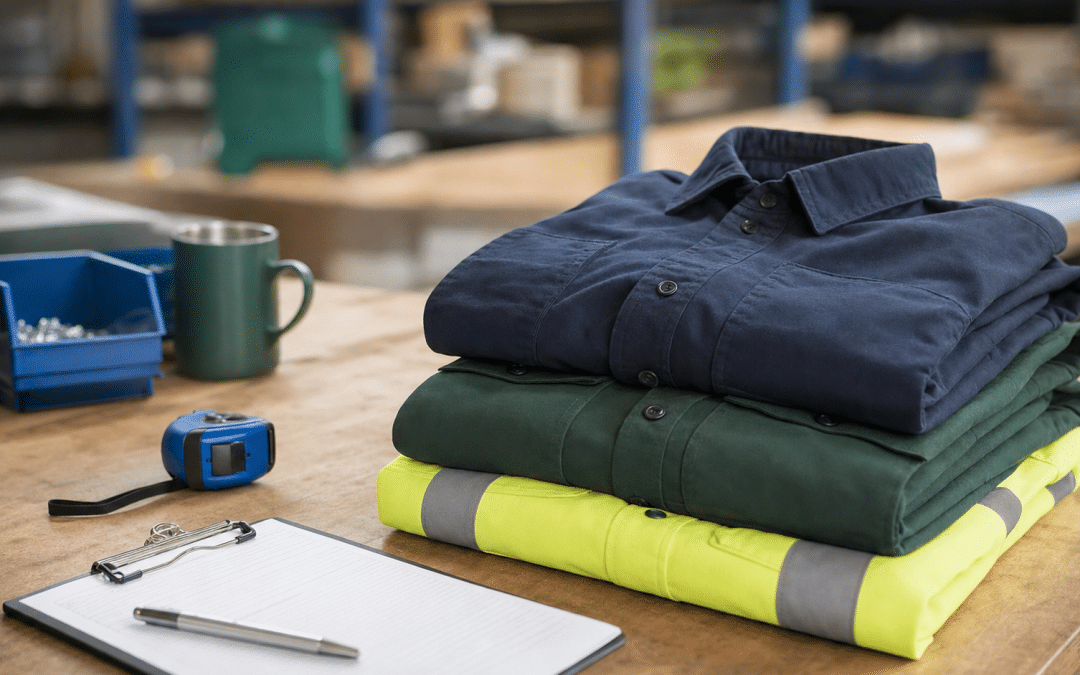
Lead generation for uniform suppliers is the work of reaching the businesses, institutions and government buyers that are about to order staff clothing and getting a qualified quote request in front of you before a competitor's catalogue does. It differs from general business lead generation because a uniform order is driven by a date (a rollout, a new site, a tender closing) and then repeats on a replacement cycle, so the value of a lead sits in the reorders as much as the first invoice.
This post gives you the arithmetic for what a qualified lead can cost, the trigger events that create orders, the public-sector route through the Central Supplier Database, and the channels and POPIA limits that fit a workwear business. Uniform suppliers South Africa wide sell to very different buyers, so the first job is to match your range to the route that reaches them.
Quick Answer
Lead generation for uniform suppliers works when you start from a cost-per-qualified-lead ceiling (gross margin over the retained years, divided by the leads you need per win), then target buyers with a deadline: a new site, a rebrand, a headcount intake, a compliance rule or a tender. On the illustrative inputs in this post, an 80-person client who places a first order and two reorders gives a break-even ceiling of about R5,040 per qualified lead at a 1-in-10 close rate. Set your working target well below that, using your own margin, retention and close rate.
Not sure what a quote request can cost you?
Send us your average order value, margin and typical reorder pattern, and we will show you the ceiling a qualified lead has to come in under.
Who Buys Staff Clothing, and Which Route Reaches Them?
Uniform buyers fall into a handful of segments, and each one is reached by a different route because the person who signs off and the rule that shapes the order are different. A single "corporate wear" campaign that speaks to all of them speaks to none.
The table below matches each segment to its route and to the fact that changes the pitch. The sets-per-employee figures come from a South African corporate wear supplier's buying guide, which describes them as typical ranges, so treat them as a starting point for quoting.
| Buyer segment | Who decides | What shapes the order | Best route |
|---|---|---|---|
| Corporate offices and branches | HR, facilities or marketing | Brand look; office teams usually need 2 sets each | Search ads, referrals, direct outreach |
| Hospitality and housekeeping | Operations or housekeeping manager | 3 to 5 sets per employee | Search ads, sample drop-offs |
| Retail and client-facing teams | Store or regional operations | 2 to 3 sets per employee; seasonal ranges | Direct outreach, existing-customer reorders |
| Security companies | Varies by company size | A regulated uniform with fixed badge rules | Search ads, compliance-led content |
| Government departments, municipalities, schools, hospitals | Supply chain management | Tender rules, B-BBEE points, local content | Tender alerts and Central Supplier Database registration |
A buyer journey that starts with a deadline and ends with a purchase order also tends to involve more than one person, so build the follow-up for a committee.
What Can Uniform Suppliers Afford to Pay for a Lead?
The most you can afford to pay for a qualified lead equals the gross margin a client earns you over the years they stay, divided by how many qualified leads it takes to win one. Work this out before you spend a rand on advertising, because every channel decision after it is a comparison against this number.
The inputs below are assumptions for illustration, not market benchmarks: an 80-person client, 2 sets each (the office-team figure above), a sell price of R700 a set, a 30% gross margin, and 25% of the first order re-ordered each following year for new starters and worn-out sets. Replace every input with your own.
| Years retained | Gross margin earned | Close rate | Ceiling per qualified lead |
|---|---|---|---|
| 1 year (first order only) | R33,600 gross margin | 1 in 5 | R6,720 |
| 1 year (first order only) | R33,600 gross margin | 1 in 10 | R3,360 |
| 3 years (first order plus 2 reorders) | R50,400 gross margin | 1 in 5 | R10,080 |
| 3 years (first order plus 2 reorders) | R50,400 gross margin | 1 in 10 | R5,040 |
Working
80 staff x 2 sets x R700 = R112,000 first order. 30% of R112,000 = R33,600 gross margin. A reorder of 25% of the first order is R28,000, which earns R8,400 margin a year. Three years: R33,600 + R8,400 + R8,400 = R50,400. Divide by 5 or 10 qualified leads per win to get the ceiling. This is a break-even maximum before sales, fulfilment and ad-management costs, and it assumes the client stays all three years, so set your working target well below it.
Two lessons sit inside the table. A client you keep for three years supports a ceiling about 50% higher than one who buys once, so reorder reliability and service after delivery are lead generation work too. And the close rate moves the ceiling as much as the margin does: a supplier who wins 1 in 5 can pay double what a supplier who wins 1 in 10 can pay for the same lead.
For how channels compare against a ceiling like this, see cost per lead in SA by channel. For what counts as a lead in the first place, see qualified lead vs booked meeting.
Takeaway
A uniform supplier's lead-cost ceiling is gross margin over the retained years divided by qualified leads per win. On the illustrative inputs here that is R3,360 to R10,080 per lead depending on retention and close rate. Replace the inputs with your own before choosing a channel.
Paying for enquiries that never become orders?
Tell us your current lead sources and what happens after the enquiry, and we will assess where the cost per win is leaking and whether the fix fits your next ordering season.
Which Trigger Events Create Uniform Orders?
A trigger event is a change in a business that forces a clothing decision on a deadline, and it is the most reliable way to reach a buyer who is not already comparing catalogues. The same supplier guide lists new staff arrivals, brand updates, team growth and seasonal garments among the things buyers plan around.
Rollout time is what turns a trigger into urgency. The guide says a professional rollout, from consultation and colour selection through fittings, production, quality checks and delivery, takes 6 to 12 weeks for most companies depending on quantity and complexity. A buyer who needs staff dressed for a launch date is therefore already late when they search, which is why speed of reply and a clear delivery timeline win enquiries.
| Trigger | Who feels it | What they search or ask | Best for |
|---|---|---|---|
| New site or branch opening | Retail, hospitality, franchises | "staff uniforms for new store" | Full rollouts with a fixed date |
| Rebrand or new corporate identity | Companies of any size | "branded corporate wear" | Design-led ranges |
| Headcount intake or seasonal hiring | Hospitality, call centres, retail | "uniforms for 50 new staff" | Size-curve planning and fast reorders |
| Won a new contract or site | Security, cleaning, facilities companies | "security uniform supplier" | Compliant, ready-to-wear ranges |
| Tender published | Departments, municipalities, hospitals, schools | Published tenders | Registered, B-BBEE-scored bids |
Why do security uniform rules create a ready-made buyer?
Security uniform rules make a security company's clothing a compliance purchase, not a style choice. The Private Security Industry Regulations, as amended on 3 July 2020, require a security service provider to give security officers an adequate and distinctive uniform, except for close protection work, according to Baartman Du Plessis Attorneys.
The same summary lists the detail a supplier must get right: two prominently visible badges showing the security business name, a front badge with the officer's name and registration number, and "Private Security" badges front and back. It says a uniform may not resemble South African Police Service dress, may not be any shade of blue and may not be camouflage except for anti-poaching work. A non-compliant provider is liable on conviction to a fine or up to 24 months' imprisonment.
That gives a supplier an honest message: sell the range that meets the rules, and say so on the page. Check the current regulations before you print any of it, because the rules can change after the 2020 amendment.
How Does the Public-Sector Route Work for Uniform Suppliers?
The public-sector route runs through registration and scoring rather than advertising: you register on National Treasury's Central Supplier Database, watch tenders on the e-Tender portal, and win on a combination of price and preference points. For uniform suppliers South Africa wide, government departments, municipalities, hospitals and schools are the buyers that publish what they want.
National Treasury launched the Central Supplier Database and the e-Tender Publication Portal on 8 April 2015, describing the portal as a single platform for the publication of tenders. The launch statement says the database exists so supplier information is held once across government, so check Treasury's Central Supplier Database guidance for the registration requirements that apply to your bids today.
Scoring then follows the Preferential Procurement Regulations, 2022. As summarised by Sourcefin, tenders from R30,000 up to R50 million use an 80/20 system, with 80 points for price and up to 20 for B-BBEE status, and tenders above R50 million use 90/10. We could not read the Treasury regulations PDF itself, so confirm the thresholds against the regulations before you build a bid model on them.
Local content is the second filter. The dtic says it has designated sectors for local production since 2011, and lists Textile, Clothing, Leather and Footwear at a 100% minimum local content threshold. The dtic page we read gives the 100% threshold for the sector but does not itemise products, so check the dtic designation circular for your specific products before you bid with imported stock.
Takeaway
Public-sector uniform work is won by being registered, scored and compliant, not by ad spend. Register on the Central Supplier Database, know your B-BBEE points under the 80/20 or 90/10 system, and check whether your garments fall under the dtic's 100% local content designation for clothing and textiles.
Which Channels Fit Lead Generation for Uniform Suppliers?
Corporate uniform lead generation fits four channels for private buyers: search ads that catch the trigger at the moment of need, Meta lead forms for volume and awareness, referral and partner routes that reach the decision-maker through someone they trust, and permission-based contact with customers you already serve.
Search advertising. Searches such as "corporate uniforms Johannesburg" or "security uniform supplier" carry intent that a social feed does not. Run them through Google Ads with location targeting set to the regions you can deliver and fit to, and send them to a page built around a quote form, not a catalogue. Count qualified quote requests in GA4, not clicks.
Meta lead forms. These suit awareness and smaller teams. The SA Digital Cost Index (SADCI) puts the average Meta cost per link click at R5.12 for SA-targeted campaigns in August 2026. For traffic sent to a landing page, a R5,040 break-even ceiling buys at most about 984 clicks per qualified lead, so the click-to-qualified rate decides whether the channel fits. Instant lead forms are a different metric, so judge them on their own cost per lead rather than on this click figure.
Referrals and partners. Interior designers, branding and print agencies, facilities managers, office fit-out firms and HR consultancies sit next to the moment a business changes premises or identity. A referral agreement costs time rather than ad spend, and the lead arrives with a recommendation attached.
Existing customers. Reorders are the cheapest leads you have. Contacting your own customers about similar products falls under the existing-customer exception in POPIA section 69(3), which carries conditions of its own. Keep order dates in a CRM so the outreach lands before the next replacement cycle; a CRM that feeds your pipeline covers the set-up.
What does POPIA allow in cold outreach to buyers?
POPIA section 69 prohibits unsolicited electronic direct marketing unless the person has consented or is an existing customer. Per the text of section 69, you may approach someone who has not previously refused only once to ask for consent.
The existing-customer exception applies where the contact details came from a sale, the offer is for similar products or services, and the customer could object at collection and in every message. The Information Regulator's Guidance Note on Direct Marketing says legitimate interest cannot replace consent for electronic marketing, although it can apply to non-electronic marketing, as summarised by Werksmans.
The note does not address business email addresses specifically, so do not assume a business-to-business exemption. Every message must identify the sender and give a way to stop further contact, and bought databases and POPIA covers the list question.
How Should You Qualify a Uniform Enquiry?
Uniform supplier lead generation only pays when the enquiry is qualified, and qualifying a uniform enquiry means capturing the few facts that decide whether you can quote and win: headcount, roles, garment types, branding method, delivery sites and the date the clothing is needed. Without them, your team spends a call discovering what a form could have asked.
A short form that asks for headcount, the roles to be dressed, the deadline and the delivery locations filters out the idle and the uncoverable in one step. Route the answers to a named owner with a reply time. A fast, specific reply beats a polished one, since a buyer facing a rollout deadline is likely to be speaking to several suppliers. See lead response time in South Africa for why the first reply matters so much.
Works: An ad for "Security uniforms that meet the PSIRA badge rules" lands on a page with a five-field form (headcount, site count, deadline, current supplier, badge needs) and a call button. The sales team replies the same day with a sample range and a delivery timeline.
Fails: An ad that says "Quality corporate wear at great prices" sends traffic to a generic contact page with a "tell us what you need" box. The enquiry arrives with no headcount or deadline, and half of it is a one-off order for five shirts.
Track outcomes beyond the form fill. A lead that books a fitting session or a sample review is closer to a purchase order than one who downloads a price list, which is why appointment setting costs are worth comparing against your ceiling if you outsource the first call.
Why South African Businesses Choose Growth Pulse Media
Growth Pulse Media is a Johannesburg agency founded by Dirk van Greuning, who built and scaled a large South African ecommerce business before starting the agency. All work is executed in-house and the client load is limited, so senior attention stays on the account. Paid acquisition runs on Google Ads and Meta Ads with GA4 and Search Console for measurement, which is the toolset a quote-led workwear lead generation campaign needs.
Lead generation for uniform suppliers at Growth Pulse Media follows the shape described above: set the cost ceiling first, then build search campaigns and landing pages around trigger events and measure qualified quote requests, not clicks. Our business lead generation service covers how that is scoped, and the free audit is a no-obligation way to test whether the numbers work for your order values.
Who This Is NOT For
This approach is not suited to suppliers who compete only on price, cannot quote a delivery timeline, want to blast a bought list, or expect advertising to win government tenders.
Suppliers selling purely on lowest price. If your only advantage is a lower rate than the next quote, advertising will not fix the position. Sort out the offer and your delivery reliability before the traffic.
Suppliers who cannot commit to a rollout timeline. Buyers with a launch date need to hear when the clothing arrives. If you cannot say, paid enquiries will turn into lost quotes.
Anyone wanting a bought list and a mass blast. Unsolicited electronic marketing to a purchased database runs into POPIA section 69. We do not build that kind of campaign.
Suppliers whose main market is tenders. Winning government work is a registration, compliance and bid-writing job. Ads can support a private-sector pipeline, but they do not replace the tender route.
Ready to see where your next uniform orders come from?
Share your top three customer types and typical order size, and we will map which route is worth testing first and what a fair timeline looks like.
Lead Generation for Uniform Suppliers: Frequently Asked Questions
How much should a uniform supplier pay per lead?
No more than your gross margin over the years a client stays, divided by the qualified leads you need per win. With an assumed 30% margin on an 80-person, R112,000 first order, three retained years and a 1-in-10 close rate, that break-even ceiling is R5,040, before sales and fulfilment costs. Use your real margin, retention and close rate, and set your working target below the ceiling.
What is the best way to find corporate uniform buyers?
Target businesses with a deadline: a new site, a rebrand, a hiring intake or a new contract. Search ads aimed at those moments, plus referral agreements with fit-out firms, branding agencies and facilities managers, put you in front of buyers when a decision is forced rather than when they are browsing catalogues.
How do uniform suppliers get government tenders?
Register on National Treasury's Central Supplier Database and watch tenders on the e-Tender portal. Tenders from R30,000 up to R50 million are scored on an 80/20 system, with up to 20 points for B-BBEE status, according to a secondary summary of the 2022 regulations. Check whether your garments fall under the dtic's 100% local content designation for clothing and textiles.
Do security companies have to buy a specific uniform?
The Private Security Industry Regulations, as amended in July 2020, require security providers to supply officers with an adequate and distinctive uniform, except for close protection. A summary by Baartman Du Plessis Attorneys lists badge requirements and says the uniform may not resemble SAPS dress, be any shade of blue or be camouflage except for anti-poaching work. Check the current regulations before you supply.
Can I cold email companies about my uniform range?
POPIA section 69 prohibits unsolicited electronic direct marketing unless the person has consented or is an existing customer under section 69(3). You may approach a new prospect once to ask for consent. The Information Regulator's guidance does not say business email addresses are treated differently, so do not assume a business exemption.
Build a lead flow your order values can afford
We work with Google Ads, Meta Ads and GA4, and every account is run in-house. Tell us your typical order size and service area, and we will show you where a qualified lead has to land to make the numbers work. No obligation: we will get back to you within 24 hours.
