
 Add to Preferred Sources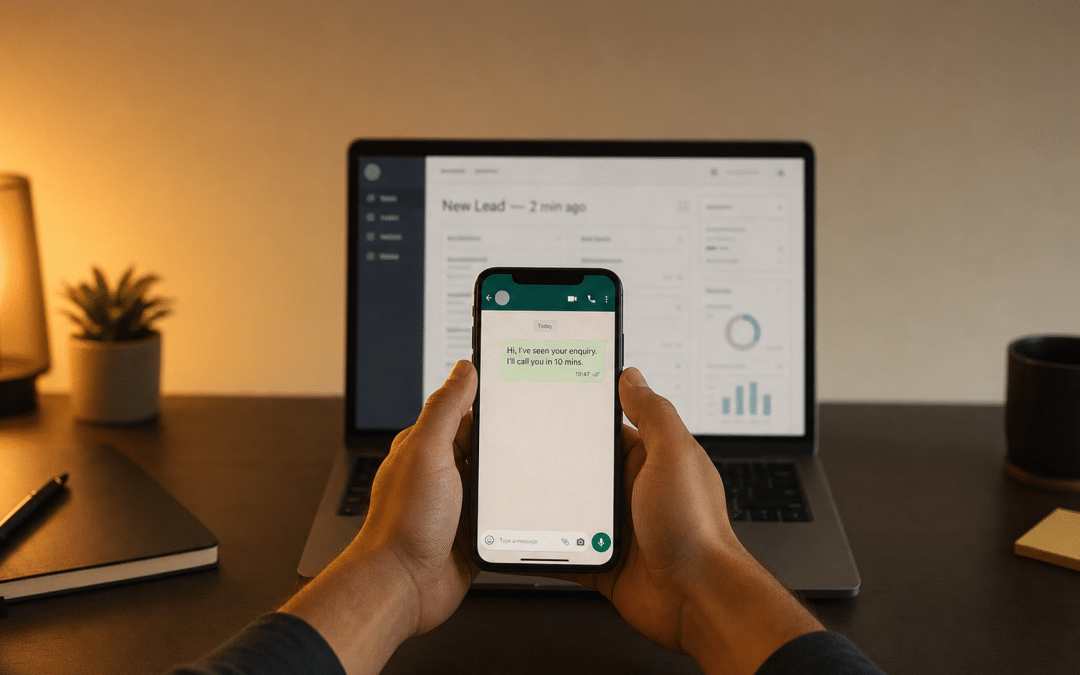
Lead response time is the single variable that separates South African B2B companies that close deals from those that lose them to a competitor who simply replied faster — and our B2B lead generation guide for South Africa shows it consistently ranks as the highest-leverage operational fix available. Most local sales teams still treat a same-day reply as acceptable. It is not.
The window in which a prospect is mentally engaged, tab still open, problem still front of mind, is short. In a market where load-shedding disrupts office hours, where buyers juggle WhatsApp, email, and LinkedIn simultaneously, and where a Sandton CFO and a Cape Town procurement manager operate on different rhythms, sales and marketing alignment around response speed is not a nice-to-have. It is a revenue decision.
Quick Answer
Lead response time is the gap between a prospect submitting an enquiry and your team making first contact. The faster that gap closes — ideally under five minutes for high-intent leads — the higher your chance of qualifying the buyer before they engage a rival. South African companies routinely let hours or days pass. That delay is costing real deals.
Do you know your current average lead response time — and how it compares to the deals you're losing?
Get a Free Response AuditWhat Lead Response Time Actually Means for SA Sales Teams
Lead response time is the elapsed time between a prospect's first contact action — form fill, WhatsApp message, LinkedIn enquiry, or phone call — and a meaningful reply from your sales team. "Meaningful" matters: an automated acknowledgement email does not count. A personalised message from a human who has read the enquiry does.
The distinction is important in the South African context. Many local CRMs log the auto-responder as the first touch, flattering the metric while the prospect waits hours for a real conversation. If your HubSpot or Salesforce dashboard shows a two-minute average response, check whether it is measuring the bot or the person.
B2B buying in 2026 involves multiple stakeholders. LinkedIn's research shows that anywhere from 3.1 to 4.6 internal groups — IT, finance, HR, and others — can influence a single purchase decision. That means the window when your champion has internal momentum and is actively seeking a vendor is genuinely narrow. Miss it and you are not just losing a reply; you are losing the moment when the deal was winnable.
Key Insight
An automated acknowledgement is not a lead response. It is a receipt. The clock keeps running until a qualified human engages the prospect in a real conversation about their problem.
Why SA Companies Struggle With Lead Response Time
Sluggish response speed in South Africa has structural causes, not just cultural ones. Understanding them is the first step to fixing the process.
Load-shedding disruption. Stage 4 or 6 outages push salespeople off their desks mid-morning. Leads that arrive during a two-hour blackout in Centurion or Bellville sit unread until power returns. Without a mobile-first fallback — typically a WhatsApp routing rule — those leads cool completely.
CRM adoption gaps. Many South African SMEs and mid-market businesses run partially adopted CRMs. Leads from the website go into HubSpot; leads from LinkedIn go to someone's inbox; WhatsApp enquiries live in a personal phone. There is no single queue and no owner. The result is that first-contact speed is not even measured, let alone managed.
Sales and marketing misalignment. Marketing runs the campaigns and celebrates the form fills. Sales receives a spreadsheet on Monday morning. The handover latency alone can be 48 to 72 hours. By then, the prospect has often already briefed a competitor. Fixing sales and marketing alignment is inseparable from fixing response speed.
Under-resourced inside sales. In manufacturing, logistics, and construction businesses, the person who handles inbound leads is often also managing existing accounts, quoting, and admin. First-contact performance degrades under load because there is no dedicated inside sales function.
| Root Cause | Typical SA Symptom | Minimum Fix |
|---|---|---|
| Load-shedding | Leads sit unread during outages | WhatsApp routing to mobile, auto-assign backup rep |
| Fragmented lead sources | No single queue; leads lost between tools | Centralise all sources into one CRM inbox |
| Sales/marketing handover | Batch delivery, 48–72 hour lag | Real-time CRM notification to assigned rep |
| No dedicated responder | Rep handles response alongside 40 other tasks | Rotational inside-sales duty or virtual SDR |
| Auto-responder counted as first touch | Inflated metrics, poor actual conversion | Measure human-first-contact separately in CRM |
Is your CRM measuring the bot or the human — and do your sales numbers reflect the difference?
Get a Free CRM AuditThe WhatsApp Bridge: Speed-to-Lead in the SA Market
The fastest lead response time infrastructure available to a South African B2B business in 2026 is a WhatsApp-first routing system, and the reason is simple: your prospects are already there. WhatsApp is deeply embedded in how South African professionals communicate at work, and B2B buyers — including procurement managers in Durban, IT directors in Rosebank, and finance leads in Tygervalley — use it daily for business decisions.
A properly built WhatsApp bridge does three things. First, it routes inbound leads from your website form, LinkedIn Lead Gen Form, or any paid channel directly to a WhatsApp notification on the assigned rep's phone. Second, it sends the prospect an immediate, human-sounding first message within 60 seconds of their enquiry. Third, it logs the conversation back to the CRM so first-contact speed is measured accurately.
This is not a chatbot strategy. The 60-second message should be short, specific, and personally signed. "Hi [Name], this is Thabo from [Company]. I've just seen your enquiry about [topic]. I'll call you in the next 10 minutes — does that work?" That message restarts the clock in the prospect's mind. They are now waiting for your call, not browsing competitors.
For IT and MSP companies, where leads often come in after hours from technical buyers researching solutions, an automated WhatsApp acknowledgement with a next-business-day call booking link has been shown to preserve lead intent overnight far better than a silent inbox.
Similarly, logistics and transport companies often receive time-sensitive freight enquiries where a one-hour lag means the shipper has already called three others. A WhatsApp-first response process converts these high-urgency enquiries before they drift.
| Metric | Before WhatsApp Bridge | After WhatsApp Bridge |
|---|---|---|
| Average first-contact gap | 4.5 hours | 8 minutes |
| Leads contacted same day | 54% | 96% |
| Qualified conversations per week | 6 | 17 |
| Pipeline value generated (monthly) | R180,000 | R410,000 |
| Lead-to-meeting conversion rate | 11% | 29% |
These figures illustrate the pattern we see, not a guaranteed outcome. Results vary by industry, offer, and existing sales process maturity.
Key Insight
WhatsApp is not a social channel in South Africa — it is a business communication standard. Building your response process around it is not optional if you want sub-five-minute first contact on mobile-first leads.
How to Set a Lead Response Time Standard for Your Business
A documented, enforced response standard defines the maximum acceptable gap between an inbound enquiry and a human first contact, segmented by lead source and intent level. Without this in writing, every rep sets their own threshold — and the average drifts toward whatever is convenient.
Not all leads warrant the same urgency. A whitepaper download from a cold LinkedIn ad is early-funnel. A demo request or a pricing enquiry from someone who visited three product pages is high-intent. Your standard should reflect this.
Tier 1 — High intent (demo request, contact form, direct WhatsApp): Maximum 5 minutes during business hours, 60-second automated WhatsApp acknowledgement after hours with a confirmed callback time.
Tier 2 — Mid intent (content download with business email, LinkedIn Lead Gen Form): Maximum 2 hours during business hours. Personalised email or LinkedIn message, not a sequence blast.
Tier 3 — Low intent (newsletter signup, gated resource): Automated nurture sequence within 15 minutes, human follow-up within 48 hours if engagement signals appear.
Tracking B2B lead generation KPIs without segmenting response time by tier produces misleading averages. A 90-minute average that includes your Tier 3 traffic will hide the fact that your Tier 1 leads are waiting 45 minutes.
For accounting and finance firms where prospects often enquire during SARS deadlines or year-end, even a 30-minute lag on a Tier 1 lead can mean the prospect has called another firm. Speed here is a direct proxy for trust and competence.
Key Insight
Segment your response standard by intent tier. A blanket two-hour SLA that treats a demo request the same as a newsletter signup is guaranteed to lose your highest-value prospects.
LinkedIn Lead Response: Closing the Platform Gap
LinkedIn is the dominant B2B lead source for many South African companies in 2026, and it creates a specific response-speed problem: leads generated through LinkedIn Lead Gen Forms often sit in Campaign Manager for hours before anyone exports them.
According to LinkedIn's own lead generation resources, 89% of B2B marketers use the platform for lead generation and it outperforms other social channels by a material margin. That volume makes the export lag a serious revenue problem.
The fix is a direct CRM integration using LinkedIn's native connectors or a Zapier/Make bridge that pushes Lead Gen Form submissions into HubSpot, Pipedrive, or Salesforce in real time. Combined with a WhatsApp notification to the assigned rep, first-contact time on LinkedIn leads can drop from hours to under 10 minutes with no additional headcount.
For businesses running LinkedIn lead generation in South Africa, this integration is table stakes. Running paid campaigns without a real-time handover process is spending money to generate warm leads and then leaving them to cool.
GPM's Approach to Lead Response Time Optimisation
At GPM, we treat lead response time as an infrastructure problem, not a motivation problem. Telling a sales team to "reply faster" without changing the tools, routing, and measurement is a waste of everyone's time.
When we audit a client's B2B lead generation process, the response-speed audit is the first operational deliverable.
We map every lead source, trace the handover path to the first human touch, measure the actual gap in the CRM, and benchmark it against the client's own closed-won data. In every engagement where we have done this, the fastest-responded leads convert at a materially higher rate — the pattern is consistent enough to treat as a rule.
We then build the routing infrastructure: WhatsApp notification triggers, CRM assignment rules, tiered SLA definitions, and a dashboard that shows lead response time by source, rep, and tier in real time. Load-shedding contingencies are built in from day one, not bolted on after the first outage disrupts a campaign.
This is operational work. It requires someone who has actually run a sales process, not just mapped one on a whiteboard. Dirk built and scaled a South African ecommerce business before founding GPM, which means the operational context — load-shedding, payment gateways like PayFast and Peach Payments, the realities of Johannesburg and Cape Town logistics — is built into how we think about the problem, not learned after the fact.
Who This Is NOT For
Transactional volume businesses. If your model relies on hundreds of inbound leads per day at low value — think FMCG reseller or high-frequency B2C — a tiered human-first response system is the wrong architecture. You need automated qualification funnels, not rep-driven responses.
Businesses without a defined sales process. Cutting response time from four hours to five minutes will expose, not fix, a broken qualification script or an untrained sales team. Speed amplifies what is already there. If the conversation after the fast response is poor, the lead still dies.
Teams unwilling to use WhatsApp for business. If your sales leadership has a policy against WhatsApp on business phones and no approved business account is in place, the fastest routing infrastructure available in the South African market is unavailable to you. The result will be a structurally slower first-contact speed than mobile-first competitors.
Organisations expecting overnight results from process change alone. A faster response system typically needs four to six weeks to stabilise — reps need to adjust behaviour, CRM rules need tuning, and SLA compliance needs active management. If the expectation is a pipeline surge in week one, this engagement will disappoint.
Ready to find out exactly where your response process is leaking pipeline value?
Get a Free Pipeline Leak AuditFAQ: Lead Response Time in South Africa
What is lead response time and why does it matter for SA B2B companies?
It is the elapsed time between a prospect's first inbound action and a meaningful human reply from your sales team. It matters because B2B buyers in South Africa — as elsewhere — evaluate multiple vendors simultaneously, and the first team to engage a high-intent prospect with a relevant, personalised response wins the conversation. Automated receipts do not count; the clock runs until a human engages.
How fast should lead response time be for a B2B company in South Africa?
For high-intent enquiries — demo requests, direct contact forms, pricing questions — the target is under five minutes during business hours. For mid-intent leads such as LinkedIn Lead Gen Form submissions, two hours is an acceptable ceiling. The key is to segment by intent tier and set different standards for each rather than applying a single blanket rule.
Does load-shedding permanently excuse slow lead response time?
No. Load-shedding is a constraint to engineer around, not an acceptable excuse for late responses. A WhatsApp-first routing system that delivers notifications to mobile phones remains functional during outages. Backup rep assignment rules, after-hours auto-acknowledgement messages, and a next-available-slot booking link all preserve lead intent through a blackout.
Can WhatsApp really work as a professional lead response channel for B2B?
Yes, and it is already the de facto standard in many South African industries. Procurement managers, IT directors, and operations leads routinely communicate business decisions over WhatsApp in this market. A short, professional, human-signed message that acknowledges the enquiry and confirms a callback time is entirely consistent with B2B norms here and materially outperforms a formal email response for speed-to-engagement.
How do we measure our first-contact speed accurately if our CRM logs the auto-responder?
Create a separate CRM field or activity type for "human first contact" and measure the gap between lead creation and that event. Most CRMs — HubSpot, Pipedrive, Salesforce — support custom activity logging. Exclude automated emails and chatbot interactions from the metric entirely. Your response-speed dashboard should show only rep-initiated contact as the first touch.
What POPIA considerations apply to WhatsApp-based lead response systems?
POPIA requires that personal information be processed lawfully and with a legitimate purpose. Practices commonly interpret this as meaning that a WhatsApp message to a prospect who has submitted an inbound enquiry is covered by the implied consent of that action, provided the message is directly related to their enquiry and you have a compliant privacy notice in place.
For detailed guidance, see our POPIA-compliant lead generation guide — and always obtain formal legal advice for your specific setup.
Want to know exactly how much pipeline your current lead response time is costing you?
We will audit your lead sources, trace the actual handover path to first human contact, and deliver a prioritised action plan to cut your response time to under five minutes for high-intent leads. No obligation — we'll get back to you within 24 hours.
Get Your Free Response Time Audit