
 Add to Preferred Sources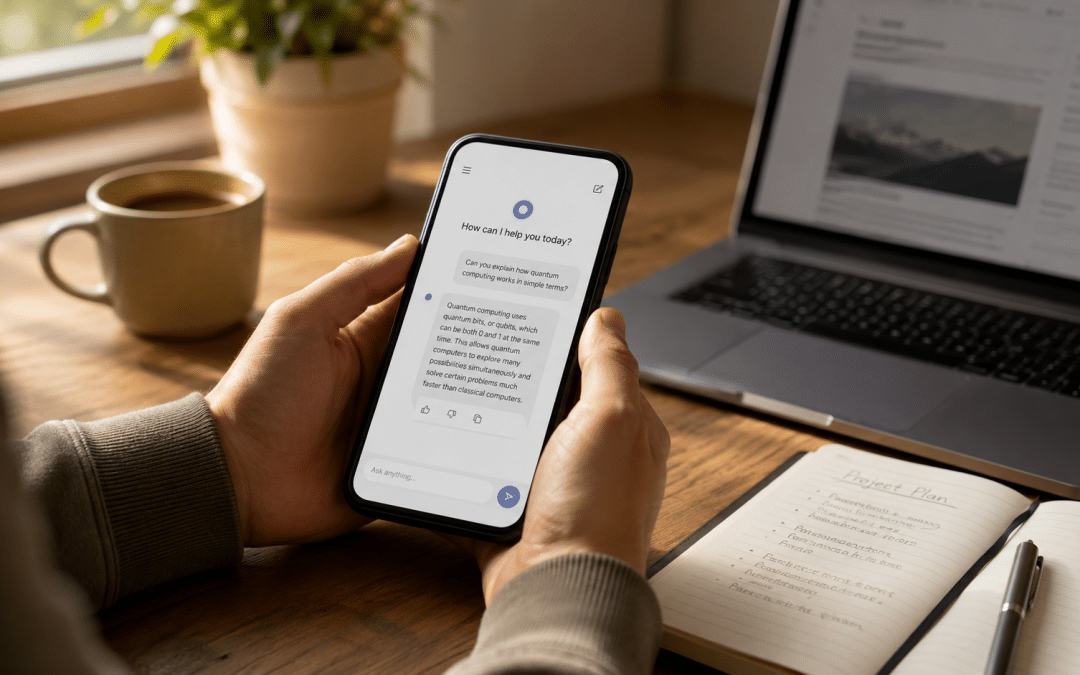
Gemini optimisation is the practice of structuring your content so Google's Gemini assistant names and cites your business in its answers — and the key to it is simple: Gemini grounds its answers in Google Search, so strong Google visibility is your foundation, as our full guide to answer engine optimisation in South Africa explains.
Gemini is two things at once, and confusing them is the first mistake most businesses make. It's the family of models Google builds, and it's the standalone assistant those models power — the app SA users open directly, plus Gemini inside Android and Workspace. This guide covers getting recommended by that assistant, building on what answer engine optimisation is.
Quick Answer
Gemini optimisation works because Gemini grounds its answers in Google Search. That means classic Google signals — rankings, crawlability, Knowledge Graph entities, schema — are the foundation, and a well-ranked page is a strong grounding candidate. Layer on answer-first content, coverage of the follow-up questions a buyer asks, fresh publish dates, and clear entity signals, and you become a source Gemini quotes rather than skips.
Curious whether Gemini names your business or a competitor when buyers ask? We'll test it for free.
Get a Free Gemini Visibility TestHow Gemini Optimisation Actually Works
The mechanism works through grounding — Gemini runs a real-time Google Search behind the scenes and builds its answer from the pages it retrieves. Per Google's own Gemini grounding documentation, this is how the assistant cites verifiable sources beyond its training data. Your page has to be one of those retrieved sources.
Because grounding runs on Google Search, the mechanics are foundationally Google SEO plus a layer of engine-specific signals. A page that ranks well is a strong grounding candidate — but ranking alone isn't enough, because Gemini retrieves across many sub-questions, not just your main term.
That sub-question behaviour is called query fan-out. Ask Gemini one question and it quietly breaks it into several — the definition, the price, the comparison, the how-to — then assembles an answer from the best source for each. Each sub-question your content answers cleanly is another surface you can be cited on. Answer-first pages still rest on sound SEO basics, which our complete SEO guide for SA businesses walks through for local sites.
Key Takeaway
Gemini grounds answers in a live Google Search, so your rankings and crawlability are the foundation — no separate index to enter. But query fan-out means Gemini splits one question into many sub-questions and cites the best source for each. Content that answers a whole cluster of related sub-questions earns more citation surfaces than a page optimised for a single term.
Why This Is Different From AI Mode and AI Overviews
Gemini the assistant, AI Mode, and AI Overviews all ground in Google Search, but they're different surfaces reached in different ways. Confusing them wastes effort, so it's worth being precise about which you're targeting.
AI Overviews are the summary boxes above ordinary search results. Google AI Mode is a conversational tab you reach from a search results page. The Gemini app is a standalone assistant you open directly — general-purpose, multi-turn, and often used mid-task rather than mid-search.
The retrieval engine is the same across all three, so the foundations overlap. But the Gemini assistant's conversational, task-oriented context makes follow-up coverage even more important here than for the AI Overviews box — users arrive mid-task and ask multi-part questions expecting the assistant to keep up.
Key Takeaway
AI Overviews, AI Mode and the Gemini assistant share one retrieval engine but are distinct surfaces. AI Overviews sit above search results; AI Mode is a tab inside a search session; the Gemini app is a standalone assistant used mid-task. Because Gemini-app users are conversational and task-driven, answering the natural follow-up questions matters even more than it does for the summary-box surface.
The Signals That Get You Cited by Gemini
The signals that get you cited by Gemini are the Google foundations plus a handful of engine-specific levers that decide which well-ranked page actually gets quoted. Getting these right is what separates being crawlable from being cited.
Four levers matter most. Entity clarity: align your business with the Knowledge Graph so Gemini understands who you are, through consistent naming, structured data, and an authoritative About presence. Schema markup: Article and FAQ structured data help the model extract and attribute your content correctly.
Then freshness and specificity. Recency is a strong selection signal across Google's AI surfaces — independent 2026 analyses put roughly half of AI-cited content at under 13 weeks old, and Gemini's grounding weights recent content more aggressively than some rivals. Update genuinely, not with fake date bumps, which Google increasingly ignores.
Specificity is the fourth lever, and the one most SA businesses miss. Grounding can only support claims that are concrete and checkable — real numbers, named sources, specific entities. Vague content gives the grounding step nothing to anchor to, so it gets skipped for a source that offers something verifiable.
Strong: A Cape Town firm publishes a service page with real Rand pricing, FAQ schema, consistent entity signals, and a genuine recent update. Gemini grounds to it because every claim is concrete and attributable, and the page answers the follow-ups too.
Weak: A competitor runs a vague, undated "we offer great service" page. Gemini's grounding step finds nothing checkable to anchor a citation to, so it quotes a rival whose page states specifics the model can verify.
The SA-Specific Gemini Playbook
The local Gemini playbook leans on specificity that generic global content can't match, plus Google's local grounding for location-intent queries. When a buyer asks Gemini for a supplier "near me" or "best in Johannesburg," the assistant leans on Google Maps and Business Profile signals to answer.
That makes a complete, active Google Business Profile a genuine Gemini lever for local businesses — Google has even begun letting businesses connect their Profile to the Gemini app directly. Consistent name, category, and location data across the web reinforces the entity signals grounding relies on.
Local specificity does the rest. Real Rand pricing, local timelines, regional context like load-shedding relevance, and content in the languages SA buyers search — Gemini now handles queries in Afrikaans, isiZulu and other local languages. Generic international pages lose these queries to sources that clearly serve this market.
Key Takeaway
For local queries, Gemini leans on Google Maps and Business Profile signals, so a complete, active Google Business Profile is a real citation lever — not just a directory listing. Combine it with consistent entity data and genuinely local content: Rand pricing, regional context, and local-language coverage. Businesses that clearly serve the South African market get cited ahead of generic global pages.
Real-World Example: A Johannesburg B2B Services Firm
A Johannesburg B2B services firm ranked reasonably on Google but was almost never cited by Gemini, because its pages answered a single question each and carried stale dates and vague claims. We restructured them to answer-first format, mapped the sub-questions behind each core query, added FAQ schema and entity signals, and refreshed the content genuinely. If your pages share those weaknesses, our SEO services in South Africa can take on the same kind of restructuring under a flat monthly retainer.
| Metric | Before | After (120 days) | Change |
|---|---|---|---|
| Cited in Gemini answers (20-query test) | 1 of 20 | 9 of 20 | +8 queries |
| AI-surface referral visits / month | 19 | 228 | +1,100% |
| Qualified enquiries / month | 8 | 20 | +150% |
| Monthly pipeline value | R260,000 | R590,000 | +127% |
The biggest single lever was query fan-out coverage. Once each page answered the cluster of sub-questions behind its topic — not just the headline query — the firm started appearing across far more of the conversation, because there were simply more surfaces for Gemini to cite it on.
Want to know which sub-questions your competitors are being cited for and you aren't? We'll map the gap for free.
Get a Free Citation Gap MapHow to Measure Whether It's Working
Measuring your Gemini visibility combines a manual query test with analytics, because there's no dedicated dashboard for it yet. Once a month, ask the Gemini app the 15 to 20 highest-intent questions in your category, plus their natural follow-ups, and record whether you're cited.
Analytics gives the second read. Referral traffic from Google's AI surfaces appears in Google Analytics, and while attribution is messier than a clean tag, watching that trend alongside branded-search growth in Search Console tells you whether the work is landing. Buyers cited in Gemini often search your brand directly afterward.
Set expectations by phase. Entity, schema and content work takes the first month or two, and because freshness is weighted, recently updated pages often move first. First improvements in citation frequency typically appear within weeks of publishing genuinely fresh, specific, well-structured content.
Structuring a Page Gemini Can Cite
Structuring a page for citation means building it around the sub-questions behind your topic, so each section is a clean, liftable answer. Because of query fan-out, a page organised this way earns citation surfaces a single-answer page never can.
Start with the entry question in an answer-first opening — two or three sentences that answer it directly and read cleanly out of context. Then give each major sub-question its own H2, phrased the way a buyer would ask it, with a direct answer as the first sentence under it.
Support every claim with something checkable: a Rand figure, a named source, a specific timeline. Add Article and FAQ schema so the model can attribute passages correctly, and keep the publish or update date honest and current, since freshness is a real selection signal.
Finally, cluster tightly. Link the page to the two or three related posts that answer adjacent sub-questions, so Gemini can retrieve your cluster across a multi-turn conversation rather than stopping at a single page. The goal is to own the whole exchange, not one query.
Key Takeaway
Build each page around the sub-questions behind its topic: an answer-first opening for the entry question, one H2 per sub-question with a direct answer, checkable claims throughout, honest fresh dates, and clean schema. Then link tightly to adjacent posts so Gemini can retrieve your cluster across a conversation. Structure for the whole exchange, not a single query.
The Growth Pulse Media Difference
Most agencies selling "Gemini optimisation" treat it as a mysterious new channel. We don't — because Gemini grounds in Google Search, and the honest work is strong Google foundations plus a focused engine-specific layer, not a repackaged secret. We won't charge you twice for search foundations you should already own.
Our AEO services for South African businesses apply an operator's lens: Google foundations first, then the entity, schema, freshness and follow-up coverage that get you cited across Gemini and the other AI surfaces together. If you'd rather measure before committing, we can run an LLM visibility audit and show you where you stand first.
Who This Is NOT For
Gemini optimisation fits most SA businesses — but not every situation. Here's when it doesn't apply cleanly.
Not for you if your Google foundations are broken. Gemini grounds in Google Search, so if your site can't rank or be crawled, there's nothing to ground to. Fix core technical and ranking health before layering engine-specific tactics on top.
Not for you if you've blocked Google-Extended. Opting out of Google-Extended in your robots.txt removes your grounding eligibility. That's a legitimate choice, but you can't opt out of grounding and expect Gemini citations at the same time.
Not for you if you won't publish specifics. Grounding can only anchor to concrete, checkable claims — real prices, named sources, specific numbers. If you keep everything vague to protect margins, you give the model nothing to cite.
Not for you if you want a set-and-forget tactic. Freshness is weighted, so this rewards genuine, ongoing updates and follow-up coverage. Businesses wanting a one-time fix rather than a maintained content foundation will see it decay.
Still reading? Then your foundations are probably worth building on. Let's find where Gemini is citing competitors instead of you.
Book Your Free Gemini Gap SessionFrequently Asked Questions
What is Gemini optimisation?
It is the practice of structuring your content so Google's Gemini assistant cites and recommends your business in its answers. Because Gemini grounds its responses in a live Google Search, it combines classic Google SEO foundations — rankings, crawlability, entities, schema — with engine-specific signals like freshness, specificity, and coverage of the follow-up questions a buyer asks.
How does Gemini decide which sources to cite?
Gemini runs a real-time Google Search, retrieves pages across several sub-questions, and cites the best source for each. It favours pages that rank well, carry clear entity and schema signals, are recently updated, and make concrete, checkable claims. Vague or stale content gives the grounding step nothing to anchor to, so it gets skipped.
Is Gemini optimisation different from normal Google SEO?
It builds on it. Because Gemini grounds in Google Search, strong traditional rankings and clean technical health are the foundation. On top of that, engine-specific levers — Knowledge Graph entity alignment, freshness, answer-first structure, and answering the sub-questions behind a query — determine whether a well-ranked page is actually quoted in the assistant's answer.
Does Gemini cite South African businesses?
Yes, increasingly for local-intent queries. Gemini leans on Google Maps and Business Profile signals for "near me" and "best in [city]" questions, and it now handles queries in SA languages including Afrikaans and isiZulu. Businesses with a complete Google Business Profile and genuinely local content get cited ahead of generic global pages.
How long does it take to get cited by Gemini?
First improvements in citation frequency typically appear within weeks of publishing fresh, specific, well-structured content, assuming your Google foundations are healthy. Because freshness is weighted heavily, recently updated pages often move fastest. It compounds from there as entity signals and follow-up coverage deepen across your content.
Can blocking AI crawlers stop me appearing in Gemini?
Yes. Gemini's grounding eligibility is tied to Google-Extended, controlled in your robots.txt. If you block Google-Extended to opt out of AI training, you also remove your eligibility to be grounded and cited by Gemini. It's a genuine tradeoff: opt out of both, or allow both and accept training inclusion to keep citation eligibility.
Worried Gemini optimisation means starting from scratch? It doesn't — if you already rank on Google, most of the foundation is built, and the engine-specific layer is a focused addition rather than a whole new channel.
Find Out Where You Stand in Gemini
We'll test 20 real buyer queries and their follow-ups in the Gemini app, show you where you're cited versus where competitors are named instead, and send you a report with the three highest-impact fixes ranked by payoff. Built by operators who run PayFast, Klaviyo and The Courier Guy stacks daily — not theorists chasing the newest acronym. No obligation — we'll get back to you within 24 hours.
Get My Free Gemini Citation Report