
 Add to Preferred Sources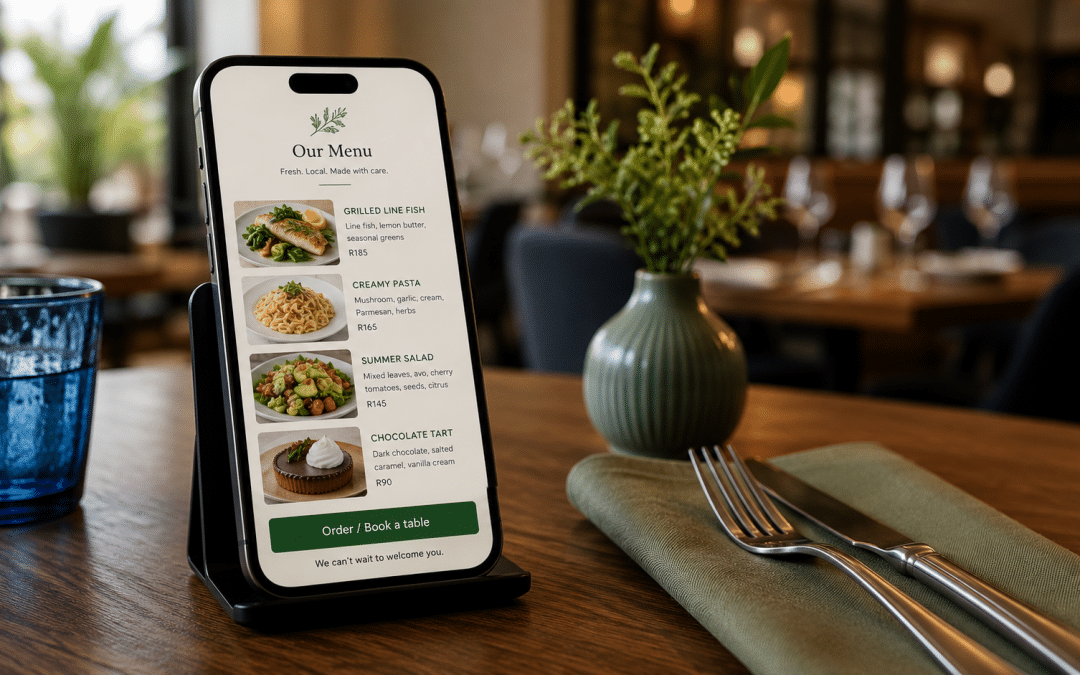
Web design for restaurants has one core job: get a hungry person from a phone search to a booked table or a placed order, fast. A restaurant site is not a brochure — it is a menu, a booking tool, and a local-search magnet rolled into one. For the underlying build fundamentals, see our web design guide; this page is about the website a restaurant specifically needs to fill tables.
The distinction matters because diners behave in a very particular way. They search on a phone, often with "near me" intent, check the menu and the photos, glance at the reviews, and decide within a minute or two whether to book, order, or scroll on. A slow site, a PDF menu, or a missing booking button loses them in that narrow window.
Quick Answer
Effective web design for restaurants is fast, mobile-first, and built around three things diners want immediately: an easy-to-read menu, a way to book or order, and the practical details — hours, location, and directions. The site should rank for local "near me" searches, show off the food with real photos, and let a restaurant take its own bookings and orders rather than handing every customer to a commission-charging delivery app.
Want a restaurant site that turns phone searches into booked tables and orders?
Get a Free Restaurant Website PlanWhat a Restaurant Website Must Do
A restaurant website has to answer three questions instantly: what's on the menu, how do I book or order, and where and when are you open. Everything else is secondary. A diner arrives hungry and impatient, and a site that makes any of those three things hard to find loses the booking to the restaurant down the road whose site does not.
The menu is the heart of it, and it must be fast, mobile-friendly HTML — never a PDF that pinches and zooms on a phone. Diners read the menu before they decide to come, so a slow or clumsy menu is actively turning customers away. The same goes for photos: real, appetising images of the food and the room do more selling than any amount of description.
The second job is the action — booking a table or placing an order — and it has to be obvious on every screen. A "Book a table" or "Order now" button that follows the diner down the page converts far better than a phone number buried in a footer. For a hungry person deciding in seconds, friction is the enemy of the booking.
Menu, Action, Details
A restaurant site succeeds by nailing three things fast: a mobile-friendly HTML menu with real photos, an obvious way to book or order, and clear hours, location, and directions. Miss any one and the hungry, impatient diner moves on. A PDF menu or a buried phone number is not a small flaw here — it is the difference between a filled table and an empty one.
Why Restaurant Websites Are Different
Restaurant sites are different because the search is local, mobile, and immediate. People look for somewhere to eat on their phones, frequently with "near me" intent and the intention to act within the hour. That makes local discovery — a strong Google Business Profile, accurate location and hours, and a fast mobile site — more important than almost anything else.
Visuals carry unusual weight too. Food is an emotional, visual purchase, so professional photography and a clean, appetising layout do real conversion work that copy alone cannot. A site that hides the food behind walls of text, or uses tired stock images, undersells even an excellent kitchen and leaves bookings on the table.
The biggest strategic difference, though, is the delivery platforms. Apps like Uber Eats and Mr D bring volume, but they charge heavy commissions on every order and own the customer relationship. A restaurant's own website is how it takes direct bookings and orders, keeps the margin, and builds a customer base it actually owns rather than rents.
Not sure how to win back orders from the delivery apps? Let us map it with you.
Get a Free Restaurant Site AuditThe Features a Restaurant Site Needs
The essential features of a restaurant site all push the diner toward a booking or an order. A fast HTML menu comes first, ideally structured so search engines can read it. Then a booking or ordering system, clear contact and location details, a gallery of real photos, and visible links to reviews that build trust before the visit.
Local search visibility is the multiplier. A restaurant should mark up its site with Restaurant structured data, which lets search engines display the menu, opening hours, price range, and ratings directly in the results. Paired with an accurate, well-maintained Google Business Profile, that structured data is what turns a generic "near me" search into a click on your restaurant specifically.
Mobile and speed sit underneath all of it. Because nearly every restaurant search happens on a phone, often on mobile data, the site has to load fast and work flawlessly on a small screen. The mobile detail is covered in our mobile website design guide, and it matters more for restaurants than for almost any other business.
The Restaurant Feature Set
Six features carry a restaurant site: a fast HTML menu, a booking or ordering system, clear location and hours, real food photography, visible reviews, and structured data for rich local results. A strong Google Business Profile ties it together. Skip the structured data and the booking button and you have a pretty site that diners admire on their way to booking somewhere easier.
Owning Your Orders Instead of Renting Them
The strongest argument for a proper restaurant site is margin: every order through a delivery app carries a commission, while an order through your own site keeps that money in the kitchen. Delivery platforms are useful for reach, but treating them as the only ordering channel quietly hands away a slice of every sale and the customer's details with it.
A well-built site flips that balance. Direct online ordering and table bookings, backed by your own customer database and a simple loyalty or email follow-up, turn one-time app customers into repeat direct ones. Over a busy year, shifting even a portion of orders from commission apps to your own channel can be the difference between a thin margin and a healthy one.
| Channel | Own website | Delivery app only |
|---|---|---|
| Commission per order | None beyond payment fees | A heavy cut of every order |
| Customer relationship | You own it | The platform owns it |
| Repeat marketing | Direct email and loyalty | Limited or none |
| Booking and table control | Fully yours | Not available |
What It Costs and How to Choose a Partner
The cost of a restaurant site depends on scope — a menu-and-bookings site, a site with integrated online ordering, and a multi-location group site sit at different price points. The general ranges are in our web design pricing guide, and the familiar rule holds: the cheapest quote usually drops the menu structure, speed, and ordering that make the site earn its keep.
When choosing a partner, check that they understand restaurants specifically — local search, menu structure, booking and ordering systems, and the delivery-platform trade-off. The web design for restaurants that actually fills tables comes from a team that has thought about how a diner decides, not one that drops your venue into a generic template and calls a PDF menu a feature.
| What to ask | A restaurant-aware answer | A red flag |
|---|---|---|
| How is the menu built? | Fast HTML, mobile-first, structured | "We'll link your PDF" |
| Can diners book or order directly? | Yes, on every page | "Just your phone number" |
| Will it rank for "near me"? | Local SEO and structured data | "It'll look great" |
| Who owns the site and customer data? | You do, entirely | "We manage all that" |
A Real-World Example: Before and After
The clearest illustration is a representative restaurant that replaced a slow site with a PDF menu and no booking option with a fast, mobile-first build with a live menu and direct bookings. Foot traffic from search barely changed; the site simply started converting the diners who were already finding it into actual tables and orders.
| Metric (monthly) | Before — slow, PDF-menu site | After — fast, bookable site | Change |
|---|---|---|---|
| Website visitors | 2,600 | 2,750 | About the same |
| Mobile load time | 6.4s | 2.0s | −69% |
| Online table bookings | 22 | 71 | +223% |
| Direct online orders | 14 | 48 | +243% |
| Orders kept off delivery apps | Few | Most new orders | Shifted |
The bookings and direct-orders rows tell the story. Roughly tripling both on near-identical traffic is the difference between a site that decorates the restaurant and one that fills it — and the direct orders carry far better margin than the same orders through an app. None of that lift came from buying more traffic; it came from the site finally doing its job.
What Drove the Result
Traffic stayed flat; the site got faster, showed a real menu, and let diners book and order in a tap. Bookings and direct orders both roughly tripled, and most new orders stayed off the commission apps. For a restaurant, that combination — more covers and better margin on each one — is the entire return on a proper website over a slow, PDF-menu page.
The GPM Differentiator
Most web design for restaurants is sold on how stylish the site will look, with the menu, bookings, and local search treated as afterthoughts. We come at it from an operator's seat, having scaled South African businesses where a website had to produce real revenue — so our web design services start with how a diner decides and works back to the build.
For restaurant clients that means a fast HTML menu, direct booking and ordering, local SEO and structured data so the venue wins "near me" searches, and real food photography that sells. You own the site, the domain, and your customer data, with no lock-in — and an honest answer when a focused fix to your existing site beats a full rebuild.
Who This Is NOT For
A booking-and-order-focused restaurant site is right for committed venues, but wrong for some. Being honest about that upfront saves everyone wasted spend — so here is who should hold off.
Venues happy to rely entirely on delivery apps. If you are content to pay commission on every order and let the platform own your customers, a custom site is an unnecessary cost. This is for restaurants that want direct bookings, owned customers, and better margin — not more app dependence.
Anyone wanting the cheapest possible site. A fast site with a structured menu and a booking system costs more than a template with a PDF menu attached. If price is the only filter, you will get the slow brochure site this guide warns against — and watch diners book elsewhere.
Restaurants unwilling to keep details current. A site with stale hours, an old menu, or wrong prices does real damage, because diners trust what they read online. If nobody will keep the menu and hours updated, even a great build will steadily mislead customers and cost goodwill.
Owners expecting a full ordering site overnight. A proper build with menu structure, bookings, and ordering takes weeks of discovery, design, and testing. If you need a complete ordering system live tomorrow with no process, the expectation is wrong and the result will show it.
Think a booking-first restaurant site is the right move for your venue? Start free.
Get a Free Restaurant Website ReviewFrequently Asked Questions
What makes web design for restaurants different from a normal website?
Restaurant sites are built around an instant decision: see the menu, book or order, and check hours and location. They need a fast HTML menu, real food photography, a booking or ordering system, and strong local search visibility for "near me" searches. The goal is converting a hungry phone searcher into a table or order, which is a different job from a standard brochure site.
Should my menu be a PDF or a web page?
A web page, always. PDF menus are slow, awkward to read on a phone, and hard for search engines to use. A mobile-friendly HTML menu loads instantly, can be marked up with structured data for rich results, and gives diners the smooth experience that keeps them on the path to booking. A PDF is one of the most common and costly restaurant-site mistakes.
Do I still need a website if I'm on Uber Eats and Mr D?
Yes. Delivery apps bring reach but charge commission on every order and own the customer relationship. Your own site lets you take direct bookings and orders, keep the margin, and build a customer base you control. The two work together — apps for discovery, your site for owned, higher-margin orders and repeat business.
How does a restaurant website help with Google searches?
A fast, mobile site with Restaurant structured data and an accurate Google Business Profile helps you appear for local "near me" searches, with your menu, hours, and ratings shown directly in results. Most restaurant searches are local and on mobile, so this visibility is often the single biggest driver of new customers a site can deliver.
How long does a restaurant website take to build?
A menu-and-bookings site takes a few weeks through discovery, design, build, and testing, while a site with integrated online ordering takes longer. The timeline depends on scope and how quickly menu content, photos, and feedback come back from your side. Anyone promising a complete ordering-ready restaurant site in a day or two is skipping the process.
Will I own the website and my customer data?
Yes, you should fully own your site, your domain, and the customer data it captures. Never accept an arrangement where the agency keeps control of your site or your bookings and orders. Ownership is one of the most important questions to settle before any build begins, and a good partner is completely comfortable confirming it.
If you are weighing whether a proper restaurant site is worth it over relying on the delivery apps, that caution is fair — many venues have paid for slow, pretty sites that never took a single booking. The difference is a build designed around the menu, the booking, and local search, so the diners already finding you actually become tables and direct orders.
Get a Free Restaurant Website Plan
We will map a booking-and-order-focused website for your restaurant — a fast HTML menu, direct bookings and ordering, local SEO and structured data, and real food photography — delivered as a one-page plan you own outright, with the highest-impact priorities first. No obligation — we will get back to you within 24 hours.
Get My Free Restaurant Website Plan