
 Add to Preferred Sources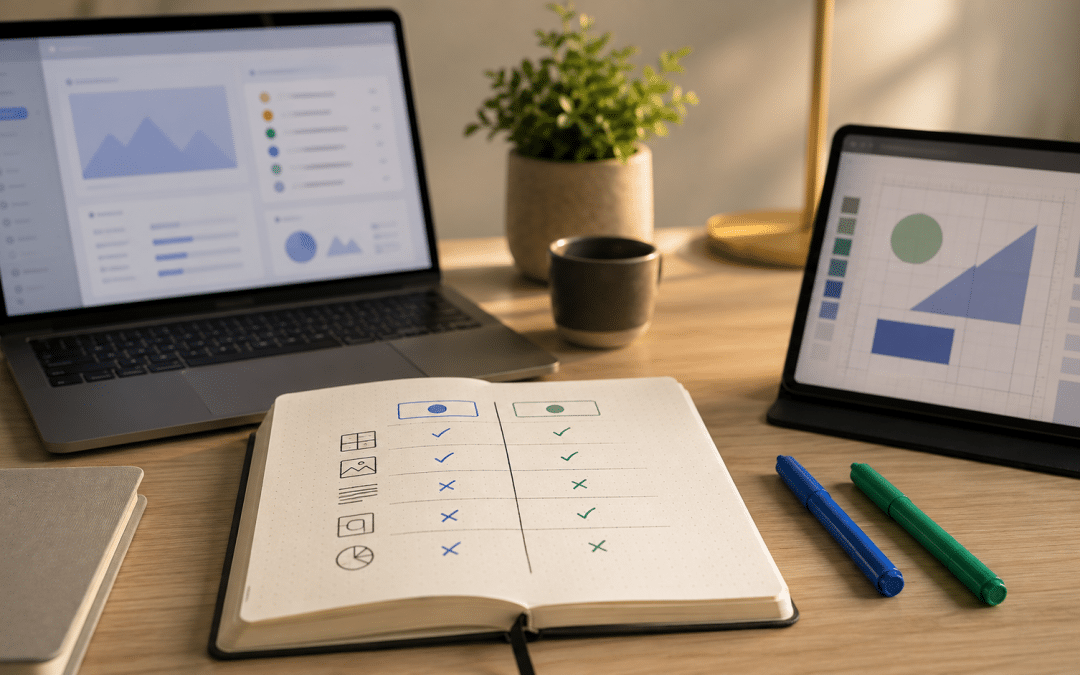
WordPress vs Webflow south africa comes down to one decision: do you need an open, plugin-driven platform you fully control with a vast local support pool, or a designer-controlled visual platform with cleaner output but a smaller SA ecosystem and an ongoing subscription cost. This guide breaks the comparison down on the criteria that actually matter locally, building on our complete web design guide for Johannesburg businesses.
For most South African businesses that want ownership, local help, and long-term flexibility, WordPress wins. For design-led teams who value pixel control and have no need for a plugin ecosystem, Webflow is the stronger fit. The rest of this guide shows exactly where each one wins and why.
Quick Verdict
For the typical South African business — local support availability, full ownership of the site, cost control, and long-term flexibility — WordPress is the default winner, and it is no contest on ecosystem scale: WordPress powers roughly 43% of all websites worldwide while Webflow sits near 1.4%, which directly determines how easily you find an SA developer to maintain it. Webflow genuinely wins on one axis: clean visual design control and tidy output for a design-led team that will never need plugins or a large content operation. The honest summary: choose Webflow only if design control is the single dominant requirement and you accept a smaller local talent pool and a permanent subscription; otherwise WordPress is the lower-risk, more flexible, more locally-supportable choice for SA. This is not a "Webflow is bad" verdict — it is a "WordPress fits more SA businesses" verdict.
Not sure which platform actually fits your business, budget, and growth plan? We will tell you straight.
Get a Free Platform RecommendationWordPress vs Webflow South Africa: The Core Difference
WordPress vs Webflow south africa is best understood as a choice between an open, self-owned ecosystem and a closed, design-led platform — not a choice between "better" and "worse". WordPress is open-source software you host and own outright; Webflow is a proprietary hosted platform you rent. That single structural difference drives almost every practical trade-off below.
This framing matters because the platforms are not really competing on the same axis. WordPress optimises for ownership, extensibility, and a vast support ecosystem. Webflow optimises for visual design precision and a clean build process for the person designing it. The right choice depends on which of those your business actually needs, not which platform is objectively superior.
Where WordPress is the honest winner: if you want to own your site outright, host it where you choose, hire from a deep pool of SA WordPress developers, and extend functionality through plugins without rebuilding, WordPress is the stronger platform — and the local supportability gap is the deciding factor for most SA businesses, not a tie-breaker.
Where Webflow is the honest winner: if your site is design-led, you have a designer who will own it, you value precise visual control and clean exported markup, and you have no need for a plugin ecosystem or a large content team, Webflow produces a genuinely tidier result with less of WordPress's plugin sprawl. This is a real advantage, not a consolation — Webflow vs WordPress south africa is not a one-sided comparison.
WordPress vs Webflow South Africa: Head-to-Head Comparison
WordPress vs Webflow south africa decisions should be made on the criteria that change outcomes for SA businesses specifically — local support depth, total cost in Rand, ownership, and flexibility — not on generic feature lists. The table below scores each platform on those criteria with a verdict per row.
| Criterion | WordPress | Webflow | Best For |
|---|---|---|---|
| SA developer availability | Very large local pool | Small local pool | WordPress |
| Ownership | You own and host it | Rented, hosted by Webflow | WordPress |
| Ongoing cost (Rand) | Hosting + optional plugins | Permanent monthly subscription | WordPress |
| Visual design control | Theme/builder dependent | Precise, designer-led | Webflow |
| Output cleanliness | Varies with plugins/theme | Generally tidy markup | Webflow |
| Extensibility | Vast plugin ecosystem | Limited add-on range | WordPress |
| Content-heavy sites | Strong, mature | Workable, less mature | WordPress |
The pattern is consistent with the platforms' design philosophies: WordPress wins the ownership, cost, ecosystem, and local-support rows; Webflow wins the visual-control and output-cleanliness rows. According to W3Techs CMS market-share data, WordPress powers a far larger share of the web than any competitor — and that scale is exactly why the SA developer pool for it is so much deeper, which is the row that most often decides the outcome for a local business.
Want this comparison applied to your specific site, budget, and who will maintain it — not a generic table?
Get a Free Platform Fit AssessmentWordPress vs Webflow South Africa: The SA-Specific Factors
WordPress vs Webflow south africa carries SA-specific weighting that generic international comparisons miss, and ignoring it leads businesses to platform choices that hurt them locally. The two factors that matter most here are local support depth and Rand cost over time.
Local support depth changes the risk
If a WordPress site breaks, there is a large pool of SA developers who can fix it, often quickly and affordably. Webflow expertise is far thinner locally, so a Webflow site can leave a business dependent on a single person or an overseas contractor. For a business that does not have in-house technical staff, that supportability gap is a real operational risk, not a footnote.
Rand cost over time, not just upfront
Webflow's permanent monthly subscription is a recurring Rand cost that never ends and is exposed to currency movement. WordPress's core is free; the cost is hosting plus optional plugins, which you control. Over several years the total cost of ownership usually favours WordPress for SA businesses — but only if it is built and maintained properly, which is where build quality matters more than platform choice.
The Platform Is Rarely the Real Decision
The honest truth behind every WordPress vs Webflow south africa debate is that build quality and who maintains the site matter more than the platform badge. A well-built WordPress site outperforms a poorly-built Webflow one and vice versa — the platform sets the ceiling, the build determines whether you reach it. The platforms differ most on ownership, local supportability, and recurring cost, and least on what visitors actually experience when the build is competent. Choosing the platform without deciding who builds and maintains it is choosing the least important variable first. This is why the right question is usually not "which platform" but "which platform, built and maintained by whom, for what this specific business needs".
WordPress vs Webflow South Africa: Real-World Cost Picture
WordPress vs Webflow south africa cost differences are clearest over a multi-year horizon, not at launch. The table below shows an illustrative SA total-cost picture — the before-state is the platform's recurring commitment, the after-state is the practical outcome for a typical SA business.
| Cost Factor | Platform Commitment (before) | Practical SA Outcome (after) |
|---|---|---|
| Platform/software | WordPress core: free; Webflow: monthly fee | WordPress removes a permanent recurring line item |
| Hosting | WordPress: chosen SA/global host; Webflow: bundled | WordPress hosting is competitively priced and portable |
| Maintenance support | WordPress: large SA pool; Webflow: thin locally | WordPress is cheaper and faster to get fixed in SA |
| Currency exposure | Webflow subscription often USD-linked | WordPress avoids ongoing forex-exposed platform cost |
| Long-term flexibility | WordPress: extend via plugins; Webflow: platform-bound | WordPress adapts without a rebuild as needs change |
For deeper figures, our web design pricing guide for South Africa breaks down what each approach actually costs to build and run locally, and the same trade-offs appear in the related WordPress vs Shopify and Wix vs WordPress comparisons in this series.
WordPress vs Webflow South Africa: Migration and Lock-In
A factor most WordPress vs Webflow south africa comparisons skip is what happens if you want to leave the platform later. This is not theoretical — businesses outgrow or change platforms, and the exit cost differs sharply between the two.
WordPress content and structure are portable by design: the site is yours, the database is exportable, and a large pool of SA developers can move or rebuild it.
Webflow is a hosted, proprietary platform — leaving it generally means a rebuild rather than a migration, because the design and structure are bound to Webflow's system. For a business thinking in years, that asymmetry in exit cost is a real part of the WordPress vs Webflow south africa decision, not a footnote.
This connects to the build-quality point: a well-architected site on either platform is easier to maintain and, where relevant, to move. The platform sets the lock-in profile; the build determines how painful any future change actually is. A clean, standards-based WordPress build is the most portable outcome available in this comparison — which is why ownership and portability weigh so heavily for SA businesses without large technical teams.
Exit Cost Belongs in the Decision
The WordPress vs Webflow south africa choice is usually argued on what each platform does today, but the more revealing question is what it costs to leave. WordPress sites are portable — owned, exportable, and supportable by a large local pool — so changing direction later is a migration. Webflow's proprietary, hosted nature means leaving is typically a rebuild, not a move. For a business that cannot predict its needs three years out, choosing the platform with the lower exit cost is choosing flexibility it may not know it needs yet. The platform decision is not only about the next build; it is about every build after it.
How Growth Pulse Media Approaches the Platform Decision
Most agencies push the platform they happen to build on, which makes their recommendation a sales position rather than advice. Growth Pulse Media's web design work for South African businesses starts from what the business actually needs — who maintains it, the budget over years, the content operation — and recommends the platform that fits that, which is usually but not always WordPress.
The operator background behind GPM means the recommendation is argued from total cost and operational risk in SA conditions, not from what is easiest for the agency to build. Where Webflow is genuinely the better fit for a design-led client with no plugin needs, that is what gets recommended. Work is executed in-house, so the platform advice and the build are owned by the same people who have to live with the consequence.
Who This Comparison Is NOT For
This WordPress vs Webflow comparison answers a platform question, but it is not the right starting point for every situation, and being honest about that prevents misdirected effort.
Businesses that have not defined who will maintain the site. The platform decision depends heavily on who maintains it afterward. Choosing WordPress or Webflow before deciding whether an in-house person, an SA agency, or nobody will own it is deciding the second question before the first — and it frequently leads to the wrong platform.
Ecommerce-first businesses. If selling online is the core purpose, this is the wrong comparison — the relevant decision is closer to a Shopify-versus-WooCommerce one. Comparing WordPress and Webflow for a store-first business optimises a choice that is not the one that matters for that goal.
Operators choosing on brand familiarity alone. Picking a platform because it is the one you have heard of, rather than the one that fits your support situation and cost horizon, is choosing on recognition rather than fit. The most familiar platform is not automatically the right one for a specific SA business.
Sites whose real problem is build quality, not platform. If an existing site underperforms, switching platform rarely fixes it — a poor build migrates its problems. The honest first step is diagnosing whether the platform or the build is the actual constraint before spending on a migration.
Ready to find out whether your real decision is the platform, the build, or who maintains it — before committing?
Get Your Free Platform DiagnosisWordPress vs Webflow South Africa: Frequently Asked Questions
Is WordPress or Webflow better for a South African business?
For most South African businesses, WordPress is the stronger default because of its very large local developer pool, full ownership, lower long-term Rand cost, and plugin flexibility. Webflow is better for a design-led team that values precise visual control, will own the site themselves, and has no need for a plugin ecosystem.
The deciding factor for most SA businesses is local supportability — a WordPress site is far easier and cheaper to get fixed locally than a Webflow one.
Why does local support matter so much in this comparison?
Because if a site breaks and you have no in-house technical staff, you depend on finding someone locally who can fix it. WordPress has a deep SA developer pool; Webflow expertise is far thinner here.
That gap turns a Webflow site into an operational risk for a business without technical staff — potential dependence on a single person or an overseas contractor — while a WordPress site can usually be picked up by many local developers.
Is Webflow more expensive than WordPress in South Africa?
Over a multi-year horizon, usually yes for SA businesses. Webflow charges a permanent monthly subscription, often USD-linked and exposed to currency movement, while WordPress core is free and the cost is hosting plus optional plugins you control.
The exception is build and maintenance quality — a poorly built and badly maintained WordPress site can erode its cost advantage, so total cost depends on the build, not the platform badge alone.
Does Webflow produce a better-designed website than WordPress?
Webflow does give designers more precise visual control and generally tidier output by default, which is a genuine advantage for design-led teams. But a well-built WordPress site can match it visually; the difference is in the build process, not a hard ceiling on what WordPress can look like.
For most SA businesses the design difference is smaller than the ownership, cost, and supportability differences, which is why those usually decide the choice.
Should I switch my existing WordPress site to Webflow?
Usually not, unless design control is your single dominant requirement and you accept a smaller local support pool and a permanent subscription. Switching platforms rarely fixes problems that are actually build-quality problems — a poor build tends to carry its issues across.
The correct first step is diagnosing whether the platform or the build is the real constraint. A migration motivated by frustration rather than a clear platform-level reason often changes things that were not the problem.
Which platform is better for a content-heavy site?
WordPress. It has a mature content management system, a large ecosystem for editorial workflows, and handles large volumes of content and contributors well. Webflow is workable for content but less mature for content-heavy operations with multiple editors.
If your site's purpose is publishing at scale, WordPress's content maturity and local support depth make it the lower-risk choice in the SA market.
Get an Honest Platform Recommendation for Your SA Site
Growth Pulse Media will assess your actual situation — who maintains the site, your budget over years, your content and ecommerce needs — and tell you honestly whether WordPress, Webflow, or another platform fits, with the reasoning, not a sales pitch for whatever we prefer to build. Built by operators who argue platform from total cost and operational risk in SA conditions. No obligation — we will get back to you within 24 hours.
Get Your Free Platform Recommendation