
 Add to Preferred Sources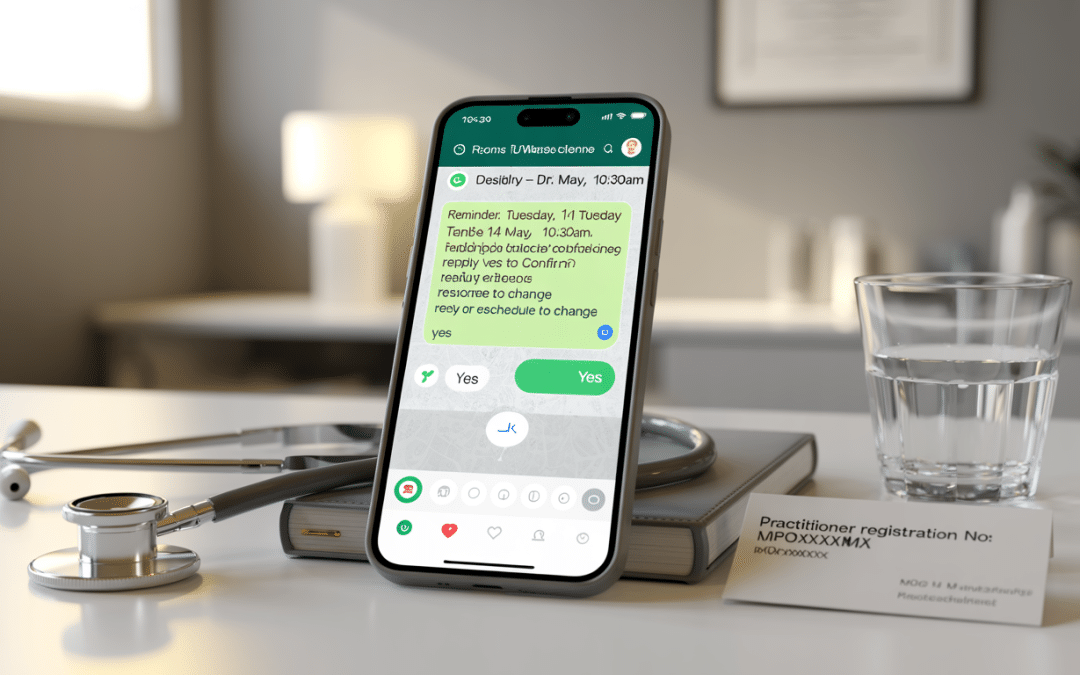
WhatsApp marketing for healthcare in South Africa is one of the most misunderstood disciplines in medical practice management. SA medical practices, dental clinics, optometrists, physiotherapists, and specialist doctors face a unique constraint that generic WhatsApp playbooks ignore: HPCSA ethical rules, POPIA Section 35 special personal information protections, and Medicines Act advertising restrictions. Marketing tactics calibrated for retail or B2B services produce real legal and disciplinary risk in healthcare contexts.
This guide covers what actually works for SA healthcare practices on WhatsApp — within ethical and legal boundaries. For broader WhatsApp framework, see our WhatsApp marketing South Africa guide. For complementary strategy, see our digital marketing guide for SA businesses.
Quick Answer
WhatsApp marketing for healthcare in SA works best when calibrated to clinical realities and HPCSA rules: appointment reminders, prescription collection notices, post-consultation care instructions, results-ready notifications, and structured patient communication — not promotional broadcasts about treatments. The mistake most SA practices make is treating WhatsApp like a marketing channel rather than a patient communication channel. Pipeline value comes from reducing no-shows and freeing reception time.
Want a free 60-minute audit of your medical practice's patient communication architecture with HPCSA-compliant recommendations?
Get a Free Communication AuditWhy WhatsApp Marketing for Healthcare is Genuinely Different
Generic WhatsApp marketing assumes a transactional buyer, broad promotional latitude, and direct conversion measurement. Healthcare WhatsApp operates within a tightly regulated framework: HPCSA Booklet 5 confidentiality requirements, POPIA Section 35 special personal information protections, Medicines Act restrictions on advertising prescription medicines, and ethical rules that prohibit doctors from advertising specific treatments or guaranteeing outcomes. Tactics calibrated for retail produce disciplinary risk in healthcare contexts.
According to Health Professions Council of South Africa (HPCSA) ethical guidelines, healthcare professionals must maintain patient confidentiality, obtain informed consent before processing personal information, and comply with both HPCSA Booklet 5 and POPIA. Patient communication via WhatsApp is permitted — but only when consent is properly captured, when the practice information officer is registered, and when communication is calibrated to the clinical relationship rather than promotional outreach.
The Critical Reframe
Generic WhatsApp marketing measures success in broadcast opens, click-throughs, and direct sales. Healthcare WhatsApp measures success in reduced no-show rates, improved prescription adherence, fewer reception phone calls, faster results delivery, and measurably higher patient satisfaction scores. A medical practice running promotional WhatsApp broadcasts measures opens but creates HPCSA risk. A practice running structured patient communication measures fewer broadcasts but dramatically more clinical and operational value. Different metric, different revenue, different game.
The Five Patient Communication Use Cases That Actually Work
The mistake almost every healthcare practice makes is treating WhatsApp marketing for healthcare as a promotional channel. SA practices that try this run into HPCSA ethical rules within the first month. The use cases that actually work are operational — they reduce administrative burden, improve patient outcomes, and stay safely within ethical boundaries. Concentrating on these five use cases produces dramatically more value than any "promotional" WhatsApp campaign.
| Use Case | Why It Works | Operational Impact |
|---|---|---|
| Appointment reminders | Reduces no-shows, frees reception time, patient-friendly | 30–50% reduction in no-show rates within 90 days |
| Prescription collection notices | Pharmacy or in-practice script ready alerts | Faster collection, fewer reception calls, better adherence |
| Results-ready notifications | Lab/imaging results available to discuss with practitioner | Reduces phone tag, improves patient experience |
| Post-consultation care instructions | Structured aftercare guidance with practitioner approval | Better adherence, fewer follow-up queries |
| Pre-procedure preparation | Standardised pre-op or pre-test instructions | Reduces procedure delays, improves preparation compliance |
An SA medical practice running these five use cases with proper HPCSA-compliant consent capture typically reduces no-show rates from 18–25% down to 6–10%, recovers 8–15 hours of weekly reception time, and improves patient satisfaction scores by 20–35 points. None of this is "marketing" in the traditional sense — but the operational and clinical impact is dramatically higher than any promotional WhatsApp campaign.
The Three Most Common SA Healthcare WhatsApp Mistakes
Three mistakes consistently destroy SA healthcare WhatsApp programmes and undermine even well-intentioned WhatsApp marketing for healthcare initiatives. Each creates either HPCSA disciplinary risk, POPIA compliance failure, or patient relationship damage. Identifying and correcting them is more important than any tactical optimisation.
Mistake 1 — Sending Promotional Treatment Broadcasts
SA medical practices sometimes broadcast treatment promotions to their patient list — Botox specials, weight loss programmes, dental whitening offers, aesthetic procedures. This breaks multiple rules simultaneously: HPCSA ethical rules restrict practitioner advertising of specific treatments, Medicines Act restricts prescription medicine promotion, and patients reasonably feel exploited by their doctor sending promotional messages. The fix is simple: WhatsApp is for patient operational communication only. Promotional content belongs on practice websites, not in patient WhatsApp threads.
Mistake 2 — Sending Clinical Information Without Practitioner Sign-Off
Practice receptionists or administrators sometimes draft WhatsApp messages containing clinical content — interpretation of test results, advice on medication dosing, recommendations on whether to come in. Without practitioner sign-off, this creates real clinical risk if the advice is wrong. HPCSA rules hold the practitioner responsible for clinical communication from their practice. Every clinical message must be drafted or explicitly approved by the practitioner. Operational messages (appointment times, collection notices) can be admin-handled.
Mistake 3 — Not Capturing Proper POPIA-Compliant Consent
SA medical practices typically collect mobile numbers at registration but rarely capture explicit POPIA-compliant consent for WhatsApp communication. POPIA Section 11 requires specific informed consent for processing personal information, and Section 35 (special personal information) creates additional requirements for health information. Practices using WhatsApp without proper consent capture face Information Regulator risk and disciplinary exposure. The fix is updating registration forms to include explicit WhatsApp consent with clear opt-out language.
Want to see which of these three mistakes is creating risk in your practice's patient communication right now?
Request a custom WhatsApp diagnosticThe GPM Differentiator: Operator Discipline in Regulated Channels
Most SA agencies that sell WhatsApp marketing to medical practices have backgrounds in retail or B2B services where the regulatory environment is permissive. They translate retail playbooks into healthcare contexts where HPCSA rules, POPIA Section 35, and Medicines Act restrictions create real disciplinary risk. The result is well-executed campaigns that put practitioners in front of disciplinary panels. WhatsApp marketing for healthcare requires regulatory judgement, not retail tactics.
Growth Pulse Media built and scaled an SA business through structured customer communication operating under regulatory constraints. The operator instincts that come from running real customer relationships under compliance pressure — knowing where the regulatory line is, how to capture consent properly, how to brief teams on what they can and cannot say — apply directly to healthcare WhatsApp contexts.
Our WhatsApp marketing service works with SA medical practices, dental clinics, optometrists, physiotherapists, and specialists on a senior-level basis. We design HPCSA-compliant patient communication architectures, build POPIA-compliant consent capture, run platform setup in-house with no offshore outsourcing, and limit client load to maintain senior attention through the regulatory complexity.
The Operator Lesson
Two SA medical practices with identical patient lists can produce completely different operational outcomes from WhatsApp. The variable is rarely platform choice or template design. It is whether the practice treats WhatsApp as patient operational communication rather than promotional marketing, captures POPIA Section 35 consent properly, and confines clinical content to practitioner-approved messages. Operator discipline under regulation is what separates a practice that improves patient outcomes from one that creates disciplinary risk.
Real-World Impact: SA Mid-Sized Multi-Practitioner Practice Before and After
This is a representative SA mid-sized multi-practitioner GP practice with 6 GPs, 4 reception staff, and 1 practice manager, based in Sandton. The "before" period reflects no structured WhatsApp programme — patients sometimes messaged the personal numbers of their preferred GPs, no consent capture, no compliance framework. The "after" period captures 12 months after a structured HPCSA-compliant patient communication programme.
| Metric | Before | After (12 months) | Change |
|---|---|---|---|
| No-show rate | 22% | 7% | −68% |
| Reception phone call volume daily | ~140 calls | ~58 calls | −59% |
| Reception time freed weekly | 0 hours | ~12 hours | 1.5 days saved |
| Prescription collection delay (avg) | 3.4 days | 1.2 days | −65% |
| Patient satisfaction score | 62/100 | 89/100 | +44% |
| Revenue lost to no-shows annually | ~R720,000 | ~R230,000 | −R490,000 |
| HPCSA compliance status | Patient WhatsApp on personal numbers | Practice channel, full consent records | Risk eliminated |
| Monthly platform + management cost | R0 | R6,800 | +R6,800 |
What Drove the Result
No new patients were acquired through WhatsApp — that was not the goal. The transformation came from operational impact. Automated appointment reminders 48h and 24h before appointments cut no-shows from 22% to 7%. Prescription-ready notifications shifted collection load away from reception phone calls. Results-ready notifications routed patients back to consultations faster. Practitioner-approved post-consultation care instructions reduced follow-up admin queries. The R490,000 annual revenue recovery from no-show reduction alone paid for the platform 6x over.
Who This Is NOT For
Structured WhatsApp marketing for healthcare works for the right SA practice and creates real risk for the wrong one. Four scenarios where it is the wrong call right now.
Your practice has not registered an Information Officer with the Information Regulator. POPIA requires every responsible party to register an Information Officer. Healthcare practices handling special personal information (Section 35) face additional scrutiny. Without proper registration, any WhatsApp programme creates compliance exposure. Resolve POPIA registration first — typically 2–4 hours of admin work — before deploying any patient communication infrastructure.
Your practitioners insist on sending clinical content from their personal mobile numbers. Personal-number patient communication is a long-standing HPCSA risk that pre-dates WhatsApp. Practitioners who refuse to migrate to a practice-managed channel cannot benefit from structured programmes. Resolve the channel question with the practitioner partners first — practice channel mandatory, no exceptions — before investing in WhatsApp infrastructure.
Your practice wants to use WhatsApp for promotional treatment marketing. HPCSA ethical rules restrict practitioner advertising of specific treatments. Medicines Act restricts prescription medicine promotion. Promotional broadcasts to patient lists create real disciplinary risk regardless of how cleverly they are worded. If the goal is treatment marketing, WhatsApp is the wrong channel — and the underlying assumption (that healthcare can market like retail) is itself the issue. Resolve the strategy question first.
Your practice has fewer than 200 monthly patient interactions. The platform and management overhead is hard to justify below this threshold. Manual reception handling typically produces better economics until patient volume justifies systematic communication infrastructure. Build the practice patient base through clinical reputation and referral networks first, then layer WhatsApp infrastructure once volume justifies it.
SA-Specific Healthcare WhatsApp Tactics That Generic Playbooks Miss
Three SA-specific tactics consistently separate medical practices with compounding patient communication value from those running expensive activity. Each requires direct experience of the SA healthcare regulatory environment.
Tactic 1 — POPIA-Compliant Consent at Registration, Not Mid-Stream
The single highest-leverage compliance step in WhatsApp marketing for healthcare is updating new patient registration forms to include explicit WhatsApp consent — not bolting consent on later through a "do you mind if we WhatsApp you?" message. Registration-stage consent capture creates a clean compliance record from day one, normalises WhatsApp as a practice channel, and avoids the awkward consent-chasing that mid-stream rollout requires. Practices that get registration forms right rarely have downstream compliance issues.
Tactic 2 — Template Library With Practitioner Sign-Off
SA practices that build a library of pre-approved message templates — appointment reminder, prescription ready, results ready, post-consultation aftercare for common conditions, pre-procedure prep — eliminate the daily question of "is this message OK to send?". Templates are drafted once, signed off by the medical director, and used by reception staff thereafter. Anything outside the template library escalates to the relevant practitioner. For broader compliance context, see our WhatsApp for professional services guide.
Tactic 3 — Practice WhatsApp Number, Not Personal Practitioner Numbers
SA medical practices that run patient WhatsApp through the practice number — not individual practitioner personal numbers — solve multiple problems at once: HPCSA risk reduction, business continuity if a practitioner leaves, audit trail for compliance, professional patient experience. WhatsApp Business API or WhatsApp Business app on a dedicated practice phone is the architecture that makes all this possible. For deeper context, see our email marketing for professional services guide.
Want all three tactics applied to your practice's patient communication with a custom 12-month roadmap?
Request a free practice WhatsApp auditFrequently Asked Questions About WhatsApp Marketing for Healthcare in SA
How much does WhatsApp marketing for healthcare cost in South Africa?
For SA medical practices running structured patient communication, expect monthly investment of R4,500–R18,000 covering platform fees, template library setup, integration with practice management software, and ongoing management. Single-practitioner practices typically run R4,500–R8,000. Multi-practitioner practices typically run R8,000–R14,000. Specialist groups with high patient volumes typically run R12,000–R18,000. Below R3,500 monthly the programme is typically too thin to integrate with practice management systems properly.
Is WhatsApp legal for SA medical practices to use with patients?
Yes, with proper compliance. WhatsApp can be used for patient communication when the practice has registered an Information Officer with the Information Regulator, has captured POPIA-compliant consent (Section 11 generally and Section 35 for special personal information), uses a practice channel rather than personal practitioner numbers, and confines content to operational and clinically-approved messages. Promotional treatment broadcasts violate HPCSA ethical rules regardless of WhatsApp itself being legal.
Which platform works best for SA medical practices?
WhatsApp Business app suits single-practitioner and small practices. WhatsApp Business API (via Twilio, Vonage, or local SA providers like Clickatell) suits multi-practitioner practices with patient volumes above 500/month and integration needs with practice management software. The choice depends on patient volume, practice management software, and budget — not platform sophistication. Avoid solutions that route through offshore servers without POPIA-compliant data handling agreements.
Can practitioners give clinical advice via WhatsApp?
HPCSA rules permit practitioner-patient communication via WhatsApp, but clinical advice carries the same professional responsibility as any other communication channel. Best practice is to confine WhatsApp to operational messages and confirmed appointments, route clinical questions back to in-person or telephonic consultations, and always document clinical communication in patient records. Practitioners remain liable for clinical content regardless of channel.
How do we measure WhatsApp ROI for SA medical practices?
The right metrics are no-show rate reduction, reception time recovered, prescription collection time, patient satisfaction scores, and reduced phone call volume — not opens, clicks, or "marketing" metrics. Build attribution around operational impact and revenue recovery from improved no-show rates. A 50% no-show reduction at most SA practices recovers R200,000–R600,000 annually in otherwise-lost consultation revenue.
What's the biggest WhatsApp mistake SA medical practices make?
Treating WhatsApp as a marketing channel rather than a patient communication channel. Promotional treatment broadcasts to patient lists create HPCSA disciplinary risk that wipes out any short-term marketing benefit. Practices that confine WhatsApp to operational and clinical communication — and put promotional marketing on websites, Google Ads, or other appropriate channels — consistently outperform practices treating WhatsApp as a broadcast marketing tool.
WhatsApp Marketing for Healthcare: The Bottom Line for SA Medical Practices
WhatsApp marketing for healthcare in SA is one of the highest-leverage operational investments a medical practice can make — but only when calibrated to clinical realities and HPCSA rules. The no-show reduction, reception time recovery, and patient satisfaction improvements are real and substantial. But the implementations that work are operational patient communication systems with proper POPIA consent and HPCSA-compliant content. Generic marketing playbooks produce disciplinary risk regardless of who runs them.
The single biggest predictor of return is not the platform or the budget. It is whether your strategy treats WhatsApp as patient communication rather than marketing, captures POPIA Section 35 consent at registration, and routes all clinical content through practitioner sign-off.
If you would rather skip the trial-and-error and have a senior operator who has built communication infrastructure for SA-regulated industries walk you through what would work for your medical practice, that is exactly what the conversation below is for.
Get a Free Patient Communication Audit for Your SA Medical Practice
We will review your current patient communication architecture — POPIA compliance status, HPCSA alignment, no-show rate, reception load, template library, and platform setup — and give you a written audit covering the two or three highest-leverage opportunities, realistic 12-month operational impact projections, and a phased implementation roadmap calibrated for HPCSA rules.
No sales pitch, no pressure — just an honest read from senior operators who have built communication infrastructure for SA regulated industries. No obligation — we will get back to you within 24 hours.
Request a Free Practice Audit →