
 Add to Preferred Sources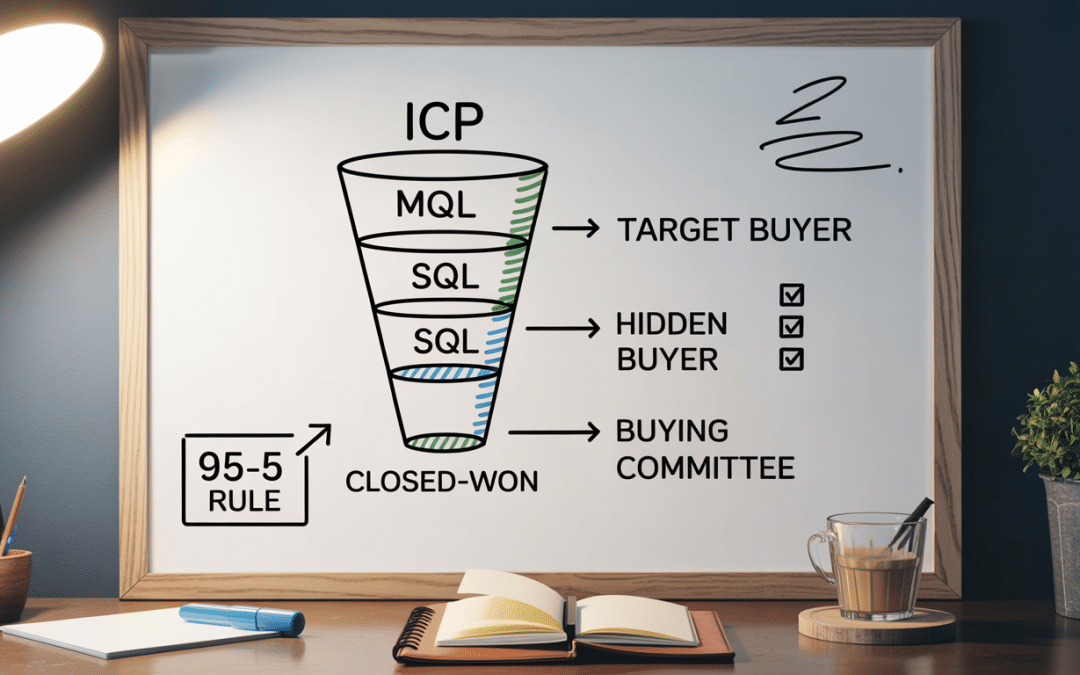
Professional services lead generation in South Africa — for legal, accounting, consulting, and advisory firms — is structurally different from product or trade-services lead gen. Most SA firms get it wrong because they apply generic B2B playbooks to a market that punishes generic approaches. Professional services buyers in SA evaluate firms over 3–9 months in committees of 3–5 people, with hidden buyers in finance and procurement holding 50% of decision power.
This guide covers what works specifically for SA professional services firms — moving from referral-dependent lead flow to a structured pipeline of qualified buyers. For the broader B2B context, see our B2B lead generation South Africa guide. For solar and renewable energy verticals, see our solar lead generation guide.
Quick Answer
Professional services lead generation in SA typically delivers 4–8 qualified opportunities per month at a cost of R450–R1,200 per qualified lead — higher than product B2B but justified by R150,000–R2,000,000+ engagement values. The four highest-leverage channels are LinkedIn thought leadership, SEO, structured referral programmes, and client case-study production. Most SA firms fail because they treat lead generation as marketing when buyers are actually evaluating credibility.
Want a free lead generation audit of your SA professional services firm with concrete pipeline recommendations?
Get a Free Lead Gen AuditWhy Professional Services Lead Generation is Different from Product B2B Lead Gen
Professional services firms sell expertise, not products. Buyers cannot try a sample, see a demo, or compare specifications side-by-side. They are buying judgment, experience, and the partner who will actually do the work — which is invisible until the engagement is underway. This makes the buying decision fundamentally about trust, not features.
The decision rhythm reflects this. Where product B2B might close in 30–60 days, professional services in SA typically takes 90–270 days from first touch to engagement letter. The buyer evaluates 3–6 firms in parallel. They check references, ask for proposals, conduct interview meetings, negotiate scope, and only then commit. Each stage requires content and credibility that generic lead gen does not produce.
The 95-5 Rule for Professional Services
According to LinkedIn's B2B Institute research, only 5% of B2B buyers are in-market at any moment — 95% are out-of-market. For professional services this ratio is even more extreme because engagements are infrequent and high-stakes. Firms that focus only on the 5% chase tiny audiences with rising costs. Firms that invest in mental availability with the 95% capture buyers when they enter the market — typically at 3–5x lower cost per acquisition.
The Four Channels That Actually Work for SA Professional Services Lead Generation
Professional services lead generation works through four distinct channels in the SA market, each with its own economics, time-to-result, and buyer psychology. Most SA firms over-invest in one channel and ignore the other three. The result is concentration risk, missed buyer touchpoints, and pipeline gaps that take months to fix.
| Channel | Lead Quality | Cost per Lead | Time to First Lead | Best For |
|---|---|---|---|---|
| LinkedIn thought leadership | High | R600 – R1,400 | 30–60 days | Senior partner positioning |
| SEO + content marketing | High | R200 – R600 (mature) | 4–6 months | High-intent service queries |
| Partnership / referral programmes | Highest | R150 – R400 | 60–120 days | Trust-driven verticals |
| Targeted Google Ads on bottom-funnel queries | Medium | R450 – R1,100 | 14–30 days | Specific service campaigns |
Notice that referral programmes deliver the highest-quality, lowest-cost leads — but most SA firms have no structured referral system. They rely on ad-hoc word-of-mouth that produces 1–3 leads per quarter rather than the 8–15 monthly volume a structured programme generates. This single shift produces more pipeline lift than any other intervention available to SA professional services firms.
The Three Most Common Mistakes SA Professional Services Firms Make
Three mistakes consistently destroy professional services lead generation results in SA. Each is invisible to the firm because each feels like the right thing to do at the time. Identifying and correcting them is more about strategic discipline than tactical skill.
Mistake 1 — Treating Every Senior Person as a Buyer
Most professional services firms build content for "executives" or "decision-makers" generically. The reality is that B2B buying decisions are made by committees of 3–5 people split into target buyers (the partner who will use the service) and hidden buyers (legal, procurement, finance). Hidden buyers control 50% of decision power, prioritise risk reduction over innovation, and respond to completely different content than target buyers do.
Firms that segment content for both groups close 3–4x more deals than firms that produce only target-buyer content. Hidden buyer content includes case studies focused on risk avoided, regulatory compliance details, fee structure transparency, and references from similar engagements — content that lets a CFO defend the choice if questioned later.
Mistake 2 — Confusing Marketing with Credibility-Building
Professional services buyers do not want marketing. They want evidence the firm has solved their specific problem before. Generic lead gen content — "5 reasons to hire a tax advisor," "what to look for in a law firm" — produces zero qualified leads. It signals "we are a generic firm desperate for any client." Firms winning in SA produce specific case studies, original analysis of recent legislation, and partner-bylined content on niche topics.
The credibility test is simple: would a senior partner at a top-tier firm publish this exact piece of content under their name? If no, the content is marketing dressed up as expertise. SA professional services buyers can spot the difference instantly.
Mistake 3 — Over-Investing in Top-of-Funnel, Ignoring Mid-Funnel
Most SA professional services lead gen pours budget into top-of-funnel awareness — LinkedIn ads, broad SEO content, sponsored posts. Then the firm wonders why MQLs do not convert to engagements. The gap is mid-funnel: the consideration content that buyers consume during their 3–6 month evaluation. Comparison guides, RFP-response templates, scope-of-work examples, fee-structure explanations.
Firms that build out mid-funnel content lift their MQL-to-SQL conversion rates by 40–60%. The math justifies the investment immediately — every R10,000 spent on mid-funnel content compounds across every top-funnel touch that follows. For broader strategic context, see our digital marketing strategy guide for South Africa.
Want to see which of these three mistakes is costing your SA firm the most pipeline value right now?
Request a custom diagnosticThe GPM Differentiator: We Build From Operator Experience
Most SA agencies that pitch professional services lead generation have never sold professional services themselves. They borrow generic B2B playbooks from product companies, paste "for law firms" or "for accountants" on top, and produce mediocre results. It does not work — because professional services lead generation depends on understanding the trust-building rhythm, hidden-buyer dynamics, and credibility signals that generic agencies cannot replicate.
Growth Pulse Media built and scaled a large SA business before launching the agency. We managed long sales cycles, complex buying committees, and the operational reality of converting committed buyers into actual revenue. The same operator instincts apply directly to professional services lead generation — the buying process is structurally similar even though the deliverable differs.
Our B2B lead generation service works with SA professional services firms — legal, accounting, consulting, advisory — on a senior-level basis. No offshore outsourcing, deliberately limited client load, and reporting that focuses on qualified pipeline value and engagement letters signed — not vanity metrics like impressions or downloads.
The Operator Lesson
Two SA professional services firms running identical marketing budgets can have a 5–8x gap in qualified pipeline value. The variable is rarely the budget. It is whether content is produced by senior partners or junior marketers, whether referral programmes are structured or ad-hoc, whether mid-funnel content exists at all, and whether hidden buyers are being addressed. Operator experience changes those decisions in ways generic agencies cannot replicate.
Real-World Impact: SA Professional Services Firm Before and After
This is a representative SA mid-tier accounting and advisory firm with 18 staff (4 partners, 6 senior associates, 8 juniors), based in Sandton. The "before" period reflects referral-dependent lead flow with sporadic LinkedIn activity in 2024. The "after" period captures six months after building a structured lead generation programme.
| Metric | Before | After | Change |
|---|---|---|---|
| Monthly qualified opportunities | 2.1 | 7.8 | +271% |
| Cost per qualified lead | Untracked | R680 | Now measurable |
| MQL-to-engagement rate | 14% | 31% | +121% |
| Average sales cycle | 6.5 months | 3.2 months | −51% |
| Average engagement value | R285,000 | R412,000 | +45% |
| Monthly engagements signed | 0.3 | 2.4 | +700% |
| Monthly attributed revenue | R85,500 | R988,800 | +1056% |
| Partner time on lead gen | ~12 hrs/week | ~4 hrs/week | −67% |
What Drove the Result
The firm restructured around four interventions. Partners started publishing one substantive LinkedIn post weekly with their byline. A structured referral programme rewarded existing clients for warm introductions. SEO content targeted high-intent SA queries like "audit firm Johannesburg" and "tax advisory Sandton." And a mid-funnel content library covered the questions buyers asked during evaluation. The 1,056% revenue lift came from doing all four together — partial implementation produced 30–40% gains. The full system multiplied them.
Who This Is NOT For
Structured lead generation works for the right SA professional services firm and burns budget for the wrong one. Four scenarios where it is the wrong call right now.
Your firm has fewer than 3 partners or principals. Effective professional services lead generation requires partner-bylined content, partner-led LinkedIn presence, and partner participation in client case studies. With 1–2 partners, the time required for the content production overwhelms billable capacity. Wait until headcount and capacity justify the investment before scaling lead gen.
Your firm has no clear specialisation or niche positioning. Generalist firms struggle with lead generation because content cannot be specific enough to attract qualified buyers. "We do everything for everyone" produces zero leads. Niche firms — "tax advisory for SA owner-managed businesses with R50m+ turnover" — produce highly qualified leads. Define the niche before scaling content.
Your operations cannot handle a 200%+ increase in qualified enquiries. Lead generation that works produces dramatic lift. If your team cannot draft proposals within 5 working days, follow up on enquiries within 24 hours, or onboard new clients within 30 days, lifting lead volume creates frustrated prospects and reputation damage. Solve operational capacity before scaling lead gen.
Your average engagement value is under R75,000. Below this deal-size threshold, the cost-per-qualified-lead economics for professional services do not work — you spend more on lead acquisition than the engagement is worth. Either reposition upmarket toward higher-value engagements, or use lighter-touch channels (Google Ads to specific service pages) rather than full lead generation programmes.
SA-Specific Tactics That Generic Professional Services Playbooks Miss
Three SA-specific tactics consistently separate professional services firms that scale lead generation from those that plateau. Each requires direct experience of the SA market because each plays against an SA-specific buyer psychology.
Tactic 1 — Bylined Content From Senior Partners, Not the Firm
SA professional services buyers trust individuals more than firms. A LinkedIn post by "Smith & Associates Partners" gets 200 impressions. The same post under a named partner's profile gets 2,000–8,000 impressions. The reason is identity-based trust: SA buyers want to know which specific human they would work with, not which firm. Insist that all content publishes under partner names, not firm pages — even if the marketing team writes the first draft.
Tactic 2 — SA Regulatory Commentary Within 48 Hours
SA professional services firms have a unique opportunity that few exploit: rapid commentary on new SARS rulings, Companies Act amendments, JSE listing changes, exchange control updates, or POPIA enforcement actions. Firms that publish substantive analysis within 48 hours of a regulatory event capture significant LinkedIn engagement and inbound enquiries from companies affected by the change. Most firms wait 2–3 weeks for "considered analysis" — by which time the buying interest has cooled.
Tactic 3 — Reference Calls Pre-Negotiated With Existing Clients
SA buyers ask for references before signing engagement letters. Firms that pre-negotiate reference availability with 5–8 existing clients (in exchange for fee discounts or invoice timing flexibility) close 60% faster than firms that scramble for references at the close stage. Time-to-engagement compresses, the buyer's risk perception drops, and the reference clients often produce additional referrals because they feel like trusted partners rather than transactional clients.
Want to see all three tactics applied to your specific professional services firm with custom implementation steps?
Request a free lead generation auditFrequently Asked Questions About Professional Services Lead Generation
How much does professional services lead generation cost in South Africa?
For SA professional services firms ready to invest in proper lead generation, expect a monthly retainer of R20,000–R45,000 covering LinkedIn content production, SEO foundation, referral programme setup, and mid-funnel content library. Cost per qualified lead typically lands in the R450–R1,200 range — higher than product B2B because of long sales cycles, but justified by R150,000–R2,000,000+ engagement values.
How long before professional services lead generation produces measurable results?
LinkedIn-driven leads can appear within 30–60 days. Referral programme leads start within 60–120 days as existing clients activate. SEO-driven leads take 4–6 months to compound. Plan for a 6-month baseline before evaluating overall programme impact. Professional services lead gen is structurally slower than product B2B because the sales cycle itself is longer.
Which SA professional services firms benefit most from structured lead generation?
Mid-tier firms with 4–25 partners typically benefit most. Below this size, partner time required for content production overwhelms billable capacity. Above this size, firms usually have in-house marketing teams and external agency support already. The sweet spot is firms with R10m–R150m annual revenue, 3+ partners, and clear specialisation in 1–3 service areas.
Should professional services firms use Google Ads for lead generation?
Selectively yes — for specific high-intent service queries like "audit firm [city]" or "tax advisor [specialisation]". Google Ads work well for bottom-funnel demand capture but poorly for top-of-funnel awareness in professional services. Budget allocation: typically 15–25% of total lead gen spend on Google Ads, with the remainder split across LinkedIn, SEO, and referral programmes.
How do SA professional services firms measure lead generation success?
Track four metrics monthly: qualified opportunities (leads matching ICP), cost per qualified lead, MQL-to-engagement-letter rate, and total attributed pipeline value. Firms that obsess over MQL volume without tracking conversion to engagement letters end up celebrating leads that never close. Pipeline value is the only metric that matters at the end of the year.
Can SA professional services firms run lead generation in-house or do they need an agency?
Either works, but the failure modes differ. In-house programmes fail when the firm lacks dedicated marketing capacity (a partner doing it part-time produces inconsistent output). Agency programmes fail when the agency lacks operator experience in B2B services. The right answer depends on whether you can hire a senior marketing lead in-house or partner with an agency that has run lead gen at scale.
Professional Services Lead Generation: The Bottom Line for SA Firms
Professional services lead generation in SA is one of the highest-leverage marketing investments available to mid-tier firms — driven by long sales cycles, high engagement values, and credibility-based buyer psychology that rewards firms willing to invest in proper content infrastructure. But the implementations that work are vertical-specific, partner-led, and SA-context-aware. Generic B2B lead gen playbooks produce mediocre results regardless of who runs them.
The single biggest predictor of return is not the agency you choose. It is whether your professional services lead generation programme is partner-led, segmented for both target and hidden buyers, structured around credibility-building rather than marketing, and uses SA-specific tactics that generic playbooks ignore.
If you would rather skip the trial-and-error and have a senior operator who has built lead generation systems for SA-specific markets walk you through what would work for your firm, that is exactly what the conversation below is for.
Get a Free Lead Generation Audit for Your SA Professional Services Firm
We will review your current setup — LinkedIn presence, content production, referral programme, mid-funnel content library, and partner positioning — and give you a written audit covering the two or three highest-return changes for your specific firm, a realistic pipeline projection, and a phased rollout plan.
No sales pitch, no pressure — just an honest read from senior operators who have built lead generation systems for SA verticals. No obligation — we will get back to you within 24 hours.
Request a Free Lead Generation Audit →