
 Add to Preferred Sources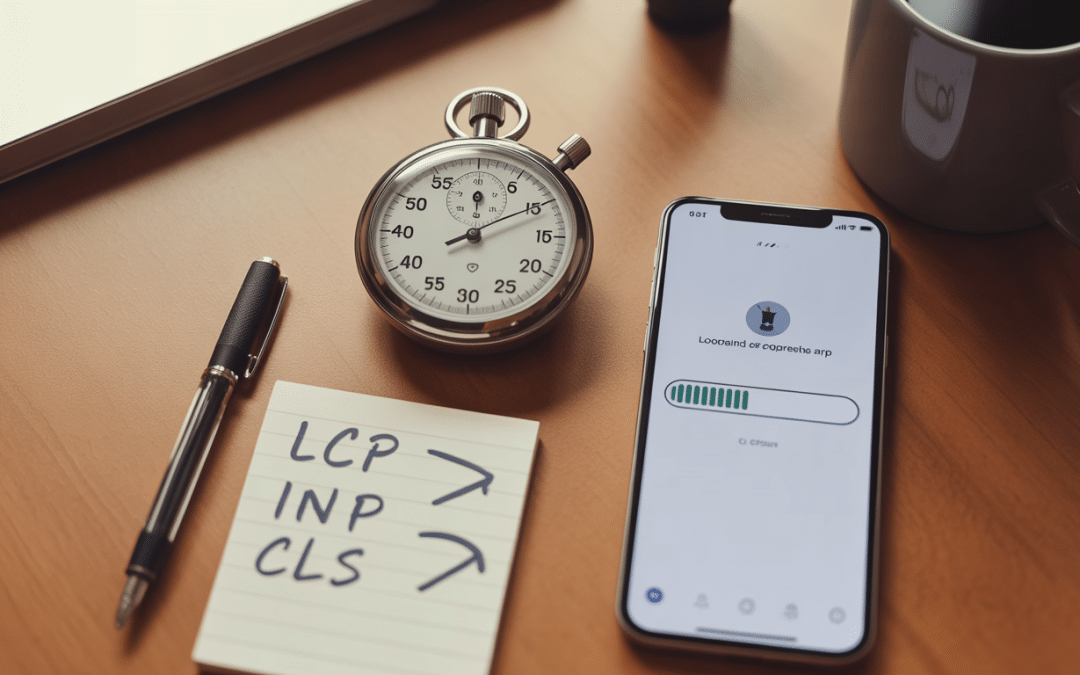
The biggest silent revenue leak we see on SA websites is page speed south africa performance — most stores are losing 15-35% of potential revenue to slow load times without realising it. The damage is invisible because slow visitors do not complain; they just leave and never come back.
This post is built from auditing 30+ SA websites over the past 18 months and watching the same speed problems repeat across platforms, industries, and budget tiers. For the strategic framework behind speed-driven conversion optimisation, see our CRO South Africa pillar guide. What follows is exactly why page speed quietly kills sales, what the SA-specific benchmarks actually are, and how to spot the bleed in your own site.
Quick Answer
Page speed south africa benchmarks: every 100ms of LCP improvement correlates with 1-3% higher conversion rates. SA websites loading in over 3 seconds lose 53% of mobile visitors before they see the page. Google's threshold for a "good" rating is LCP under 2.5 seconds, INP under 200ms, and CLS under 0.1.
SA businesses typically run 4.2-6.8 second LCP on mobile — well into the "poor" range. Fixing this is the highest-ROI conversion optimisation work most SA stores are not doing.
Want a senior-level review of how much revenue your slow site is bleeding right now?
Get a Free Page Speed AuditWhy Page Speed South Africa Performance Is the Silent Killer
Page speed south africa metrics get ignored because the damage is invisible at the dashboard level. The store still gets traffic. The reports still show clicks. Revenue is still coming in — just less of it than there should be.
The lost visitors do not show up as a complaint or a customer service ticket; they show up as a slightly lower conversion rate that has been baked into the business for so long it looks like the baseline. Speed is among the build decisions covered in our complete web design guide, which walks through what a well-built business website involves.
The structural problem is that slow visitors leave silently. A customer who waits 4 seconds for a page to render, gets frustrated, and clicks back to Google never enters your funnel. Your analytics shows them as a bounce. Your store sees no data on what they would have bought. The revenue impact is not in the numbers you look at — it is in the ones you never get to see.
The Three Reasons SA Operators Underestimate This
First, page speed feels like a developer problem rather than a marketing problem. Most SA marketers do not own the technical stack and assume someone else will fix it. The result: nobody fixes it. Second, page speed south africa audits feel like vanity work because the immediate revenue impact is hard to quantify without proper attribution.
Third, most SA stores test page speed once at launch and never again — but speed degrades over time as plugins are added, images uploaded, and tracking scripts stacked. The site that launched fast in 2023 is probably running a 5-second LCP in 2026 because nobody has been watching the gauge.
The SA-Specific Page Speed Reality Check
The first useful exercise on any page speed south africa audit is benchmarking the site against actual SA user conditions, not the optimistic numbers a developer's high-spec laptop produces. Run PageSpeed Insights on the homepage and three top product or service pages. Toggle to mobile. Look at the field data — the real-world Chrome User Experience Report numbers — not the lab data.
The reason mobile field data matters most: 70-80% of SA web traffic now comes from mobile, and SA mobile networks are slower than US/UK averages. A site that scores 95/100 on a desktop lab test can run a 6-second LCP on a real SA mobile user — exactly the audience your conversion rate depends on.
Key Insight
The single most predictive page speed south africa metric is mobile field-data LCP. Lab data shows what your site COULD do under perfect conditions. Field data shows what it actually does for the SA mobile user paying you money. Optimise field data, not lab scores.
The Three Metrics That Actually Move SA Conversion Rates
Page speed south africa optimisation is mostly about the three Google Core Web Vitals — Largest Contentful Paint (LCP), Interaction to Next Paint (INP), and Cumulative Layout Shift (CLS). Each affects a different piece of the conversion experience, and each has a Google-defined threshold that separates "good" from "poor" performance. These three metrics ARE the page speed south africa audit, in practical terms.
The thresholds, per Google's official Web Vitals documentation: LCP under 2.5 seconds is good, over 4 seconds is poor. INP under 200 milliseconds is good, over 500ms is poor. CLS under 0.1 is good, over 0.25 is poor. Google measures these at the 75th percentile of real user data — meaning 75% of your page loads must hit "good" for the page to pass.
What Each Metric Costs You When It Fails
LCP failures hurt the most because they happen first. A user landing on a slow page sees a blank screen for 4-6 seconds and either bounces or arrives mentally checked-out. Industry data from Google and major case studies (Vodafone, Pinterest, Renault) shows LCP improvements of 1 second drive 8-15% conversion lift. SA stores running 5-second LCP are leaving exactly that much revenue on the table.
INP failures hurt during interaction — when the user clicks "Add to Cart" or "Submit Form" and nothing happens for 500ms+. The user often clicks again, which can double-submit, or gives up. CLS failures cause the layout to jump as the page loads, leading to mis-clicks and form abandonment. Each metric has its own conversion damage profile.
Why Most SA Stores Run a 4.2-6.8 Second LCP
The page speed south africa pattern is consistent across our audit data. SA websites typically run mobile LCP in the 4.2-6.8 second range, comfortably in the "poor" rating tier. The five most common causes of poor page speed south africa performance — in order of frequency:
| Cause | Typical LCP Penalty | Fix Difficulty |
|---|---|---|
| Hero image not optimised (PNG instead of WebP, no lazy loading control) | 1.5-2.8 seconds | Low (1 day) |
| Render-blocking JavaScript (analytics, chat widgets, A/B tools loading first) | 1.0-2.0 seconds | Medium (3-5 days) |
| Slow server response time / cheap shared hosting | 0.8-2.5 seconds | Medium (hosting migration) |
| Too many third-party scripts (8+ tracking pixels stacked) | 0.6-1.4 seconds | Low (audit + remove) |
| Web fonts loading synchronously instead of via font-display:swap | 0.4-0.8 seconds | Low (1 day) |
Most SA stores have at least three of these active simultaneously. Compounding effect means a site can lose 4+ seconds of LCP from the cumulative drag. The good news: the first three fixes alone typically reclaim 2.5-4 seconds of LCP, moving the site from "poor" to "good" rating in 1-2 weeks of focused work.
Want help running a proper Core Web Vitals diagnostic on your site against the SA-specific reality?
Get a Free Core Web Vitals DiagnosticThe Conversion Math: How Slow Pages Actually Bleed Revenue
The honest revenue impact of page speed south africa underperformance is bigger than most operators expect. Consider an SA ecommerce store doing R600,000 monthly with a 1.8% conversion rate. Improving LCP from 5.2 seconds to 2.8 seconds typically lifts conversion rate by 18-25% — based on aggregated data from Vodafone (8% sales lift from 31% LCP improvement), Renault (13% conversion lift from 1-second LCP improvement), and similar published case studies. If your current site is too slow to fix economically, our fast, mobile-first web design service builds WordPress and Shopify sites designed to turn visitors into customers.
For that R600,000 store, a conversion rate moving from 1.8% to 2.2% translates to roughly R130,000-R150,000 in additional monthly revenue. The page speed south africa fix typically costs R15,000-R45,000 once-off. The ROI is 6-12x in the first 90 days alone, and the lift compounds because the improvements stay in place. Few CRO interventions deliver this kind of return — speed sits at the top of the priority list for a reason.
Real example: A Cape Town fashion ecommerce store running on Shopify had mobile LCP of 6.4 seconds and a 1.4% mobile conversion rate. The page speed south africa audit identified four issues: unoptimised hero images (PNG, 2.8MB each), 11 third-party scripts loading synchronously, web fonts blocking render, and a heavy theme with unused CSS.
Fixes took 9 working days and cost R28,000. Mobile LCP dropped to 2.2 seconds. Mobile conversion rate climbed to 2.1% over 60 days. Monthly revenue increased by R94,000 with no other changes — pure speed-driven lift. The store had been bleeding this revenue for 18 months before the audit.
The Page Speed South Africa Audit Framework We Run
Most SA agencies that "do speed optimisation" run PageSpeed Insights once, hand the operator a 30-page report full of red flags, and walk away. The work that actually moves conversion rates needs a structured audit framework — five steps, in this order, no skipping.
Step 1 — Field Data Baseline (not lab data)
Pull 28-day field data from Google Search Console's Core Web Vitals report. Note the percentage of URLs in "good", "needs improvement", and "poor" categories on mobile and desktop separately. This is the real page speed south africa baseline — the number you are trying to move.
Step 2 — Identify the LCP Element
For the top 5 highest-traffic pages, run PageSpeed Insights and identify the LCP element. Usually a hero image, sometimes a text block. The fix path differs based on which element type is the problem.
Step 3 — Audit Render-Blocking Resources
Catalogue every JavaScript and CSS file loaded above the fold. Most SA sites have 8-15 render-blocking resources that can be deferred or eliminated. This is where the biggest LCP wins typically hide.
Step 4 — Run Network Throttling Tests
Test the site under simulated 3G network conditions (still relevant for parts of SA mobile traffic) and slow 4G. The site that loads fast on fibre might break completely on a real SA mobile connection in suburban Johannesburg or rural KZN.
Step 5 — Re-test After Each Fix
Apply one fix at a time. Re-test field data after 28 days. This is the only way to attribute conversion rate changes to specific speed improvements rather than to seasonal traffic shifts.
Real-World Before/After: A Johannesburg B2B SaaS Speed Audit
The figures below are from an actual SA B2B SaaS company that ran the page speed south africa audit framework above over 60 days. The results illustrate the typical revenue lift from systematic optimisation.
| Metric | Before (Status Quo) | After (60-Day Optimisation) | Change |
|---|---|---|---|
| Mobile LCP (75th percentile) | 5.8 seconds | 2.3 seconds | -3.5s (-60%) |
| Mobile INP | 340ms | 180ms | -47% |
| Mobile CLS | 0.18 | 0.05 | -72% |
| Mobile bounce rate | 74% | 52% | -22pp |
| Lead form conversion rate | 1.6% | 3.4% | +113% |
| Monthly leads from organic | 42 | 97 | +131% |
| Sales pipeline generated/month | R820,000 | R1,940,000 | +R1.12M (+137%) |
The total project cost was R38,000 in agency time over 60 days. The lift in monthly pipeline value was R1.12 million — a 29x ROI in the first 60 days alone. Speed improvements compound because they stay in place; this kind of lift is not a one-time gain. The SaaS business had been losing this revenue every month for over a year.
Key Takeaway
Page speed south africa work is the highest-ROI conversion optimisation most SA businesses are not doing. Typical 90-day return is 6-30x the audit cost, with the lift staying in place permanently. The reason it gets ignored is not because it does not work — it is because the damage is invisible until someone runs the diagnostic.
The GPM Differentiator: How We Actually Run Speed Audits
Most SA agencies running page speed south africa audits are running PageSpeed Insights, copy-pasting the recommendations into a Word document, and charging R5,000-R10,000 for the report. The work that actually moves conversion rates is the implementation, not the diagnostic. We run the implementation in-house.
Our conversion rate optimisation service for South African businesses includes structured page speed audits as a standard CRO discipline. Work is done in-house at Growth Pulse Media — no outsourcing, no developer subcontractors. We have personally optimised page speed across Shopify, WooCommerce, WordPress + Divi, and custom-built SA sites. We have configured CDNs (Cloudflare), image optimisation pipelines, and render-blocking resource elimination on real SA hosting environments.
Who This Page Speed Work Is NOT For
Be honest about whether speed optimisation is the right priority for your business right now.
Sites with under 3,000 monthly visitors. Speed optimisation needs traffic to convert. A site doing 800 visitors monthly will see meaningful conversion rate improvements, but the absolute revenue lift is too small to justify the audit cost. Focus on traffic acquisition first, then optimise speed once volume justifies the investment.
Sites already passing all three Core Web Vitals on mobile. If your Search Console field data shows green "good" ratings across LCP, INP, and CLS at the 75th percentile on mobile, you are not in the "poor" SA cohort and the marginal returns from further speed work are smaller. Focus CRO budget on funnel work, copy testing, and offer optimisation instead.
Operators not willing to make technical changes. Real speed work requires touching hosting setup, plugin stacks, theme code, and image pipelines. If the operator or developer team is unwilling to make these changes — for political reasons, fear of breaking things, or contract constraints with the original builder — the audit recommendations will not be implemented and the work is wasted.
Anyone hoping for a 7-day speed turnaround. Real speed improvements compound over 4-8 weeks of measurement, fixing, and re-measurement. Field data takes 28 days to refresh in Search Console. If the timeline horizon is one week, the work cannot be done properly — wait until the timeline allows for proper field-data validation.
Want a clear-eyed diagnostic of whether speed work is the highest-ROI move for your business right now?
Get a Free CRO Priority ReviewFrequently Asked Questions
What is good page speed south africa benchmark for ecommerce sites?
Good page speed south africa benchmark targets for ecommerce: mobile LCP under 2.5 seconds, mobile INP under 200ms, and mobile CLS under 0.1, measured at the 75th percentile of real user data. These are Google's official Core Web Vitals thresholds. Most SA ecommerce stores currently run mobile LCP in the 4.2-6.8 second range, well into the "poor" rating tier. Hitting "good" thresholds typically requires 4-8 weeks of focused optimisation work.
How much does poor page speed cost an SA online store?
Poor page speed typically costs SA online stores 15-35% of potential revenue. Industry data from Google case studies (Pinterest, Vodafone, Renault) shows that improving LCP by 1 second correlates with 8-15% conversion rate improvements. For an SA store doing R500,000 monthly, this translates to R75,000-R175,000 in monthly recoverable revenue. The damage is invisible until a proper audit measures it because slow visitors leave without complaining.
How do I measure my SA website's page speed accurately?
Use Google PageSpeed Insights (pagespeed.web.dev) for individual page testing and Google Search Console's Core Web Vitals report for site-wide field data. Always prioritise field data (real user measurements) over lab data (simulated tests). Run tests on mobile separately from desktop — most SA traffic is mobile and mobile performance is typically much worse. The 75th percentile field data is what Google uses for ranking signals.
What is the cheapest fix for slow page speed on an SA Shopify store?
The single highest-ROI cheap fix for SA Shopify stores is hero image optimisation: convert PNG/JPG to WebP, ensure image dimensions match display size, and add proper width/height attributes to prevent layout shift. This typically reclaims 1.5-2.8 seconds of LCP for around R3,000-R5,000 of work. The second-highest is removing unused third-party scripts — most SA stores have 4-6 tracking pixels they no longer use.
Does page speed matter more for SEO or conversion rate?
Page speed affects both, but the conversion rate impact is typically larger and faster to materialise. SEO impact is real (Google confirmed Core Web Vitals as ranking signals in 2021) but works as a tiebreaker among already-relevant content rather than a dominant factor. Conversion rate impact is direct and immediate: faster pages convert more visitors into customers regardless of where they came from. Prioritise speed as a CRO project; SEO benefits will follow.
How long does it take to fix page speed on an SA website?
A focused page speed optimisation cycle typically takes 4-8 weeks: 1 week for the field-data baseline and audit, 2-4 weeks for implementation, and 28 days for field data to refresh and confirm the improvements. Quick wins (image optimisation, removing unused scripts) show in lab data within days but field data takes the full 28-day Chrome UX Report cycle to reflect changes. Plan for a 60-day window to confirm conversion rate impact.
If page speed has not been audited on your site in the last 6 months, the chances are very high that recoverable revenue is being lost right now. The next step is a proper page speed south africa field-data baseline and a prioritised fix list — not another generic PageSpeed Insights screenshot. We will run the diagnostic, identify the top three highest-ROI fixes, and produce a written recommendation with realistic Rand recovery projections.
Ready to Find the 15-35% of Revenue Your Slow Site Is Bleeding?
We will run a proper page speed and Core Web Vitals diagnostic on your top 5 pages, identify the largest revenue leaks against the SA-specific benchmarks above, and give you a 60-day execution plan with realistic Rand recovery projections. No obligation — we will get back to you within 24 hours.
Request a Free Page Speed Audit