
 Add to Preferred Sources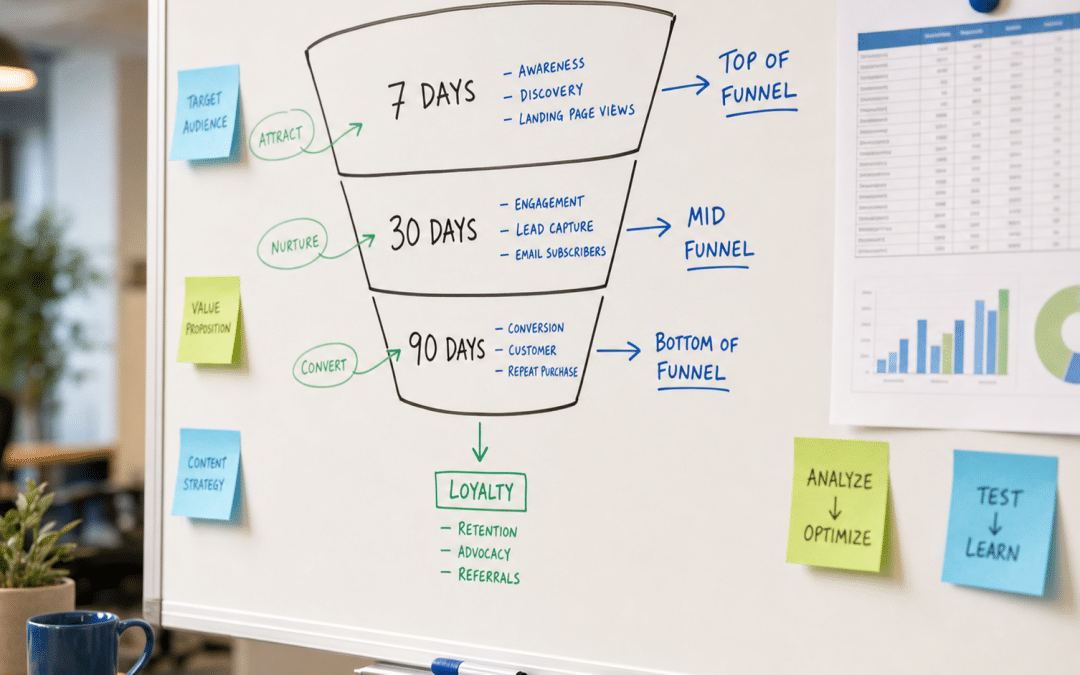
Setting the right meta ads retargeting window guide for your campaigns starts with a single question: how long does your customer actually need to make a decision? Across Meta's platform, retargeting windows run from 1 day to 180 days for website-based audiences and up to 365 days for on-platform engagement audiences — a range wide enough that the wrong choice quietly drains budget while returning thin results. If you are running Meta Ads in South Africa and your warm-audience campaigns feel expensive relative to what they return, window length is one of the first levers worth inspecting.
Before iOS 14 reshaped the tracking landscape, tight 7–14 day windows were conventional wisdom. The pixel captured most visits, audiences built quickly, and shorter windows meant fresher intent. Since then, the Pixel fires on a fraction of what it once did — and for many SA accounts, a 7-day window now builds audiences too small for Meta's algorithm to optimise against.
Getting the window right also intersects with POPIA-compliant Conversions API setup: businesses running Pixel alone are working with degraded signal, smaller pools, and weaker match quality across every window they choose.
Quick Answer
A meta ads retargeting window guide in brief: website custom audiences offer 1, 7, 14, 30, 60, 90, or 180-day options; on-platform engagement audiences extend to 365 days. Choose 1–14 days for high-intent actions like cart and checkout abandonment; 30–60 days for considered purchases; and 90–180 days for high-ticket services, B2B, and real estate. After iOS 14, standard practice shifted toward longer windows — 30–60 days now commonly build larger, more deliverable audiences than 7-day windows, because reduced Pixel coverage means short windows often fail to accumulate enough people to sustain delivery.
What This Guide Covers
Window options available in Meta Ads Manager
How iOS 14 changed what your window returns
Matching window duration to your SA buying cycle
Not sure which window is killing your retargeting ROAS?
Share your current audience setup and we will identify whether window length, audience size, or frequency is the limiting factor.
Get a Free Retargeting ReviewWhat Retargeting Window Options Does Meta Actually Offer?
A retargeting window — called a retention period in Meta's Ads Manager — sets the maximum number of days that must have elapsed between a person taking a qualifying action and being included in your audience. The moment that clock runs out, they drop off automatically.
Available options differ by audience source:
| Audience Source | Available Windows | Best For |
|---|---|---|
| Website visitors (Pixel/CAPI events) | 1, 7, 14, 30, 60, 90, 180 days | Ecommerce, lead gen, service businesses with web presence |
| Facebook/Instagram Page engagement | 30, 60, 90, 180, 365 days | Brands with active organic presence; iOS-resilient |
| Video views | 30, 60, 90, 180, 365 days | Awareness-to-consideration bridge; high-ticket and B2B |
| Lead form interactions | 30, 60, 90, 180, 365 days | Service businesses; professional services; B2B |
| Customer list upload | No expiry (matched at upload) | CRM re-engagement; win-back campaigns; lookalike seeds |
For Meta Ads audience targeting built on dynamic product events, the API gives you even finer control: the retention_seconds parameter lets you set different windows per event. Different events can be assigned different retention windows — a short window for high-intent actions like add-to-cart, a longer period for product-view browsing events — with separate exclusion retention values to prevent purchasers from appearing in your retargeting pool immediately after buying. This is the mechanism behind the window settings you configure in Ads Manager.
Key Rule
Engagement and video audiences extend to 365 days — website visitor audiences cap at 180 days for standard events. If you need to retarget beyond 180 days, build an on-platform engagement audience (video views, page interactions) rather than stretching a website visitor window that Meta will silently truncate.
How iOS 14 Changed What Your Retargeting Window Returns
Before Apple's App Tracking Transparency prompt launched, the Meta Pixel fired on the overwhelming majority of site visits. Short windows worked because audiences built fast: a 7-day website visitor window could hold tens of thousands of people even on modest traffic.
The tracking landscape changed materially after 2021. For iOS users who decline tracking, Meta can only match via hashed email or phone number sent through the Conversions API — the Pixel alone cannot identify them. The result: a 7-day website visitor audience that once held 10,000 people might hold significantly fewer today on the same traffic volume, depending on your iOS visitor share and your CAPI implementation.
The practical consequence for your window strategy:
| Before iOS 14 | After iOS 14 |
|---|---|
| 7–14 day windows were standard practice | 30–60 day windows now commonly build larger, more deliverable audiences |
| Short windows = fresher intent | Short windows often = too small to sustain delivery |
| Pixel alone sufficient for most campaigns | Pixel + CAPI hybrid required for healthy audience pools |
| Tight exclusions preserved audience quality | Tighter exclusions can make audiences undeliverable |
The Conversions API recovers 20–40% of that lost signal by sending hashed first-party data server-side, bypassing browser-level restrictions entirely. Businesses running Pixel alone should expect audience pools to run materially thinner than their web traffic numbers suggest. On-platform engagement audiences — video views, page interactions, lead form opens — were completely unaffected by iOS 14 because they never cross a browser boundary: these audiences retained 90%+ signal and remain the most reliable warm-audience source for SA advertisers who cannot achieve full CAPI coverage.
Event Match Quality: The Indicator to Watch
Meta's Event Match Quality (EMQ) score runs from 0 to 10. A Pixel-only setup typically scores below 5. A properly configured Pixel + CAPI hybrid lifts EMQ to 7 or above, with 8.8+ the recommended target for purchase events. Higher EMQ means better audience match rates and more accurate attribution — both of which affect how accurately your windows are actually measuring the people they claim to include.
Meta Ads Retargeting Window Guide: Matching Duration to Your SA Buying Cycle
The single most important window variable is not your traffic volume or your CAPI setup — it is how long your customer takes to decide. Match your window to that cycle and every other parameter becomes easier to calibrate.
| Business / Action Type | Recommended Window | Reasoning |
|---|---|---|
| Fashion / impulse (cart abandoners) | 3–7 days | Intent decays fast; 51.7% of SA online purchases happen via smartphone — the decision is often made in one sitting |
| Fashion / impulse (product viewers) | 7–14 days | Browser → purchaser in the same weekend; beyond 14 days, intent is cold |
| Electronics / appliances (cart abandoners) | 7–14 days | Research phase active; most conversions happen within the first two weeks |
| Electronics / appliances (comparison shoppers) | 30–60 days | Spec comparison takes time; catch the moment of decision |
| Professional services (enquiry page visitors) | 30–60 days | Decision often involves a conversation; multi-week sales cycle |
| High-ticket / real estate (property viewers) | 90–180 days | Long consideration; multiple decision-makers; financial qualification period |
| B2B / SaaS (pricing or demo page visitors) | 14–30 days | High intent; follow up while the problem is top of mind |
| B2B / SaaS (content / awareness visitors) | 60–180 days | Full enterprise buying cycle; build familiarity through the funnel |
| Travel / hospitality (booking abandoners) | 1–3 days | Urgency-driven; the specific deal may change within days |
| Restaurants / events | 1–7 days | Near-term decision; people eat this week, not in 60 days |
There is an SA-specific nuance worth building into your windows: economic pressure extends decision cycles in ways that global benchmarks do not capture. A visitor who views a mid-range appliance mid-month may return only when their salary arrives at month-end. A 30-day window catches that return visit. A 7-day window misses it entirely. For considered purchases where the buyer needs a salary cycle to pull the trigger, erring toward the longer end of your range costs relatively little and recovers a segment of genuine buyers that shorter windows delete.
How to Set Your Retargeting Window in Ads Manager
In Meta Ads Manager, navigate to Audiences → Create Audience → Custom Audience → Website. Select your Pixel, then choose the event to target (All Website Visitors, ViewContent, AddToCart, Purchase, and so on). The In the past field is your retention window — enter any value from 1 to 180 days. Name the audience to reflect both the event and the window (for example, "AddToCart — 14d") so campaigns stay organised as you scale.
For engagement audiences, follow the same path but choose Facebook Page or Instagram Account instead of Website, select your engagement type (post interactions, profile visits, video views), and set the retention period up to 365 days.
Building a Layered Retargeting Window Strategy
Rather than choosing a single window, structure your campaigns in three heat layers — each with different creative, copy, and frequency — and exclude converters from every layer.
| Layer | Window | Audience | Creative Approach |
|---|---|---|---|
| Hot | 1–14 days | Cart abandoners, checkout starters, lead form openers | Urgency copy; specific product or offer; direct response |
| Warm | 15–60 days | Product page viewers, blog readers, high-engagement visitors | Social proof, reviews, testimonials; benefit-led messaging |
| Cool | 61–180 days | All site visitors, video viewers (75%+ watch time), page fans | Brand story; value proposition; problem-awareness content |
Two rules that make this work:
Exclude converters from every layer. Someone who purchased in the last 30 days should never see your cart abandonment sequence. Build a 30-day purchaser exclusion audience and apply it as an exclusion to all hot and warm campaigns. Nothing erodes trust faster than a retargeted cart ad shown to someone who already bought.
Exclude hot from warm. If someone is in your 1–14 day cart abandoner audience, exclude them from the warm 15–60 day product-viewer audience. They are receiving more targeted messaging already — serving them both sets simultaneously raises frequency without raising intent.
Frequency by Layer
Industry-reported starting-point benchmarks vary by source — treat these as working heuristics rather than fixed rules, and monitor your own account data. For the hot layer, 2–3 impressions per day in the first 72 hours is a widely-cited starting point — urgency is genuine and tolerance is higher. For warm audiences, 3–4 impressions per week is a commonly reported ceiling before fatigue signals appear; some practitioners cite 5–7 total impressions across a 7-day period as a broader guideline across a full retargeting mix. For cool audiences, a lower frequency is appropriate — enough to maintain brand visibility without burning through the pool. Watch CPM trend, CTR week-over-week, and engagement rate as your fatigue early-warning system — these decline before conversion rate visibly drops.
Want a full-funnel retargeting structure mapped to your campaigns?
Tell us your account setup and we will outline a three-layer window structure suited to your SA buying cycle — including exclusions and frequency caps.
Request a Campaign Structure ReviewKeeping Your Audience Pool Large Enough to Matter
Any meta ads retargeting window guide has a prerequisite: the window selection means nothing if the resulting audience is too small for Meta to deliver against. The technical minimum is 100 people in a custom audience before ads can run — but below 1,000 people, the algorithm exhausts frequency quickly, CPM climbs, and performance deteriorates. For meaningful optimisation, 1,000+ is the practical floor; 5,000+ provides more stable delivery.
If your retargeting audience consistently sits below 1,000, you have three options:
- Extend the window. Move from 7 to 30 days, or from 30 to 90 days, to accumulate more people from the same traffic.
- Consolidate segments. Merge product-viewer audiences from multiple categories rather than creating separate campaigns per category.
- Shift to on-platform engagement audiences. Page interactions, video views, Instagram profile visits — these build freely, are iOS-resilient, and extend to 365 days. For seeding lookalike audiences, an on-platform engagement custom audience often produces a cleaner source signal than a fragmented pixel-based list.
POPIA and Your Retargeting Data
South Africa's Protection of Personal Information Act requires a lawful basis for processing personal information — consent, legitimate interests, and contractual necessity are among the recognised grounds — and requires that processing be disclosed in your privacy policy. If your Meta Pixel collects behavioural data on SA visitors, both elements apply: a documented lawful basis and a clear disclosure.
Running the Conversions API server-side — sending hashed email and phone rather than raw identifiers — gives you documented control over exactly what data leaves your servers and reaches Meta. This is the most defensible POPIA position for paid social campaigns. See the Meta Marketing API documentation for how retention windows are configured at the API level.
South Africa's 72.7% mobile web traffic share means a large portion of your site visits happen on interrupted, session-broken browsing — commute time, lunchbreaks, load-shedding workarounds. A user who started a checkout on mobile may return on desktop two days later. Broader windows (30+ days) and cross-device matching via CAPI hashed identifiers capture those split-session journeys that cookie-based tracking misses. With SA's cart abandonment rate sitting at approximately 75%, the economic case for recovering even a fraction of those exits through well-structured retargeting is clear.
Why South African Businesses Choose Growth Pulse Media for Meta Campaigns
Running Meta Ads management in South Africa well requires more than Ads Manager access — it requires an understanding of how SA buying cycles, salary rhythms, mobile usage patterns, and POPIA obligations interact with platform mechanics that were designed for global markets. Dirk, who founded GPM after building and scaling an SA ecommerce operation, spent years paying the invoices and learning which levers actually moved revenue rather than just metrics.
GPM clients get:
- Window architecture matched to their buying cycle — not a default 30-day audience applied to every campaign
- Pixel + CAPI audit before any window decisions — because a degraded signal gives you bad data to optimise against regardless of the window you choose
- Full-funnel segmentation — hot, warm, and cool layers with proper exclusions, so budget goes to intent rather than frequency
- Named integrations — Shopify, WooCommerce, and standalone Pixel/CAPI setups across SA ecommerce and service businesses
- A deliberately limited client roster — senior attention on every account, not a rotation of juniors
If your Meta retargeting is spending without returning, the window structure is usually the first place to look. The second is the data quality underlying it. GPM addresses both in the same review.
Who This Approach Is NOT For
Ready to audit your retargeting window setup?
Send us your current audience configuration and we will give you a direct assessment of whether your window, audience size, or signal quality is limiting performance.
Book a Retargeting AuditFrequently Asked Questions
What is a Meta ads retargeting window?
A Meta ads retargeting window — also called a retention period — controls how recently a person must have taken a qualifying action to remain in your custom audience. Set a 30-day window and any visitor who came to your site more than 30 days ago drops off automatically. The window effectively defines the recency threshold of your warm audience at any point in time.
How long should my Meta retargeting window be?
Match the window to your buying cycle. For impulse purchases like fashion and food, 3–14 days for cart and product audiences is appropriate. For considered purchases (electronics, appliances, professional services), 30–60 days captures the comparison and deliberation period. For high-ticket items, real estate, and B2B, 90–180 days aligns with the actual length of the decision process. In South Africa, where salary cycles affect purchase timing, erring toward the longer end of each range recovers buyers that shorter windows miss.
What is the maximum retargeting window available on Meta?
Website custom audiences (Pixel/CAPI events) cap at 180 days for standard events. On-platform engagement audiences — page interactions, video views, lead form engagements — extend to 365 days and are the best option when you need to retarget beyond 180 days or when your pixel-based audiences are too small. Some accounts report extended windows for Purchase events beyond 180 days — check your own Ads Manager under Audiences to see the options available to your account configuration.
Why is my Meta retargeting audience too small?
Three common causes: your window is too short relative to your traffic volume; iOS 14 signal loss has shrunk your pixel-visible audience without a Conversions API to compensate; or your site traffic is genuinely below the threshold where retargeting sustains delivery. Extending the window, implementing CAPI, and supplementing with on-platform engagement audiences (video views, page interactions) are the three levers available.
Does POPIA apply to Meta retargeting in South Africa?
Yes. The Protection of Personal Information Act requires processing to have a lawful basis — consent, legitimate interests, and contractual necessity are among the grounds the Act recognises — and requires that processing be disclosed to data subjects. A privacy policy disclosure alone is not sufficient; the lawful basis must exist and be documentable. Running the Conversions API server-side, which sends hashed identifiers rather than raw personal data, gives you cleaner documented control over what is transmitted to Meta and is the recommended approach for POPIA-aligned paid social campaigns.
Get Your Meta Retargeting Windows Right
GPM audits your Pixel and CAPI data quality, maps your audience windows to your actual buying cycle, and builds a layered retargeting structure that spends against intent rather than frequency. We work across Shopify and WooCommerce stores and standalone SA businesses — with senior attention on every account and a limited client roster that keeps it that way.
No obligation — we will get back to you within 24 hours.
Request Your Retargeting Audit