
 Add to Preferred Sources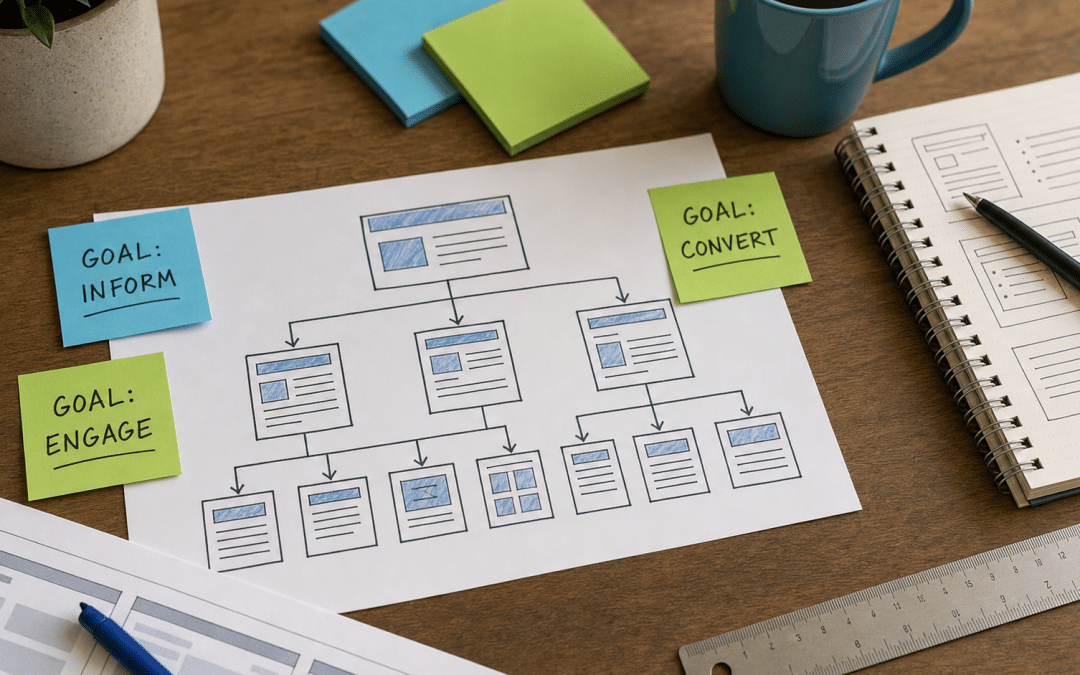
How to plan a business website in South Africa involves eight core decisions — goals, audience, page architecture, platform, domain and hosting, content, budget, and legal compliance — and the sequence matters as much as the individual choices. The web design Johannesburg guide covers the commercial and agency context; this post gives you the planning sequence that determines whether the investment produces results. Skip this stage and you risk spending significant budget on a site that needs rebuilding within two years. Get it right and the same investment builds something that generates enquiries from day one.
South Africa's digital landscape shapes every one of these decisions in ways that global planning guides miss. As of early 2026, there were 51.7 million internet users in South Africa — 79.6% internet penetration — and the vast majority access the web through a mobile device, not a fixed line. A site that loads slowly on a mid-range Android handset on LTE loses South African visitors faster than any campaign can replace them.
POPIA, South Africa's data protection law, adds a mandatory compliance layer that global templates ignore entirely: it applies to every business that collects personal data through a website, with no small-business exemption and fines reaching R10 million.
Work through the eight decisions below before spending anything on design or development. Each step includes the SA-specific angles that make the difference.
Quick Answer
How to plan a business website in South Africa: define your primary goal first (lead generation, e-commerce, or brand credibility), map your audience and their mobile habits, sketch a page structure before wireframes begin, choose a platform that fits the goal (WordPress for most service businesses; Shopify for e-commerce), register a .co.za domain and pick a South African host, plan content before development starts, set a realistic budget (professionally built sites range from R10,000 to R80,000 depending on complexity), and meet your POPIA obligations before launch.
Is Your Website Brief Missing Something Critical?
Share the outline of what you're planning and we'll review it against what high-performing South African business websites actually include — no obligation.
Send Us Your BriefHow to Plan a Business Website: The 8-Step Framework
Planning a business website in South Africa follows eight sequential decisions — from defining goals to meeting POPIA obligations — and the order matters because each step constrains the next. Rush step four (platform choice) before completing step one (goals) and you will pick the wrong platform for the right money.
Step 1: Define What Your Website Must Achieve
The most useful question to answer before anything else: what specific action do you want a visitor to take when they land on your site? The three most common goals for South African business websites are lead generation (contact form or phone enquiry), direct e-commerce sales, and credibility building — a professional presence that supports sales conversations happening elsewhere.
Your goal determines the platform you need, the pages you build, and the metrics you use to measure whether the site is working. Write it as a measurable outcome: "Generate 30 qualified enquiry form submissions per month from Gauteng-based decision-makers" is a goal. "Have a professional online presence" is a wish. The more specific the goal, the clearer the brief becomes for everyone involved in the build.
Goal Clarity Before You Brief Anyone
Knowing how to plan a business website starts with a single decision: your primary goal — lead generation, e-commerce, or credibility building — must be defined before design or development begins. It determines the platform you need, the pages you build, and how you measure ROI. A site without a defined goal produces a design without a direction.
Step 2: Map Your South African Audience — Especially Their Mobile Reality
Your audience's device, connection speed, and search behaviour should shape every design decision. In South Africa, over 75% of internet users access the web via mobile data rather than a fixed-line connection. Mobile is not an afterthought — it is the primary use case, which means a site that works well on desktop but "mostly works" on mobile is effectively a broken site for the majority of your visitors. Mobile website design in South Africa requires a genuine mobile-first approach in the brief, not a desktop design adapted for small screens at the end of the project.
Understanding your audience also means knowing what they search for before they find you, what objections they have before they make contact, and what language they use to describe their problem. The answers to those questions belong in the brief before any wireframe gets drawn. If you have existing customers, interview a handful of them. If you don't yet, describe your best prospect in as much detail as possible. A designer who understands the target audience produces a stronger site than one who receives a colour preference and a logo.
Step 3: Decide Which Pages You Actually Need
A sitemap — even a rough sketch — forces every page to justify its existence before you pay for it to be designed. For most South African service businesses, the essential pages are: Home, About, Services (one per core offering or a single page with clear sections), Contact, and optionally a Blog. E-commerce builds add Product, Category, Cart, and Checkout pages. The About page is the most consistently underinvested page on South African business websites — it is where a visitor decides whether to trust you enough to make contact.
An About page worth the investment names the specific people behind the business (not just a company bio), states relevant credentials or years of experience, includes social proof such as named clients or industry affiliations, and explains clearly why the business exists. Generic About pages are missed conversion opportunities.
Resist the temptation to plan a 20-page site at launch. A tight, well-written six-page site will serve visitors — and your enquiry rate — far better than a sprawling 20-page site where half the content is placeholder text. Launch with what is genuinely ready; grow from there. Every page you plan is a page someone needs to write content for — and content is the step that most commonly delays a website build.
Step 4: Choose the Right Platform for Your Business
Platform choice is the most consequential technical decision in the planning process. The three most common options for South African businesses are WordPress, Shopify, and DIY builders like Wix or Squarespace. Each fits a different set of needs.
| Platform | Best For | SA-Specific Notes |
|---|---|---|
| WordPress | Service businesses, lead generation, content-heavy sites | Most flexible; best long-term SEO performance; largest SA developer pool; supports all SA hosting environments |
| Shopify | E-commerce stores | Native integrations with PayFast, Peach Payments, Ozow, and Yoco; purpose-built for selling online; lower SA developer overhead |
| Wix / Squarespace | Solopreneurs needing a quick, low-cost presence | Limited design flexibility and SEO ceiling; adequate for a simple brochure site but harder to scale; ongoing subscription model |
WordPress is the default choice for most South African service businesses: it is flexible, well-supported by local agencies and developers, and performs well for SEO at scale. If your primary goal is online sales and you need local payment gateway integrations out of the box, Shopify is worth serious consideration. DIY builders reduce upfront cost but impose constraints on design, integrations, and search visibility that become expensive workarounds as the business grows.
The Platform Decision Rule
Still weighing WordPress against Shopify? Ask where your primary revenue comes from. Services and professional work: choose WordPress — it handles lead generation and content far better at scale. Product transactions and online sales: choose Shopify — SA payment gateways (PayFast, Peach Payments, Ozow) and inventory management are built in. DIY builders are the right choice only when upfront cost is the binding constraint and you understand the SEO trade-off going in.
Step 5: Register Your Domain and Choose Reliable SA Hosting
A .co.za domain signals local presence to South African visitors and to Google's local search algorithms. Registration costs roughly R90–R130 per year through South African registrars such as Domains.co.za, Afrihost, or Xneelo. If possible, confirm your preferred domain is available before finalising your business name — domain availability should be part of the brand decision, not a retrospective compromise.
For hosting, two questions matter in the South African context: where are the servers, and what support is available in your timezone? Local servers reduce latency for SA visitors, which directly affects page load times and therefore both user experience and search visibility. For most business websites, managed WordPress hosting from a South African provider handles security patches, backups, and uptime monitoring automatically — freeing your team from infrastructure management. Established SA providers include Xneelo, Elitehost, 1-grid, and Afrihost. The full breakdown of what to look for is in our website hosting South Africa guide.
Step 6: Plan Your Content and SEO Foundation Before Development Starts
The single most common cause of website build delays is content arriving late. Designers cannot finish pages with placeholder text; developers cannot build the right section architecture without knowing what goes in each section. Plan your content alongside your sitemap: for every page, document the main heading, the primary call to action, the key proof points (testimonials, credentials, case studies), and the search query you want that page to rank for.
From an SEO standpoint, each core service or product page needs to be built around a specific search phrase — the query a potential customer types into Google when looking for what you offer. A single page trying to rank for every service in every city is a page that ranks for nothing. Build one focused page per service, per city or region you serve.
Technical performance belongs in the brief too. Google's Core Web Vitals are evaluated against measurable thresholds, and Google's own page experience guidance confirms that Core Web Vitals are used by their ranking systems. Specifying a mobile PageSpeed target in the brief means you are not retrofitting it after launch.
Not Sure Which Platform Fits Your Business Goals?
Tell us what your site needs to do and we'll give you a straight recommendation — platform, structure, and what to budget — based on your specific goals.
Get a Platform RecommendationStep 7: Set a Budget That Reflects SA Market Realities
Website budgets in South Africa cover a wide range. Professionally built sites typically fall between R10,000 for a simple template-based WordPress build and R80,000 or more for a fully custom platform or a properly built e-commerce store. DIY builders like Wix and Squarespace run at R100–R500 per month as a recurring subscription — lower upfront, but the constraints on design and SEO accumulate. For a small-to-medium service business expecting a site to generate qualified leads, a professionally built WordPress site in the R15,000–R50,000 range is a realistic starting point given current SA agency rates.
The build cost is only part of the equation. Factor in ongoing managed hosting (typically R300–R1,000 per month for a South African provider), annual domain renewal (R90–R130 per year), SSL certificate (often included in managed hosting plans), any premium plugins or integrations, and a basic maintenance arrangement to keep the site secure and current. Those components add meaningful monthly overhead — scale them against your build complexity before committing to a platform or build budget. For a full breakdown by business type and complexity, the website cost South Africa guide covers every category.
Budget Planning Note
Separate the build budget from the running budget. A common planning error is spending the entire allocation on development and discovering that nothing remains for hosting, maintenance, or initial content. Treat domain renewal, managed hosting, and a basic maintenance arrangement as fixed annual line items in your budget — not optional extras you will sort out later.
Step 8: Meet Your POPIA Obligations Before You Launch
Every South African business website that collects personal information — through a contact form, newsletter sign-up, checkout, analytics cookie, or any other mechanism — must comply with the Protection of Personal Information Act. POPIA applies to all businesses operating in South Africa regardless of size. The practical requirements for a launch-ready website are:
- A compliant privacy policy that discloses what data you collect, why you collect it, and how long you retain it
- A cookie consent banner that obtains opt-in agreement for non-essential cookies before they are placed
- A named, registered Information Officer (this can be the business owner for most SMEs)
- A documented process for handling data access and deletion requests from visitors
- Secure storage and handling of any personal data collected through site forms or integrations
Administrative non-compliance can result in fines up to R10 million; the Act also provides for criminal imprisonment of up to 10 years for the most serious offences — these are statutory maximums, not standard first-enforcement outcomes. From April 2025, data breach notifications must be submitted through the Information Regulator's eServices portal. These are not aspirational guidelines — the Regulator has issued real fines since 2024. The full compliance checklist, including POPIA and web accessibility requirements, is in the SA website compliance guide.
POPIA Compliance Is Not Optional
Every South African business website that collects personal data through a form, cookie, or checkout must have a compliant privacy policy, a working cookie consent mechanism, and a registered Information Officer before it goes live. There is no small-business exemption. Build compliance into the brief — retrofitting it after launch costs more in time and legal exposure.
Why South African Businesses Work With Growth Pulse Media
The eight steps that define how to plan a business website are not academic — they are the brief we work through with every client before our web design team writes a single line of code. Growth Pulse Media's senior team has direct operator experience in South African business: running campaigns, managing platforms, and building web presence in a market where mobile data conditions, POPIA obligations, and local payment infrastructure shape every correct answer.
We work with a deliberately limited number of clients at any one time, which means the same senior strategist who reviews your brief oversees your build — not a junior designer translating a document they weren't in the room for. We have hands-on integration experience with SA payment gateways (PayFast, Peach Payments, Ozow, Yoco), local SEO requirements specific to the South African search landscape, and the SA hosting and infrastructure options that affect real-world site performance.
If you are working through the planning decisions above and want a second pair of eyes on your brief before you commit to a build, send it to us. We will tell you what is strong, what is missing, and whether our offering is the right fit for your goals and budget.
Who This Planning Guide Is NOT For
Businesses that haven't defined a goal and want a designer to figure it out. A designer's job is to execute a brief, not write one. Arriving at a web design agency with "we need a website" and expecting them to determine what it should achieve is a reliable way to spend a significant budget on the wrong outcome. The planning stage belongs to you.
Anyone planning to launch without any written content ready. "We'll sort the copy later" is the most common phrase that delays website projects by weeks and produces weaker results. Content written under deadline pressure — after the design is locked — is almost always generic. Content planned before the design begins is specific, persuasive, and structurally correct from the first page.
Businesses expecting immediate organic search results from a new site. A newly launched website with no SEO history, no inbound links, and no established content strategy will not rank for competitive terms overnight. Planning for a six-to-twelve month runway before organic traffic becomes a reliable lead source is the working estimate most SA search practitioners operate to — not pessimism, but a realistic planning input. If your business needs immediate enquiries, plan a paid traffic strategy alongside the site build, not instead of SEO groundwork.
Anyone who wants a "set and forget" website with no ongoing budget. A business website is a living asset that requires security updates, plugin maintenance, performance monitoring, and content refreshes. Without a maintenance arrangement and budget, site security degrades, performance drifts, and content goes stale — all of which cost more to fix than to prevent.
Ready to Move From Planning to Building?
Send us your site plan and we'll run a quick review of your goals, page structure, and platform fit — before any development spending begins.
Request a Free Site ReviewFrequently Asked Questions
How long does it take to plan and build a business website in South Africa?
As a working estimate, planning takes two to four weeks when the brief is clear and content is prepared in advance. The build adds four to eight weeks for a standard WordPress site, and longer for custom-designed or e-commerce builds — these are practical ranges based on typical SA project timelines, not guarantees. The most consistent delay is content — copy, images, and credentials — arriving late. Having all of this ready before the build starts is the single biggest time-saver in any project.
What platform is best for a South African business website?
WordPress suits most South African service businesses: it is flexible, well-supported by local agencies, and performs strongly for SEO. Shopify is the better choice for e-commerce businesses that need built-in SA payment gateway support — PayFast, Peach Payments, and Ozow integrate natively. DIY builders like Wix or Squarespace work for simple brochure sites but impose design and SEO limitations that become costly workarounds as the business scales.
Do I need a .co.za domain for my South African business?
You don't need one, but it is strongly recommended for local businesses serving South African customers. A .co.za domain signals local presence to visitors, supports geographic relevance in Google Search, and typically costs R90–R130 per year at South African registrars. International businesses with a global reach often use .com; for a business primarily serving the South African market, .co.za is the clearer signal of local commitment.
What does POPIA require for a South African business website?
POPIA requires a compliant privacy policy, an opt-in cookie consent mechanism for non-essential cookies, a registered Information Officer, a documented process for handling data subject requests, and secure storage of any personal data collected. The Act applies to all South African businesses processing personal information through a website, with no small-business exemption. Administrative non-compliance can result in fines up to R10 million; the Act also provides for criminal imprisonment of up to 10 years for the most serious offences — these are statutory maximums, not standard first-enforcement outcomes.
How much should I budget for a business website in South Africa?
Professionally built business websites in South Africa range from around R10,000 for a simple template-based site to R80,000 or more for a custom WordPress or e-commerce build. For a service business site built to generate qualified enquiries, the realistic range is R15,000–R50,000 for the development build. Add ongoing managed hosting (R300–R1,000 per month), annual domain renewal (R90–R130), and a basic maintenance arrangement. DIY builders cost R100–R500 per month as a recurring subscription but carry meaningful SEO and scalability trade-offs.
Plan Your Website Right — Then Build It Once
Growth Pulse Media's team brings direct South African operator experience to every web project — from POPIA-compliant brief reviews to full WordPress and Shopify builds with local payment gateway integrations. We work with a limited client list so you get senior attention, not a junior relay. No obligation — we will get back to you within 24 hours.
Start the Conversation