
 Add to Preferred Sources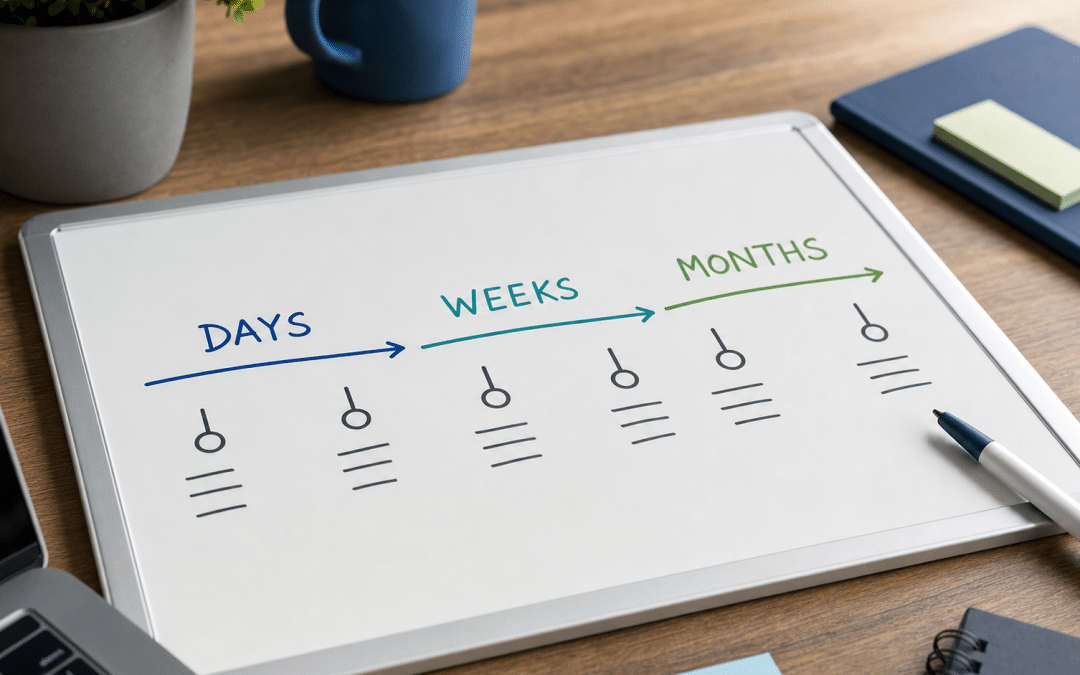
How long Google Ads take to deliver results depends entirely on which result you are measuring — impressions arrive within hours, qualified leads typically follow within the first few weeks, and a campaign optimised for a stable cost per acquisition usually requires three months of data. For a full grounding in how the platform operates in this market, the Google Ads South Africa guide covers the mechanics alongside this timeline guidance.
Understanding that distinction is what separates businesses that stick with a campaign long enough to see a return from those that cancel after thirty days and conclude paid search does not work. The Google Ads timeline is not a single number — it is three sequential phases, each with its own clock and its own success metric.
South Africa adds one more layer of complexity: search volumes in this market are meaningfully smaller than in the UK or US, which means new campaigns accumulate conversion data more slowly.
An account that exits the learning phase toward the lower end of the typical 2–6 week range in a high-volume market will often land toward the higher end — or beyond it — in South Africa. That is not a failure; it is arithmetic. Knowing it changes how you plan your budget and your patience.
Quick Answer
Most Google Ads campaigns begin sending traffic within 24–48 hours of approval, with early leads possible in the first week. The algorithm's learning phase — when Smart Bidding calibrates to your conversion goals — typically takes two to six weeks; Google's documentation indicates it can take up to around 50 conversion events to calibrate fully, though campaigns generating higher conversion volumes often exit the learning phase sooner. Stable, optimised results (predictable cost per lead, reliable ROAS) generally arrive between weeks eight and twelve. Judging a campaign before the 90-day mark is almost always premature. How long Google Ads take to work is therefore not one number; it is three phases with different clocks.
In This Guide
Phase 1: Ad Approval (Days 1–2)
Phase 2: The Learning Phase (Weeks 1–6)
How Long Does Google Ads Take to Deliver Stable Results?
What Slows Results in South Africa
Decision Table: Patient or Problem?
Why Campaigns Fail Before They Have a Chance
Not Sure if Your Campaign Is in a Normal Learning Phase or Stuck?
Share your current setup and we will tell you exactly where it sits in the timeline — and whether anything needs changing now.
Get a Campaign ReviewPhase 1: Ad Approval — Days 1 to 2
New Google Ads campaigns must clear a review process before any ad serves. For most standard campaigns — retail, services, B2B — Google's automated review process typically completes within one business day. Ads in regulated categories, including legal services, financial products, healthcare and pharmaceutical topics, typically require a manual reviewer and can take two to three business days.
South African advertisers starting a brand-new Google account also face an additional step: Google's advertiser identity verification for South Africa requires either a CIPC company extract or a VAT registration certificate, plus a government-issued photo ID for the account's authorised representative. Submitting these documents at account creation avoids delays that can otherwise stall a campaign by five to seven additional days.
Approval in a sentence: Standard industries clear in 24–48 hours; regulated categories take 2–3 business days; new SA accounts that skip identity verification can wait a week or more for their first impression.
Phase 2: The Learning Phase — Weeks 1 to 6
The learning phase is a period during which Google's Smart Bidding system gathers data on which users, queries, times and placements lead to the conversion actions you have defined — and this phase applies specifically to Smart Bidding strategies such as Maximise Conversions, Target CPA and Target ROAS. Manual CPC campaigns do not have a formal learning period.
According to Google's own guidance on learning period duration, a bid strategy can take up to around 50 conversion events or three full conversion cycles to calibrate fully. Three factors determine how quickly that threshold is reached:
| Factor | What it means | SA context |
|---|---|---|
| Conversion volume | How many conversions your campaign records per month | SA search volumes are smaller than UK/US, so daily conversion counts are often lower |
| Conversion cycle length | Time between a click and a completed conversion (a quote request vs. a product purchase) | B2B and professional services in SA often have 7–30 day sales cycles, lengthening the data window |
| Bid strategy type | More complex strategies (Target ROAS) need more data than simpler ones (Maximise Conversions) | New SA accounts with limited conversion history should start with Maximise Conversions before moving to Target CPA |
In practice, campaigns generating strong conversion volume can exit the learning phase in ten to fourteen days. Campaigns with lower monthly conversion counts take longer — and the algorithm continues learning and refining even after the "Learning" status disappears from your dashboard.
One shortcut worth knowing: Google's learning period documentation notes that conversion data from previous campaigns can speed up the initial learning period. Accounts that inherit historical conversion data — for example, businesses restructuring after a failed campaign or migrating from an older account — carry forward prior conversion signals and can reach calibration faster. Starting fresh from scratch loses this advantage.
Learning Phase Duration — Illustrative Estimates
Based on Google's published ceiling of up to approximately 50 conversion events to complete calibration, derived as a working guide only (50 ÷ monthly conversions):
- 50+ conversions/month → Learning phase likely completes in 3–4 weeks
- 25 conversions/month → Approximately 8 weeks (two months) to reach the threshold
- 10 conversions/month → Approximately 5 months before the algorithm has full calibration data
These are ceiling-based estimates: campaigns that calibrate with fewer conversions will reach stable performance sooner. Your actual timeline also depends on bid strategy, conversion cycle, and campaign structure. The practical implication: if your budget does not generate at least 20–30 conversions a month, start with either Manual CPC or Maximise Clicks — both accumulate click and impression data without requiring conversion signals — before switching to Target CPA or Target ROAS once you have 30 or more monthly conversions in place.
How Long Google Ads Take to Deliver Stable Results
Stable results — a cost per lead that is consistent week on week, a ROAS you can plan around, impression share that reflects your true market coverage — typically arrive between weeks eight and twelve for a well-structured campaign.
Understanding how long Google Ads take to reach this state is the three-month milestone most experienced paid search practitioners cite. The reasoning is straightforward: the first month gathers data and eliminates wasted spend, the second month optimises targeting and bids with real conversion signals, and the third month begins scaling confidently from a known baseline.
The table below maps what you should reasonably expect at each stage of a correctly structured SA campaign:
| Stage | Timeline | What to expect | What to do |
|---|---|---|---|
| Launch | Days 1–7 | Traffic starts; CTR and impression data available; first conversions possible | Check conversion tracking is firing; add negatives daily from search terms report |
| Early learning | Weeks 2–4 | Uneven performance; algorithm calibrating; CPC and position fluctuating | Do not change bids or budget materially — major edits can restart the learning phase |
| Data available | Weeks 4–8 | Patterns emerge; underperforming keywords visible; landing page conversion rate measurable | Pause low-converting keywords; improve landing page for top queries; consider smart bidding if 30+ conversions achieved |
| Optimised | Weeks 8–12 | CPA stabilises; ROAS becomes predictable; impression share gaps identified | Scale budget on proven ad groups; test new ad copy; assess geographic bid adjustments |
| Mature campaign | Month 4+ | Compounding improvement; audience lists, remarketing, and seasonal signals in play | Review account structure; add Performance Max if Search is profitable; test new keyword groups |
What Slows Google Ads Results in South Africa
Several factors specific to the South African market mean the global "2–3 month" guideline often underestimates local reality. When businesses ask how long does Google Ads take to work here versus the UK or US, the honest answer is: a few weeks longer, for structural reasons that have nothing to do with campaign quality.
Low conversion volume from small budgets. Google's Smart Bidding algorithm needs conversion data to optimise. In a market where a given keyword may generate tens of daily searches rather than hundreds, a campaign needs proportionally more calendar time to accumulate the same signal. A budget that would generate 50 conversions in six weeks in London may need twelve weeks to reach the same threshold in Johannesburg.
Long professional-services conversion cycles. If you are a financial advisor, attorney, medical practice or B2B company, the journey from a Google Ad click to a signed client can take weeks. Each cycle is one data point. At one conversion per week, three months barely gives Google 12 data points — well short of the ~50-conversion threshold for full calibration.
Pulling the plug too early. The most common timeline error in South African paid search is pausing or halting a campaign at week four because "it isn't working." At week four, the learning phase is often still incomplete. Stopping resets the clock and discards accumulated data. A campaign paused and restarted extends its total ramp-up time, not shortens it.
Missing conversion tracking from day one. If you launch without properly configured conversion tracking — form submissions, phone calls, WhatsApp initiations — Google has no signal to optimise against. Smart Bidding without conversion data is equivalent to driving with a blindfold. Every week without clean conversion data is a week of the learning phase wasted. This is covered in detail on the Google Ads conversion tracking guide for SA.
Want to Know Where Your Campaign Actually Sits in This Timeline?
Tell us your campaign age, monthly conversion volume, and current CPA — we will assess whether you are in a normal ramp-up or whether the structure needs fixing before the clock runs further.
Get a Timeline AssessmentDecision Table: Patient or Problem?
Not every slow-performing campaign is in a normal learning phase. This table helps distinguish between expected ramp-up friction and a structural problem that requires intervention.
| Symptom | Likely cause if campaign is under 6 weeks old | Likely cause if campaign is 6+ weeks old |
|---|---|---|
| Zero impressions | Budget too low for the keyword CPC; ad disapproved; billing issue | Same — this is never a learning-phase issue |
| Impressions but zero clicks | Ad copy not relevant to search intent; match type too broad showing non-commercial queries | Quality Score may be low; landing page relevance score poor |
| Clicks but zero conversions | Conversion tracking not firing correctly; landing page mismatch | Landing page conversion rate issue; wrong audience; check landing page conversion fundamentals |
| Conversions but high CPA | Normal — algorithm still calibrating; do not adjust bids yet | Bids too aggressive; negative keywords missing; check SA CPL benchmarks |
| Stable but plateauing | N/A — this is a good problem for a campaign under 6 weeks | Impression share gap; budget constraint; consider expanding match types or adding Performance Max |
The key diagnostic: If you have zero conversions and your campaign is more than eight weeks old with a reasonable budget, the problem is structural — landing page, tracking, or targeting — not the learning phase. If you have conversions but the CPA feels high at week four, that is almost certainly normal calibration. Distinguish between these two before making any changes.
Why Campaigns Fail Before They Have a Chance
The most damaging actions in the early weeks of a Google Ads campaign are the ones that feel logical to a frustrated business owner. A clearer picture of how long Google Ads take to mature — and why shortcuts destroy progress — is worth every operator's time before they make any change under pressure.
Restarting every few weeks. Each time you pause a campaign and restart it — or make significant structural changes to bids, budget, targeting or ad groups — Smart Bidding re-enters the learning phase. A campaign that is started, stopped, and restarted three times at monthly intervals may never accumulate enough consecutive data to complete calibration. The algorithm starts over each time.
Chasing weekly CPA numbers. CPA in weeks one to four is structurally inflated because conversion tracking has a lag built into it — a click on Monday can generate a form submission on Thursday, which gets recorded against Monday's data. Looking at a seven-day window inside the learning phase gives you noise, not signal. Evaluate in 28-day rolling windows once the campaign is past week four.
Underfunding the learning phase. A budget that generates only a handful of clicks per day gives Google almost no usable data per week — it is a sample too small to optimise from. The Google Ads ramp up time is directly proportional to how quickly your budget generates conversion events. Before cutting budget to control spend, consider whether budget is itself the reason the campaign is not working. The SA Google Ads budget guide covers practical minimums by campaign type.
Related: if you are comparing Google Ads against SEO as a channel choice, the SEO vs Google Ads SA comparison covers the respective timelines of both channels side by side. The short version is that Google Ads wins on speed-to-first-lead and SEO wins on long-run cost per click — but both require patience that most SA businesses underestimate.
Why South African Businesses Choose Growth Pulse Media
Most Google Ads agencies in South Africa run dozens of accounts simultaneously and hand new campaigns to junior managers. The setup is optimised for their workflow, not your results.
Growth Pulse Media operates differently. Dirk van Greuning, the founder, built and scaled a large South African ecommerce business before founding the agency — he has paid the Google invoices, watched the learning phase play out, and experienced what a week-four panic can cost a campaign. That operating background shapes how every account is structured and supervised here.
Every campaign at Growth Pulse Media's Google Ads management service is run in-house, with a deliberately limited client load that keeps senior attention on each account. You will not receive a call from a rotating junior manager when your campaign is in its critical fourth week. You get the same person who built the account — someone who knows whether you are in a normal learning phase or whether something needs to change.
This matters most in weeks two through six of a new campaign, when the temptation to intervene is highest and the cost of premature changes is steepest.
Who This Is NOT For
Businesses that need revenue this week. Paid search can generate early leads, but if your business cannot sustain itself through a 60–90 day ramp-up without immediate positive ROAS, paid search is unlikely to be the right first channel. A different short-term revenue source needs to come first.
Operators unwilling to fund the learning phase properly. If you want to test Google Ads at a token monthly spend and draw conclusions within thirty days, you will consistently conclude it does not work — because the sample is too small to tell you anything. The platform requires a realistic minimum budget sustained over a realistic minimum period.
Businesses without a working landing page. Google Ads sends traffic. Where that traffic lands determines whether it converts. If your landing page has no clear call-to-action, loads slowly, or does not match the search intent of your keywords, no amount of budget or patience will fix the conversion rate. Solve the page before spending on the clicks.
Companies expecting "set and forget" after launch. The learning phase is the beginning of ongoing management, not the end. Campaigns that are launched and left alone for months without negative keyword additions, bid refinements, and ad copy testing do not compound — they stagnate. Google Ads is an actively managed channel, not a tap you turn on once.
Ready to Know What a Realistic 90-Day Timeline Looks Like for Your Business?
Book a no-obligation Google Ads audit — we will map your specific market, conversion volume, and budget to a realistic SA timeline with clear milestones.
Book a Free Google Ads AuditFrequently Asked Questions
How long does it take for Google Ads to start showing results?
Google Ads campaigns typically begin serving impressions within 24–48 hours of ad approval. Early clicks and leads are possible in the first week, particularly for high-intent commercial keywords. However, "showing results" in the sense of consistent, optimised leads or sales generally requires six to twelve weeks as the learning phase completes and conversion data accumulates.
What is the Google Ads learning phase and how long does it last?
The learning phase is the period during which Google's Smart Bidding algorithm calibrates to your conversion goals. According to Google's own documentation, the algorithm can take up to around 50 conversion events or three full conversion cycles to calibrate fully — though campaigns generating higher conversion volumes often exit the learning phase sooner. In practice this takes two to six weeks for campaigns with reasonable monthly conversion counts, and longer for campaigns generating fewer conversions. Manual CPC campaigns do not have a formal learning phase.
Why does Google Ads take longer to work in South Africa?
South Africa has a smaller total search volume for most keywords than markets like the UK or US. Fewer daily searches mean fewer clicks per day, and fewer clicks mean fewer conversions per month. Because Google's learning phase is triggered by conversion volume — not calendar time alone — SA campaigns frequently need more weeks than global estimates suggest to reach the data threshold required for Smart Bidding to calibrate. A longer B2B sales cycle compounds this effect.
When should I give up on a Google Ads campaign?
Three months is the minimum evaluation period for a correctly structured campaign with a realistic budget. Before that point, you are measuring a learning phase, not a mature campaign. If after 90 days you have zero conversions despite adequate budget and verified conversion tracking, the issue is structural — likely the landing page, keyword targeting, or ad relevance — rather than the channel itself. That is a problem worth diagnosing, not a reason to abandon paid search.
Can making changes to a Google Ads campaign reset the learning phase?
Significant edits — such as changing the bid strategy, substantially adjusting the budget, changing geographic targeting, or restructuring ad groups — can cause Smart Bidding to re-enter the learning phase. Not every edit triggers a reset, but large structural changes early in a campaign's life are particularly costly because they discard accumulated conversion data. Routine additions like new negative keywords or ad copy tests generally do not reset learning.
How much budget does a South African campaign need to exit the learning phase quickly?
The required budget depends on your keyword CPC and landing page conversion rate — both vary considerably by industry. Divide your target conversion volume by your conversion rate to get the required click volume, then multiply by your CPC. A higher CPC or lower conversion rate means the same 30 conversions require significantly more spend. The Google Ads budget guide for South Africa covers minimum spend levels by campaign type.
Talk to an SA Google Ads Specialist — No Obligation
Growth Pulse Media manages Google Ads campaigns in-house from Johannesburg, with senior attention on every account and a limited client load that keeps it that way. Tell us where you are in the timeline and we will tell you what comes next — no junior handoff, no templated response. We will get back to you within 24 hours.
Get a Free Google Ads Consultation