
 Add to Preferred Sources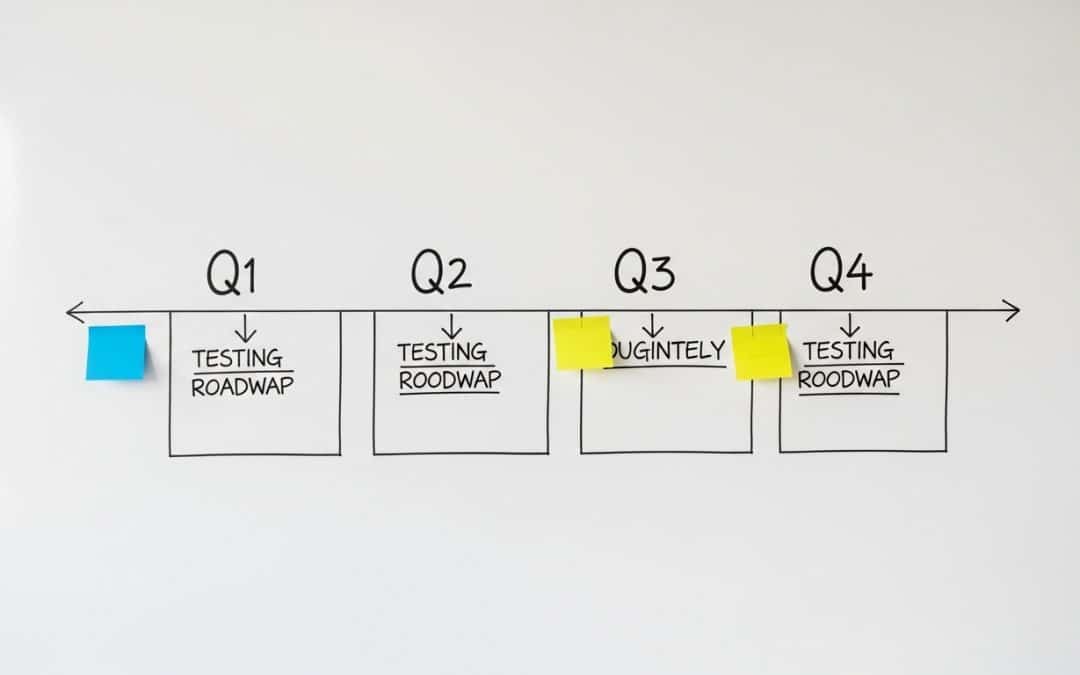
A CRO strategy in South Africa that produces compounding revenue improvements is built as a 12-month structured programme — not a series of ad hoc tests run whenever someone in the team has a hypothesis. Most South African businesses that invest in CRO and see disappointing results are not running bad tests. They are running tests without a strategy: no baseline measurement, no test prioritisation framework, and no systematic implementation of winning variants.
This guide sets out a proven 12-month CRO strategy structured around the Conversion Multiplier™ — the four-quarter sequencing framework that produces consistent, compounding conversion rate improvements for South African businesses.
The strategy applies to South African ecommerce stores, B2B lead generation websites, and landing page programmes — and follows the same four-quarter logic across all three: measure first, fix the biggest leaks, test methodically, then compound the wins across your full digital marketing programme.
Quick Answer
A proven CRO strategy in South Africa follows a four-quarter structure: Q1 establishes baseline measurement and identifies the three highest-impact conversion gaps; Q2 fixes structural conversion barriers and launches the first A/B tests; Q3 tests the mid-funnel (product page copy, imagery, pricing presentation, and cart recovery); Q4 systematises the wins and applies the compounded conversion rate improvement across all paid channels. South African businesses following this sequencing consistently achieve 0.5–1.5 percentage point improvement.
Running A/B tests on your South African website without a documented 12-month CRO strategy — and not seeing the compounding improvements you expected?
Get Your Free CRO Strategy SessionCRO Strategy South Africa: Why Most South African CRO Programmes Fail to Compound
A CRO programme that does not compound is a programme that has not been structured correctly. Most South African businesses run CRO tests in isolation — one test on the product page hero image, one test on the CTA button colour, one test on the checkout form layout — without a framework that connects these tests to a strategic priority and builds each test on the insight from the previous one.
The result is what South African CRO practitioners call "the flat line" — individual test wins that never produce a sustained upward trend in overall conversion rate. Each test win is real, but because the tests are not sequenced strategically, they do not compound. The hero image test wins 8% more conversions from product page visitors. But the checkout flow is losing 78% of those visitors, and the win is neutralised by the downstream leak. Our conversion rate optimisation guide for SA explains how to map the whole funnel first, so each test targets the leak that matters before you polish the pages above it.
The Conversion Multiplier™ — Why Sequencing Beats Volume in South African CRO
The Conversion Multiplier™ is the principle that CRO tests should be sequenced to address conversion leaks from the top of the funnel to the bottom — so that each fix compounds the value of every subsequent fix.
Fixing the checkout flow before the product page is the correct sequencing — because the checkout fix generates revenue from the 97–98% of product page visitors not improved by a product page test alone. Sequence matters more than volume.
CRO Strategy South Africa: Q1 — Measurement Foundation (Months 1–3)
Quarter one establishes the measurement infrastructure, completes the full conversion audit, and identifies the three highest-impact conversion gaps that the subsequent quarters will address in sequence. No tests are run in Q1. This phase is diagnostic — and skipping it is the single most common cause of CRO programme failure for South African businesses.
Month 1 — Analytics Configuration and Baseline Measurement
Month one installs and verifies every measurement tool required for a rigorous CRO programme. Google Analytics 4 with ecommerce tracking verified (purchase events firing correctly), a heatmap and session recording tool installed (Microsoft Clarity for stores under 50,000 monthly sessions, Hotjar for larger sites), and Google Search Console confirming no crawl errors that could be suppressing indexing of key conversion pages.
The baseline metrics measured in month one become the benchmark against which every subsequent month's performance is compared: overall store conversion rate, product page conversion rate, add-to-cart rate, cart-to-checkout conversion rate, checkout completion rate, and mobile vs desktop conversion rate gap.
Month 2 — Full Conversion Audit
Month two runs the complete conversion audit across all five stages of the South African conversion funnel: landing page to product page, product page to add-to-cart, add-to-cart to checkout initiation, checkout initiation to purchase completion, and post-purchase to repeat visit. Each stage is assessed against South African ecommerce benchmarks and the specific product category's conversion expectations.
The audit produces a prioritised list of conversion gaps ranked by expected revenue impact. The three gaps with the highest expected revenue impact per fix are selected for Q2 and Q3 treatment. All other gaps are documented for Q4 or the year-two programme.
Month 3 — South African-Specific Conversion Barrier Assessment
Month three adds the South African-specific conversion barrier assessment — the overlay of local market factors that global CRO frameworks routinely miss. This includes: PayFast and Peach Payments trust badge placement and visibility, The Courier Guy and Aramex delivery timeline display on product pages, South African mobile network performance testing (pages tested on actual South African mobile data speeds, not laboratory conditions), and price anchoring assessment for South African consumer price sensitivity patterns.
Want the full Q1 audit and baseline measurement completed for your South African business — with the three highest-impact conversion gaps identified and prioritised before any test budget is committed?
Get Your Free Q1 CRO AuditCRO Strategy South Africa: Q2 — Structural Fix and First Tests (Months 4–6)
Quarter two implements the structural fixes identified in Q1 — the conversion barriers that do not require A/B testing because they are definitively broken — and launches the first A/B tests on the highest-impact page elements identified in the audit.
Month 4 — Structural Fixes (No Tests Required)
Some conversion barriers are not hypotheses — they are confirmed problems that do not require testing to validate. A checkout flow requiring account creation before purchase is confirmed to reduce conversion rates for South African shoppers sceptical about committing personal data to a new brand. A product page with a single image and no reviews is confirmed to underperform against South African consumer trust requirements. These structural fixes are implemented in month four without testing.
Month 5 — First A/B Tests: Checkout and Trust Layer
Month five launches the first A/B tests on the checkout and trust layer — the stage of the South African conversion funnel with the highest revenue impact per percentage point of improvement. According to Shopify's enterprise CRO guide, accelerated checkout tools increase conversions by up to 50% over guest checkout — making checkout flow optimisation the highest-leverage CRO test available to most South African businesses at this stage.
Month five tests typically include: guest checkout vs account creation as default, PayFast vs card as the displayed default payment method, and one-page vs multi-step checkout layout. These tests run for 4–6 weeks depending on South African traffic volume — long enough to reach 95% statistical significance at most store traffic levels.
Month 6 — First Test Results and Implementation
Month six implements the winning variants from month five and launches the second round of A/B tests on the product page trust layer. Tests typically include: customer review display format (star rating summary vs full review feed), product imagery configuration (single hero vs image gallery), and delivery timeline display. Month six produces the first meaningful conversion rate measurement — structural fixes from month four and checkout test winners should produce a measurable uplift on baseline.
Q3 — Mid-Funnel Testing and AOV Optimisation (Months 7–9)
Quarter three focuses the CRO testing programme on the mid-funnel — product page copy, pricing presentation, cross-sell and upsell mechanics, and cart recovery — and begins optimising average order value alongside conversion rate.
Month 7 — Product Page Copy and Value Proposition Testing
Month seven tests the product page copy — specifically the value proposition positioning and the way South African consumer concerns are addressed. South African buyers respond differently to product descriptions than UK or US buyers: price-value framing is more important, local context anchoring (SA Rand pricing, local delivery language, local return policy clarity) has a disproportionate impact on conversion, and social proof from South African customers carries more weight than global review volume.
Month 8 — Cart Recovery and Abandonment Intervention
Month eight introduces cart abandonment intervention testing — a high-value area that most South African CRO strategies address too late. For South African ecommerce stores, cart abandonment rate is typically 70–80%. A 10% reduction in cart abandonment on a store with 200 monthly add-to-cart events generates 20 additional purchases per month at zero additional ad spend. Month eight tests typically include: exit-intent overlay copy, cart abandonment email timing, and social proof placement in the cart.
Month 9 — Upsell and Cross-Sell Mechanics
Month nine adds average order value optimisation to the conversion rate testing programme. South African online stores that improve their AOV by 15–25% while maintaining conversion rate generate disproportionate revenue improvement — because the higher AOV applies to every order already being generated by the improved conversion rate from Q1–Q3. Month nine tests typically focus on post-add-to-cart upsell placement, complementary product recommendation format, and minimum order value threshold display for free delivery offers.
Why AOV Optimisation Belongs in Q3, Not Q1
Adding AOV optimisation in Q3 — after the checkout flow, trust layer, and product page tests have been implemented — generates disproportionate returns because the higher AOV applies to every purchase already generated by the improved conversion rate. A South African online store that improves conversion rate from 0.8% to 1.8% in Q1–Q2 and then improves AOV by 20% in Q3 has not added two separate wins — it has multiplied them.
Every additional purchase now generates 20% more revenue. AOV optimisation multiplies the gains from the improved conversion rate; it does not simply add to them.
Q4 — Systemise and Scale (Months 10–12)
Quarter four systemises the Q1–Q3 wins, locks in the testing cadence for year two, and applies the compounded conversion rate improvement across the full digital marketing programme to show the amplified return on every channel's investment.
Month 10 — Implement All Remaining Audit Findings
Month ten implements the remaining audit findings from Q1 that were deprioritised in favour of the highest-impact fixes in Q2–Q3. By month ten, the CRO programme has produced a measurable baseline improvement — typically 0.4–0.8 percentage points — and the additional fixes from the original audit add incremental improvement on top of this foundation.
Month 11 — Personalisation Layer Planning
Month eleven plans the personalisation layer for year two: the ability to show different product page content, pricing presentation, and social proof to different South African audience segments — returning customers vs first-time visitors, mobile vs desktop, and paid traffic vs organic. Personalisation requires 12 months of accumulated CRO data to implement effectively — which is exactly what the Q1–Q3 programme has produced.
Month 12 — Year-Two Programme and Cross-Channel ROI Calculation
Month twelve builds the year-two CRO programme and calculates the full cross-channel ROI from the 12-month conversion rate improvement. The cross-channel ROI calculation shows how the improved conversion rate has reduced the effective cost per sale on every paid channel running simultaneously — Meta Ads, Google Shopping, Google Search — and quantifies the compounded return across the full digital marketing investment.
Real Before and After Results: 12-Month Conversion Multiplier™ Programme
A Pretoria-based homeware and interior décor online store implemented the 12-month Conversion Multiplier™ CRO strategy from a baseline store conversion rate of 0.8%. Monthly traffic was stable at 22,000 visitors and average order value was R640. Monthly revenue at baseline was R112,640. The 12-month CRO programme was managed at R14,500 per month. Results at month 12:
| Metric | Month 1 (Baseline) | Month 12 |
|---|---|---|
| Monthly website visitors | 22,000 | 22,000 (unchanged) |
| Store conversion rate | 0.8% | 2.3% |
| Average order value | R640 | R790 |
| Monthly orders | 176 | 506 |
| Monthly revenue | R112,640 | R399,740 |
| Meta Ads cost per sale | R340 | R118 |
| Total CRO investment (12 months) | R0 | R174,000 |
| Cumulative additional revenue | — | +R1,726,000 |
Monthly revenue grew from R112,640 to R399,740 — a +255% increase — with zero increase in website traffic. Conversion rate improved from 0.8% to 2.3%, and average order value improved from R640 to R790 through the Q3 upsell optimisation work. Meta Ads cost per sale dropped from R340 to R118. Against a total 12-month CRO investment of R174,000, the cumulative additional revenue generated was R1,726,000 — a 9.9:1 return.
How Growth Pulse Media Executes the Conversion Multiplier™ CRO Strategy for South African Businesses
Growth Pulse Media executes the Conversion Multiplier™ CRO strategy for South African businesses — covering ecommerce stores, B2B lead generation websites, and landing page programmes. Every engagement begins with the Q1 measurement foundation: Google Analytics 4 verification, heatmap installation, baseline metric capture, and a full conversion audit producing a ranked gap list before any test is designed or budget committed.
We built and scaled a large South African ecommerce business ourselves — which means we understand the South African-specific conversion barriers that global CRO frameworks miss: PayFast trust dynamics, South African mobile network performance constraints, local courier delivery expectation management, and South African consumer price sensitivity patterns. All CRO work is executed in-house. We work with a limited number of South African clients so every business receives senior-level attention throughout the 12-month programme.
Who This Is NOT For
The 12-month CRO strategy is not the right priority for every South African business right now.
Your website receives fewer than 4,000 monthly visitors. The 12-month Conversion Multiplier™ strategy requires sufficient traffic to run A/B tests that reach statistical significance within a 4–8 week window. A South African website receiving fewer than 4,000 monthly visitors cannot complete meaningful A/B tests — tests would need to run 3–5 months each, making the four-quarter cadence unworkable. For South African businesses below this threshold, increasing traffic through paid advertising and SEO comes first.
You want to run a CRO programme without a baseline measurement phase. The Q1 measurement foundation is not optional — it is the input that makes every subsequent test and fix strategically correct rather than arbitrary. South African businesses that skip straight to A/B tests without establishing baseline metrics and identifying the three highest-impact gaps will run tests that do not address the actual conversion barriers on their website.
The Q1 phase takes 8–12 weeks — and is what makes the entire programme compound.
You need immediate revenue improvement in under 60 days. The 12-month CRO strategy is built for compounding — the most significant revenue improvements appear in months 4–9 as structural fixes, checkout optimisation wins, and product page test winners accumulate. A South African business that needs immediate revenue improvement should first invest in paid advertising, which produces results within 2–4 weeks of launch.
CRO and paid advertising can run simultaneously — but paid advertising should not be the first channel cut when immediate revenue is the priority.
Your product or pricing has not yet been validated by market demand. CRO optimises the mechanics of converting visitors who are already interested in your product. It cannot fix a product that South African consumers do not want at the price you are offering, or a value proposition that does not clearly differentiate from cheaper or more established alternatives.
A South African business with a conversion rate below 0.5% and fewer than 100 monthly visitors is almost certainly experiencing a product-market fit problem — not a conversion mechanics problem. Resolve product-market fit before beginning a CRO programme.
Ready to build a documented 12-month CRO strategy for your South African business — with the three highest-impact conversion gaps identified and a quarterly test roadmap delivered before any test budget is committed?
Get Your Free 12-Month CRO Strategy BriefCRO Strategy South Africa: Frequently Asked Questions
What is a CRO strategy in South Africa?
A CRO strategy in South Africa is a documented 12-month programme defining which conversion barriers to address in which order, how each test result will be implemented, and how the accumulated wins will compound across the full digital marketing investment.
The most effective CRO strategy for South African businesses follows a four-quarter sequencing: Q1 measurement and audit, Q2 structural fixes and first tests, Q3 mid-funnel testing and AOV optimisation, and Q4 systemisation. Sequencing matters as much as the tests.
How long does a CRO strategy take to produce meaningful results in South Africa?
A CRO strategy in South Africa produces its first measurable conversion rate improvement at the end of Q2 — months 4–6 — when structural fixes and the first checkout optimisation tests have been implemented. Meaningful cumulative improvements — where the compounding of multiple test wins is visible in monthly revenue — typically appear at months 6–9. A 12-month programme following the Conversion Multiplier™ sequencing consistently produces 0.5–1.5 percentage point conversion rate improvements by month 12.
What is the Conversion Multiplier™ CRO framework?
The Conversion Multiplier™ is Growth Pulse Media's 12-month CRO strategy framework for South African businesses. It is based on the principle that CRO tests should be sequenced to address conversion leaks from the top of the funnel to the bottom — so that each fix compounds the value of every subsequent fix.
Fixing checkout before the product page generates more revenue per test, because checkout fixes benefit the 97–98% of product page visitors not affected by a standalone page test.
What South African-specific factors affect CRO strategy?
South African CRO strategies must account for factors that global frameworks routinely miss: PayFast and Peach Payments trust badge placement (South African consumers have higher payment trust requirements than global benchmarks assume), mobile network performance (pages must convert at 3G data speeds, not laboratory conditions), local courier delivery timeline display (The Courier Guy and Aramex timelines should be stated explicitly), and South African consumer price sensitivity in product value framing.
How does CRO strategy interact with paid advertising for South African businesses?
A CRO strategy compounds the return on paid advertising by reducing the effective cost per sale on every paid channel simultaneously. A South African business running R15,000/month on Meta Ads at a 0.8% conversion rate pays approximately 2.9x more per sale than the same business at a 2.3% conversion rate — because it needs significantly more clicks to generate the same number of sales.
The 12-month CRO programme's conversion rate improvement applies directly to Meta Ads, Google Shopping, and Google Search traffic at the same time — reducing cost per sale across all three channels simultaneously.
How do I prioritise CRO tests for my South African website?
Prioritise CRO tests for your South African website using the funnel-sequencing principle: test the conversion stage with the highest abandonment rate first. For most South African ecommerce stores, this means checkout flow first (70–80% abandonment), then product page (95–97% non-conversion), then landing page (60–70% bounce). Within each stage, prioritise headline and value proposition tests — they produce larger lifts than button colour or layout tests.
The South African businesses that generate the most from a CRO strategy are not the ones with the highest test velocity — they are the ones that sequence their tests correctly and implement winners before moving to the next experiment.
Ready to Build a Documented 12-Month CRO Strategy for Your South African Business — With the Three Highest-Impact Conversion Gaps Identified and a Quarterly Test Roadmap Delivered Before Any Test Budget Is Committed?
Growth Pulse Media executes the Conversion Multiplier™ CRO strategy for South African businesses — covering ecommerce stores, B2B lead generation websites, and landing page programmes. We will deliver a one-page 12-month CRO strategy brief specific to your website, traffic volume, and current conversion rate within 24 hours of your enquiry. No obligation — we will get back to you within 24 hours.
Get Your Free 12-Month CRO Strategy Brief