
 Add to Preferred Sources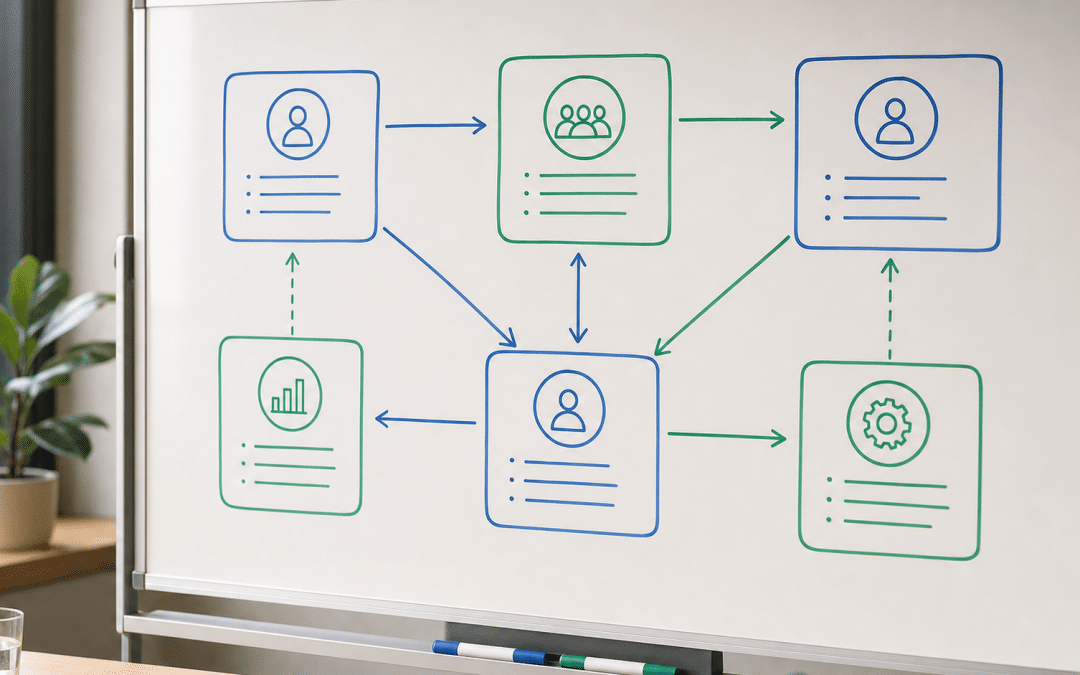
The B2B buying committee explained in one sentence: it is the group of people — typically four to thirteen — who collectively evaluate, influence, and approve a business purchase before any contract is signed. For South African business-to-business sellers, understanding this group is no longer optional. Our B2B lead generation guide for South Africa makes the point repeatedly — single-contact outreach breaks against committee-driven purchases, and most mid-market and enterprise deals in SA are exactly that.
The shift has been measurable. In 2015, the average purchasing committee had 5.4 members. By 2023, Gartner put that number at 8.2. Current benchmarks show enterprise deals regularly involving 8 to 13 stakeholders — each with a different agenda, different information needs, and a different definition of risk. A campaign that reaches one of them rarely closes the deal.
In South Africa's relationship-driven market, the dynamics carry additional weight. Large corporates and government buyers apply B-BBEE supplier scoring alongside conventional financial and technical criteria. Procurement teams in sectors like mining, construction, and financial services move deliberately. Government and SOE purchasing cycles routinely run six to eighteen months. Knowing who sits on the committee — and what each person actually cares about — is the difference between a deal that stalls after the first meeting and one that reaches contract.
Quick Answer
A B2B buying committee is the cross-functional group of people who influence or approve a significant business purchase — typically four to six stakeholders in SMB deals, and eight or more in enterprise sales. In South Africa, the committee almost always includes an end user, a technical evaluator, a financial approver, and a procurement officer. Winning a deal means addressing each role's specific concern, not just finding the person with budget authority. The B2B buying committee explained here maps all six core roles and what each one needs to say yes.
In This Guide
What is a B2B buying committee?
How large is the typical committee?
The six key roles and what each one needs
How committees actually make decisions
Selling to a committee and not sure who's in the room?
Send us your current outreach sequence and we will identify where single-contact targeting is costing you deals.
Review My OutreachB2B Buying Committee Explained: The Core Concept
A business-to-business buying committee is the full set of people inside a target company who shape a purchase decision — not just the person who signs the order. This includes those who identify the need, those who evaluate vendors, those who manage technical and compliance risk, those who control the budget, and those who formally approve spend. The committee rarely appears on an org chart as a named group. It assembles around a specific purchase, then disperses.
The committee concept was formalised by CEB (now Gartner), which found in the mid-2010s that most significant enterprise purchases involved multiple decision-makers with competing priorities. The practical implication for sellers: a strong relationship with one enthusiastic contact does not guarantee a deal. Another member the seller has never spoken to can veto or stall the process at any point — and in most enterprise deals, that happens.
How Large Is the Typical B2B Buying Committee?
B2B buying committees average 4.6 distinct decision-maker titles in SMB deals, 5.6 in mid-market, and 6.0 identified contacts in enterprise — rising to 11 when passive approvers are counted (Gartner, 2024). Belkins' 2026 B2B Buying Committee Study, which analysed outreach data across thousands of deals, breaks the picture down by company size:
| Company Size | Avg Decision-Maker Titles | Most Common First Contact |
|---|---|---|
| SMB (<200 employees) | 4.6 | CTO (65.4% of deals) |
| Mid-market (200–1,000) | 5.6 | CTO (70.9% of deals) |
| Enterprise (1,000+) | 6.0 identified contacts | CTO (77.1% of deals) |
Those Belkins figures measure direct outreach contacts — the people a seller actually identified and contacted. For large enterprise software or services deals, Gartner's 2024 research puts the full committee (including passive influencers and approvers who never join a call) at 11 stakeholders. For mega-deals, that number climbs further. The Starr Conspiracy's 2025 benchmarks show that enterprise sales cycles for complex deals above $100K ACV average 11.5 months, and mid-market cycles average 5.8 months. In South Africa, government and SOE procurement runs longer still: six to eighteen months is typical under SA's supply chain management framework, driven by formal tender processes, mandatory evaluation committees, and multi-tier approval chains.
In SA financial services, the pattern from the Belkins data sharpens further: the CEO is involved in 51.9% of deals and the CFO in 44.3% — both well above cross-industry averages. In manufacturing, manager-level roles dominate at 50.6%, reflecting the decentralised, plant-level decision-making common in that sector.
Key Takeaway: Size Determines Cycle
The larger the company, the more stakeholders are involved — and the longer the sales cycle. If you are selling into enterprise accounts or SA government entities, build your outreach plan around a committee of eight or more, not a single champion. Deals that assume a two-person decision get stuck when the third and fourth signatories appear in month four.
The Six Key Roles on a B2B Buying Committee
Six distinct roles shape most significant B2B purchases: the Champion, Economic Buyer, Technical Buyer, End User, Influencer, and Blocker — each requiring different evidence before they will move forward. They may overlap (one person sometimes carries two), but the agendas rarely combine cleanly.
1. The Champion
The champion wants the purchase to happen and will advocate for it internally when you are not in the room. Champions are typically end users or department heads who have felt the problem directly. They lack formal budget authority but drive the internal conversation — equip them with shareable one-pagers, ROI calculations, and answers to the objections you know will surface. An unprepared champion loses the internal argument.
Test their commitment early by asking them to arrange an introduction to the economic buyer. If they hesitate, they are not yet a champion; they are a contact who likes your demos.
2. The Economic Buyer
The economic buyer controls budget authority and evaluates financial risk. In SA mid-market companies this is usually the CFO or MD; in enterprise accounts it may be a VP-level executive who never joins early calls but holds a quiet veto. Gartner research consistently finds that the economic buyer approves deals others say no to — and kills deals everyone else has already agreed to.
Reach this person earlier than feels natural. Lead with a concise financial case — payback period, cost-per-result, downside risk — and keep your pitch under three minutes. In South Africa's financial services sector specifically, the CEO participates in 51.9% of deals and the CFO in 44.3% — plan for both from early in the process.
3. The Technical Buyer
The technical buyer evaluates whether the solution actually works with the existing environment: IT, security, data architecture, or RevOps depending on the industry. This person does not usually initiate a deal and may not endorse it enthusiastically, but they can veto it on compliance, integration, or data security grounds. In SA deals, POPIA data processing agreements are increasingly a hard requirement before the technical buyer signs off. Share your security documentation, data flow diagrams, and sub-processor lists early — proactively addressing compliance concerns is faster than waiting for a formal questionnaire.
4. The End User
End users live with the product or service daily. They rarely sign contracts, but a vocal group of unhappy users can sink a deal after the contract is drafted — or erode retention fast enough that renewal becomes uncertain. Run genuine product demos with actual end users, not just polished executive presentations. In the B2B sales funnel, end user sentiment tends to be underweighted early and overweighted late. Engage them in the middle stages rather than waiting.
5. The Influencer
Influencers shape committee opinions through domain credibility rather than formal authority. This might be a principal consultant, a recently hired industry specialist, or an external advisor the economic buyer trusts. LinkedIn's own platform research notes that between 3.1 and 4.6 distinct functional groups (IT, finance, legal, HR) routinely influence a single business-to-business purchase. Identifying who the economic buyer defers to on technical or strategic questions — and reaching that person separately — is one of the highest-leverage moves in a complex deal.
6. The Blocker
The blocker has a reason to resist: a competing priority, a rival vendor relationship, change aversion, or a concern nobody has yet addressed directly. Blockers are rarely adversarial by nature — most are carrying a legitimate objection that the sales process has failed to surface. Procurement officers are common blockers in SA when supplier B-BBEE credentials do not meet the company's preferential procurement policy. Rather than trying to route around a blocker, use your champion to learn what specific concern is driving the resistance, then address it with data. Ignoring a blocker is the most common reason committee-stage deals collapse.
Struggling to build pipeline that reaches every stakeholder?
Tell us your deal size and target sector — we will assess whether your current outreach fits a committee buying cycle and where the gaps are.
Assess My FitHow B2B Buying Committees Actually Make Decisions
B2B buying committees make decisions through messy internal consensus — not a linear sign-off chain — and 67% of that process is already complete before they contact any vendor (Forrester, 2023). By the time your first call happens, the committee has already defined the problem, consulted peers, and read third-party content. Eighty-one per cent arrive at that first vendor meeting with a pre-formed shortlist. Being on that shortlist before the first meeting is now the most competitive part of B2B lead generation.
Once vendor evaluation begins, decisions are made by committee consensus — which is messy. Gartner's May 2025 survey found that 74% of buying teams show unhealthy internal conflict during the evaluation process. That conflict is rarely visible to sellers. The deal goes quiet, internal alignment is negotiated, and one of three things happens: consensus forms around your solution, consensus forms around a competitor, or the deal stalls indefinitely with no official decision. Seventy-seven per cent of business buyers describe their most recent purchase as very complex or difficult — which means internal drag is the rule, not the exception.
Key Takeaway: Win the Shortlist Before the First Call
Sixty-seven per cent of the buying journey happens before any vendor contact. That means your content — thought leadership, case studies, LinkedIn presence, LinkedIn lead generation — must reach committee members while they are still defining the problem, not just when they begin evaluating vendors. By the time a committee member responds to a cold message, they have usually already formed an opinion about your category and your likely competitors.
How to Sell to a B2B Buying Committee in South Africa
Multi-thread from day one. Research from Instantly.ai's enterprise buying analysis shows that multi-threading across all committee roles boosts win rates by 130% on deals over $50K versus single-contact strategies. In B2B lead qualification terms, a deal with only one internal contact is not qualified pipeline. As a practical qualification threshold, map to at least three distinct stakeholder roles before treating any account as real pipeline. The Starr Conspiracy's 2024 data puts win rates at 34% when six or more stakeholders are mapped, versus 11% when fewer than three are engaged.
Build content for each role. The champion needs shareable proof. The economic buyer needs a concise financial case — as a practitioner rule of thumb, short enough to be read in under two minutes. The technical buyer needs compliance documentation, not a sales deck. The blocker needs their specific concern named and addressed, not generic reassurance. Most SA B2B marketing produces one brochure aimed at nobody in particular. Role-specific assets — even simple one-pagers — move deals faster because each committee member receives the information actually relevant to their sign-off criteria.
Account for SA-specific buying dynamics. South Africa's B2B market is widely characterised as relationship-driven — a dynamic SA practitioners consistently observe. In practice, senior stakeholder access most often comes through trusted network connections rather than cold channels, making LinkedIn presence and referral strategies particularly valuable in the SA context. B-BBEE supplier credentials are a genuine gate in many corporate and government procurement processes — sellers without competitive B-BBEE ratings need either strong enough ROI to offset the preference points gap or a partnership structure that addresses it. Account-based marketing in South Africa works precisely because it allows relationship-building across the full committee rather than waiting for a single inbound inquiry to do the work.
Plan for longer cycles and use them. If your target accounts include SA government entities or large parastatals, the six to eighteen month procurement timeline is not a problem to solve — it is a planning constraint to build around. Appointment setting with multiple committee members across that timeline creates the multi-threaded relationships that win formal tenders. Use the pre-RFP period to make your solution the default option inside the committee, so that by the time the formal process opens, you are already on the shortlist.
Key Takeaway: The Goal is Internal Consensus, Not Individual Conviction
No one on the committee makes the final B2B purchase alone. Your job is to equip each stakeholder to advocate internally for your solution when you are not in the room. A champion who cannot answer the CFO's ROI question, a technical buyer who has not received your security documentation, or a procurement officer whose B-BBEE concern was never addressed — any one of these stalls the deal. Build for consensus, not conversion.
Why South African Businesses Choose Growth Pulse Media
Most B2B lead generation approaches optimise for volume — more contacts, more sequences, more touchpoints with the same person. With the B2B buying committee explained clearly, the problem becomes visible: committee-driven deals require fewer targets, deeper penetration across the full stakeholder group, and content built for each decision-maker's specific sign-off criteria. That is what our B2B lead generation service for South Africa is built around.
Dirk and the GPM team have run campaigns across SA's most committee-heavy sectors — professional services, manufacturing, financial services, and construction — where five to eight internal approvers is a standard deal structure, not an edge case. We work with a limited number of accounts at any time so that multi-stakeholder outreach receives the senior attention it requires.
We do not run generic sequencing tools against a cold contact list and call it pipeline. We map the committee, build role-specific messaging, and create the digital footprint — LinkedIn, content, direct outreach — that earns your place on the shortlist before the evaluation process formally begins.
Who B2B Buying Committee Strategy Is NOT For
Ready to build outreach that reaches every decision-maker?
Share your target account list and we will run a committee mapping audit on your top five prospects — identifying who needs to be reached, in what order, with what message.
Request a Committee AuditFrequently Asked Questions
What is a B2B buying committee?
A B2B buying committee is the cross-functional group of people inside a company who collectively influence or approve a significant purchase. It typically includes an economic buyer (budget authority), a technical buyer (compliance and integration), end users, a champion (internal advocate), influencers (domain experts), and sometimes a blocker (risk-averse gatekeeper). The committee assembles around a specific purchase rather than existing permanently on an org chart.
How many people are typically on a B2B buying committee?
Belkins' 2026 study found averages of 4.6 decision-maker titles for SMB deals, 5.6 for mid-market, and 6.0 for enterprise outreach contacts. Gartner's 2024 research, which includes passive influencers and approvers who may not appear in outreach, puts the full enterprise committee at 11 stakeholders. For mega-deals and SA government tenders, the formal evaluation committee can be larger still.
How does the buying committee process work in South Africa?
In South Africa, the typical business-to-business buying committee includes an end user, a technical evaluator, a financial approver, and a procurement officer. B-BBEE supplier scoring adds a compliance dimension that often brings procurement into the process earlier. Government and SOE deals follow formal tender structures with evaluation committees, mandatory documentation requirements, and procurement timelines of six to eighteen months. Private-sector mid-market deals are faster but still relationship-driven, with warm introductions carrying significant weight.
What is the difference between a champion and an economic buyer?
The champion wants the purchase to happen and advocates for it internally but does not control the budget. The economic buyer controls budget authority and holds the final financial veto — they can kill a deal everyone else has agreed to, or approve one where others are hesitant. In practice, a strong champion will help you access the economic buyer and frame the financial case; without that introduction, cold outreach to economic buyers in SA tends to underperform because the relationship has not been established.
Why do B2B deals stall at committee stage?
Most committee-stage stalls happen because internal consensus has not formed, not because a stakeholder explicitly said no — a pattern Gartner's 2025 research found in 74% of buying teams. Common causes in SA: a blocker's concern was never addressed (often B-BBEE or procurement policy related), the economic buyer did not receive a financial case they found compelling, or the champion lacks the internal credibility or materials to drive the conversation forward. Identifying which specific role is holding the decision is the first step to unlocking it.
Build Pipeline Across the Full Buying Committee
GPM runs multi-stakeholder B2B lead generation campaigns built around SA's committee-driven market — mapping key roles, building role-specific messaging, and creating the LinkedIn and content presence that earns you a place on the shortlist before formal evaluation begins. We work with a limited number of accounts at once, which means senior attention on every campaign, not templated sequences.
No obligation — we will respond within 24 hours.
Start the Conversation