
 Add to Preferred Sources
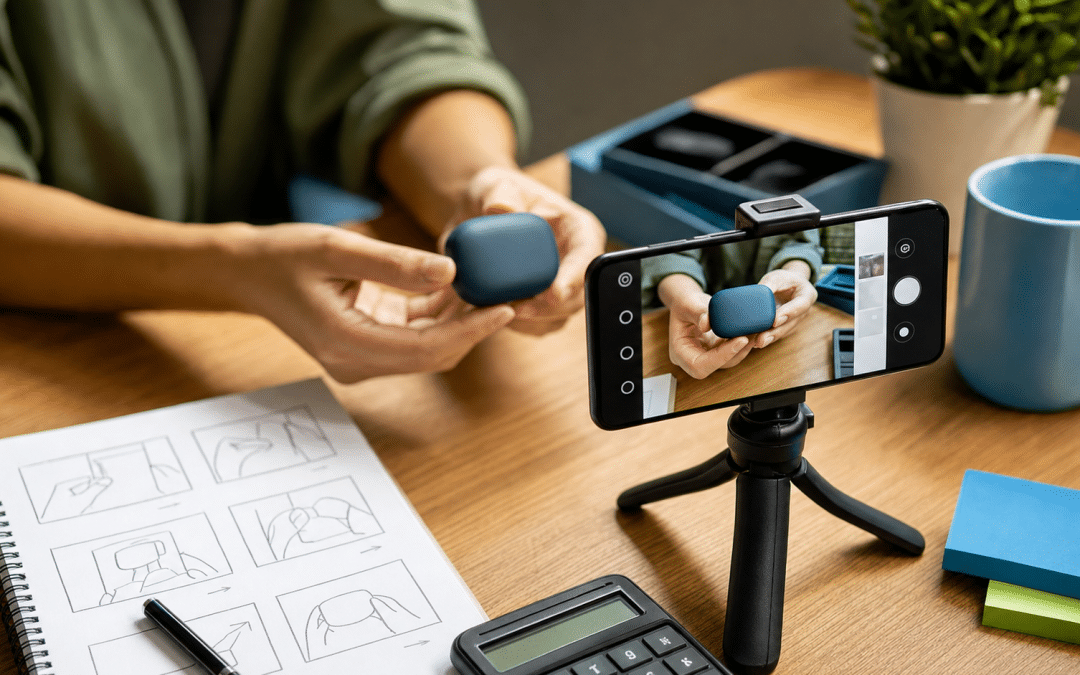
UGC ads are paid adverts built from video or images made by a customer or a creator rather than a brand production team, usually shot on a phone and delivered in a native, unpolished style. UGC ads in South Africa sit in the creative layer of the Meta Ads in South Africa pillar: the targeting and budget stay the same, but the thing people see is a person talking, not a studio shoot.
This playbook prices a UGC test in Rand from published inputs, shows which of the four formats fits which situation, and covers the licence, consent and disclosure checks that decide whether a creator's video can legally run as your ad. For testing method after the first batch lands, see creative testing without wasting spend.
Quick Answer
UGC ads in South Africa are creator-made or customer-made videos that you license and run as paid adverts. A five-video test costs about R23,500 before platform fees, VAT, editing and extra usage rights: R7,500 for creators at a typical R1,500 a video, plus R16,000 of media. The media figure assumes 50,000 impressions per video. Get a written paid-use licence and a clear ad disclosure before any video runs.
Jump to
Not sure which creative format to test first?
Send us your current best-performing ad and your product page, and we will tell you which creator format to try against it.
The Four Formats a South African Brand Can Run
A UGC format is defined by who owns the footage and who controls the account it runs from, and that choice decides your cost, speed and legal exposure. There are three true UGC formats for creator UGC ads, plus a fourth that borrows the look without the source, and they are not interchangeable.
| Format | How it works | Main risk | Best for |
|---|---|---|---|
| Customer content, reposted | A customer posts about you; you ask permission and run it as an ad | No written permission, or a person on camera who did not agree to paid use | Brands with steady organic mentions and tagged posts |
| Commissioned creator video | You brief a creator, pay a fee and license the footage; you upload it from your own page | Licence too short or too narrow for the campaign you plan | Stores that need a fresh batch of hooks to test |
| Partnership ad from the creator's handle | The creator gives permission on Meta and the ad runs from their handle with your brand tagged (account control to be confirmed in Meta's help pages) | Account-level permission can be revoked by the creator, so the ad can stop | Longer creator relationships where the creator's audience matters |
| UGC-style, not UGC: staff-shot | Your own team films in a phone-native style | Looks staged, because it is | Cheap first tests before paying anyone |
Partnership ads are Meta's name for what used to be called branded content ads. A guide from the ad-tooling company Adamigo describes two routes: content-level permission, where the creator shares a code for one post or Reel, and account-level permission through the Partnership Ads Hub, which the creator can revoke. Meta's own help pages returned errors when we checked, so confirm the current steps in the Meta Business Help Centre before you brief anyone.
Takeaway: pick the format by who owns the account
Reposted customer content and creator video you license run from your page. A partnership ad runs from the creator's handle. The first two give you control; the third gives you the creator's audience but depends on their ongoing permission.
What Do UGC Ads Cost in Rand? A Five-Video Test
UGC ads cost two separate bills: the creator fee for the footage and the media spend that puts it in front of people. Plan both before you brief anyone; at a R1,500 fee the media is the larger line, but at the top of Lit's range the creator fee is the larger line.
For creator pricing, the South African platform Lit states on its own page (as seen in November 2026) that per-video fees run from R500 to R5,000+, with most creators around R1,500. Its packaged UGC offer is R2,500 a video.
On top of creator fees, Lit lists a platform plan of R900 a month plus 5% commission on a three-month minimum, or twice the monthly fee for a once-off campaign. Those are one marketplace's figures, so treat them as a planning range, not a national rate card.
For media, the SA Digital Cost Index (August 2026) puts the average Meta CPM for SA-targeted campaigns at R64 (US$3.92), with a range of R55–R74, and the median link click-through rate at 2.57%. The index converts dollars at R16.42/USD, an index assumption rather than a live rate.
The arithmetic, with inputs
Creators: 5 videos x R1,500 = R7,500. At Lit's packaged R2,500 a video, five videos cost R12,500 and three cost R7,500.
Media: as a working assumption, give each video 50,000 impressions. 5 x 50,000 = 250,000 impressions; 250,000 / 1,000 x R64 = R16,000. Across the index CPM range of R55 to R74, the media line scales in proportion, so recalculate with the CPM you actually see.
Total: R7,500 + R16,000 = R23,500, or R4,700 per tested video (R1,500 fee + R3,200 media). At R2,500 a video it is R12,500 + R16,000 = R28,500.
Clicks: 50,000 impressions x 2.57% median CTR = 1,285 clicks per video, if your ad performs at the SA median.
The 50,000-impression figure is a rule of thumb, not a statistical threshold. It is enough to compare videos on click-through rate, because each collects over a thousand clicks at the median. It is rarely enough to compare purchases or leads, which are far rarer events. Judge the first round on click-through, then move spend to the winner.
Add the platform fees above, VAT, and any editing, captions or extra usage rights as separate lines. If you are a VAT vendor, check with your accountant how creator invoices are treated. For the production comparison, see what video production costs in South Africa; a creator-led batch is a different cost structure from a studio day.
Quoted a creator package that feels off?
Send us the quote and we will check the fee, the licence length and the media budget against each other.
Briefing a Creator So the Footage Is Testable
A creator brief turns a person's natural style into a set of footage you can actually test, by fixing the few things that must be consistent and leaving the delivery to them. Without it you receive three videos that differ in six ways at once, and the result tells you nothing.
Fix the offer, the product claim and the call to action, and let the creator vary the delivery.
A first round with five different creators compares creator-and-opening combinations, which is fine for finding a winner. To isolate the opening itself, brief one creator for several different first three seconds on the same body in round two, at the cost of extra variants to fund. This is the logic of the Meta Ads hook testing guide, and the structure of a brief is in the Meta Ads creative brief template.
Ask for the raw footage and a clean version without text overlays, so your editor can recut. Specify vertical format and safe zones for Stories and Reels. For the placement side, see Instagram Reels ads in South Africa.
Give the creator real product facts. As a working rule, treat every claim a creator makes in a paid post as your own claim, because you are the advertiser running it. A creator improvising a performance promise on camera becomes your promise the moment the video goes into Ads Manager.
Licences, Consent and Who Can Run What
A UGC licence is the written permission that lets you use someone's footage in paid media, and it must state the platforms, the duration and whether the creator can work for competitors. A casual thank-you in the DMs is not enough; a message that spells out paid use, platforms and duration, and that both sides confirm, is much closer.
Lit's page shows what a typical marketplace default looks like: paid media rights for Meta, TikTok, YouTube and Google, licence durations from three months to perpetual, and extended periods or exclusivity as negotiated add-ons. Whatever the source, put the terms in writing before spend begins, and match the licence length to the length of the campaign you intend to run.
Licence checklist
Name the platforms. State the start date and end date. Say whether you may edit, cut down or add captions. Say whether the creator may feature competitors in the same period. Agree what happens at expiry: the ad is switched off, not left running.
For reposted customer content, ask the person who made it, in writing, for permission to use it as a paid advert. Check that no one else is identifiable on camera, and that music in the clip is cleared for commercial use.
A name, face or handle is personal information, so POPIA may apply to how you use it in an advert. We have not covered the exceptions here; get legal advice on the basis you will rely on rather than assuming a public post is free to reuse.
Takeaway: permission for organic is not permission for paid
A creator or customer agreeing to be tagged does not automatically agree to paid use. Get the paid-media terms, the duration and the platforms in writing before the video is uploaded to Ads Manager.
Disclosure: What Press Coverage Says the ARB Expects
Disclosure of a paid creator relationship means the post itself clearly tells the viewer it is advertising, and press coverage of an Advertising Regulatory Board (ARB) ruling describes that as a shared duty of creator and brand. The ARB publishes social media guidance on its website; we could not read that document directly, so the points below come from press and legal commentary, and you should confirm them against the ARB's text.
Press coverage of the ARB's Superbalist ruling reports that an influencer's promotional code in the bio was not enough; disclosure was needed within the post, using unambiguous terms such as "#AD", "#Advertisement" or "#Sponsored". The same coverage quotes the ruling: "the responsibility does not rest solely with the influencer. Advertisers must also ensure that the influencers they engage with understand and comply with the Code's requirements."
The same reporting says a material connection includes free products, discounts or other forms of value, even without a formal contract. A creator you gave product to, with nothing signed, may still need to disclose.
A separate legal commentary describes the ARB applying a "substance over form" test. Practically, your contract with each creator should require the disclosure, say where it goes, and give you the right to have non-compliant content corrected. Our companion piece on influencer disclosure rules in South Africa goes further into wording and placement, and the broader influencer marketing guide covers organic partnerships.
When a creator's post is boosted as a partnership ad, Meta adds its own labels, reportedly "Paid partnership" on organic posts and "Sponsored" once boosted. Those platform labels are useful, but treat them as a supplement to the creator's own disclosure, not a replacement, until you have confirmed that with Meta and against the ARB's own text.
Running creator content without a disclosure clause?
Send us your current creator terms and we will mark where the paid-use and disclosure wording is missing.
Reading the Results and Replacing Tired Footage
The result of a first creator batch is a ranking of creator-and-opening combinations, not a verdict on the format, and the right response to a winner is to brief a second round around what that video did differently. Compare the videos on click-through first, then on cost per lead or sale only once enough of those events have happened.
If your CTR sits near the 2.57% SA median, the creative is doing its job at the top of the funnel; if it is far below, the opening is the likely problem. If clicks are healthy but sales are weak, the creative may be fine and the landing page or offer is the issue, which is why new footage will not rescue a weak page.
Creator footage wears out like any other creative. When frequency climbs and click-through drops, see Meta Ads creative fatigue explained for the diagnosis, and the Meta Ads creative best practices for what to replace it with. If you run automated placements and creative selection, the Advantage+ for SA stores verdict explains how those interact with a small set of creator videos.
Weak plan
"We will get one influencer to make a video and boost it for a week." One video tests one idea, with no comparison, no licence in writing and no stopping rule.
Stronger plan
Five briefed videos from five creators with the same offer, a written paid-use licence, a disclosure clause, about R3,200 of media behind each, and a pre-agreed rule: scale the best, recut the second, switch off the rest.
Why South African Businesses Choose Growth Pulse Media
South African businesses choose Growth Pulse Media for paid social built from an operator's perspective: Dirk van Greuning built and scaled a large South African ecommerce business before founding the agency, so creative advice starts from cost per sale rather than views. Client numbers are kept limited so senior attention stays on the account, and all work is executed in-house.
The paid side of that work is Meta Ads management in South Africa, alongside Google Ads, GA4 and Shopify. This post is a planning reference for the creative layer, not an offer to source creators.
Who This Is NOT For
A UGC test is the wrong move when the landing page does not convert, there is no media budget behind the video, or the product is claim-heavy and needs compliance review.
A page that does not convert
If visitors from your existing ads do not buy or enquire, new footage will not fix the page. Repair the page first.
No budget for media behind the video
A creator fee with a token boost produces a video no one sees. Fund the test, or wait.
Regulated or claim-heavy products
Health, finance and similar products need compliance review of every spoken claim. The risk here is a creator improvising a claim on camera, so have the approved claims written into the brief before filming.
Want a second opinion on your creative plan?
Send us your brief and your test budget and we will tell you where the spend is thin.
Frequently Asked Questions
UGC advertising raises four practical questions for South African advertisers: what it is, what it costs, whether it must be labelled, and whose content you may run.
What are UGC ads?
UGC ads are paid adverts made from video or images created by a customer or creator instead of a brand studio. They are usually phone-shot and run on Meta placements such as Reels and Stories. The brand needs a licence to use the footage as a paid advert.
How much do UGC ads cost in South Africa?
Lit's SA marketplace page shows creator fees from R500 to R5,000+ a video, with most around R1,500. A five-video test at R1,500 is R7,500. Media is a separate line: with 50,000 impressions per video, it comes to R16,000, about R23,500 before platform fees, VAT and editing. The CPM behind that sum is R64 (US$3.92) on the SA Digital Cost Index, August 2026, roughly 72% below the global average.
Do UGC video ads need to be marked as ads in South Africa?
According to press coverage of the ARB's Superbalist ruling, a creator with a material connection to the brand needs a clear disclosure inside the post, such as "#AD" or "#Sponsored", and a code in the bio was not enough. The same coverage says advertisers share the duty. Confirm against the ARB's own text before you rely on it.
Can I run a customer's post as an ad?
Ask for the customer's written permission for paid use first, and check that nobody else is identifiable and the music is cleared. Permission to tag you is a separate thing from permission to run their post as an advert.
What is a partnership ad on Meta?
A partnership ad is Meta's name for branded content ads: an ad that runs from a creator's handle with your brand tagged. According to an Adamigo guide, permission is given for one post or for the whole account, and the creator can revoke account-level access. Confirm the current steps in Meta's help pages.
Plan a UGC test with the licence, disclosure and budget shown up front
We work with Meta Ads, Google Ads, GA4 and Shopify for South African businesses, and we will review where your first creator batch should go. No obligation, and we will get back to you within 24 hours.
