
 Add to Preferred Sources
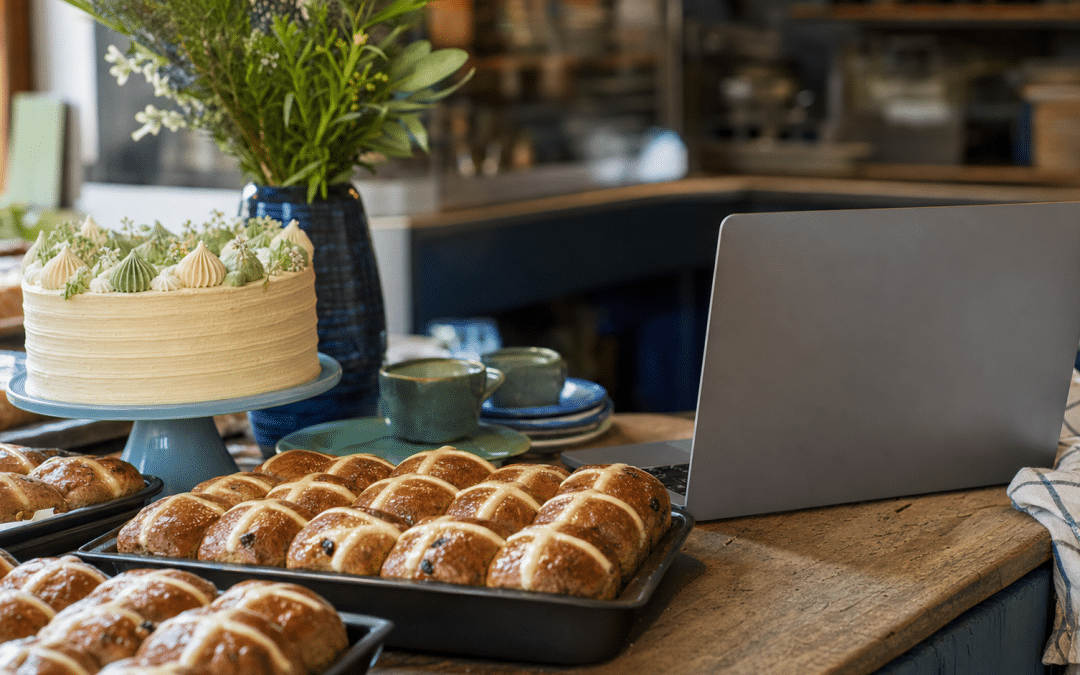
Email marketing for bakeries is a pre-order tool: you write to people who have bought from you or asked to hear from you, tell them what you are baking and the last day they can order it, and take the order before the oven is on. It sits inside the wider channel mix in our email marketing South Africa guide, but a bakery has a constraint most shops do not: the product cannot be restocked, so the message is only useful if it lands before the cut-off.
That changes how you plan sends, how you collect addresses and how much platform you need. This post covers the list sources a bakery actually has and the POPIA basis for each, the handful of emails worth building, how to work a send calendar backwards from your baking lead time, and what bakery email marketing costs on published Omnisend and Mailchimp plan limits.
Quick Answer
Email marketing for bakeries works when every promotional send carries an order deadline: an opening message for each pre-order window, a cut-off reminder and a last call, with a welcome and a thank-you either side of them. Build the list from order forms and a web sign-up, send only to people you can lawfully email under POPIA section 69, and keep the cadence inside your plan's send limit. A bakery email newsletter that arrives after the cut-off is just a menu.
Selling out on Instagram but not owning the list?
Send us how you take orders today and we will show you where the addresses could be captured.
Get a list-capture reviewEmail Marketing for Bakeries: What a List Does That a Feed Does Not
A bakery email list is a set of addresses you own, which lets you announce a pre-order window to the people most likely to buy rather than hoping a social post is shown. A feed delivers to whoever the platform decides; a list delivers to the people who gave you the address.
That matters most for the products that need notice: celebration cakes, hampers, hot cross buns and festive boxes. A WhatsApp broadcast does a similar job for quick reminders, and we cover that channel in WhatsApp marketing for bakeries. The two are complements rather than rivals: WhatsApp vs email marketing sets out the trade-offs, and email is the one that carries a full menu, photographs and an order link in one message.
Because the order link is the point, a bakery that sells through a Shopify store can send to its own customers from Omnisend, while a counter-only bakery can send a plain message that points to an order form or a phone number. Either way the list is the asset, and the platform is replaceable.
Takeaway: the list is the asset
A bakery with an owned list can announce a pre-order window to its own customers on the day it opens. A bakery that relies only on social posts has to rent attention for each announcement it makes.
Who Can a Bakery Lawfully Write To Under POPIA?
Under POPIA section 69, you may send electronic direct marketing such as email only to people who have consented, or to existing customers who meet the conditions in section 69(3). Sending to anyone else is a compliance problem however good the offer is.
The same section applies to email marketing for bakeries South Africa wide, whatever the size of the shop. Its own text is short. Section 69(2) lets you approach a person only once to ask for consent, and the consent must be requested in the prescribed manner and form.
Section 69(3) allows marketing to a customer whose details you obtained in the context of a sale, for your own similar products or services, provided they were given the chance to opt out when you collected the details and with every message. Section 69(4) requires each message to identify the sender and give an address where the recipient can ask for the messages to stop. The full wording is on popia.co.za's reproduction of section 69.
Applied to a bakery's actual address sources, the picture looks like this:
| Where the address came from | Likely basis | What to watch | Best for |
|---|---|---|---|
| Customer ordered a cake and gave an address on the order form | Existing-customer exception, s69(3) | Opt-out offered at the point of collection; messages limited to your own similar products | Celebration and custom orders |
| Web sign-up form on your site | Consent | Say clearly what they will receive; ask once, in the prescribed manner and form | Regulars and followers who have not bought yet |
| Instagram follower who never bought | No basis on its own | Following you is not consent to be emailed; invite them to your sign-up form instead | Growing the list |
| Corporate catering contact | Same tests as any other address | We could not verify what the Information Regulator's guidance says about business addresses, so do not assume an exemption | Office orders and events |
| Bought or scraped list | None you can document | Leave it alone | Nobody |
Do not count on legitimate interest to cover a weak list. In Mayet's law-firm summary of the Information Regulator's December 2024 guidance note, legitimate interests are discussed for non-electronic marketing, while electronic marketing such as email and SMS is framed around opt-in consent with the existing-customer exception. We could not fetch the guidance itself, so treat that as a summary and read the note before you rely on a borderline case. Our POPIA email compliance guide goes through the wording in more detail.
Takeaway: the till and the order form are your best list sources
A customer who gives an address while ordering a cake is an existing customer under section 69(3), as long as you offered an opt-out when you took the address and keep marketing to your own similar products. A follower who has never bought needs to be invited to consent first.
Which Five Messages Does a Bakery Actually Need?
A bakery needs five message types: a welcome, a pre-order opening, a cut-off reminder, a last call, and a post-order thank-you. Together they cover the whole order window without a single generic newsletter, which is how email marketing campaigns for bakeries stay tied to the oven.
| Message | Job | What goes in it | Best for |
|---|---|---|---|
| Welcome | Set expectations after sign-up | What you send, how often, the next order window and the opt-out line | New sign-ups and first-time customers |
| Pre-order opening | Announce the range and the dates | Photographs, the menu, the cut-off date in the first lines | Easter, Mother's Day, Father's Day, December |
| Cut-off reminder | Move people who read but did not order | The date, what is already sold out, one order link | Anyone who opened the first send |
| Last call | Catch the final orders | One line and one button, sent before you close the book | Late deciders |
| Post-order thank-you | Confirm and set up collection | Collection time and place, and a short note on what is next | Everyone who ordered |
Put the deadline where a phone inbox shows it. The subject line and the preheader are the only parts many readers see, so give the cut-off a place in one of them; the mechanics are in our email preheader text guide. A welcome message is worth building once and leaving to run, and welcome email sequences covers the structure.
The thank-you is the one most bakeries skip, and it is also the one that does not need persuasion. It confirms the order, repeats the collection details and gives you a second contact point with someone who has just bought from you.
Not sure which message to build first?
Tell us your busiest order window and we will assess where a flow of these five would fit your timeline.
Get a timeline assessmentHow Do You Work a Send Calendar Back From the Baking Cut-Off?
A baking cut-off calendar starts with the date the customer collects, subtracts your own lead time to get the order deadline, and then places the three sends before that deadline. The lead time is yours to set, because it depends on what you bake and how many hands you have.
Here is the worked example, with an input chosen for illustration rather than a benchmark. Mother's Day in South Africa falls on the second Sunday of May, according to calendar listings. Suppose your celebration cakes need three days' notice. Counting back three days from a Sunday gives a Thursday cut-off. As a working rule of thumb, send the opening message a week or more before the cut-off, the reminder on the Tuesday and the last call on the Wednesday, which is the day before the Thursday cut-off. Swap in your own lead time and the dates move with it.
The formula
Collection date, minus your lead time, equals the order cut-off. Place the opening send early enough that someone who is away for a weekend still sees it before the deadline. As a working rule of thumb, not a measured result, give the opening message at least one full week on the calendar before the cut-off.
The dates themselves are fixed or predictable, so you can plan the year at once. The public holiday dates below are from the South African government's public holiday list. The Mother's Day and Father's Day dates come from calendar listings rather than a government source, so confirm them for your year. Those listings describe neither as a public holiday.
| Occasion | When it falls | Planning note | Best for |
|---|---|---|---|
| Easter | Good Friday moves each year: 3 April in 2026 and 26 March in 2027 | Check the year before you schedule; the date is not fixed | Hot cross buns, Easter eggs and boxes |
| Mother's Day | Second Sunday of May | A Sunday collection means a mid-week cut-off | Cakes, cupcake boxes, breakfast boxes |
| Father's Day | Third Sunday in June | Same Sunday logic as Mother's Day | Cakes and savoury bakes |
| National Women's Day | 9 August (observed on the Monday when it falls on a Sunday) | A long weekend in some years, so collection windows shift | Gift boxes and office treats |
| December | Christmas Day 25 December; Day of Goodwill 26 December | Close the order book before the final trading days and say so | Festive cakes, hampers, party platters |
The calendar also tells you when not to send. A bakery that is fully booked for a weekend gains nothing from another promotional message about it. Send the "sold out, next window opens on" note instead, which keeps the list warm and gives the next opening message a head start.
What Do Bakery Email Marketing Platforms Cost, and Which Plan Fits?
Platforms limit a bakery on two counts, contacts and monthly sends, and on the free tiers the send limit binds first. A send is one email to one person, so a pre-order window multiplies sends quickly, and the published free tiers cap them so low that even one three-message occasion can break them.
The figures below come from each vendor's pricing page as read in October 2026. Both price in US dollars, so what you pay in Rand moves with the exchange rate, and you should check the live page before you commit. Omnisend's page shows a 30% discount for paying three months upfront; the table gives the monthly rate with that discount in brackets.
| Plan | Price (USD) | Contacts | Sends per month | Best for |
|---|---|---|---|---|
| Omnisend Free | $0 a month | 250 | Up to 500 | One or two messages to a 250-contact list, or a three-message occasion on a very small list |
| Omnisend Standard | $16 a month ($11.20 with the 30% discount) | 500 | Up to 6,000 | A weekly cadence on a small list |
| Omnisend Pro | $59 a month ($41.30 with the 30% discount) | 2,500 | Unlimited | A growing list with several windows a month |
| Mailchimp Free | $0 a month | 250 | Max 500 a month, or 250 a day | One or two messages to a 250-contact list, or a three-message occasion on a very small list |
| Mailchimp Essentials | From $13 a month | Varies by tier | 10 times your contact count | Basic scheduled campaigns |
| Mailchimp Standard | From $20 a month | Varies by tier | 12 times your contact count | Lists that need more sends per contact |
The send arithmetic
On a free tier with 250 contacts and 500 sends a month, each contact can receive 2 emails a month (500 ÷ 250). Mail that same list once a week for four weeks and you need 1,000 sends (250 × 4), which is double the cap. On Omnisend Standard, 6,000 sends across 500 contacts allows 12 emails per contact a month (6,000 ÷ 500), and a weekly send to all 500 contacts uses 2,000 sends (500 × 4), well inside the allowance.
Read that as a planning check, not a recommendation to mail weekly. Opening, reminder and last call for one occasion is three sends per contact, which is already more than the 2 a free tier allows on a 250-contact list: 3 × 250 is 750 emails against a cap of 500. Dividing the 500 cap by 3 shows a free tier carries one three-message occasion only for about 166 contacts or fewer.
Omnisend's pages also show SMS as a separately charged add-on, which is worth knowing if you plan to pair the two channels. Paid tiers are also priced by contact count, so clean the list before you pay: email list cleaning shows how to remove addresses that only inflate the bill.
Takeaway: on a free tier, sends bind before contacts
In email marketing for bakeries, the free tiers from both Omnisend and Mailchimp cap a 250-contact list at 2 emails per contact per month. A bakery that mails an opening, a reminder and a last call to that list needs a paid plan, or a list of about 166 contacts or fewer, before it needs more contacts.
How Should a Bakery Split Its List?
A split list sends each customer only the occasions they have bought for, which keeps send counts down and replies relevant. Bakeries usually have natural groups already, so the splits can follow what customers ordered and where they collect.
Three splits cover most counters. The first is product interest: celebration cakes, daily bread and pastries, and festive or seasonal items. The second is the collection or delivery area, so a Saturday market stall note does not go to a customer on the other side of the city.
The third is corporate versus personal customers, because an office catering contact wants a price list and lead times, not a Mother's Day cupcake box. Email segmentation explains how to build the groups, and email marketing automation covers triggering the five messages without sending each by hand.
Keep the groups simple. A bakery with a small list that splits into eight segments ends up with eight tiny audiences and no time to write for any of them.
Want a second opinion on your current programme?
Send us your last three campaigns and we will run an audit against the send, consent and calendar points in this post.
Request an auditWhy South African Businesses Choose Growth Pulse Media
Growth Pulse Media was founded in Johannesburg by Dirk van Greuning, who built and scaled a large South African ecommerce business before starting the agency. All work is executed in-house and the client load is kept limited, so a senior person stays on your account. We are a registered Shopify Partner and an Omnisend Certified Partner, and our email marketing service centres on Shopify stores sending campaigns and automations through Omnisend, which is the route we would look at first for email marketing for bakeries that sell their pre-orders online.
Who This Is NOT For
This guide does not suit bakeries that sell only walk-in bread with no advance orders, bakeries without a lawful way to collect addresses, or bakeries already at their baking capacity; the three cases below show why.
You sell only walk-in bread and never take orders ahead. With no order window and no addresses, a list has nothing to announce. A sign on the counter or a WhatsApp broadcast to regulars fits better.
You hope to email everyone who follows you on Instagram. A follow is not consent. Invite followers to a sign-up form, and do not import addresses you cannot trace to a sale or a consent.
You expect a platform to fix a capacity problem. If you are already at your limit on the days you bake, a stronger campaign only adds orders you cannot fill. Fix the cut-off first.
Frequently Asked Questions
Is email marketing worth it for a small bakery?
Email marketing for small bakeries is worth it when you take orders ahead of time, because the list lets you announce a window and its cut-off to your own customers. It is less useful for a counter that sells only on the day. A free tier only carries a short test: 500 sends a month covers one or two messages to a 250-contact list, so a full three-message occasion needs a paid plan or a very small list.
Can I email customers who gave me their address when they ordered a cake?
Under POPIA section 69(3) you can, if you took the address in the context of a sale, offered them an opt-out when you collected it, and market your own similar products. Every message also has to name you and give an address for stopping the messages.
Can I email people who follow my bakery on Instagram?
Not on that basis alone. A follow is not consent to receive email, and electronic marketing needs consent or the existing-customer exception. Invite followers to a sign-up form and ask once, in the prescribed manner and form, as section 69(2) provides.
How often should a bakery send email?
Send when there is an order window to announce, not on a fixed weekly schedule. As a working rule, three promotional messages per occasion (opening, reminder, last call) is a sensible starting point, and your plan's monthly send limit decides how many occasions you can run. The welcome and thank-you messages sit outside that count.
Which email platform should a South African bakery use?
Choose by monthly send limit and by whether you sell online. A bakery with a Shopify store can send from Omnisend, and a counter-only bakery can run a short test on a free tier from Omnisend or Mailchimp. Both bill in US dollars, so the Rand cost moves with the exchange rate.
Turn your order windows into a send plan
We work with Shopify and Omnisend and will map your calendar, list sources and POPIA basis into a plan you can run. No obligation — we'll get back to you within 24 hours.
Talk to Growth Pulse Media