
 Add to Preferred Sources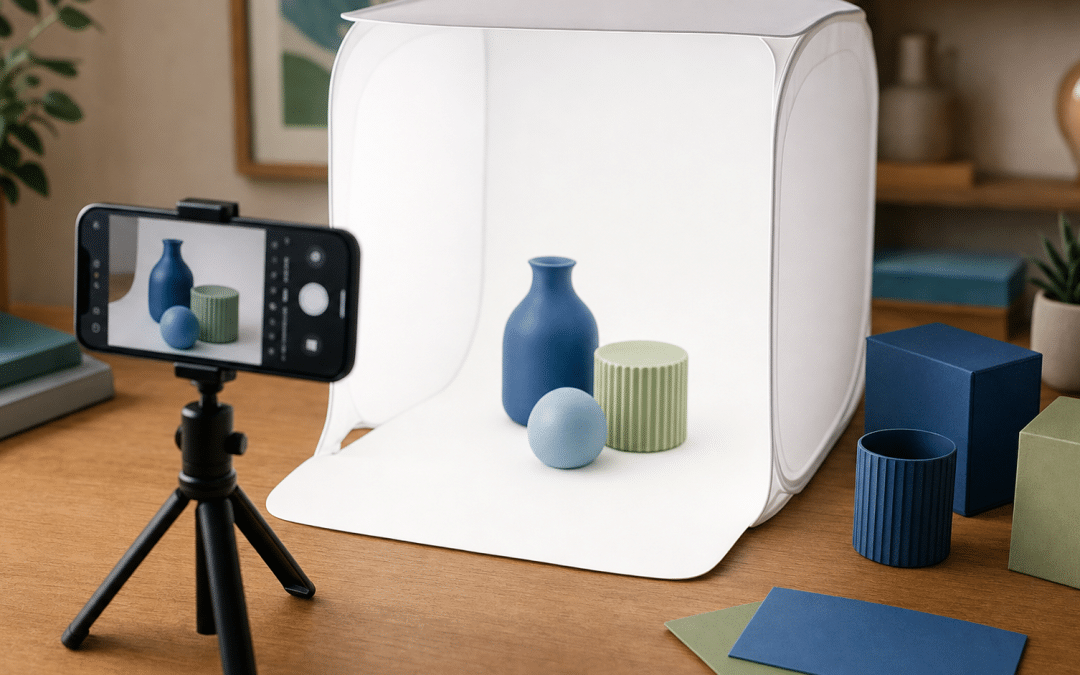
Ecommerce photography DIY means shooting your own product images using a smartphone or entry-level camera, a basic lighting setup, and a clean backdrop — and for many South African online stores, it is a perfectly viable starting point. Whether it stays the right choice depends on your product type, catalogue size, and margin, and that is the decision this post is built to answer. If you are setting up an online store for the first time, the Shopify South Africa guide covers the full platform picture.
South Africa's online retail market is forecast to reach R159 billion in 2026, up 22.5% on 2025 figures, according to World Wide Worx's Online Retail in SA 2026 report — and for every one of those rands, the product image is doing more persuasion work than any description. Industry surveys consistently find that three-quarters of shoppers rely on product photography as their primary decision input. Getting this wrong costs you sales and inflates your return rate: Narvar's 2023 consumer returns survey found that 22% of online returns happen because the product looked different from the photos.
Quick Answer
Ecommerce photography DIY is the right call when you are testing new products, have a small catalogue of simple items, and need speed over polish. Professional photography is worth the cost when your catalogue exceeds 20 SKUs, your products are reflective, textured, or lifestyle-dependent, or when you are scaling paid advertising and need consistent, conversion-optimised images. In South Africa, professional per-product studio rates drop to R287.50 per image (incl. VAT) at 40+ products, from R345 incl. VAT for smaller runs — which makes the DIY vs pro calculation a unit-economics question, not a pride question.
In This Post
What DIY Product Photography Actually Requires
When Ecommerce Photography DIY Is the Right Call
When Professional Images Earn Their Cost
South African Studio Rates: What You Will Pay Per Image
The Decision Table: Choosing by Product Type and Stage
Not sure which option fits your store's stage?
Send us your current product page and we will tell you exactly where your images are losing the sale — before you spend on a reshoot.
Get a Free Store ReviewWhat DIY Product Photography Actually Requires
An ecommerce photography DIY setup produces consistent, sellable images when you assemble three things correctly: a stable light source, a clean background, and a fixed camera position. The smartphone in your pocket — any current flagship or mid-range Android — is more than capable of the output Shopify or Takealot needs for a standard white-background listing image.
The equipment categories you need:
- Lighting: A lightbox (portable folding versions are widely available on Takealot) or two continuous softbox lights positioned either side of the product. Natural light from a large north-facing window can substitute, but only if you can shoot at the same time of day for every batch — inconsistency shows.
- Background: A white sweep of poster board or a seamless paper roll. Crinkled or yellowed backgrounds add editing time that compounds quickly across a catalogue.
- Stabilisation: A phone tripod with a clamp mount. This is non-negotiable — hand-held smartphone shots, even with optical stabilisation, lose the precise framing you need when you are shooting 40 variants of the same product.
- Editing: Snapseed (free, mobile) handles basic exposure and white balance. Lightroom mobile or Canva handle batch cropping and format export for Shopify's recommended image dimensions.
Time budget: A realistic DIY session for 10 simple products (one hero angle each) runs 2–3 hours of shooting plus 1–2 hours of editing. At 50+ products, the editing alone becomes a production bottleneck — factor that into your true cost before comparing it to studio rates.
The skills gap is real but learnable. White balance, controlled exposure, and consistent framing are the three levers. Getting all three right on your first session is unlikely; most operators need three to five sessions before output is genuinely store-ready.
DIY Setup Checklist
A workable DIY product photography setup needs four things: a controlled light source (lightbox or two softboxes), a clean white backdrop, a phone tripod for consistent framing, and a free editing app such as Snapseed or Lightroom Mobile. The equipment is available locally through retailers like Takealot — start basic, learn the setup, and only upgrade once you have identified the specific gaps in your output.
When Ecommerce Photography DIY Is the Right Call
DIY product photography wins when speed and lower upfront cost are the priority over polish, and when your products are straightforward enough that a clean, well-lit image is sufficient to earn the sale.
| Situation | Why DIY Works | Verdict |
|---|---|---|
| Testing a new product before committing to inventory | Speed takes priority over perfection; you need a listing image today, not in two weeks | ✓ DIY |
| Catalogue of 5 simple products or fewer | Studio minimum fees (R1,500+ for 1–4 products) make pro expensive at low volume | ✓ DIY |
| Flat, opaque products on white (clothing folded flat, books, simple accessories) | No complex lighting; white background achieved with poster board and a window | ✓ DIY |
| Social media content and behind-the-scenes imagery | Authentic content typically generates stronger engagement than studio polish on Instagram Reels and TikTok | ✓ DIY |
| Restocking existing SKUs with minor packaging changes | You already know the setup; incremental shots cost almost nothing | ✓ DIY |
Where DIY holds up: A Cape Town candle brand with 8 SKUs, flat product shape, and a north-facing home studio window. One Saturday session, no studio fees. The images serve the Shopify listing and the Instagram grid at the same time.
The one condition that overrides all of the above: if your product requires accurate colour rendering — and many South African fashion and homeware products do — test your DIY output against the physical product under a different light source before publishing. Smartphone white balance, unchecked, can make a navy product list as black, which is a return waiting to happen.
When Professional Images Earn Their Cost
Professional product photography earns its cost when the gap between your current image quality and what a conversion-optimised image would look like is large enough to move the needle on sales. Industry research, citing a Shopify survey, finds professional imagery is associated with roughly a third more sales on average — though the figure originates from a secondary source and has not been independently replicated in an SA context. It starts to look conservative when you are running Meta ads where the image is the first (and sometimes only) element a prospect sees.
| Situation | Why Pro Is Worth It | Verdict |
|---|---|---|
| Catalogue of 20+ SKUs launching simultaneously | Consistency across 20+ products is nearly impossible to achieve with DIY across multiple sessions | ✓ Pro |
| Reflective, transparent, or highly textured products (glass, jewellery, skincare, ceramics) | These require specialist lighting control; DIY results in hotspots, blown highlights, or flat texture | ✓ Pro |
| Lifestyle or on-model photography | Requires styling, set design, model direction — skills beyond a basic DIY setup | ✓ Pro |
| Products going into paid advertising at scale | Meta and Google Shopping ads serve your image to thousands; a weak image wastes every rand of ad spend | ✓ Pro |
| Premium or gift-market positioning | Image quality signals value; a premium product photographed on a crinkled backdrop loses its price justification | ✓ Pro |
Where pro pays off: A Johannesburg ceramics brand preparing a 35-SKU launch on Shopify, each piece with a matte glaze that reads differently under different light. A half-day studio session at market rates produces consistent, gallery-quality white-background images plus lifestyle context shots — all in a single booking.
The return-rate argument is underrated. Narvar's research found that 22% of online returns happen because the product differs from the photos — and a return in South Africa, factoring in reverse courier costs through providers like The Courier Guy or Dawn Wing, is expensive. An accurate, detailed professional image sets expectations correctly and cuts that cost before it lands.
When to Call a Professional
Professional product photography in South Africa earns its cost at three clear trigger points: a catalogue of 20 or more SKUs (where DIY consistency falls apart across sessions), any reflective or transparent product, and any creative going into paid advertising. The ecommerce photography cost difference between DIY and a studio session narrows significantly once you account for your time, the returns caused by inaccurate images, and the ad spend wasted on weak creative.
South African Studio Rates: What You Will Pay Per Image
Professional product photography pricing in South Africa is structured around volume, complexity, and session type. The figures below are drawn from published studio rate cards and verified by fetch — not estimates. If you are comparing these against an ecommerce photography setup that you already own, factor in your time per session and the editing hours that follow each shoot.
| Service Type | Rate (ex VAT) | Incl. 15% VAT | Notes |
|---|---|---|---|
| Studio shoot, 1–4 products | R1,500 session fee | R1,725 | Fixed fee regardless of how few images; at 4 products = R375/product |
| Studio shoot, 5–19 products (per product) | R300 | R345 | One white-background angle per product |
| Studio shoot, 20–39 products (per product) | R270 | R310.50 | Volume discount applies |
| Studio shoot, 40+ products (per product) | R250 | R287.50 | Best per-image rate at volume |
| Deep etching / transparent background | R60 extra per image | R69 | Required for products against coloured page backgrounds |
| On-location mobile studio | Above rates + R1,800–R2,500 setup fee | Above + setup fee | Photographer travels to your premises |
| Half-day studio rate | From R5,200 | R5,980 | Includes post-production and image transfer |
| Full-day studio rate | From R10,000 | R11,500 | Suitable for large catalogue or lifestyle sessions |
Source: Monsoon Photography product photography rates and ProSelect-images Gauteng rate card, verified September 2026. SAFREA's published guidelines set R350+ per image as a floor for product photography. All prices exclude VAT unless labelled.
The volume breakpoint: At a 5-product catalogue, professional studio photography at R300 per image costs R1,725 incl. VAT — comparable to a well-specified DIY setup purchased outright. The difference is that the studio delivers consistent, production-ready images on day one, while the DIY setup requires a learning curve before output reaches that standard. At 40+ products, the per-image rate drops to R287.50 incl. VAT — and the case for DIY rests entirely on whether your time and skills can match that output.
The Decision Table: Choosing by Product Type and Stage
The correct choice between ecommerce photography DIY and professional production changes as two variables shift: how complex the product is to photograph, and what stage your store is at. This table maps those two axes to a clear recommendation.
| Product Complexity | Store Stage: Testing / MVP | Store Stage: Established / Scaling | Store Stage: Running Paid Ads |
|---|---|---|---|
| Simple (opaque, flat, solid colour) | ✓ DIY — speed wins | DIY or Pro — depends on catalogue size | ✓ Pro — consistency required for ad creative |
| Medium (multi-angle, patterned, coloured) | DIY — accept imperfection | ✓ Pro — returns risk rises with colour accuracy | ✓ Pro — required for catalogue ads |
| Complex (reflective, glass, jewellery, food) | ✓ Pro — DIY rarely achieves acceptable output | ✓ Pro | ✓ Pro |
| Lifestyle / on-model required | ✓ Pro (or UGC as bridge) | ✓ Pro | ✓ Pro |
Two constraints from the South African market specifically:
- Load-shedding and natural light: If you rely on window light for your DIY product photography setup, Eskom's schedule makes consistent shooting genuinely difficult. A session planned for 11 AM natural light is a different image if load-shedding hits and you switch to indoor bulbs. Investing in a battery-powered continuous light source solves this — budget for it if natural light is your plan.
- Marketplace requirements: Takealot has specific image standards (pure white background, minimum dimensions, no watermarks) and so does Shopify's Google Shopping integration. Professional studios routinely deliver to these specs; DIY operators have to learn and check them manually for each platform.
The South African Cost Comparison at a Glance
The ecommerce photography cost calculation in South Africa is straightforward at the extremes: for a 5-product catalogue of simple items, a well-assembled DIY product photography setup typically involves a lower one-time cost than the R1,725 incl. VAT minimum studio booking. For a 40-product catalogue, the professional per-image rate drops to R287.50 incl. VAT — and the decision shifts to whether your time and consistency can match what a studio delivers in a single session. For ecommerce DIY product photos on social media, authenticity often wins over polish at any volume.
Ready to scale your Shopify store beyond the first 10 SKUs?
Tell us where you are in your build and we will outline which growth levers to pull first — photography, ads, or conversion rate work.
Talk to the TeamWhy Growth Pulse Media Clients Get More From Their Images
Growth Pulse Media reviews every product image against the specific paid placement it will appear in — catching format, crop, and creative failures before any ad spend is committed, not after. A product image that looks adequate on the listing page may perform poorly as a Meta ad creative, a Google Shopping thumbnail, or an Omnisend email campaign hero image — because each format crops differently and rewards different visual signals.
Growth Pulse Media, founded by Dirk van Greuning, works with South African ecommerce operators as a registered Shopify Partner and Omnisend Certified Partner. The team's background in building and scaling a large South African ecommerce business means that product photography briefs are written from the perspective of what the image needs to do — not just what it needs to look like.
The way GPM's Shopify marketing service approaches this: before any paid acquisition runs, product images are reviewed against the placement they will appear in. A square image that works for a Shopify collection page may need a vertical crop for Meta Stories; a white-background hero image for the listing needs a lifestyle version for the top-of-funnel Meta ad. This review catches issues before ad spend is committed. GPM operates a limited client load — all work is executed in-house, no juniors, no outsourcing.
Who This Is NOT For
Not for you if: You are selling handmade jewellery and want to keep it all DIY. Jewellery is one of the most technically demanding product categories to photograph — reflective surfaces, small scale, and the need to render stone colours accurately all require specialist lighting. A DIY setup almost never produces output that converts at the price points jewellery commands. A half-day studio session is the minimum viable approach.
Not for you if: You want to skip photography entirely and use supplier images. Supplier stock images are identical to those used by every other reseller, which means your listing is indistinguishable in search results or on a marketplace. Unique photography — even basic DIY — differentiates your listing and gives you the right to use the images without licensing risk.
Not for you if: You are running Meta ads with no brand visuals beyond white-background cutouts. White-background product shots work for Google Shopping; they are weak on Meta. Running social advertising without lifestyle imagery or on-brand creative is a setup for poor click-through rates. Build a creative asset library before you scale paid social — and that library needs more than product cutouts.
Not for you if: You expect professional output from a first DIY session. Shooting your own product images is a skill that improves with repetition. If your launch timeline requires publication-ready images in week one, DIY is unlikely to deliver — and the risk of going live with images that reduce rather than build conversion is real. For a launch, budget for at least one professional session for your hero products.
Is your store's creative brief working for your ad placements?
Share your current Shopify product pages and we will audit whether your images are set up for Meta Ads and Google Shopping — no obligation, response within 24 hours.
Request a Creative AuditFrequently Asked Questions
Can I use a smartphone for ecommerce product photography in South Africa?
Yes — a current mid-range to flagship smartphone produces image quality sufficient for Shopify, Takealot, and most marketplace listings, provided you control the lighting and use a tripod. The camera is rarely the limiting factor in DIY product photography; inconsistent lighting and camera shake are the two most common causes of unusable output. Natural window light on an overcast day, a phone tripod, and a white backdrop are the minimum viable setup for simple opaque products.
How much does professional product photography cost in South Africa?
Published studio rate cards show per-product costs of R300 ex VAT (R345 incl. VAT) for 5+ products, dropping to R250 ex VAT (R287.50 incl. VAT) at 40+ products. A 1–4 product session carries a minimum booking fee of around R1,500 ex VAT. Half-day rates start from R5,200 ex VAT. Jewellery, food, and lifestyle photography require custom quotes.
At what catalogue size should I switch from DIY to professional photography?
There is no single threshold, but two triggers consistently make professional photography the better choice: a catalogue of 20 or more products (where DIY consistency degrades across sessions), and any product category where colour accuracy or surface detail is central to the purchase decision. For a small catalogue of 5 or fewer simple products, DIY typically makes more economic sense than paying the minimum session fee most studios charge.
Do I need separate images for Shopify listings and Meta Ads?
In practice, yes. Shopify listing images suit square or near-square formats on a white or brand-consistent background. Meta Ads — particularly Reels and Stories placements — perform best with vertical creative showing the product in a lifestyle setting. Running the same white-background cutout across both is common among SA store owners and consistently produces weaker social ad performance. Budget for both formats — use a professional shoot for both, or DIY listing images with user-generated content as social creative.
What product types require professional photography regardless of budget?
Three categories almost always need professional photography: reflective or transparent products (glass, jewellery, chrome finishes), food and beverages requiring food styling, and lifestyle or on-model images. Ecommerce photography DIY can produce adequate output for flat, opaque, solid-colour products — but reflective surfaces require multi-light setups with specialist positioning that is difficult to achieve without professional equipment and experience. The cost of poor images in these categories, in lost conversions, is typically higher than the cost of a studio session.
Is AI-generated product photography a viable alternative for South African stores?
AI image tools can generate lifestyle backgrounds and contextual scenes from a base product image — a useful option for operators who already have clean, isolated product shots. Some A/B tests in 2024 found AI-generated lifestyle images performing close to traditional studio photography in conversion terms.
The limitation is input quality: you still need a clean, well-lit base product image, which brings you back to DIY or professional as the starting point. For SA operators, AI generation extends what you already have — it does not replace the need for a high-quality primary image.
Build an Ecommerce Store That Converts — Not Just One That Looks Good
GPM's team built and scaled a large South African ecommerce business before working with clients. As a registered Shopify Partner and Omnisend Certified Partner, we know how product images, store structure, and marketing channels interact — and where the gaps are costing South African operators sales. All work is executed in-house by the senior team, with a limited client load to ensure meaningful attention on every account.
No obligation — we will get back to you within 24 hours.
Get a Free Shopify Consultation