
 Add to Preferred Sources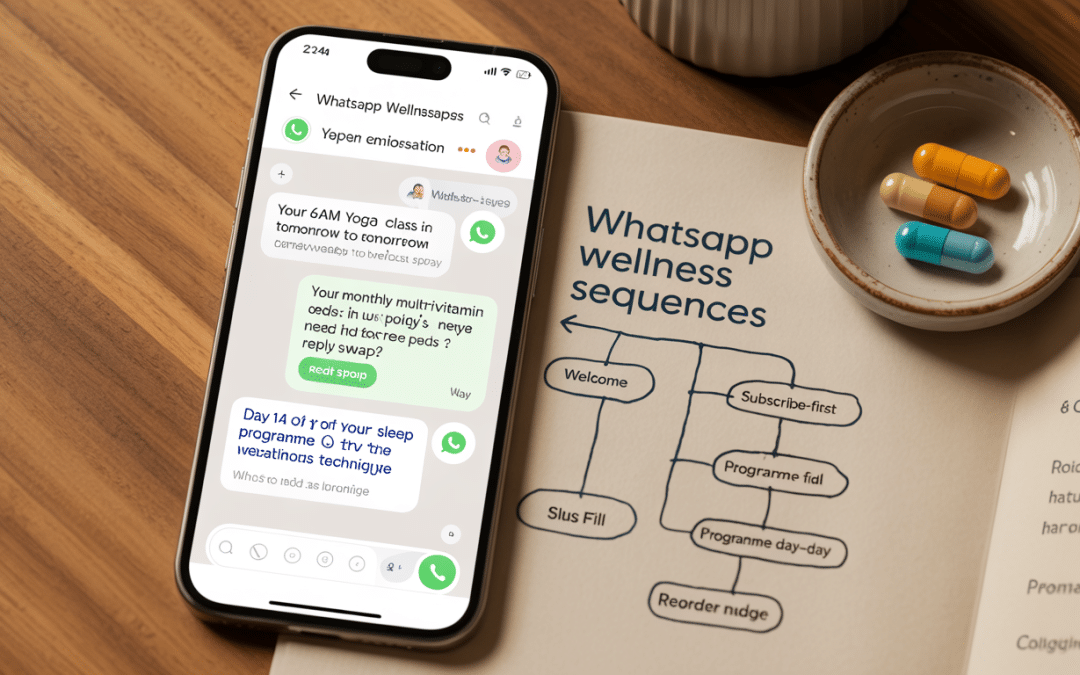
WhatsApp marketing for wellness in South Africa is a fundamentally different discipline from generic broadcast marketing. SA boutique gym chains, supplement brands, wellness subscription boxes, fitness studios, and corporate wellness providers operate within an unusual sweet spot — they have ongoing customer relationships, recurring engagement moments, and audiences who actively want timely reminders rather than promotional broadcasts. Generic WhatsApp marketing tactics that work for retail fail entirely for wellness.
This guide covers what actually works for SA wellness brands across consumer engagement, retention, and revenue mechanics on WhatsApp. For broader strategic context, see our WhatsApp marketing South Africa guide. For HPCSA-regulated patient communication (a different vertical), see our healthcare WhatsApp marketing guide.
Quick Answer
WhatsApp marketing for wellness in SA works best when calibrated to four use cases: class and appointment reminders (cuts no-show rates dramatically), subscription reorder nudges (lifts retention 20–40%), programme day-by-day messaging (drives completion rates), and re-engagement after lapse (recovers churned customers). Pipeline value comes from utility-led messaging customers want — reminders, reorder notifications, programme nudges — not promotional broadcasts that get muted within days.
Want a free 60-minute audit of your wellness brand's WhatsApp architecture with use-case mapping and template recommendations?
Get a Free WhatsApp AuditWhy WhatsApp Marketing for Wellness is Genuinely Different
Generic WhatsApp marketing assumes a transactional retail context — broadcast promotions to a list, drive checkout, measure short-term conversion. Wellness operates differently: customers want ongoing engagement around their goals, not promotional pressure. The right WhatsApp programme acts as a coach, reminder system, and reorder facilitator rather than a sales channel. SA wellness brands that try retail-style promotional broadcasts on WhatsApp see rapid opt-out rates and brand damage.
According to WhatsApp Business Platform official pricing documentation, the platform charges per delivered template message with marketing messages priced significantly higher than utility messages — and service replies within a 24-hour window are free. For wellness brands the economics matter: utility-led messaging costs less and converts better than promotional broadcasts. Industry data shows WhatsApp messages achieve 98%+ open rates and median CTRs of 58%+ when used appropriately.
The Critical Reframe
Generic WhatsApp marketing measures success in broadcast volume, list size, and one-time campaign conversion. WhatsApp marketing for wellness measures success in attendance rates, subscription retention, programme completion rates, and reorder velocity. A wellness brand running promotional broadcasts generates short-term sales lift followed by mass opt-out. A brand running utility-led WhatsApp generates compounding engagement, higher retention, and customers who recommend the channel to friends. Different metric, different revenue, different game.
The Four Highest-Leverage Wellness WhatsApp Use Cases
The mistake almost every wellness brand makes is treating WhatsApp as a broadcast channel. Effective WhatsApp marketing for wellness has four specific use cases where the platform dramatically outperforms email and SMS — and each requires its own template structure, timing logic, and consent infrastructure. Concentrating on these four use cases produces dramatically more revenue than running generic promotional campaigns.
| Use Case | Why WhatsApp Wins | Highest-Impact Template Type |
|---|---|---|
| Class and appointment reminders | Cuts no-show rates from 25–40% to 5–10% | Utility template with reply-to-confirm + reschedule option |
| Subscription reorder nudges | Customers retain 20–40% better with timely "ship in 3 days" prompts | Utility template with swap, pause, skip options |
| Programme day-by-day messaging | Drives 2–3x completion rates vs email-only nurture | Utility/educational template with daily action + reply prompt |
| Re-engagement after lapse | Recovers 8–15% of churned subscribers within 30 days | Marketing template with personalised offer + clear opt-out |
An SA wellness brand running all four use cases — with proper template approval, segment infrastructure, and Klaviyo or BSP integration — typically reduces no-shows by 60–80%, lifts subscription retention by 25–40%, and improves programme completion by 100–200% within 90 days. The compounding effect comes from each use case strengthening the others — engaged programme participants are more likely to subscribe, and active subscribers are more likely to attend classes.
The Three Most Common SA Wellness WhatsApp Mistakes
Three mistakes consistently destroy SA wellness brands' WhatsApp performance. Each is invisible at the time but produces predictable outcomes — high opt-out rates, brand damage, and the channel becoming useless within weeks. Identifying and correcting them is the foundation before any tactical optimisation.
Mistake 1 — Treating WhatsApp Like Bulk Email
SA wellness brands often import their email list into WhatsApp Business and broadcast the same promotional content. The opt-out rate is brutal — typically 30–50% within the first three sends — and the residual list becomes hostile to the brand. WhatsApp opt-in expectation differs from email: people expect direct, relevant, utility-driven messages, not promotional blasts. The fix is using WhatsApp for use cases where customers genuinely want messages — not as another promotional channel.
Mistake 2 — Skipping Template Approval and Using Service Messages for Everything
SA wellness brands sometimes try to use service messages (free within the 24-hour customer-initiated window) for all communication to avoid template costs. This works briefly until volume scales and operations become impossible to manage manually. The right approach is proper template approval upfront for utility and marketing templates, with service messages reserved for genuine customer service. Investing in template approval and BSP setup pays back through volume capability and automation that manual messaging cannot achieve.
Mistake 3 — Inadequate Opt-In Documentation and POPIA Exposure
SA wellness brands often import customer phone numbers from email lists or POS systems without proper WhatsApp-specific consent documentation. POPIA requires demonstrable consent for direct marketing communications, and Meta requires explicit opt-in for WhatsApp marketing messages. Brands without proper documentation face POPIA exposure if challenged and Meta account suspension if reported. The fix is building proper opt-in mechanics at every customer touchpoint (checkout, programme enrolment, class booking) with clear scope of communications and easy opt-out.
Want to see which of these three mistakes is creating the biggest drag on your wellness brand's WhatsApp performance?
Request a custom wellness WhatsApp diagnosticThe GPM Differentiator: Operator Discipline in Use-Case Architecture
Most SA agencies that sell WhatsApp marketing to wellness brands come from generic broadcast marketing backgrounds — they translate email and SMS campaign tactics into WhatsApp templates and call it strategy. They optimise for broadcast reach instead of use-case fit, and the channel decays predictably within months as opt-outs accumulate. The result is well-executed broadcasts that consume budget while damaging customer relationships.
Growth Pulse Media built and scaled an SA business through real customer engagement infrastructure — knowing which channel works for which moment, how to architect utility-led messaging that customers thank brands for, and how to balance message economics against retention impact. The operator instincts that come from running real subscription and class-fill mechanics apply directly to WhatsApp marketing for wellness contexts.
Our WhatsApp marketing service works with SA wellness brands — boutique gym chains, supplement brands, wellness subscription boxes, fitness studios, and corporate wellness providers — on a senior-level basis. We design use-case architecture before templates, build POPIA-compliant opt-in mechanics across customer touchpoints, integrate with subscription platforms and class booking systems, run channels in-house with no offshore outsourcing, and limit client load to maintain senior attention through implementation complexity.
The Operator Lesson
Two SA wellness brands with identical customer bases can produce completely different WhatsApp outcomes. The variable is rarely template design or BSP choice. It is whether the brand maps WhatsApp to specific high-leverage use cases (reminders, reorders, programmes, re-engagement), builds POPIA-compliant consent at every touchpoint, and uses utility-led messaging rather than promotional broadcasts. Operator discipline in use-case architecture separates wellness brands that compound retention from ones that destroy customer relationships through a channel mismatch.
Real-World Impact: SA Boutique Gym Chain Before and After
This is a representative SA boutique gym chain with 4 studio locations across Johannesburg and Pretoria, ~2,400 active members, and a structured class booking system. The "before" period reflects basic WhatsApp Business app usage — manual messages, occasional promotional broadcasts, no template structure. The "after" period captures 12 months after a structured wellness WhatsApp programme on the Business Platform.
| Metric | Before | After (12 months) | Change |
|---|---|---|---|
| Class no-show rate | 32% | 8% | −24pp |
| Class fill rate | 71% | 89% | +18pp |
| Monthly subscription churn | 9.2% | 4.8% | −48% |
| Programme completion rate (8-week) | 34% | 71% | +109% |
| Referrals via WhatsApp | ~6 monthly | ~38 monthly | +533% |
| Customer satisfaction (NPS) | 42 | 67 | +25 points |
| Monthly WhatsApp message cost | R0 | R3,800 | New channel |
| Annual revenue from improved retention | R0 baseline | R2.4m additional | R2.4m lift |
What Drove the Result
Spend on WhatsApp went from zero to R3,800 monthly — that was not the lever. The transformation came from use-case architecture. Class reminders cut no-shows from 32% to 8%, lifting fill rates and instructor utilisation. Programme day-by-day messaging drove completion rates from 34% to 71%, dramatically improving member outcomes and word-of-mouth. Subscription churn fell 48% through reorder nudges and proactive engagement. The R2.4m additional revenue came from retention compounding, not new acquisition.
Who This Is NOT For
Structured WhatsApp marketing for wellness works for the right SA brand and consumes resources for the wrong one. Four scenarios where it is the wrong call right now.
Your wellness brand has fewer than 300 active customers. Below this volume, the operational overhead of running structured WhatsApp marketing (BSP fees, template approval, consent infrastructure, integration) consumes more than the per-customer benefit produces. Use the free WhatsApp Business app for manual messaging until customer base justifies platform infrastructure. Premature WhatsApp Platform investment at low customer volume wastes resources that should fund acquisition.
Your brand has no integrated booking, subscription, or programme systems. WhatsApp marketing for wellness depends on integration with class booking platforms, subscription management tools, and programme delivery systems. Without these integrations, message automation is impossible and the channel becomes another manual broadcast tool. Fix the operational systems first, then layer WhatsApp marketing on top. WhatsApp without underlying integration is just an expensive SMS service.
Your customer base is heavily older and lower smartphone-penetration. WhatsApp marketing assumes smartphone-native customers who treat the platform as their primary messaging app. Wellness brands targeting older demographics (retirees, mature-segment fitness) often have lower WhatsApp engagement and higher resistance to digital channels. Validate WhatsApp adoption rates within your specific customer base before investing — email and SMS may produce better results for the audience.
Your brand wants to use WhatsApp primarily for promotional broadcasts. WhatsApp's value for wellness is in utility-led use cases, not promotional reach. Brands that build programmes around promotional broadcasts experience predictable opt-out cascades, brand damage, and channel collapse within 90 days. If your only use case is promotional broadcasts, use email or SMS instead — WhatsApp will damage your brand more than it adds revenue when used promotionally.
SA-Specific WhatsApp Wellness Tactics That Generic Playbooks Miss
Three SA-specific tactics consistently separate wellness brands with compounding WhatsApp results from those running expensive activity. Each requires direct experience of the SA wellness market because each plays against an SA-specific reality.
Tactic 1 — Click-to-WhatsApp Meta Ads for Wellness Lead Generation
SA wellness brands running lead generation through Click-to-WhatsApp Meta ads benefit from the 72-hour free messaging window Meta provides after ad-initiated conversations. This creates an economic advantage — three days of free messaging for nurture and first conversion. Brands using Click-to-WhatsApp ads in wellness lead generation typically see 40–70% lower cost per qualified lead than equivalent Meta ad campaigns. See our wellness B2B lead generation guide.
Tactic 2 — Discovery Vitality and Medical Aid Engagement Notifications
SA wellness consumers using Discovery Vitality, Momentum Multiply, or Bonitas Wellness respond strongly to WhatsApp notifications that surface medical aid wellness benefit eligibility — "Your HealthyFood points expire in 5 days at this gym", "Vitality points available on this supplement order". These integrations turn wellness benefit complexity into engagement and drive conversion that competitors without medical aid integration cannot match. SA wellness brands miss this lever almost universally.
Tactic 3 — Mobile Data-Aware Message Design for Wellness Consumers
SA mobile data costs remain meaningfully higher than international benchmarks. Wellness customers on prepaid mobile plans actively notice when WhatsApp messages contain large media files. The fix is using compressed images, short video clips under 30 seconds, and avoiding heavy carousels in template messages. Data-aware design lifts engagement rates 20–40% versus generic template designs imported from global playbooks. For supporting ecommerce context, see our wellness ecommerce marketing guide.
Want all three tactics applied to your wellness brand with a custom 12-month WhatsApp roadmap?
Request a free wellness WhatsApp auditFrequently Asked Questions About WhatsApp Marketing for Wellness in SA
How much does WhatsApp marketing for wellness cost in South Africa?
For SA wellness brands running structured WhatsApp programmes, expect monthly investment of R3,500–R28,000 covering BSP fees, template message costs, integration setup, and ongoing management. Boutique gym chains and fitness studios typically run R3,500–R8,000 monthly. Supplement brands with subscription complexity typically run R6,000–R15,000. Wellness subscription boxes with high message volume typically run R12,000–R28,000. Costs depend heavily on customer volume and message mix between utility (cheaper) and marketing (more expensive) templates.
What's the realistic timeline for WhatsApp marketing results for SA wellness brands?
Tactical results (no-show rate drops, attendance lifts) appear within 30–60 days of class reminder template deployment. Subscription retention improvements typically appear 60–120 days in as reorder nudges compound through cohort cycles. Programme completion rate lifts appear within one full programme cycle (typically 8–16 weeks). Compound retention effects from full use-case architecture appear 6–12 months in. Plan for 12-month evaluation horizon minimum.
Which WhatsApp tools work best for SA wellness brands?
Twilio and 360dialog are mature BSP options well-suited to wellness brands with technical capacity. WATI, Respond.io, and AiSensy offer good mid-market options with built-in CRM functionality. Manychat and Spur work for smaller wellness brands wanting simpler setup. Klaviyo's WhatsApp integration is strong for brands already using Klaviyo for email. Choose based on integration requirements with your booking and subscription platforms — fit matters more than feature breadth.
How do we handle POPIA compliance for wellness WhatsApp marketing?
Build explicit opt-in mechanics at every customer touchpoint — checkout, programme enrolment, class booking — with clear scope and easy opt-out instructions. Maintain consent audit logs. Avoid importing phone numbers without WhatsApp-specific consent. Route content through legal review before launching templates. POPIA enforcement on direct marketing is increasing, and complaints are typically driven by recipients who report unwanted messages.
What's the difference between WhatsApp Business app and WhatsApp Business Platform for wellness brands?
The free WhatsApp Business app is suitable for small wellness brands with under ~300 active customers and manual messaging. The Business Platform (API) is required for brands needing automation, integration with booking or subscription systems, multi-user access, or volume above ~1,000 monthly messages. The Platform requires a BSP intermediary and per-message costs, but unlocks automation that the free app cannot deliver. Most growing wellness brands migrate to the Platform between 300 and 800 active customers.
What's the biggest WhatsApp marketing mistake SA wellness brands make?
Treating WhatsApp as a promotional broadcast channel instead of a utility-led engagement channel. Wellness customers tolerate (and actively want) reminders, reorder notifications, and programme messages — but rapidly opt out of promotional campaigns. SA brands that built WhatsApp programmes around utility use cases (class reminders, subscription nudges, programme delivery) consistently outperform brands that import their email marketing strategy into WhatsApp. The medium is the message — WhatsApp expectations are fundamentally different from email.
WhatsApp Marketing for Wellness: The Bottom Line for SA Wellness Brands
WhatsApp marketing for wellness in SA is one of the highest-leverage retention and engagement investments a wellness brand can make once customer volume justifies the infrastructure. The combination of 98%+ open rates, 58%+ median CTRs, and the utility-led use case fit creates dramatic retention and operational lifts that other channels cannot match. Implementations that work focus on the four high-leverage use cases rather than promotional broadcasts.
The single biggest predictor of return is not the BSP choice or template design. It is whether your strategy uses WhatsApp for use cases where customers actively want messages — class reminders, reorder nudges, programme delivery, re-engagement — and whether POPIA-compliant consent is built at every customer touchpoint.
If you would rather skip the trial-and-error and have a senior operator who has built WhatsApp programmes for SA wellness contexts walk you through what would work for your brand, that is exactly what the conversation below is for.
Get a Free WhatsApp Audit for Your SA Wellness Brand
We will review your current WhatsApp architecture — use-case mapping, template structure, POPIA consent placement, BSP and integration fit, and 12-month engagement projections — and give you a written audit covering the two or three highest-leverage opportunities, realistic retention projections, and a phased implementation roadmap calibrated for your wellness sub-segment.
No sales pitch, no pressure — just an honest read from senior operators who have built WhatsApp programmes for SA wellness brands. No obligation — we will get back to you within 24 hours.
Request a Free Wellness WhatsApp Audit →