
 Add to Preferred Sources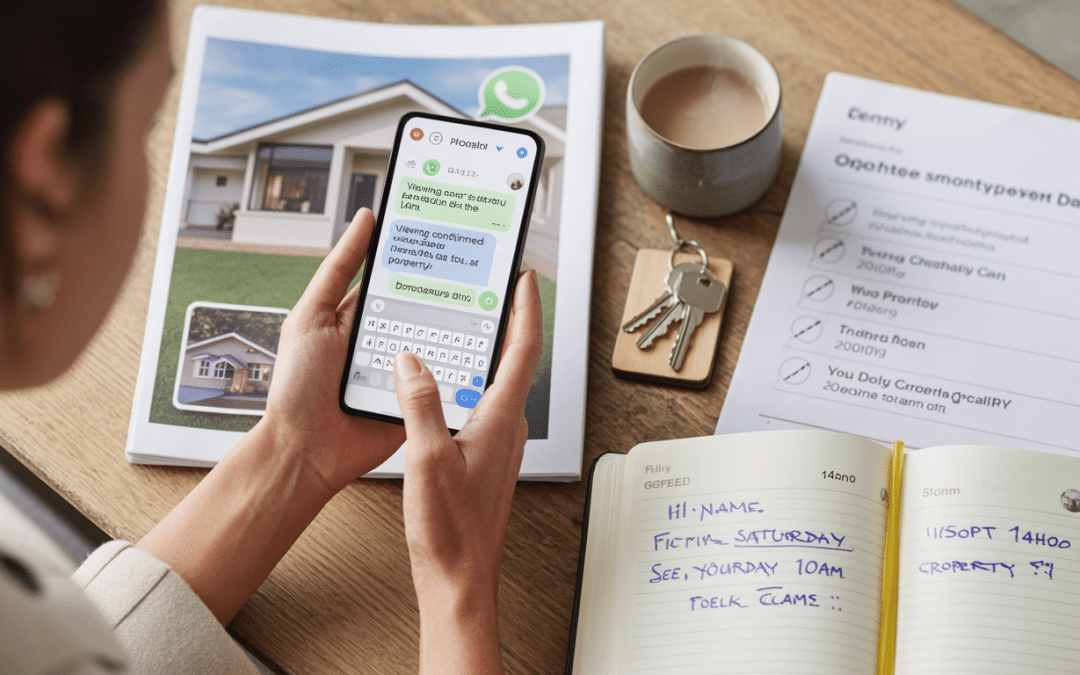
Real estate whatsapp marketing for South African estate agents is the single highest-leverage communication channel available — converting at 3-5x higher rates than email and 8-10x higher than SMS for property viewing confirmations and offer follow-up. Most SA estate agents use WhatsApp informally, sending one-off messages from personal numbers without templates, compliance protocols, or pipeline tracking. That approach caps growth around 8-12 closed sales per year.
For the broader strategic framework that underpins this channel, see our complete WhatsApp marketing guide for South Africa. This guide covers what specifically works for SA residential estate agents and small-to-mid agency principals — moving from ad-hoc personal-number messaging to structured workflows that survive PPRA compliance requirements and POPIA scrutiny.
Quick Answer
A working real estate whatsapp marketing system in South Africa runs four core sequences — new-listing alerts to buyer lists, viewing confirmations and reminders, post-viewing follow-up, and offer-to-close communication. Properly built, these sequences typically convert 40% more property viewings into offers because WhatsApp open rates exceed 70% in the SA market versus 20-30% on email, and response time drops from hours to minutes during the critical 24-hour window after a viewing.
Want a custom WhatsApp marketing system mapped to your real estate business?
Request Your Free Real Estate WhatsApp AuditWhy Real Estate WhatsApp Marketing Outperforms Every Other Channel
Real estate whatsapp marketing outperforms email, SMS, and phone calls for one structural reason — South African property buyers and sellers respond to WhatsApp messages within minutes, not hours or days. The medium matches the urgency of property decisions, where competing buyers can lose interest in 48 hours and competing offers shift the price ceiling within a week.
Email open rates in the SA real estate sector typically run 18-25% with click-through rates below 3%. SMS performs slightly better at 30-40% open rates but feels intrusive and breaks under the character limit when sharing property details. WhatsApp consistently achieves 70-85% open rates within the first hour and 15-25% reply rates within the same window. The gap is not marginal — it is structural.
For an estate agent running 30-50 active buyers and 15-25 active sellers at any given time, real estate whatsapp marketing reduces the time spent on routine communication by 60-70% while increasing the contact frequency that drives offer conversion. The agent who replies to a viewing enquiry within 4 minutes wins the listing engagement 3-4x more often than the agent who replies after 30 minutes.
| Channel | SA Open Rate | Reply Window | Best Use Case |
|---|---|---|---|
| 70-85% | Minutes | Viewing confirmations, follow-up, offer negotiation | |
| SMS | 30-40% | Hours | Appointment reminders only |
| 18-25% | Hours-Days | Listing alerts, market reports, bulk newsletters | |
| Phone call | 40-50% answer rate | Immediate if answered | Offer presentation, qualified buyer interviews |
The SA property market also runs on different time-of-day mechanics than other consumer markets. Property searches spike between 19:00 and 22:00 on weekdays, with viewing requests landing late evening. Estate agents using personal WhatsApp numbers either respond after hours and burn out, or miss the window and lose the buyer to a competitor who replied promptly. WhatsApp Business automation closes that gap without requiring the agent to be on the phone at 21:30.
The Four Core Sequences in Real Estate WhatsApp Marketing
A working real estate whatsapp marketing system runs four distinct automated sequences — new-listing alerts, viewing confirmations, post-viewing follow-up, and offer-to-close communication. Each sequence solves a different friction point in the SA property sales cycle and requires different message templates approved through WhatsApp Business.
Sequence 1 — New-listing alerts
The new-listing alert sequence pushes a fresh listing to a segmented buyer list within 30 minutes of mandate activation. The segmentation matters — buyers searching for 3-bedroom sectional title in Sandton do not want alerts about freehold homes in Centurion. A properly segmented buyer list converts new-listing alerts at 8-12% viewing-request rates versus 1-2% on broadcast alerts.
The mechanics require an opt-in buyer database (POPIA-compliant), property metadata captured at listing (price band, area, bedrooms, garden/no garden, sectional title vs freehold, school catchment), and message templates that include the listing's primary differentiator in the first 50 characters — because WhatsApp previews truncate beyond that.
Sequence 2 — Viewing confirmations and reminders
Viewing no-shows cost SA estate agents 25-40% of their booked viewings when handled by email or phone alone. Real estate whatsapp marketing reduces no-show rates to 8-12% through a three-message confirmation flow: an immediate booking confirmation, a same-day reminder at 09:00, and a 30-minute "I'm on my way to the property" check-in. The reminder sequence makes the appointment feel committed in a way that email confirmations do not.
For sellers, the same sequence works in reverse — confirming the seller will be off the property during the viewing window, then a post-viewing message asking for any feedback the agent can incorporate before the next showing.
Sequence 3 — Post-viewing follow-up
The 24 hours after a property viewing is when buyer interest either converts to an offer or fades. A structured post-viewing follow-up sequence captures the buyer's reaction within 2 hours of the viewing ending, asks specific questions about what worked and what did not, and positions the agent to handle objections while the property is still fresh in mind.
Agents running this sequence typically see 30-40% more second viewings and 18-25% more offers in the 7 days after first viewing. The sequence works because it removes the friction of an awkward follow-up call — buyers reply to a WhatsApp message at 21:00 that they would let a phone call go to voicemail.
Sequence 4 — Offer-to-close communication
From offer presentation to deed registration, the typical SA property sale runs 45-90 days with 15-25 distinct communication touchpoints involving buyers, sellers, bond originators, conveyancers, and the agent. A WhatsApp-based offer-to-close sequence keeps everyone synchronised on outstanding items — bond approvals, suspensive conditions, inspection dates, occupational rent calculations — without the agent manually chasing five parties simultaneously.
Need help building these four sequences for your agency?
Get a Custom WhatsApp Sequence SetupPPRA Compliance and POPIA for Real Estate WhatsApp Marketing
Real estate whatsapp marketing in South Africa operates under two regulatory frameworks that most agents either ignore or misunderstand — the Property Practitioners Act through the Property Practitioners Regulatory Authority (PPRA) and the Protection of Personal Information Act (POPIA). Getting both right is not optional, and a single complaint can suspend an agent's Fidelity Fund Certificate.
PPRA mandate disclosure rules
Section 67 of the Property Practitioners Act requires every property advertisement and marketing communication to disclose the property practitioner's status, registration number, and the agency they represent. WhatsApp messages count as marketing communications. Templates must include a footer with agency name and FFC reference where the message promotes a specific property — failure to include this triggers a sanctionable practice under PPRA regulations.
POPIA consent for buyer and seller data
Every contact added to a WhatsApp buyer list must have given explicit, recorded consent to receive property alerts via WhatsApp. The consent must specify the channel (WhatsApp), the purpose (property listings matching their stated criteria), and the duration (typically 24 months, renewable). Adding contacts from email signatures, business cards, or property24 enquiries without explicit WhatsApp opt-in is a POPIA breach.
Marketing record-keeping
PPRA Regulation 33 requires property practitioners to keep marketing records for five years. WhatsApp Business automatically logs all sent messages, but agents using personal WhatsApp numbers lose this audit trail. For agencies running real estate whatsapp marketing at scale, the WhatsApp Business API (not the consumer Business app) is the only compliant path because it provides exportable conversation logs and template approval records.
Compliance Reality
Most South African estate agents running WhatsApp from personal numbers are technically non-compliant with both PPRA mandate disclosure rules and POPIA consent requirements — they just have not been audited yet. Migrating to a WhatsApp Business API setup with template-based messaging, explicit opt-in flows, and exportable audit logs takes 2-3 weeks but resolves both compliance risks permanently. The cost of waiting until after a complaint is significantly higher than the cost of building it properly upfront.
Budget and Setup for Real Estate WhatsApp Marketing
The infrastructure cost for a working real estate whatsapp marketing setup in South Africa ranges from R3,500/month for a solo agent to R18,000/month for a 10-agent agency. The variation comes from message volume (WhatsApp Business API charges per conversation in three categories — marketing, utility, and authentication) and the automation platform layered on top.
| Agency Size | Active Pipeline | Monthly Cost | Monthly Conversation Volume |
|---|---|---|---|
| Solo agent | 30-50 buyers + 10-20 sellers | R3,500-R5,500 | 800-1,500 |
| Small agency (3-5 agents) | 150-250 active contacts | R7,000-R11,000 | 2,500-4,500 |
| Mid agency (6-10 agents) | 400-700 active contacts | R12,000-R18,000 | 5,500-9,000 |
The cost components break down across three layers — Meta's per-conversation charges (typically R0.40-R1.20 per conversation depending on category and country routing), the Business Solution Provider (BSP) platform fee (R1,500-R8,000/month), and any custom automation built on top through Zapier or Make.com (R500-R2,000/month for SA real estate use cases).
Agencies typically recover the full monthly cost of real estate whatsapp marketing within the first additional sale per agent. A single R2.5m property sale at 5% commission produces R125,000 in commission income, which more than covers a year of WhatsApp infrastructure for the entire agency.
Real-World Example — Mid-Sized SA Agency Going Integrated
The following before/after represents a typical outcome for a mid-sized SA estate agency that moves from personal-number WhatsApp to a properly built real estate whatsapp marketing system. The numbers below are representative of what GPM has seen across similar SA residential agencies applying structured WhatsApp workflows.
| Metric | Before (Personal WhatsApp) | After 6 Months (Structured) | Improvement |
|---|---|---|---|
| Viewing booking rate (enquiry to viewing) | 42% | 67% | +60% |
| Viewing no-show rate | 32% | 11% | -66% |
| Viewing-to-offer conversion | 14% | 22% | +57% |
| Average response time | 2h 40min | 4 minutes | -97% |
| Monthly closed sales (5 agents) | 6.4 | 10.2 | +59% |
| Annual gross commission (R bn) | R8.4m | R13.8m | +64% |
| Agent hours per week on routine comms | 22 hrs | 7 hrs | -68% |
The hours-saved figure is often more valuable to agents than the revenue figure because it reallocates time from administrative messaging to high-value activities — listing presentations, offer negotiations, and physical viewings. A 5-agent agency reclaiming 75 agent-hours per week across the team is the equivalent of adding a sixth agent without the payroll cost.
The Real Lesson
Real estate whatsapp marketing does not increase conversion rates by being a "better channel" in isolation — it increases conversion by removing the bottleneck of agent availability during the buyer's decision window. Most lost deals in SA residential property are lost between 19:00 and 22:00 when buyers are searching but agents have stopped replying. Automating the first response and viewing confirmation captures that window, and the agent reclaims their evenings.
Why GPM Builds Real Estate WhatsApp Marketing Differently
Real estate whatsapp marketing that actually works for SA agencies cannot be built from generic agency playbooks. Most local digital agencies offering WhatsApp services have never sold a property, never sat through a PPRA mandate audit, and never managed a buyer pipeline through the 45-90 day SA sale-to-transfer cycle.
They sell WhatsApp setup as a checkbox without understanding the operational mechanics that make the difference between an agent gaining 4 sales a year and losing their Fidelity Fund Certificate. The compliance layer matters as much as the conversion layer for any agency operating under PPRA oversight.
Growth Pulse Media builds WhatsApp marketing for South African businesses from a different starting point — we have operated WhatsApp Business API setups against SA buyer behaviour during load-shedding, built POPIA-compliant consent flows for property buyer databases, and structured PPRA-disclosure-compliant templates that survive regulatory review. We work in-house, no offshore outsourcing, with senior-level attention because we deliberately limit client load.
Every real estate whatsapp marketing engagement we deliver sequences the four core flows, integrates with the agent's existing CRM (whether that is Property24's agent tools, Private Property, or a custom Pipedrive build), and trains the agency team on template management without locking them into our platform. The goal is an operational system the agency owns, not a dependency the agency rents.
Who This Is NOT For
A structured real estate whatsapp marketing system is the wrong fit for several types of SA property businesses, and it is more honest to say so up front than to take the engagement and disappoint everyone later.
Solo agents doing under R3m annual GCI. If your total gross commission income is below R3m and you are running a one-person operation, a properly built WhatsApp Business API setup is over-engineered. You will get 80% of the benefit by upgrading to the free WhatsApp Business app, setting up quick-reply templates, and using a single labelled buyer list. The full API setup pays back at higher volumes.
Commercial property and industrial brokers. The framework above is built for residential estate agents and small-to-mid residential agencies. Commercial property buyers operate on 6-18 month decision cycles with different communication mechanics — formal RFP processes, multiple stakeholder approvals, and procurement teams. WhatsApp helps but is not the primary channel. Different post needed for commercial.
Agencies not yet POPIA-compliant. If your current buyer and seller databases were built without explicit consent records, the first job is rebuilding the database lawfully — not layering WhatsApp on top of non-compliant data. We will not build WhatsApp infrastructure on a POPIA-exposed database because that compounds the regulatory risk rather than resolving it.
Property developers selling off-plan only. Off-plan property sales run through show-house funnels, deposit qualification, and bond pre-approval workflows that are different from re-sale residential mechanics. WhatsApp plays a role but the dominant channel for off-plan is paid Facebook and Google Ads driving to qualified lead forms. Different playbook entirely.
Not sure if your agency fits the structured WhatsApp framework?
Book a 20-Minute Real Estate WhatsApp Fit CallFrequently Asked Questions
What does real estate whatsapp marketing for South African agencies actually include?
A working setup includes four automated sequences — new-listing alerts to segmented buyer lists, viewing confirmation and reminder flows, post-viewing follow-up sequences, and offer-to-close communication management. The technical infrastructure includes WhatsApp Business API access through a Business Solution Provider, PPRA-compliant message templates, POPIA-compliant opt-in flows, and integration with the agent's existing CRM. Personal WhatsApp numbers do not provide the audit trail or compliance signals required.
How long does it take to set up WhatsApp marketing for a real estate agency in South Africa?
A solo agent setup takes 5-7 business days from kickoff to first live message. A small agency with 3-5 agents takes 14-21 days because of the template approval workflow through Meta (typically 24-48 hours per template, with 8-12 templates required for the four core sequences). A mid agency with 6-10 agents and existing CRM integration takes 30-45 days including team training, role-based permissions, and reporting dashboard setup.
Is WhatsApp marketing PPRA-compliant for South African estate agents?
Yes, when implemented correctly. The Property Practitioners Act through PPRA requires marketing communications to disclose the property practitioner's status, registration number, and agency. Template-based messaging through WhatsApp Business API allows this disclosure to be embedded in every template footer, making compliance automatic rather than dependent on the agent remembering to include it. Personal WhatsApp numbers without templates are the primary compliance risk, not WhatsApp itself.
How much should a South African estate agency spend on WhatsApp marketing each month?
Solo agents budget R3,500-R5,500/month including Meta conversation charges and a Business Solution Provider platform fee. Small agencies (3-5 agents) budget R7,000-R11,000/month. Mid agencies (6-10 agents) budget R12,000-R18,000/month. The full cost is typically recovered within the first additional sale per agent — a single R2.5m property sale at 5% commission produces R125,000 in commission income, which more than covers a year of WhatsApp infrastructure.
Can WhatsApp marketing replace listings on Property24 or Private Property?
No — and trying to replace them is the wrong framing. Property24 and Private Property generate initial buyer enquiries through search-led discovery. WhatsApp converts those enquiries into viewings and viewings into offers. The two channels work in sequence, not in competition. Agencies that try to bypass property portals by going WhatsApp-only lose the top-of-funnel enquiry volume that makes the WhatsApp conversion layer worth running.
How does POPIA affect adding buyers to a WhatsApp marketing list in South Africa?
Every contact added to a WhatsApp buyer list must give explicit, recorded consent specifying the channel (WhatsApp), purpose (property listings matching their criteria), and duration. Existing buyer databases built from property portal enquiries, email signatures, or open-house sign-in sheets typically lack this WhatsApp-specific consent and must be rebuilt with a re-permissioning campaign before WhatsApp marketing begins. Adding contacts without explicit opt-in is a POPIA breach that can result in fines and reputational damage.
If any of the above sounds different from what you have heard from generic agencies, that is the operator difference talking. Generic agency advice optimises for what is easy to sell; operator-built infrastructure optimises for what actually moves property pipeline.
Build a Real Estate WhatsApp Marketing System That Converts 40% More Viewings Into Offers
Receive a custom WhatsApp Business API setup tailored to your agency size, your current buyer and seller pipeline, your CRM integration requirements, and the PPRA and POPIA compliance context — covering the four core sequences with template-approval guidance, opt-in consent flow design, and team training. Built by operators who understand SA residential property mechanics, not generic agency playbooks. No obligation — we will get back to you within 24 hours.
Request Your Custom Real Estate WhatsApp Setup