
 Add to Preferred Sources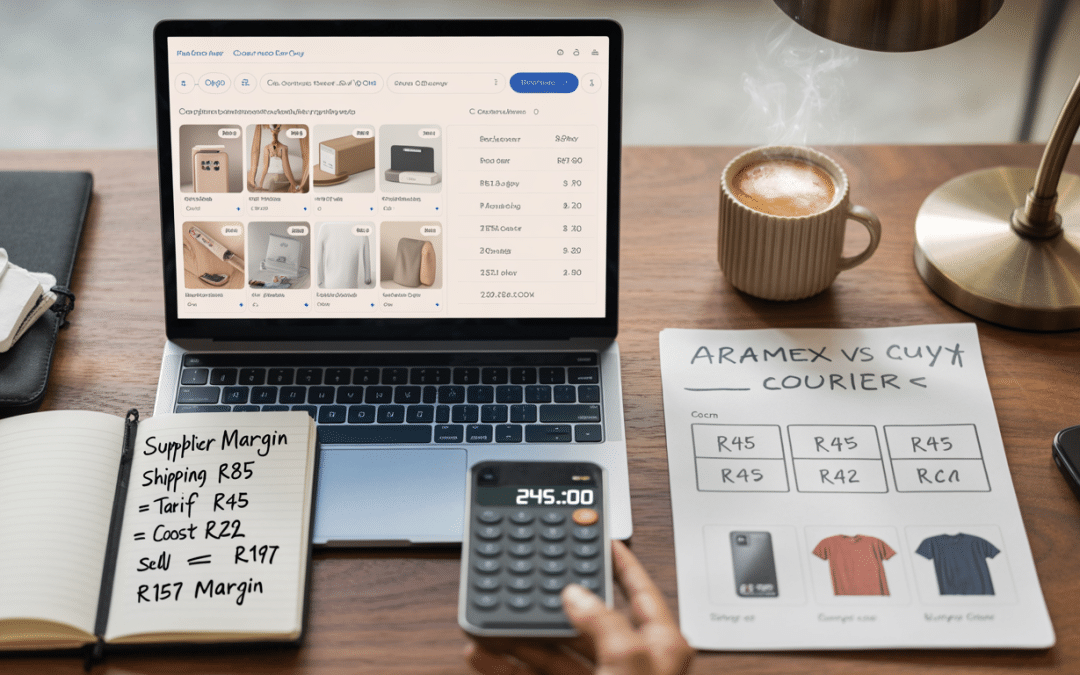
Shopify dropshipping south africa is not the passive income business model that YouTube tutorials and Instagram ads make it look like — it works in SA, but only for operators who understand the brutal economics involved. Long international shipping times, ZAR currency volatility, customs duties on imports, and SA buyer trust dynamics around no-physical-stock business models all compound.
Most SA dropshipping stores fail within 90 days because they copy US tutorials without adjusting for these four SA-specific realities. The model is not impossible in South Africa — it just requires structural adaptations the international content rarely covers.
This guide covers what actually works for shopify dropshipping south africa stores in 2026 — the supplier configurations that survive SA shipping times, the apps that handle Rand conversion correctly, the legal and tax obligations most tutorials skip, and the honest break-even economics. For the broader Shopify context that underpins this business model, see our complete Shopify South Africa guide. This is the operator view, not the influencer pitch.
Quick Answer
Shopify dropshipping south africa works in 2026 if you accept three structural constraints — international supplier shipping takes 15-30 days to reach SA buyers (versus 3-7 days in US/EU markets), ZAR exchange rate volatility erodes margins by 5-15% per quarter, and SARS requires VAT registration above R1m annual turnover plus customs duty payment on imports. Working dropshipping setups in SA use 60-70% local SA suppliers (Bidvest, Takealot Marketplace fulfilment, local print-on-demand) combined with 30-40% international dropshipping for unique products. The pure international dropshipping model that works in the US fails in SA without local supplier integration.
Need help evaluating whether dropshipping is right for your SA store?
Request a Free Dropshipping Viability AuditThe Four SA-Specific Realities That Break International Dropshipping Tutorials
Shopify dropshipping south africa stores fail or succeed based on four operating realities that international tutorials ignore. Each one independently can sink a store; together they explain why 70-80% of SA dropshipping stores close within their first year of operating.
Reality 1 — International shipping times kill conversion
The dropshipping model in shopify dropshipping south africa setups typically sources from AliExpress, Spocket, or DSers — and the average shipping time from Chinese suppliers to South African addresses is 15-30 days for standard shipping, 8-15 days for ePacket. SA buyers compare those timelines against Takealot's 1-3 day delivery and walk away. The conversion rate impact is severe — international dropshipping stores typically convert at 0.4-0.8% while SA-supplier-backed stores convert at 1.5-2.8%.
Reality 2 — ZAR currency volatility erodes margins
Shopify dropshipping south africa operators selling in Rand but paying suppliers in USD or CNY take a 5-15% margin hit every quarter as the Rand fluctuates. A product costing $8 USD at R18/USD costs R144, but the same product at R20/USD costs R160 — a 11% cost increase that wipes out a typical 15-25% dropshipping margin.
Most international dropshipping apps do not auto-adjust selling prices based on FX movements, so the store sells at a loss for weeks until manually corrected. Building in a 30%+ margin buffer at launch is the only sustainable mitigation.
Reality 3 — Customs duties and VAT on imports
Every imported parcel above R500 is subject to customs duty (typically 20% of declared value) and 15% VAT. Many international suppliers under-declare parcel values to dodge duties, which is illegal under South African Customs and Excise Act and creates personal liability for the dropshipper if SARS audits. Legitimate dropshipping operations factor these duties into pricing, which raises the price ceiling that customers will pay — and often makes the unit economics non-viable for low-margin products.
Reality 4 — SA buyer trust and returns
SA consumers are increasingly aware of dropshipping and view long shipping times as a trust signal. Reviews mentioning "took 3 weeks to arrive" or "could not return — supplier overseas" appear consistently in low-trust SA dropshipping stores. The Consumer Protection Act gives SA buyers 7-day cooling-off rights on online purchases, but enforcing returns against an international supplier is essentially impossible without the dropshipper absorbing the return shipping cost (often more than the product margin).
| SA Reality | Impact on Pure International Dropshipping | Working Mitigation |
|---|---|---|
| Shipping time 15-30 days | Conversion drops to 0.4-0.8% | Use local SA suppliers for 60-70% of catalogue. |
| ZAR-USD volatility 5-15%/quarter | Margin erosion 8-12% annually | Build 30%+ margin buffer. |
| Customs duty + 15% VAT on imports | Effective COGS up 25-35% | Build duties into pricing. |
| 7-day CPA cooling-off + return liability | Return costs exceed margins | Use SA suppliers for higher-return-risk categories. |
Working Shopify Dropshipping South Africa Configurations
The shopify dropshipping south africa setups that actually generate sustainable revenue use a hybrid model — combining local SA suppliers (for high-velocity, low-margin items where speed matters) with international dropshipping (for unique products with longer perceived value). Pure international dropshipping rarely works; pure local supplier sourcing isn't really "dropshipping" but rather a traditional reseller model. The hybrid sits between them.
Configuration A — Local SA suppliers (60-70% of catalogue)
Several SA suppliers offer dropshipping integration with Shopify either natively or through Shopify apps. Bidvest Waltons (office supplies), Pricecheck (consumer electronics), and Takealot Marketplace (broader product catalogue) all support dropshipping arrangements with SA-based fulfilment. Shipping times drop to 2-5 days (Courier Guy or Aramex), and the Rand-pricing question goes away because pricing is already in Rand. The trade-off is lower margins — SA suppliers typically take 70-80% of retail versus international suppliers who take 50-60%.
Configuration B — International dropshipping for unique products (30-40%)
For shopify dropshipping south africa stores sourcing niche products not available locally (unique decor, specialised electronics, novelty items), international dropshipping via Spocket or DSers with US/EU warehouse-based suppliers works better than direct China sourcing. Spocket specifically curates US, EU, UK, and AU suppliers — shipping times drop to 5-10 days for SA addresses, and margins improve compared to AliExpress sourcing. The trade-off is smaller product catalogue and higher per-unit costs.
Configuration C — Print-on-demand for branded products
For branded merchandise (apparel, mugs, posters) on shopify dropshipping south africa stores, local SA print-on-demand services like Printulu or Shippr integrate with Shopify and produce on-demand with 5-7 day SA fulfilment. This works for stores building a brand identity rather than reselling generic products. The margins are higher (35-50%) because the products are exclusive to the store.
The Configuration Reality
The most successful shopify dropshipping south africa stores in 2026 do not use a single sourcing model — they layer 60-70% local SA suppliers for the catalogue backbone, 30-40% curated international suppliers for differentiated products, and a small print-on-demand catalogue for brand-building merchandise. Stores attempting pure AliExpress-style international dropshipping at scale typically fail within 6-12 months because the four SA realities compound.
Real-World Economics of Shopify Dropshipping in South Africa
The honest unit economics of shopify dropshipping south africa setups look very different from the YouTube tutorial maths. The tutorial maths assumes 30-50% margins on a $20 product with $4 paid traffic costs. The SA reality builds in shipping delays that suppress conversion, currency hits that compress margins, duties and VAT that raise costs, and paid traffic that costs more per acquisition than US benchmarks. Run the actual numbers before launching.
| Cost / Revenue Line | Per-Unit Value | Notes |
|---|---|---|
| Selling price (Rand) | R299 | Typical SA dropshipping price point |
| Supplier cost (USD $8 @ R19) | -R152 | AliExpress mid-tier supplier |
| Customs duty (20% on declared) | -R30 | Legitimate declaration |
| VAT on import (15%) | -R23 | SARS obligation above R500/parcel |
| Shopify transaction fee (2.9%) | -R8.67 | Basic Shopify plan |
| Paid traffic cost (R250 CAC) | -R250 | Typical SA Meta Ads CAC |
| Net per sale | -R164.67 loss | Unit-level loss before margin |
The honest reality: at typical SA dropshipping price points and traffic costs, the unit economics are upside-down. To make shopify dropshipping south africa profitable, operators need to either increase the price point above R600 (where customs and traffic costs become proportionally smaller), reduce paid traffic costs through organic acquisition (SEO, social, referrals), or move significant catalogue share to local SA suppliers where supplier cost is 50% lower and customs/VAT disappear.
Want help running the honest unit economics for your dropshipping idea?
Get a Free Dropshipping Economics ReviewLegal and Tax Obligations Most SA Dropshipping Tutorials Skip
Shopify dropshipping south africa operators face a stack of legal and tax obligations that international tutorials rarely cover. Skipping them does not make them go away — SARS, the National Consumer Commission, and the Companies and Intellectual Property Commission (CIPC) increasingly enforce against non-compliant ecommerce operators. The legitimate operating cost is real and must be factored into the business model.
VAT registration threshold
SA businesses with turnover exceeding R1m in any consecutive 12-month period must register for VAT and charge 15% VAT on sales. Voluntary registration is available below R1m but creates administrative burden. Most early-stage dropshippers operate below this threshold and avoid VAT, but planning for the threshold crossing is essential — at R1m turnover, the business needs to either absorb 15% VAT (compressing margins) or raise prices 15% (compressing conversion).
Customs duty on imports
Every imported parcel above R500 declared value attracts customs duty (typically 20%) plus 15% VAT on the duty-inclusive value. The official Shopify dropshipping documentation covers the principle but not SA-specific rates. Under-declaring values to dodge duties is illegal under the Customs and Excise Act and creates personal liability for the registered importer (the dropshipper, not the supplier).
Consumer Protection Act compliance
The Consumer Protection Act gives SA buyers 7-day cooling-off rights on online purchases. Dropshippers must offer returns and refunds within this window regardless of supplier policy. The cost of return shipping and refund processing falls on the dropshipper, not the supplier.
CIPC registration
Operating an ecommerce business as a registered company (Pty) Ltd is not legally mandatory below certain thresholds, but it protects personal assets and simplifies SARS compliance. Most dropshippers register a Pty Ltd through CIPC at minimal cost (R125 for registration plus annual filings).
The Compliance Reality
The compliance overhead of running a legitimate shopify dropshipping south africa business adds R3,000-R8,000 in annual professional fees (accounting, CIPC filings, VAT submissions). That cost is real and must be priced into the unit economics from day one. Stores that skip compliance to "save money early" typically face SARS audit liabilities 18-36 months in that cost 5-10x more than the original compliance fees would have.
Why GPM Approaches Shopify Dropshipping Differently
Most SA agencies pitching shopify dropshipping south africa setup services optimise for what looks good in a portfolio screenshot — slick store design, hero product imagery, animated landing pages. That approach produces beautiful stores that lose money because the unit economics were never validated. The four-reality framework above optimises for what actually generates sustainable revenue: legal compliance, viable margins, defensible supplier relationships, and customer trust signals.
Growth Pulse Media builds Shopify stores for South African businesses from operator experience — we have run unit economics validation against AliExpress and Spocket supplier pricing, integrated Bidvest and Takealot Marketplace dropshipping into client stores, configured customs and VAT compliance into store pricing logic, and rebuilt stores that failed under pure international dropshipping models. We work in-house with senior-level attention because we deliberately limit client load.
Every shopify dropshipping south africa engagement we deliver starts with a 2-week viability validation — pricing the actual unit economics against real supplier quotes, validating the margin survives customs and VAT, and stress-testing the model against 15-30% Rand volatility. The 2 weeks of validation prevents the 6-12 month failure cycle that defines most SA dropshipping store lifespans.
Who This Is NOT For
The shopify dropshipping south africa framework above is the wrong fit for several types of SA ecommerce operators, and it is more honest to say so up front than to take the engagement and disappoint everyone later.
Operators expecting passive income. Dropshipping is an active operations business — product research, supplier vetting, paid traffic management, customer service, and returns handling are daily activities. If you are looking for a "passive income" or "set and forget" business model, dropshipping is not it. The YouTube version is fiction.
Brands needing exclusive product control. If your brand positioning depends on product exclusivity, custom packaging, or quality control, dropshipping fails on all three dimensions. You are sharing supplier inventory with thousands of other dropshippers, you cannot customise packaging, and you do not inspect products before shipping. Branded ecommerce needs inventory ownership.
Sellers with thin margins on price-sensitive products. Dropshipping economics work at higher price points (R500-R2,000) where customs and traffic costs are proportionally smaller. For low-priced items (under R200), the unit economics rarely survive SA-specific costs. If your product idea sells for R99 or R149, dropshipping is the wrong fulfilment model.
Operators unwilling to handle compliance. SA dropshipping requires VAT registration planning, customs duty compliance, CPA returns handling, and CIPC registration. If you are not prepared to handle these obligations or pay an accountant to handle them, do not start. Non-compliance compounds; SARS enforcement is becoming more aggressive.
Not sure if dropshipping fits your business idea?
Book a 20-Minute Dropshipping Fit CallFrequently Asked Questions
Is shopify dropshipping south africa profitable in 2026?
Yes — for operators who combine 60-70% local SA suppliers with 30-40% international dropshipping, target price points above R500, run viability validation before launching, and budget for customs duty, VAT, and Consumer Protection Act compliance.
The pure international dropshipping model (AliExpress only, undifferentiated products, low price points) typically loses money in SA because shipping times kill conversion, ZAR volatility erodes margins, and customs duties raise effective COGS by 25-35%.
How much does it cost to start a Shopify dropshipping store in South Africa?
Minimum viable cost is R8,000-R15,000 to launch: Shopify Basic plan (R750/month), a dropshipping app (R200-R600/month for Spocket, DSers, or AutoDS), domain registration (R150 annual), a Shopify theme (R0 for Dawn, R5,500-R8,500 for premium), and R5,000-R8,000 in paid traffic budget for the first 60 days of validation.
Realistic operating cost to profitable scale is R30,000-R60,000 across the first 6 months — most of that going to paid traffic experimentation before the unit economics work.
What are the best dropshipping suppliers for South African Shopify stores?
For local SA fulfilment: Bidvest Waltons (office and stationery), Pricecheck (electronics), Takealot Marketplace (broader catalogue), Printulu and Shippr (print-on-demand). For international dropshipping: Spocket (US and EU warehouses, 5-10 day shipping to SA), DSers (AliExpress integration, 15-30 day shipping).
Avoid pure AliExpress sourcing as a primary supplier — the shipping times destroy conversion. Use it for niche products where the customer accepts longer delivery in exchange for unique items.
Do I need to pay tax on dropshipping income in South Africa?
Yes — all SA dropshipping income is subject to income tax (personal or corporate depending on entity structure). Businesses with annual turnover exceeding R1m must register for VAT and charge 15% on sales. Every imported parcel above R500 declared value attracts customs duty (typically 20%) plus 15% VAT.
Operating without tax compliance is illegal and creates personal liability if SARS audits. Most legitimate dropshipping operations register a Pty Ltd through CIPC and engage an accountant from month one rather than catching up later.
How long does shipping take from international dropshipping suppliers to South Africa?
Standard AliExpress shipping to South Africa takes 15-30 days for free shipping, 8-15 days for ePacket. Spocket US and EU suppliers ship to SA in 5-10 days at higher cost. DSers via official AliExpress integration averages 10-20 days depending on supplier location.
Local SA dropshipping suppliers (Bidvest, Takealot Marketplace, Printulu) ship within 2-5 days using Courier Guy or Aramex. Shipping time is the single biggest variable affecting shopify dropshipping south africa store conversion rates.
Can I dropship to South Africa without registering a business?
Technically yes for small operations below R1m annual turnover — you can operate as a sole proprietor reporting income on personal tax returns. However, registering a Pty Ltd through CIPC (cost R125 plus annual filings) protects personal assets, simplifies SARS compliance, and is essentially mandatory once turnover crosses R500,000 because the personal tax bracket impact becomes punitive.
Most legitimate SA dropshipping operations register a company within the first 3-6 months of operating.
If any of the above sounds different from what you have heard from generic dropshipping tutorials, that is the operator difference talking. Tutorial advice optimises for what is easy to sell; operator-built recommendations optimise for what actually generates sustainable Rand revenue without SARS enforcement risk.
Validate Your Shopify Dropshipping Business Idea Before You Burn R30,000 on Paid Traffic
Receive a custom shopify dropshipping south africa viability audit covering unit economics validation against real supplier pricing, customs duty and VAT compliance pricing logic, ZAR volatility margin stress-testing, supplier selection across local and international options, and an honest profitability projection across 6, 12, and 24 months. Built by operators who have validated and rebuilt SA dropshipping stores, not generic agency playbooks. No obligation — we will get back to you within 24 hours.
Request Your Custom Dropshipping Viability Audit