
 Add to Preferred Sources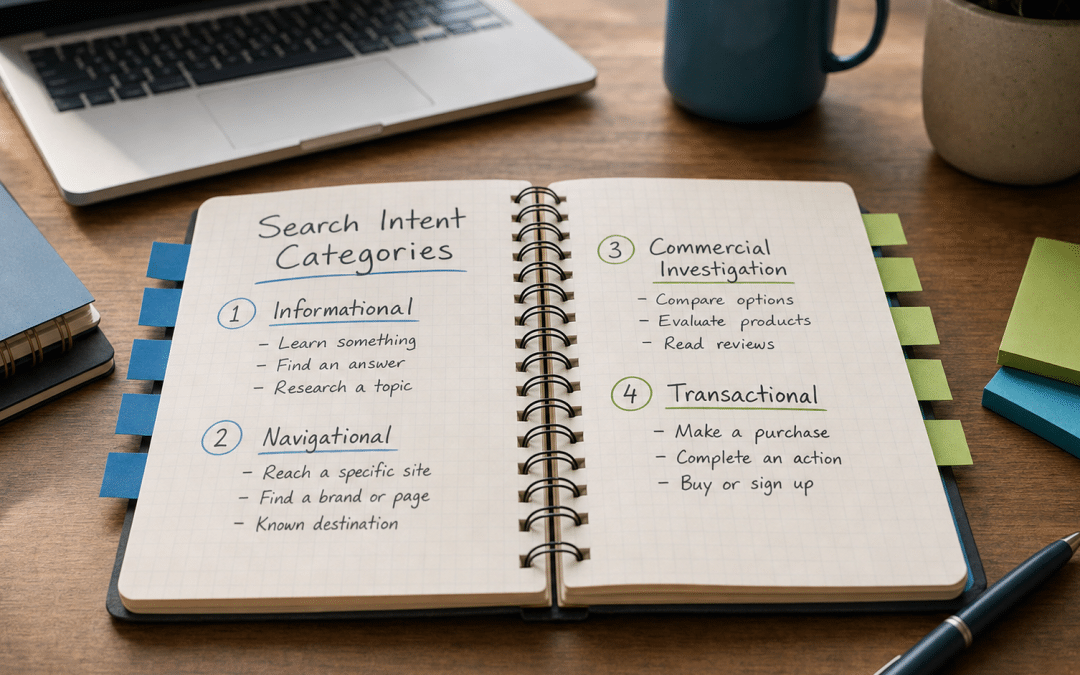
How search intent affects SEO comes down to one principle: Google classifies the goal behind every query before it decides which pages to return — and if your content does not match that goal in format, depth, and purpose, it will not rank regardless of how well it covers the topic. Intent is the filter that operates before backlinks, page speed, or content quality are even assessed.
Most South African businesses investing in SEO in South Africa focus on keyword targeting first. That is the wrong order. Intent determines what format Google rewards (a step-by-step guide, a product listing, a comparison page, a local directory entry) and which SERP features appear around your result. Getting the intent right first means every other optimisation effort lands on a page Google is already willing to rank. Getting it wrong means building an excellent page on the wrong foundation.
With Google holding a 91.94% search market share in South Africa as of August 2026 — the highest of any large market on the continent (StatCounter) — understanding how Google evaluates and matches intent is not an optional refinement. It is the core of any working organic strategy.
Quick Answer
How search intent affects SEO: Google classifies every query into one of four intent categories — informational, navigational, commercial, or transactional — and then surfaces results that match the format, depth, and purpose those intents require. Content that aligns with the detected intent ranks; content that misaligns does not rank, regardless of technical quality or backlink count. Identifying and matching search intent before writing is the single step that determines whether all other SEO work pays off.
Jump to a section
Not sure which intent your key pages are targeting?
Send us your top five URLs and we will tell you exactly where your intent alignment is breaking down and what Google wants to see instead.
Get a free intent auditWhat Is Search Intent in SEO?
Search intent is the underlying goal a person has when they type a query into Google — what they are actually trying to do, not just the words they used to describe it. Two queries containing the same keyword can have completely different intents and require completely different content formats to satisfy them.
The concept is formalised in Google's Search Quality Evaluator Guidelines, which instruct quality raters to assess pages using "Needs Met" ratings — a direct measure of how completely a page satisfies the searcher's actual goal. A page that uses the right words but answers the wrong goal scores poorly on Needs Met and does not earn high rankings.
Google's own SEO Starter Guide notes that its language matching systems are sophisticated enough to understand how a page relates to a query — but only when the page is built to fulfil a genuine user need, not to target a keyword in isolation.
Consider the difference between "plumber Cape Town" and "how to fix a leaking pipe." Both contain plumbing-related words. The first is a local service lookup — the searcher wants a business name, phone number, and reviews. The second is an instructional query — the searcher wants a step-by-step walkthrough. A plumbing business that writes a blog post titled "How to Fix a Leaking Pipe" but structures it as a sales page for their services has misread the intent on both queries. Neither page will rank well.
Key Principle
Search intent is not about what keywords appear in a query — it is about what the searcher is trying to accomplish. Google's algorithm identifies that goal first, then finds pages that fulfil it. Your page needs to match the goal, not just the words.
The Four Types of Search Intent
Every search query falls into one of four intent categories — and each category requires a different content format, depth, and call to action to satisfy Google's ranking model and the actual searcher.
| Intent Type | What the Searcher Wants | SA Example Queries | Content Format That Ranks |
|---|---|---|---|
| Informational | An answer, explanation, or how-to guide | "how does VAT work in South Africa", "what is load-shedding schedule" | Blog post, guide, explainer, FAQ page |
| Navigational | A specific website, brand, or page | "SARS eFiling login", "Takealot returns portal" | Home page, brand page, login page |
| Commercial | Research and comparison before buying | "best solar panels South Africa", "PayFast vs Ozow fees" | Comparison article, review, best-of list |
| Transactional | To complete a purchase or sign-up | "buy standing desk Johannesburg", "Shopify plan South Africa" | Product page, category page, pricing page |
Informational intent is the most common category. One widely cited estimate — from SE Ranking's analysis of large query datasets — puts informational queries at approximately 70% of searches, commercial at 22%, navigational at 7%, and transactional at around 1%. These proportions vary by dataset and industry vertical; treat them as directional rather than exact. The core point stands: most searches are research-seeking rather than purchase-ready, so most of a South African business's content should serve informational or commercial intent, with transactional intent reserved for product and service landing pages.
Intent and South Africa's Mobile-First Reality
South Africa has 51.7 million internet users, 79.6% internet penetration, and 98.7% of mobile connections operating on broadband (DataReportal, 2025) — meaning most SA searches arrive on fast, reliable mobile devices. As a regional benchmark, mobile accounts for 69.8% of search traffic across Africa; South Africa's own broadband-mobile reality suggests the proportion is at least comparable. The practical implication: mobile searchers expect fast, direct answers. Informational content must be scannable and answer-first. Transactional pages need to remove friction at the point of action, not front-load with narrative.
How Search Intent Affects SEO Rankings
Search intent affects Google rankings because the algorithm classifies the goal behind a query first and only surfaces pages whose format and purpose match that goal — technical quality and backlinks operate within that constraint, not above it. How search intent affects SEO is therefore not a refinement to apply after other optimisation work; it is the premise everything else runs on.
Google's ranking systems detect intent through three mechanisms:
- Query modifiers — words like "how", "why", "best", "buy", "near me", "login" signal the intent category directly
- Historical click behaviour — Google monitors which results searchers engage with and which they ignore or bounce from, then adjusts rankings accordingly
- SERP composition — the mix of features Google returns (featured snippets, People Also Ask boxes, product carousels, local packs) reflects its current intent classification for that query
When a page misaligns with intent, the user behaviour signals confirm the mismatch. A high bounce rate, short dwell time, or immediate back-navigation tells Google the page did not satisfy the query. Over time, those signals suppress the page's rankings for that query — even if the page is well-written and technically sound. If you suspect intent mismatch is holding key pages down, our SEO service for South African businesses starts with a free audit before any rewrite is agreed.
This is a critical distinction for building an SEO content brief: the brief must establish intent before it establishes structure. If the intent is commercial — a searcher comparing two platforms — writing a general explainer rather than a side-by-side comparison guarantees underperformance regardless of word count or keyword inclusion.
Intent Match — What Works
A Johannesburg accounting firm targets the query "VAT registration cost South Africa." They check the SERP: the top results are blog posts listing the steps, expected timelines, and SARS fees. They write a structured guide with a clear steps breakdown and a table of cost components. The page ranks within three months because the format matches the informational intent Google has classified for that query.
Intent Mismatch — What Fails
The same firm instead writes a service page headlined "Our VAT Registration Service — Get Started Today" and targets the same query. The page has strong calls to action and good testimonials, but it is a transactional page competing on an informational query. Google's quality raters evaluate it as a poor Needs Met match. It never reaches page one, and the backlinks built to it deliver no ranking lift.
Intent drift is a related risk: queries can shift category over time as markets mature or as AI-generated answers change what users expect from a SERP. A query that was informational in 2023 — "electric vehicle charging stations" — may have shifted to commercial or local intent by 2026 as EV adoption accelerates. Pages that were ranking can drop not because the content degraded but because the intent category moved under them. Refreshing existing posts should include an intent re-check alongside a content update.
How to Identify Search Intent for Any Keyword
The most reliable method for identifying search intent is SERP analysis — examining what Google is already returning for a query tells you exactly what intent it has classified and what format it rewards.
A practical four-step process:
- Open an incognito browser and search your target keyword from a South African IP address. Incognito removes personalisation. SA IP matters because Google localises results.
- Examine the top five organic results for content type (blog post, product page, comparison article, video, local listing) and content format (how-to guide, listicle, definition article, data table). The type and format that dominate are what Google's model has confirmed for that intent.
- Note the SERP features present — featured snippets indicate an informational or definitional query; product carousels indicate transactional intent; local packs indicate navigational or visit-in-person intent; People Also Ask boxes suggest informational with multiple sub-queries.
- Read the query modifiers — "how", "what", "why" reliably signal informational; "best", "vs", "review", "alternatives" signal commercial; "buy", "price", "near me", "book" signal transactional; brand names signal navigational.
For keyword research to be actionable, each keyword must have an intent classification before it enters your content calendar. A keyword without an intent tag is an incomplete brief — you do not yet know what page type to build.
The SERP Is the Answer
You do not need a tool to identify intent — Google has already done the research. Whatever format dominates the top five results for your keyword is the format that currently satisfies that intent. Match it, then differentiate on depth and originality. Trying to rank a blog post against five product pages, or a product page against five guides, is optimism without a strategy.
Common Search Intent Mistakes South African Websites Make
South African websites most commonly misalign intent in five recurring patterns: publishing blog posts for transactional queries, using service pages for informational queries, ignoring local-pack intent, failing to re-check intent as SERPs evolve, and overlooking how SA-specific seasonal events shift intent class entirely. Practitioners consistently report these as the root cause of ranking failures — even for businesses that invest in topical authority and produce well-researched content.
Writing blog posts for transactional queries
A retailer targeting "buy noise-cancelling headphones Johannesburg" publishes a buying guide. The guide is informative and well-written. The SERP is filled with product category pages and Takealot listings. The guide never ranks because Google has classified that query as transactional and is only surfacing purchase-ready pages. The fix is a product listing or category page, not a guide.
Using service pages for informational queries
A law firm targets "how to register a company in South Africa" with a page that promotes their company registration service. The SERP for that query is dominated by step-by-step guides and CIPC documentation. The service page doesn't match — it answers a different question ("hire someone to register my company") rather than the searcher's actual question ("how do I do this myself"). The firm needs a separate informational guide and a separate service landing page targeting a commercial query like "company registration service South Africa."
Ignoring local intent signals
Service businesses often optimise for generic national keywords and miss the local pack entirely. Queries like "electrician Sandton" or "wedding venue Cape Town" trigger local map packs. Ranking in the standard organic results for these queries is secondary to ranking in the local pack — which requires a different set of optimisation signals centred on Google Business Profile completeness and local citations.
Not refreshing intent as SERPs evolve
Google's classification of intent for any given query is not fixed. A business that audited its content strategy in 2023 and mapped intent correctly may find that intent has drifted by 2026 — particularly in fast-moving sectors like fintech, renewable energy, and AI tools. If pages are losing traffic without an obvious technical reason, a changed intent classification is often the cause.
Ignoring SA-specific seasonal intent spikes
Load-shedding stages drive sudden surges in queries like "inverter prices" and "solar quotes Johannesburg" — normally low-volume keywords that spike to strong transactional intent when Eskom announces extended outages. Similarly, SARS filing deadlines shift informational queries into navigational ones, and CPA-regulated sale periods move commercial queries toward transactional. A content calendar built on annual volume averages misses these windows entirely. Mapping intent against South African seasonal triggers — not just global monthly data — is what separates an SA-calibrated strategy from a global template applied to the local market.
Consistently losing ground to competitors who publish less?
The gap is usually intent, not effort. We will audit your top ten tracked keywords for intent alignment and show you exactly which pages are fighting the wrong format battle.
Request a keyword intent reviewWhy South African Businesses Choose Growth Pulse Media for SEO
Growth Pulse Media's approach to SEO for South African businesses starts with intent mapping before a single page is briefed. Dirk Rossouw built and scaled a South African ecommerce business before founding GPM — which means the team has paid for bad keyword decisions with real rand and real inventory, not just reporting declines in a dashboard.
Practically, this shapes how GPM works:
- Every keyword gets an intent classification before entering a content brief — so each page is built for the format Google rewards, not just the keyword volume a tool reports
- SERP analysis is done from South African IPs — because localised results in Gauteng, the Western Cape, or KwaZulu-Natal differ from what a UK-based tool reports as the "correct" format
- Intent drift is monitored quarterly — content calendars are adjusted as search behaviour and SERP composition evolves, not locked to a single annual plan
- GPM works with a limited client roster — senior attention on every account rather than delegating intent decisions to junior researchers unfamiliar with the South African market
The result is an SEO strategy where the effort put into content production actually translates to organic rankings — because the intent filter is cleared before production starts, not after a page fails to move.
Who This Is NOT For
An intent-first approach delivers the most value for businesses building long-term organic demand. There are four situations where a different strategy is the better fit.
Businesses that need rankings within weeks
Intent-aligned content still takes time to rank. Even perfectly matched pages need crawling, indexing, and the accumulation of behavioural signals before they climb. If your timeline is six to eight weeks, paid search is the right tool while organic builds. SEO timelines in South Africa rarely compress below three to six months for genuinely competitive queries.
Businesses unwilling to build separate pages by intent
A common push-back is "can't we just put everything on one page?" The answer is no — a page that tries to serve informational and transactional intent simultaneously satisfies neither cleanly. Google rewards the clearest match. If you are not prepared to build separate guides and separate service pages, intent alignment will remain incomplete.
Businesses operating in purely navigational markets
If your customers already know your brand and are searching for you by name, intent optimisation for informational or commercial queries delivers limited new-demand capture. The investment is better spent on brand search dominance (schema, Google Business Profile, review volume) rather than content expansion into query categories your audience is not using.
Businesses that treat content as a one-time project
Intent shifts. A page that matches today's SERP composition may need reformatting in 18 months as Google's classification of that query evolves. If your business is not prepared to treat content as a recurring investment — including intent re-checks during regular SEO fix prioritisation — the initial work will decay faster than it delivers returns.
Ready to find out if your content is built for the right intent?
We run a full intent-alignment review across your top tracked keywords — no obligation, results delivered within five business days.
Book your intent-alignment reviewFrequently Asked Questions
How does search intent affect SEO rankings in South Africa?
Google's algorithm determines the intent behind every query — whether it is informational, navigational, commercial, or transactional — and then surfaces pages that match the format and purpose that intent requires. In South Africa, where Google holds 91.94% of the search market (StatCounter, August 2026), this classification applies to every local, national, and English-language query your audience uses. Pages that match intent rank; pages that mismatch it do not, regardless of other quality signals.
What are the four types of search intent?
The four types are: informational (the searcher wants an answer, explanation, or how-to guide), navigational (the searcher is looking for a specific website or brand), commercial (the searcher is researching options before a purchase), and transactional (the searcher is ready to buy, book, or sign up). Each type requires a different content format and structure to satisfy the searcher and earn a ranking from Google.
How do I identify the search intent of a keyword?
The most reliable method is SERP analysis: search the keyword in an incognito browser from a South African IP address and examine the top five organic results. The content type (blog post, product page, comparison article, local listing) and format (how-to guide, list, definition) that dominate the top results tell you what intent Google has classified for that query. SERP features like featured snippets, product carousels, and local packs provide additional confirmation.
Can a single page rank for multiple search intents?
Occasionally — some queries have mixed intent, and Google returns a mix of content types for them. But trying to build a single page that serves both informational and transactional intent usually results in a page that satisfies neither well. Google rewards the clearest intent match. The safer approach is separate pages for each distinct intent: a guide for informational queries and a service or product page for transactional ones targeting the same topic.
What happens when content does not match search intent?
The page struggles to rank, and even if it reaches page one, it generates poor engagement signals — high bounce rates, short time on page, and users returning quickly to the results. Google interprets those signals as confirmation that the page did not satisfy the query, and rankings drop over time. Intent mismatch is one of the most common causes of content that ranks briefly then declines, even without any change to the page itself.
Build an SEO Strategy That Starts With Intent
Growth Pulse Media works with South African businesses to map search intent across every keyword in their target cluster, brief content to the right format first, and track intent drift as Google's classifications evolve. We run SEO on Shopify stores, WordPress sites, and custom platforms — and every campaign starts with an intent audit before a word is written.
No obligation — we will get back to you within 24 hours.
Start the conversation